Archives de Tag: Opera Bastille

« Racines » at the Paris Opera : How to Cook Roots

George Balanchine’s Theme and Variations, Mthuthuzeli November’s Rhapsodies, Christopher Wheeldon’s Corybantic Games.

October 17th and 18th, 2025, at the Opéra Bastille in Paris.

This new season the triple bills are advertised under teaser catch-all titles that make no sense whatsoever. The one I’ve seen twice in a row is entitled “Racines” [aka “Roots”]. Now, as far as the Paris Opera Ballet goes, what do Balanchine, November (a newcomer), and Wheeldon have to do with our “roots?” Tchaikovsky, Gershwin, Bernstein? Well, if you are an American, the latter two just might work as far as your roots go.

I walked in — and alas left — the Opera Bastille both evenings still unable to find the answer.  Came home rooted around the refrigerator, in search of comfort and inspiration. I know this sounds like what am I about to write will be pretty gnarly, but please bear with me.

Once I’m done, I’m going to finally look at the essays in the program book and see if that adds some enlightenment.

*

 *                                  *
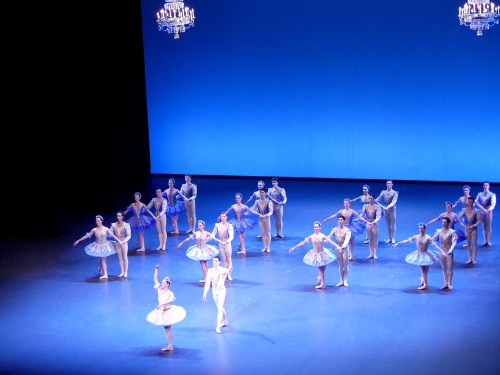
Theme & Variations.

Zucchini Blossoms/ George Balanchine’s Theme and Variations (1947)

Have you ever planted zucchini in your garden? It just never stops sneakily extending its roots in all directions. By the end of the season you just cannot even look at even one more piece of your neighbor’s redundant zucchini bread. That’s Sleeping Beauty, tasty, but two long runs of it last season turned out to be more than filling.

Zucchini blossoms offer a delicate synecdoche for all that raw bounty. They are, in a sense, all the flavor concentrated into one juicy fried mouthful. Maybe this is one way to define how Theme and Variations distills Sleeping Beauty: the essence is there, minus the endless fairies.

Unfortunately, there are as many opinions out there about THE “authentic” way to dance Balanchine technique as there are recipes that do, or do not, include nutmeg. Ben Huys of THE Trusts (both Balanchine and Robbins!) was the invited coach. This ballet, despite its surprising construction – the ballerina barely gets to breathe during the first half and then mostly polonaises around for the rest – always turns out to be very tasty.

So let’s just enjoy the show and take a look at the dancers.

On October 17th, from the initial danced statement of the theme up to their deeply elegant réverances, both Bleuenn Battistoni and Thomas Docquir were still clearly inside their heads as Aurora and Désiré from last spring. And they continued to be that way, all the way through.  But, as the last time, there was just 1% missing. A dash of pepper. Battistoni reiterated the unemphatic grace of her first act Aurora: all about just the right uplift and épaulements and un-showy but oh-so centered rock-solid balances. But this performance could also use just one more pinch of spice.  Docquir, as he did last spring, concentrated on making his steps and jumps and batterie as scholastically perfect as possible. His performance wasn’t radiant. In princely roles, he seems to be fighting imposter syndrome. He rushed the music in partnering at times.

Honestly, this Theme was lovely, courtly, polished. The soft and precise landings into every pose at the end of a sequence literally pulled the audience in. I noticed that my neighbor kept leaning forward towards the stage each time, as if she had been swept up into 18th century courtesies, impelled to bow in return.
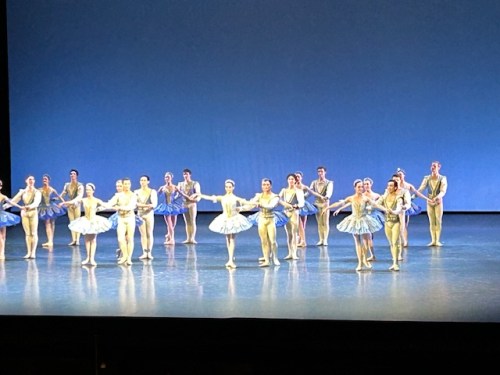
October 17th 2025. Bleuenn Battistoni & Thomas Docquir. Theme & Variations.

With Valentine Colasante and Paul Marque on October 18th, Theme felt looser and more fun. It was Beauty, but Act 3. Colasante luxuriated into the movements and teeny-weeny stretch-the-movement-out just enough beyond the axis to make a swish-swish seem new.  She danced big, fearlessly, and playfully dared to hover a microsecond too long. Both dancers caressed the air and the floor.  And there was something intriguing about the way Marque partnered: he seemed to catch her before the lifts, rather than on the way down, if that makes sense.

After the ballet, I thought about this very French concept of “la belle presentation.” Have you ever looked into a shop window in Paris where all the foodstuffs – from succulent to basic — are beautifully organized? Even bouquets of radishes are carefully placed in delicate patterns. Theme and Variations definitely suits our sense of l’art de vivre.

On both nights, I overheard complaints about the tiny corps on occasion not getting to their places and not lining up properly. Yes, yes, I did see it: one of the four girl soloists, and then especially when the male corps showed up. It’s not worth it to name names, as we have Giselle and a tour going on and are spread thin. Quite a few in the tutus and tights were newish to the stage. I find this critique particularly funny as Paris Opera Ballet is often accused of being too perfect from top to bottom.

As Balanchine would say, “who cares?”

*

 *                                  *
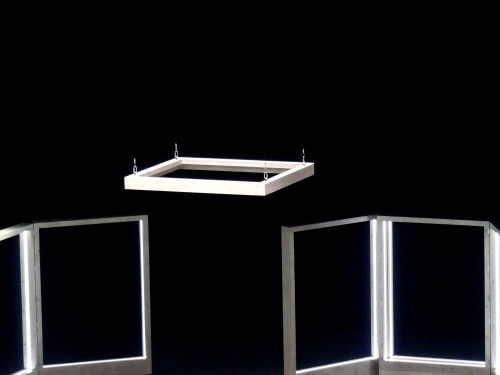
Rhapsodies. Magda Willi for Mthuthuzell November’s Rhapsodies.

Fennel and Endive /Mthuthuzeli November’s Rhapsodies (2024)

Who knows what to do with fennel or endives? Braise? Slice down in some direction and drench in lemon? No matter what, you have no answers. Maybe they just aren’t meant to be cooked.

Maybe Gershwin’s Rhapsody in Blue – by a composer who wrote pop music but wanted to be taken seriously – just isn’t meant to be used for a ballet?

Other choreographers have taken it on. In Paris, Odile Duboc did in 1999. It was insipid and has long gone into the dustbin.

Mthuthuzeli November’s take on the music has a lot more going for it. Or does it?

A clever set that leaves you puzzled, to start with.  The outlines of wooden door frames are highlighted by led lights. The frames are attached to each other and can be pulled out like accordions and wheeled around or reshaped into one square outline as clouds of dried ice float by. I thought of Olafur Eliasson’s “Inside the Horizon,” that unfolding series of slivered reflections at the Louis Vuitton Foundation. I began to recall the many times Jean Cocteau made characters walk through mirrors in his films. My seatmate – after we made a pact that we would both not put our noses into the program beforehand – concentrated hard and said she saw people trying to step away from their cellphones. A French friend had seen French windows.

So the set gets you from the get-go, even if your mind drifts back to how many choreographers have used moving sets to incite and inspire movement since the beginning of time…

And does the dance get your attention? It’s perfectly watchable, nicely thought out.

On the 17th in the lead couple Celia Drouy, sensual and rounded, was the charming girl next door. I’d love to see her in Dances at a Gathering. It was odd then, late in the piece, when she shoved away her partner, the cooly intense Axel Ibot. It seemed to come out of nowhere.

October 17th 2025. Rhapsodies.

The dance? Watchable and performed with energetic commitment by all. The cast was filled with skilled soloists who are only occasionally ever cast in big roles, such as Ibot (eye-catching here and equally focused the next night when he rejoined the corps) or Fabien Révillion (a delightful Colas long ago and a wrenching Lensky recently). I often watch for Isaac Lopes Gomes, cleanly and powerfully performing no matter what line he’s stuck in. Daniel Stokes. Juliette Hilaire. Charlotte Ranson…

Ah yes the dance. Forgot that one. Weight down but pulled up. A repeated group movement of squats in second thump forward while swaying side to side à la les drinking buddies in Prodigal Son. Open your arms to the sun and close them at varied speeds. Embracing the sky is common to almost all local world dances as well as yoga. Push and pull. As a young woman once said to me after she tried a baguette for the first time and did not want to seem ignorant: “I wasn’t amazed, but it was soft, it was crunchy, it was warm! It was soft and crunchy! Wasn’t it supposed to be soft and crunchy?”

On the 18th I think another layer got added to Rhapsodies. Letizia Galloni was laid back/avid, out-of-here/imperious, chiseled/pliant. She projected a mysterious anguish and tension which made you notice from the start that she was indeed pushing back at her partner, Yvon Demol. Even when Galloni yields, she holds something back.

Letizia Galloni is another one of those soloists whose career has switched on and off and on. Talented and eye-catching from the time she graduated the POB school, she scored La Fille Mal Gardée during the Millepied era about ten years ago. Then she faded into herself. Then disappeared. (At least here in a national company, you can go into hibernation without being fired).  But she popped up again last spring in Sleeping Beauty and offered the audience one of the loveliest Gold and Silvers I’ve seen in many a year: relaxed, imperious, generous, impeccable technically, with a sense of bounce and sweep that made us in the audience glad for her.

*

 *                                  *
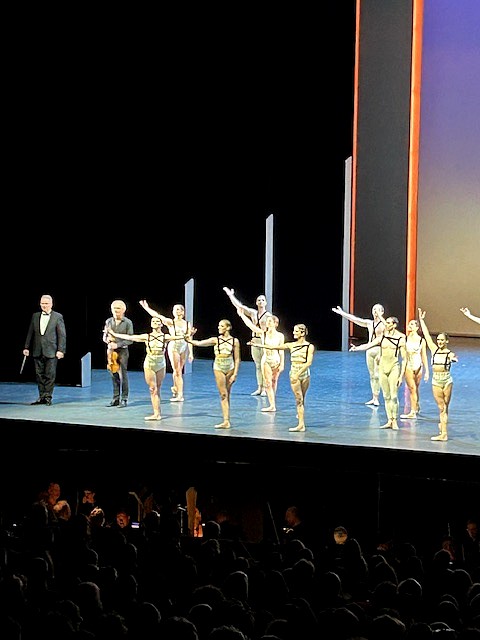
October 17th 2025. Corybantic Games.

Turnips/ Christopher Wheeldon’s Corybantic Games (2018)

Un “navet” aka turnip is the French way to say “that was a real dud.” I could have called this ballet a turkey, but we being very svelte and are only going to eat veggies today.

This thing, created for The Royal Ballet in 2018, has no structure (dramatic or balletic), no core, and dithers endlessly along. My seatmate on the 17th called it “soporific.” I thought of nastier words but simply nodded. I seriously considered skipping it on the 18th. Once was more than enough.

The pretty costumes are white with black ribbons crisscrossed across the torso that then dangle down from the shoulders. During the second night’s curtain calls, I tried to see if there was some sense to the danglers. Seems like the more of a soloist you are, the more ribbons.

The pretentious music is by Leonard Bernstein whenever he windily demands to be taken seriously. I’d call it Bride of Agon. The choreography, equally self-infatuated, proffers up innumerable quotes from just about every ballet that had an Antique World-y theme to the point that you could use it as a quiz: Note down the minute and the second where this choreographer directly cites Nijinsky, Nijinska, Robbins, Balanchine, Taylor. From Faun(s) to Apollo to Antique Elegies, this whole ballet felt like some snarky schoolboy’s inside joke. Flexed heels and upside-downsies and, as my seatmate noted, a lot of great final poses that turn out to be just a hook for more of the same. The Third Movement pas de deux ends with the guy hurling the girl up and into the wings (to be caught). Just where have I seen that one before?

It just goes on and on. I am too tired to describe it. Only a few days later I stare at my scribbled notes and all images of actual movement have faded. The steps from scene to scene – indeed within one — never get individuated. I’m looking at the cast list, filled with up-and-coming and cherished dancers and it’s painful. People tried to shine, gave it their all, but.

In the last scene, a soloist turns up (Valentina Colasante on the 17th and Roxane Stojanov on the 18th). Clearly, she is supposed to mean something, but what? Yes, I did know who the Corybantes were and that their earth mother is the fertility goddess Cybele (pretentious me) but what I didn’t see was one drop of wild ecstatic energy — not even once! — during these long minutes (37 minutes says the program, felt at least twenty minutes longer).

So now I’m looking at the program notes. Oh! Games is about Plato’s Symposium and polyamory! A less sexy or sensual ballet you will never find. No one connects. Ever. It turns out that in the fourth movement, if you look closely, the three couples are a straight, a male, and a lesbian one. Ooh! Did I look for boobies at all while three pairs of soloists in low light diddled around before settling into lovely enlaced poses on the downstage lip like teddy bears going to beddy? Seriously? As a female, I should note that women of any kind had no legal status or interest at all to Ancient Greek life or thought. Plato didn’t give a flying…hoot… about women, gay or straight. Why didn’t Wheeldon just make a dance about men being men who then tolerate a female diva who shows up for the grand finale? A fun fact is that Cybele’s male followers often castrated themselves at the apex of their delirium. Come to think about it, I don’t think that would make for a great ballet either.
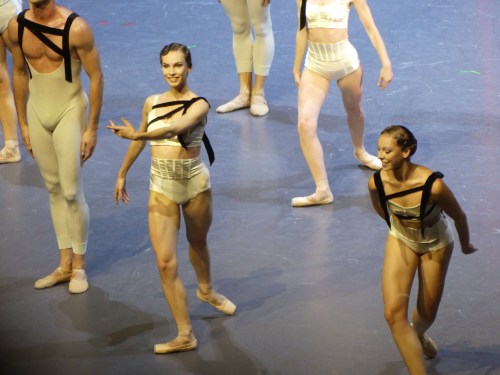
Bleuenn Battistoni & Roxane Stojanov, Corybantic Games.

As far as the title “Roots” goes, the program book insists that Wheeldon’s roots are in Greece. Seriously? He’s about as English as they come. As for Mthuthuzeli November,  the program talks less about his native origins and much more about his discovery of ballet. This program should have been entitled « Apples and Oranges with a Dried-Out Raisin on The Side. »

Could someone please pass the salt?


Commentaires fermés sur « Racines » at the Paris Opera : How to Cook Roots

Classé dans Retours de la Grande boutique

Les Balletos d’or 2018-2019

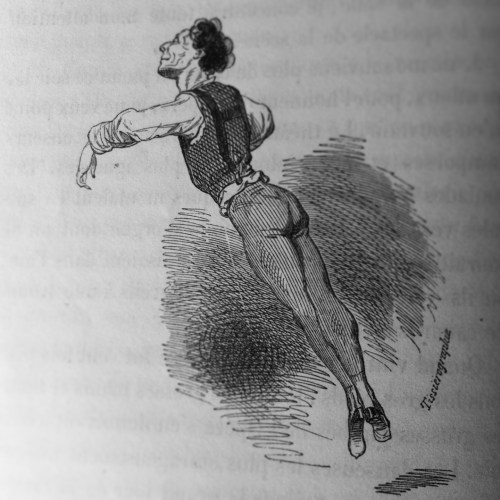
Gravure extraite des « Petits mystères de l’Opéra ». 1844

La publication des Balletos d’or 2018-2019 est plus tardive que les années précédentes. Veuillez nous excuser de ce retard, bien indépendant de notre volonté. Ce n’est pas par cruauté que nous avons laissé la planète ballet toute entière haleter d’impatience une semaine de plus que d’habitude. C’est parce qu’il nous a quasiment fallu faire œuvre d’archéologie ! Chacun sait que, telle une fleur de tournesol suivant son astre, notre rédaction gravite autour du ballet de l’Opéra de Paris. Bien sûr, nous avons pléthore d’amours extra-parisiennes (notre coterie est aussi obsessionnelle que volage), mais quand il s’est agi de trouver un consensus sur les les points forts de Garnier et Bastille, salles en quasi-jachère depuis au moins trois mois, il y a eu besoin de mobiliser des souvenirs déjà un peu lointains, et un des membres du jury (on ne dira pas qui) a une mémoire de poisson rouge.


Ministère de la Création franche

Prix Création : Christian Spuck (Winterreise, Ballet de Zurich)

Prix Tour de force : Thierry Malandain parvient à créer un ballet intime sur le sujet planche savonnée de Marie Antoinette (Malandain Ballet Biarritz)

Prix Inattendu : John Cranko pour les péripéties incessantes du Concerto pour flûte et harpe (ballet de Stuttgart)

Prix Toujours d’Actualité : Kurt Jooss pour la reprise de La Table Verte par le Ballet national du Rhin

Prix Querelle de genre : Les deux versions (féminine/masculine) de Faun de David Dawson (une commande de Kader Belarbi pour le Ballet du Capitole)

Prix musical: Goat, de Ben Duke (Rambert Company)

Prix Inspiration troublante : « Aimai-je un rêve », le Faune de Debussy par Jeroen Verbruggen (Ballets de Monte Carlo, TCE).

Ministère de la Loge de Côté

Prix Narration : François Alu dans Suites of dances (Robbins)

Prix dramatique : Hugo Marchand et Dorothée Gilbert (Deux oiseaux esseulés dans le Lac)

Prix Versatilité : Ludmila Pagliero (épileptique chez Goecke, oiseau chez Ek, Cendrillon chrysalide chez Noureev)

Pri(ze) de risque : Alina Cojocaru et Joseph Caley pour leur partenariat sans prudence (Manon, ENB)

Prix La Lettre et l’Esprit : Álvaro Rodriguez Piñera pour son accentuation du style de Roland Petit (Quasimodo, Notre Dame de Paris. Ballet de Bordeaux)

Prix Limpidité : Claire Lonchampt et son aura de ballerine dans Marie-Antoinette (Malandain Ballet Biarritz).

Ministère de la Place sans visibilité

Prix Singulier-Pluriels : Pablo Legasa pour l’ensemble de sa saison

Prix Je suis encore là : Le corps de Ballet de l’Opéra, toujours aussi précis et inspiré bien que sous-utilisé (Cendrillon, Le lac des Cygnes de Noureev)

Prix Quadrille, ça brille : Ambre Chiarcosso, seulement visible hors les murs (Donizetti-Legris/Delibes Suite-Martinez. « De New York à Paris »).

Prix Batterie : Andréa Sarri (La Sylphide de Bournonville. « De New York à Paris »)

Prix Tambour battant : Philippe Solano, prince Buonaparte dans le pas de deux de la Belle au Bois dormant (« Dans les pas de Noureev », Ballet du Capitole).

Prix Le Corps de ballet a du Talent : Jérémy Leydier pour A.U.R.A  de Jacopo Godani et Kiki la Rose de Michel Kelemenis (Ballet du Capitole de Toulouse)

Prix Seconde éternelle : Muriel Zusperreguy, Prudence (La Dame aux camélias de Neumeier) et M (Carmen de Mats Ek).

Prix Anonyme : les danseurs de Dog Sleep, qu’on n’identifie qu’aux saluts (Goecke).

Ministère de la Ménagerie de scène

Prix Cygne noir : Matthew Ball (Swan Lake de Matthew Bourne, Sadler’s Wells)

Prix Cygne blanc : Antonio Conforti dans le pas de deux de l’acte 4 du Lac de Noureev (Programme de New York à Paris, Les Italiens de l’Opéra de Paris et les Stars of American Ballet).

Prix Gerbille sournoise (Nuts’N Roses) : Eléonore Guérineau en princesse Pirlipat accro du cerneau (Casse-Noisette de Christian Spuck, Ballet Zurich).

Prix Chien et Chat : Valentine Colasante et Myriam Ould-Braham, sœurs querelleuses et sadiques de Cendrillon (Noureev)

Prix Bête de vie : Oleg Rogachev, Quasimodo tendre et brisé (Notre Dame de Paris de Roland Petit, Ballet de Bordeaux)

Prix gratouille : Marco Goecke pour l’ensemble de son œuvre (au TCE et à Garnier)

Ministère de la Natalité galopante

Prix Syndrome de Stockholm : Davide Dato, ravisseur de Sylvia (Wiener Staatsballett)

Prix Entente Cordiale : Alessio Carbone. Deux écoles se rencontrent sur scène et font un beau bébé (Programme « De New York à Paris », Ballet de l’Opéra de Paris/NYCB)

Prix Soft power : Alice Leloup et Oleg Rogachev dans Blanche Neige de Preljocaj (Ballet de Bordeaux)

Prix Mari sublime : Mickaël Conte, maladroit, touchant et noble Louis XVI (Marie-Antoinette, Malandain Ballet Biarritz)

Prix moiteur : Myriam Ould-Braham et Audric Bezard dans Afternoon of a Faun de Robbins (Hommage à J. Robbins, Ballet de l’Opéra de Paris)

Prix Les amants magnifiques : Amandine Albisson et Audric Bezard dans La Dame aux camélias (Opéra de Paris)

Ministère de la Collation d’Entracte

Prix Brioche : Marion Barbeau (L’Été, Cendrillon)

Prix Cracotte : Emilie Cozette (L’Été, Cendrillon)

Prix Slim Fast : les 53 minutes de la soirée Lightfoot-Leon-van Manen

Prix Pantagruélique : Le World Ballet Festival, Tokyo

Prix indigeste : les surtitres imposés par Laurent Brunner au Marie-Antoinette de Thierry Malandain à l’Opéra royal de Versailles

Prix Huile de foie de morue : les pneus dorés (Garnier) et la couronne de princesse Disney (Bastille) pour fêter les 350 ans de l’Opéra de Paris. Quand ça sera parti, on trouvera les 2 salles encore plus belles … Merci Stéphane !

Prix Disette : la deuxième saison d’Aurélie Dupont à l’Opéra de Paris

Prix Pique-Assiette : Aurélie Dupont qui retire le pain de la bouche des étoiles en activité pour se mettre en scène (Soirées Graham et Ek)

Ministère de la Couture et de l’Accessoire

Prix Supersize Me : les toujours impressionnants costumes de Montserrat Casanova pour Eden et Grossland de Maguy Marin (Ballet du Capitole de Toulouse)

Prix Cœur du sujet : Johan Inger, toujours en prise avec ses scénographies (Petrouchka, Ballets de Monte Carlo / Carmen, Etés de la Danse)

Prix à côté de la plaque : les costumes transparents des bidasses dans The Unknown Soldier (Royal Ballet)

Prix du costume économique : Simon Mayer (SunbengSitting)

Prix Patchwork : Paul Marque et ses interprétations en devenir (Fancy Free, Siegfried)

Prix Même pas Peur : Natalia de Froberville triomphe d’une tiare hors sujet pour la claque de Raymonda (Programme Dans les pas de Noureev, Ballet du Capitole)

Ministère de la Retraite qui sonne

Prix Laisse pas traîner tes bijoux n’importe où, Papi : William Forsythe (tournée du Boston Ballet)

Prix(se) beaucoup trop tôt : la retraite – mauvaise – surprise de Josua Hoffalt

Prix Sans rancune : Karl Paquette. Allez Karl, on ne t’a pas toujours aimé, mais tu vas quand même nous manquer !

Prix Noooooooon ! : Caroline Bance, dite « Mademoiselle Danse ». La fraicheur incarnée prend sa retraite

Prix Non mais VRAIMENT ! : Julien Meyzindi, au pic de sa progression artistique, qui part aussi (vers de nouvelles aventures ?)

Louis Frémolle par Gavarni. « Les petits mystères de l’Opéra ».

Commentaires fermés sur Les Balletos d’or 2018-2019

Classé dans Blog-trotters (Ailleurs), France Soirs, Humeurs d'abonnés, Ici Londres!, Ici Paris, Retours de la Grande boutique, Une lettre de Vienne, Voices of America

Un argument pour « Le Songe d’une nuit d’été » de Balanchine.

Grandville : L’Amour fait danser les ânes

Dans l’original de Shakespeare vertigineusement déroutant, une palette de personnages divers et variés s’entrecroisent, se déchirent et se rabibochent sous un clair de lune.

Un roy des fées et sa noble dame se querellent pour savoir lequel des deux aura la garde d’un joli petit page de compagnie. Chacun d’entre eux considère qu’il le vaut bien. Pauvre chéri !

Deux jeunes damoiselles et deux jeunes damoiseaux, aristocratiques mais terre-à-terre, considèrent qu’ils sont / ne sont pas amoureux. Qu’ils se détrompent !

Un duc (d’Athènes, rien que ça) et sa guerrière de fiancée considèrent qu’une toute nouvelle pièce de théâtre serait la plus digne des additions à leur festivités de noces. Mauvaise idée.

Une horde calamiteuse d’artisans mal dégrossis qui considèrent qu’ils peuvent écrire cette pièce – et même apprendre à la jouer- tout ça en un jour. Mais en fait, non…

Et puis il y a Puck, qui considère qu’il sait ce qu’il fait mais qui en fait ne distingue pas sa droite de sa gauche.

Aucun d’entre eux ne capte vraiment  «qu’à trop considérer, on sidère surtout par son ânerie ».

Mais  voilà que le vrai âne entre en scène. C’est le sot enchanté et enchantant, Bottom le tisserand, que Puck a transformé en bourricot. Gentil et naïf, Bottom considère qu’il n’a pas besoin de magie pour mettre en chaleur une reine des fées…

Mais voyons ce que donne l’adaptation par Balanchine de ce classique sans queue ni tête.

Acte 1 (à peu près une heure)

Ouverture et scène 1

De grands papillons et de mignonnes petites lucioles  sautillant aux côtés de Puck le lutin, voient leur clairière traversée par une grande variété de personnages ; une jeune fille au désespoir sémaphorique, une titubante troupe d’artisans avinés ; le roi des fées Obéron et sa reine Titania.

Titania et Obéron semblent être au milieu d’un véritable incident diplomatique – elle dit « non » à foison. Voyez-vous, Obéron veut que sa femme lui cède son jeune page (en général costumé en petit indien d’Inde à turban). Il est tellement  condescendant que vous pourriez bien confondre et le prendre pour son papa. Il ne remporte pas cette manche.

Et voilà qu’un nouveau type paraît. C’est Thésée, le duc d’Athènes. Il aimerait bien se consacrer à sa fiancée, une autre reine, Hyppolyte. Elle est du genre infatigable avec un arc greffé à son poing. C’est une guerrière amazone.

Mais tout d’abord, Thésée doit gérer la jeune désespérée – son nom est Héléna – et ses trois comparses tout aussi désespérés. : Hermia, Démétrius et Lysandre… Mais qui est qui ? Sans plaisanter, qui s’appelle quoi a toujours été l’aspect le plus ardu de cette pièce pour le spectateur. Juste pour information, Hermia est celle qui est adorée par les deux garçons au début puis rejetée tandis qu’Héléna est la mal aimée qui sera ensuite adorée par eux contre son gré. Seule la magie, et certainement pas les lois athéniennes, sera en mesure de démêler tout cela.

Scène 2

Titania et ses papillons font leur aérobic avant  d’aller au dodo, interrompues par des représentants du sexe fort, d’abord Puck et puis… non ! Pas Obéron. L’un des petits caprices assumés de la version Balanchine, qui déborde de duos, est que Titania ne danse jamais avec son légitime. Néanmoins, une ballerine peut avoir besoin  d’une présence masculine occasionnelle pour la soutenir. La solution choisie, que je trouve un peu bizarre, est de la coupler avec un gars sorti de nulle part. Le pas de deux est savoureux, mais vous ne recroiserez jamais le monsieur. Si ça peut vous aider de penser que Titania est tellement furieuse qu’elle s’est lancée dans une aventure extraconjugale, allez-y.

Scène 3

Entouré d’une nuée d’insectes dansants, Obéron boude. Un papillon danse énormément (son nom est « Papillon »). Mais voilà qu’il a une idée de génie : il est temps d’utiliser son arme secrète, la fleur au nectar si puissant qu’elle vous fait tomber violemment amoureux de la première créature que vous croisez. Il l’utilisera pour humilier sa femme cabocharde. Mais d’abord, il ordonne à Puck de l’utiliser pour mettre un peu d’ordre dans l’esprit de Démetrius, le garçon désiré ardemment par Héléna.

Mais voila, parce que Puck confond dans le programme lequel est Démetrius et lequel est Lysandre, le chaos s’ensuit, avec tous les quatre jeunes gens courant après ou fuyant l’autre. Désormais, Héléna est encore et toujours désespérée parce qu’elle a DEUX soupirants pour la tripoter et Hermia est en larmes.

Scène 4

Grandville : âne et chardon

Titania – je suppose qu’elle ne pouvait plus s’endormir après tout cet exercice – traîne avec ses copines et entame un solo. C’est ensuite le tour de Hermia. Et les artisans qui apparaissaient brièvement lors de l’ouverture y trébuchent de nouveau. Alors que la petite troupe traverse la scène, Puck en arrache le tisserand Bottom, et le transforme en âne. Ça c’est méchant, d’autant qu’à l’époque élisabéthaine, les ânes étaient réputés très libidineux !

Scène 5

Obéron surprend finalement Titania endormie, saupoudre la potion d’amour sur ses yeux et positionne stratégiquement Bottom. Le résultat est des plus charmants. Les mouvements de Titania et son mime sont remplis d’une immense tendresse, tandis que l’âne bâté se concentre sur les gratouilles et la tambouille. Leurs « amours » croisant les espèces sont bien innocentes. Elle le caresse comme s’il était son greffier et on pourrait presque l’entendre ronronner.

Scène 6

Vous vous souvenez d’Hippolyte, la fille à l’arc ? Eh bien, la voilà qui revient, dégainant les grands jetés et les fouettés dans tous les sens, accompagnée dans le petit matin glacé par une meute de chiens qui ondoie par-dessus les fumigènes. Thésée se retrouve nez à nez avec les quatre jeunes gens en colère. Obéron décide alors qu’il est temps de régler tout ça. Bottom perd son ânitude, Titania se réveille sous le regard interrogatif de son mari, prête à céder le petit page. Lysandre se relève amoureux de Hermia ; Démetrius ne cessera jamais d’aimer Héléna  (j’espère que j’ai bien tout compris). Thésée et Hippolyte décident d’organiser un mariage de groupe.

Entracte

Acte 2 (à peu près 30 minutes)

On entend la marche nuptiale (oui, celle-là même). Tout le monde est maintenant sur son trente-et-un classique (c.à.d les tutus). Et voilà pour l’argument. La scène est livrée à un flot de «divertissements ».

Dans le courant de l’action, votre cœur stoppera peut-être à la vue d’un pas de deux complètement infusé de lyrisme qui semble encapsuler tout la signification de l’amour véritable. C’est une démonstration magistrale de la manière dont l’âme et le corps peuvent trouver la paix et l’harmonie. Mais, bizarrement, il n’est dansé par aucun des danseurs que vous viendriez à reconnaître. Un nouveau couple est apparu, sorti de nulle part, et a commencé à danser. Pouf, comme ça ! Et ils n’ont même pas de nom. Ils sont identifiés dans le programme comme : « pas de deux ». Dans une histoire qui a déjà trop de personnages, je reste toujours perplexe face à ce choix d’ajouter un monsieur souteneur à l’acte 1 et un monsieur et madame allégorie de l’Amour à l’acte deux.

Cet interlude, je suppose, a permis à Balanchine de penser qu’il pouvait se dispenser de faire connaître la fin de l’histoire de Bottom et de ses amis. Ils disparaissent purement et simplement. Je pense que si vous avez jamais vu la pièce sur scène – ou toute autre de ses adaptations filmées, chantées ou dansées – vous conviendrez que la représentation par les artisans de la « courte et fastidieuse histoire du jeune Pyrame et de son amante Thisbé ; farce très tragique » pendant les célébrations de mariage est la chose la plus drôle que vous ayez jamais vu. Son absence me gène cruellement ici. S’il a été possible de trouver un moyen de faire entrer le chat botté par effraction dans le mariage de La Belle au bois dormant, alors pourquoi le maître de ballet n’a-t-il pas laissé ces gars revenir tituber sur scène ?

Grandville. La vie d’un papillon

Commentaires fermés sur Un argument pour « Le Songe d’une nuit d’été » de Balanchine.

Classé dans Hier pour aujourd'hui, Retours de la Grande boutique

Swan Lake: Get Your Story Here. A plot summary.

cygne-rougeThe basic story is so ridiculous even Freud would break out in giggles. A mama’s boy falls for a female impersonator really into feathers who goes by the moniker #QueenOfTheSwans. He digs her divine Virgin in White get-up but can’t stop making googly eyes at a sexy fashionista in black who turns out to be her -get this – Evil Twin. Then there’s the problem of their pimp. Since our hero has also demonstrated from the outset that he’s a limp noodle when it comes to standing up to father figures, he’ll…oh never mind. I mean, would you keep a straight face if late one night a middle-aged guy suddenly jumped out of the bushes, ripped open his Bat-cape, and exposed you to…his sequined green bodysuit?
But every time I’m actually experiencing Swan Lake, my snarkiness about the plot just evaporates. This ballet – like the best of operas — simply lets you cry in the dark over how you yourself, younger and softer and in better shape, had once been a fool for love.
What’s really weird, though, is that most people with bucket-lists think that if you’ve seen one Swan Lake you’ve seen ‘em all. Wrong. So if you don’t go see Rudolf Nureyev’s 1984 version for the Paris Opera Ballet, still fresh and juicy after all these years, you will miss out on something big: a dramatically coherent and passionately danced dreamscape. This production, for once, succeeds in forcing the tired threads of the generic story into real narrative. To boot, it gives the male dancers of the corps – sans les plumes de ma tante — as much to do as the female ones.
Many, many, versions of this ballet exist. All of the steps of the first one from 1877, created in tandem with Tchaikovsky’s music and famed as a colossal flop, seem to have been lost. Every production we see today claims to be « after the original » 1895 version as devised by Marius Petipa and Lev Ivanov for the Maryinsky Theater. Yet we probably should consider 1895’s as lost, too. Ballet, by definition, just keeps evolving.
Just imagine: not that long ago, the Prince only mimed and his bestie, Benno, did all the complicated partnering stuff. An annoying court jester still scampers about in some productions, boring everyone on either side of the footlights. Just imagine: in some productions, this big tearjerker comes to a happy end. Some constants: almost all the steps in Act II and Odile’s extended series of fouettés (where the ballerina whirls like an unstoppable top) in Act III. Imagine the challenge each leading ballerina faces: she must convince you that you must have seen two completely different leading ladies – one fragile and tender, the other violent and bad. But in some earlier versions, you did indeed see two different leading ladies…

Le Lac des Cygnes, Moscou, 1877. Une évocation du décor du 2e acte partiellement corhoborée par les sources journalistiques

Le Lac des Cygnes, Moscou, 1877. Une évocation du décor du 2e acte partiellement corroborée par les sources journalistiques

PROLOGUE (OVERTURE)
Prince Siegfried has a nightmare where he looks on helplessly as a beautiful princess falls into the clutches of a half-human bird of prey. Before his eyes, the evil succubus transforms her into a swan and carries her off into thin air.

ACT ONE: THE CASTLE
It is the prince’s birthday. A crowd of young people, Siegfried’s friends, burst into the room, along with the prince’s Tutor Wolfgang (who bears a striking resemblance to the monster in Siegfried’s dream). Siegfried, aroused from his slumber, somewhat half-heartedly joins in their revels. He’s a melancholy prince, a dreamer.
The revel is interrupted by trumpet fanfare and the Queen Mother makes her entrance. She has come to congratulate her son upon his coming-of-age, but also to remind him of normal stuff. Her birthday gifts comprise a crown (do your duty) and a crossbow (shooting could provide some pleasure perhaps in the Freudian sense). As she points to her ring finger, the Queen Mother make it clear to the prince that both objects mean it’s time he took a wife (duty and/or pleasure?). At the ball in his honor tomorrow night, he will have to choose a bride. Eew! Her son goes limp at the mere thought.
Once they are sure that momma has gone back upstairs, Siegfried’s friends try to cheer him up: two girls and a boy perform a virtuosic pas de trois. Then the Tutor tells all the girls to fluff off. He gives the prince a dance lesson that involves a strong undercurrent of aggression: it looks like a power struggle rather than an initiation to the idea of the birds and the bees. The chorus boys break into one more rousing group dance-off, full of exhilaratingly complicated combinations, as they take leave.
The prince dances a sad solo while the Tutor glares at him. He has zero right to disapprove, for he’s not the prince’s father nor even his step-father. After once more bringing the prince to his knees, this oddly dominant employee suggests Siegfried go shoot his crossbow. In most productions, the Tutor is just a fat patsy who has nothing to do with evil. I happen to appreciate how, by sneakily combining our doubts about two characters, Nureyev’s production will soon merge both the Oedipal complex and Hamlet’s troubled relationship with male authority figures into one Really Big Bird.

We hear the “Swan theme.” The stage empties.

... et la "Danse des coupes", préfiguration de la vision des cygnes.

… et la « Danse des coupes », préfiguration de la vision des cygnes.

WITHOUT A PAUSE

ACT TWO BEGINS: NIGHT AT THE LAKE. ODDLY, IT FEELS AS IF WE HAVEN’T LEFT THE CASTLE, JUST GONE INTO ANOTHER ROOM…

Le corps de ballet aux saluts de la soirée du 8 avril 2015.

Le corps de ballet aux saluts de la soirée du 8 avril 2015.

We see that creepy bird of prey again, rushing across the stage. But is it the wicked magician von Rothbart or…the Evil Twin of the Tutor? Siegfried enters, and takes aim at something white and feathery rustling in the bushes. To his astonishment, out leaps the most beautiful creature he has even seen in his life: the princess he had already discovered in his dream. But she moves in a strange fashion, like a bird. Terrified, she begs him not to shoot. But Siegfried cannot resist the urge to grab her and to ask: “who are you? Um, what are you?”
“You see this lake? It is filled with my mother’s tears, for I,” she mimes, “am Odette, once a human princess, now queen of the swans. That evil sorcerer cast a spell on us, condemning us to be swans by day but we return to almost-human form at night. The spell will only be broken when a prince swears his undying love for me and never breaks that vow.” They are interrupted, first by von Rothbart, then by the arrival of the swan maidens (a corps de ballet of thirty-two).
Surrounded by the swan maidens, Siegfried and Odette express their growing understanding of each other in a tender pas de deux, which is followed by a series of dances by the other swans. Siegfried swears he will never look at another woman. But as dawn approaches he watches helplessly as von Rothbart turns Odette back into a bird. Siegfried doesn’t know it, but the strength of his vow is about to be put to the test.

INTERMISSION

ACT THREE: THE NEXT EVENING, IN THE CASTLE’S GRAND BALLROOM
Lac détailIt’s time for the Prince’s birthday party. Guests who seem to have been called forth from the Habsburg empire – Hungary, Spain, Naples, Poland — perform provincial dances in his and our honor.
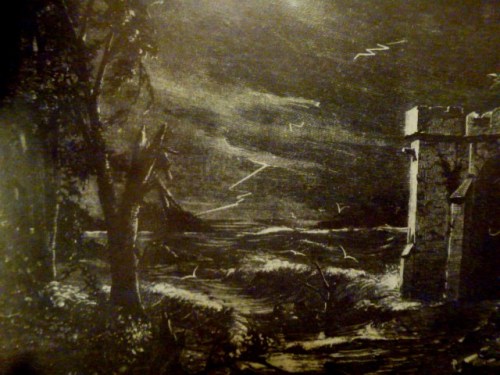

Six eligible princesses waltz about, and the Queen Mother forces Siegfried to dance with all of them. Siegfried is polite but cold: the princesses all look alike to him, and not one is his Odette. Tension increases when the prince tells his mother he doesn’t even like, let alone want, any of these dumb girls. Suddenly two uninvited guests burst into the ballroom. It’s the Tutor (or is it von Rothbart?) and a beautiful young woman, It’s Odette!
But something is odd: she’s dressed in black and much coyer and sexier than the demure and frightened creature he’d embraced last night. As they dance the famous Black Swan Pas de Deux, the fascinated prince finds himself increasingly blinded by lust. Convinced she is his Odette, simply a lot more macha today, he asks for her hand in marriage and, at the Tutor/von Rothbart’s insistence, swears undying love. [A salute with fore and middle finger raised]. At that moment, all hell breaks loose: the Black Swan bursts out laughing and points to another bird who’d been desperately beating at the window panes. “There’s your Odette, doofus!” The Black Swan is actually Odile, her evil twin! The foolish prince falls in a faint, realizing he has completely screwed things up.

PAUSE (DON’T LEAVE YOUR SEATS!)

ACT FOUR: BACK AT THE LAKE. OR STILL INSIDE THE PRINCE’S MIND?
Siegfried finds himself back at the lake, surrounded by the melancholy swan maidens. He rushes off to find Odette. She rushes in. Frantic and distraught, Odette believes that, if she wants to liberate her fellow swans, she now has no other option but to kill herself.
The swans try to comfort their queen, while the triumphant von Rothbart unleashes a storm. Odette tries to fly from him to die but our gloating villain grabs at her with his claws.
The prince finally finds Odette, barely alive. Her wings – like her heart – are broken. Nevertheless, she forgives him and they dance together one last time, their movements illustrating how lovers cling to each other even as fate and magic try to pull them apart.
In 1877, the pair just ended up drowned. What a bummer.
In 1895, choosing to jump into the lake and drown together as martyrs meant the two would be carried up to the heavens as befits a final orchestral apotheosis.
In 1933, the evil magician killed Odette. Poor prince got left with little to do. Another bummer.
In the USSR, 1945, the hero ripped off von Rothbart’s wig and the gals all dropped their feathers. Liberation narratives befitted those times, we must assume.
Tonight?
Odette looks on helplessly as Siegfried tries to do battle with the sadist that is von Rothbart. As in the “lessons” with the Tutor in the first act, the prince is brought to his knees. Is this for real? Has all of this been a dream? Do nightmares return? Bummer.

Le Lac des Cygnes. L'acte 3 et sa tempête...

Le Lac des Cygnes. L’acte final et sa tempête…

Commentaires fermés sur Swan Lake: Get Your Story Here. A plot summary.

Classé dans Hier pour aujourd'hui

Le Parc. Paris. Plot summary.

La Carte du Tendre. Illustration pour la « Clélie » de Madeleine de Scudéry (1654)

Choreography: Angelin Preljocaj (1994, created for the Paris Opera Ballet)

Music: Mozart and Goran Vejvoda.
At the Palais Garnier.

You are in Paris now, a perilous yet exhilarating place. Surely, you expect to find romance. Maybe in a park, under the shade of a tree? But what do you really want? Love or sex? Reason or emotion? Are they mutually exclusive? A meeting of the minds or…And just how much of yourself are you willing to surrender? These are ageless questions.
Fascinated by the great early novels of 17th and 18th century French literature, Angelin Preljocaj tried to see whether such a verbal genre could survive translation into the language of movement. Les Liaisons dangereuses, La Princesse de Clèves, Mlle de Scudéry’s Clélia, and the plays of Marivaux, all charted the treacherous journey which might connect your heart through your brain to the rest of your body. At the time, artists even drew maps of this untamed wilderness: relationships depicted as a landscape littered with land mines. When trapped between the dangerous Sea of Passion and the Lake of Indifference, are trust and tenderness even possible? Do lovers ever truly know or understand each other?

While the ballet is danced in one blow – 1:40 minutes and no intermission – conceptually, the ballet is set up into three sections:

PART ONE:

Each section begins with a weird, stiffly-moving, coven of Gardeners. Are they fate? Are they the rigid rules of society? Wearing welder’s glasses and butcher’s aprons, are they hiding from the light of day or does this indicate that love is blind, scalding, fatal? Their music will sound like a train wreck or the repetitive grind of a factory assembly line: are we ever in control of such events? In a harsh and stiff way, they map out the very gestures and movements that will follow. Notice that the “garden” is carved out of steel and wood beams. This “park,” this “landscape of love,” will have sharp and painful edges.
Suspicion/Flirtation. The company assembles around a game (is it only a game?) of one-upmanship and musical chairs. He checks out the available women (en travesti, a wink at Marivaux) while She feigns indifference. But He has noticed Her. Despite the ordered surface, the disorienting game of seduction has begun.
The first meeting/Temptations (Pas de deux/duet #1). He is ardent, She apprehensive; but both quickly realize that they are in synch. The two of them “talk” but hesitate to touch…until she faints. They struggle to remain true to – and break out of – polite society’s rules.

PART TWO:

Gardeners again.
Delicious bait. The women, having discarded some clothing, cheerfully anticipate being loved some more. She, in a bright red gown, is curious but apprehensive.
Desire. Four men arrive on hands and knees as if desperate. He is one of them, yet soon happily finds another woman to flirt with. Those men who don’t get so lucky dance out their frustrations.
The second meeting/Resisting (Pas de deux #2). The gardeners bring Her to a grove in the park. As hard as He tries to impress her, She resists. While he seems to be offering his body and soul, she fears the consequences. Perhaps she could surrender only her body but not her soul ?

PART THREE:

She is trapped in a nightmare, manipulated by the ice-cold gardeners.
Regrets. Late at night, the women lament lost (or dead) lovers/loves.
Passion. He, aflame with desire, goads the other men on.
Weakness. A second too late, some of the men realize just how much women can/will depend upon them. While seduction may on occasion result in a man acquiring a “ball and chain,” for all women all the possible results – including childbirth or death thereby —  leave a deeper mark on their bodies.
The Third Meeting/ Surrender (Pas de deux #3) In French, the title is “abandon.” As  They dance, the steps they once did side by side merge into one. This is truly one of the most magnificent statements about love — that flying kiss! — but do any of us really believe that love can last forever?
EPILOGUE: As the sky blackens (the storm approaches?) the gardeners have the last word.

10 Commentaires

Classé dans Hier pour aujourd'hui