
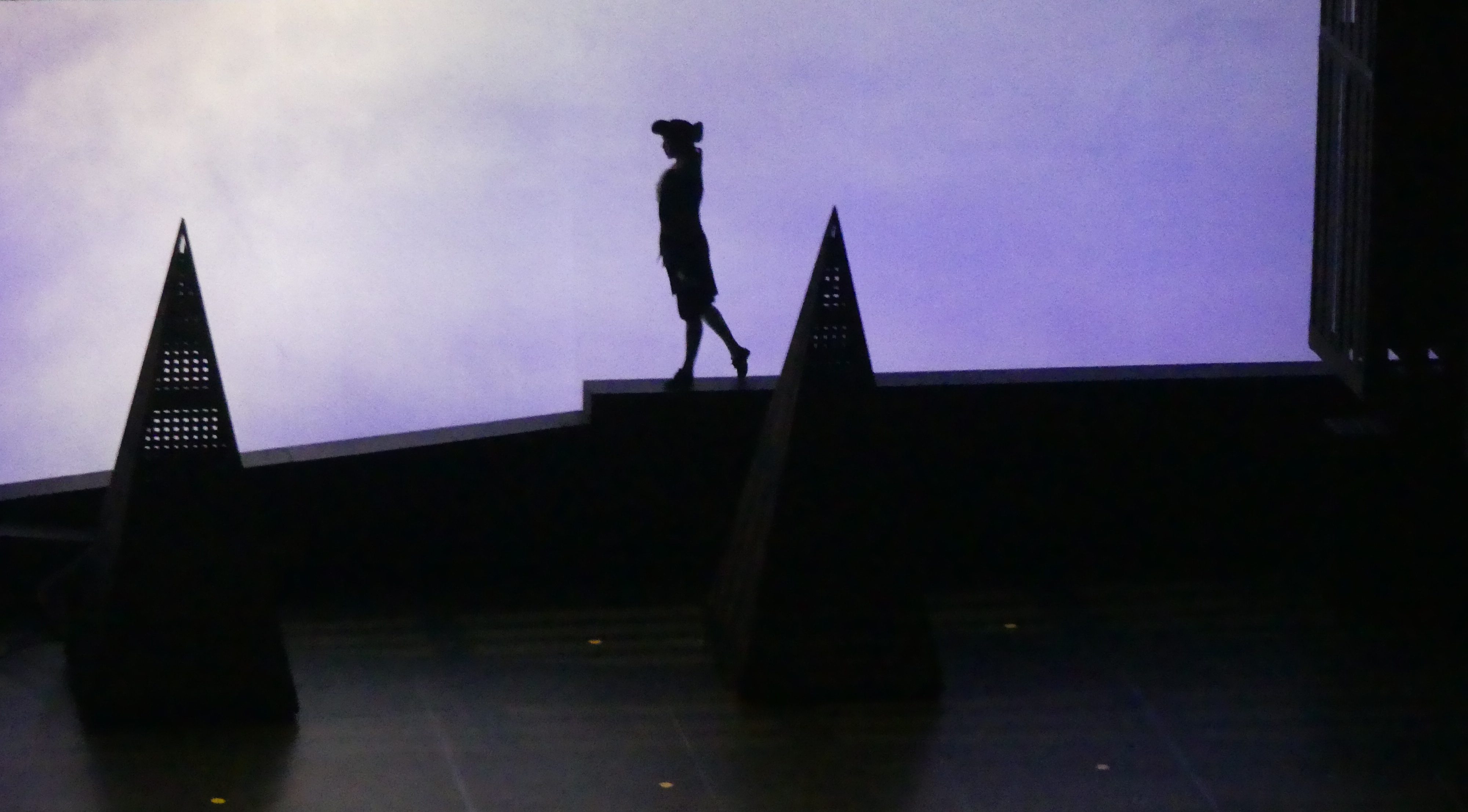
Le Parc (Mozart/Preljocaj). Ballet de l’Opéra national de Paris. Palais Garnier. 136eme et 140eme représentation.
J’ai jadis aimé le Parc, un ballet dont j’ai vu la première au moment de sa création à l’Opéra, le 9 avril 1994. Je l’ai même assez aimé pour aller le voir en juillet de la même année à Rome, lors d’une tournée de la compagnie.
Pourtant, force m’est de constater que depuis la naissance des Balletonautes, il y a maintenant quatorze ans, notre rédaction ne s’est pas précipitée pour rendre compte des reprises du ballet de Preljocaj. Pour celle de 2013, Fenella s’était acquittée d’un spirituel plot summary que je m’étais contenté de traduire lors de la mouture 2019. Aucun article sur une représentation d’aucun des rédacteurs n’est conservé sur le blog. Aussi, en 2026, peut-être était-il temps de redonner sa chance à une œuvre qui, c’est un fait rare, semble être parvenue à s’imposer au répertoire de la grande boutique.
Ce qui m’a le plus marqué, au travers de deux soirées aux distributions différentes, c’est combien, malgré le temps passé (les dernières représentations auxquelles j’ai assisté datent de la saison 2008-2009), ce ballet restait clairement inscrit dans mon esprit. La structure est donc bonne : tripartite, elle correspond aux trois villes de la Carte du tendre et sans doute aussi aux trois chapitres de la Clélie de mademoiselle de Scudéry qui l’a inspirée. On se souvient clairement des trois moments de la journée (le matin, l’après midi – la nuit), des 3 jeux (la courses de chaises musicales, le jeu de cache-cache et le colin-maillard), des trois postures (séduction, pamoison, abandon). Des images assez vives nous restaient donc en mémoire, notamment le concours de chaises martelées au sol, les coups de tête de la fille sur la poitrine de son séducteur à la fin de la deuxième partie ou encore la diagonale cour-Jardin des dormeuses tirées par les garçons durant la troisième partie.
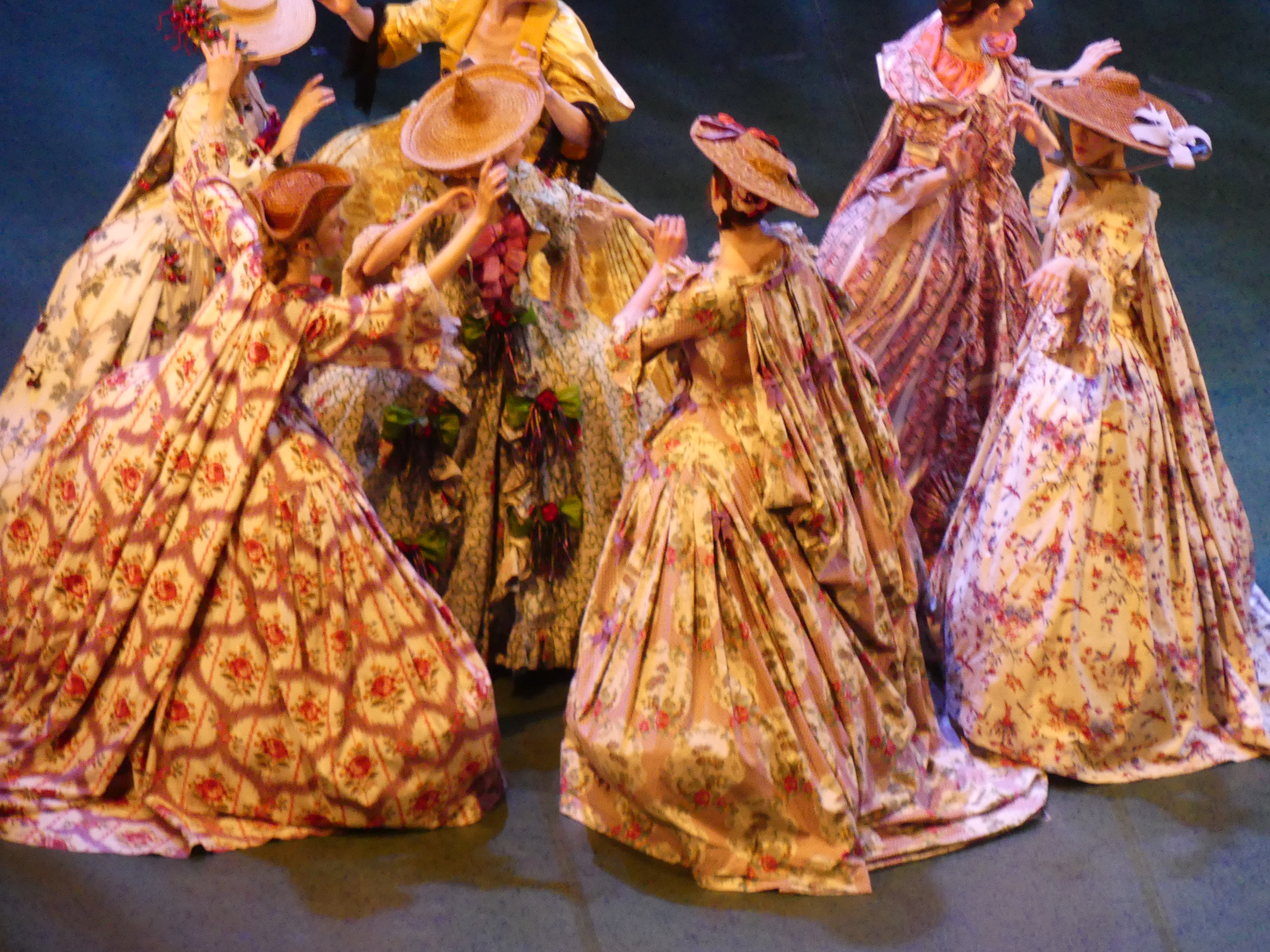
Le Parc. Avant tout une production réussie. Costumes : Hervé Pierre
Il faut le reconnaître aussi, la production n’a pas pris une ride. Le Parc mi sylvestre – mi citadin de Thierry Leproust aux arbres palissés ressemblant à des immeubles de ville nouvelle, les costumes de Hervé Pierre (ah, la robe à la française aux imprimés rouge et blanc de la danseuse principale !) et les lumières soyeuses, translucides et un peu mystérieuses de Jacques Chatelet concourent à la magie renouvelée du ballet de Preljocaj.
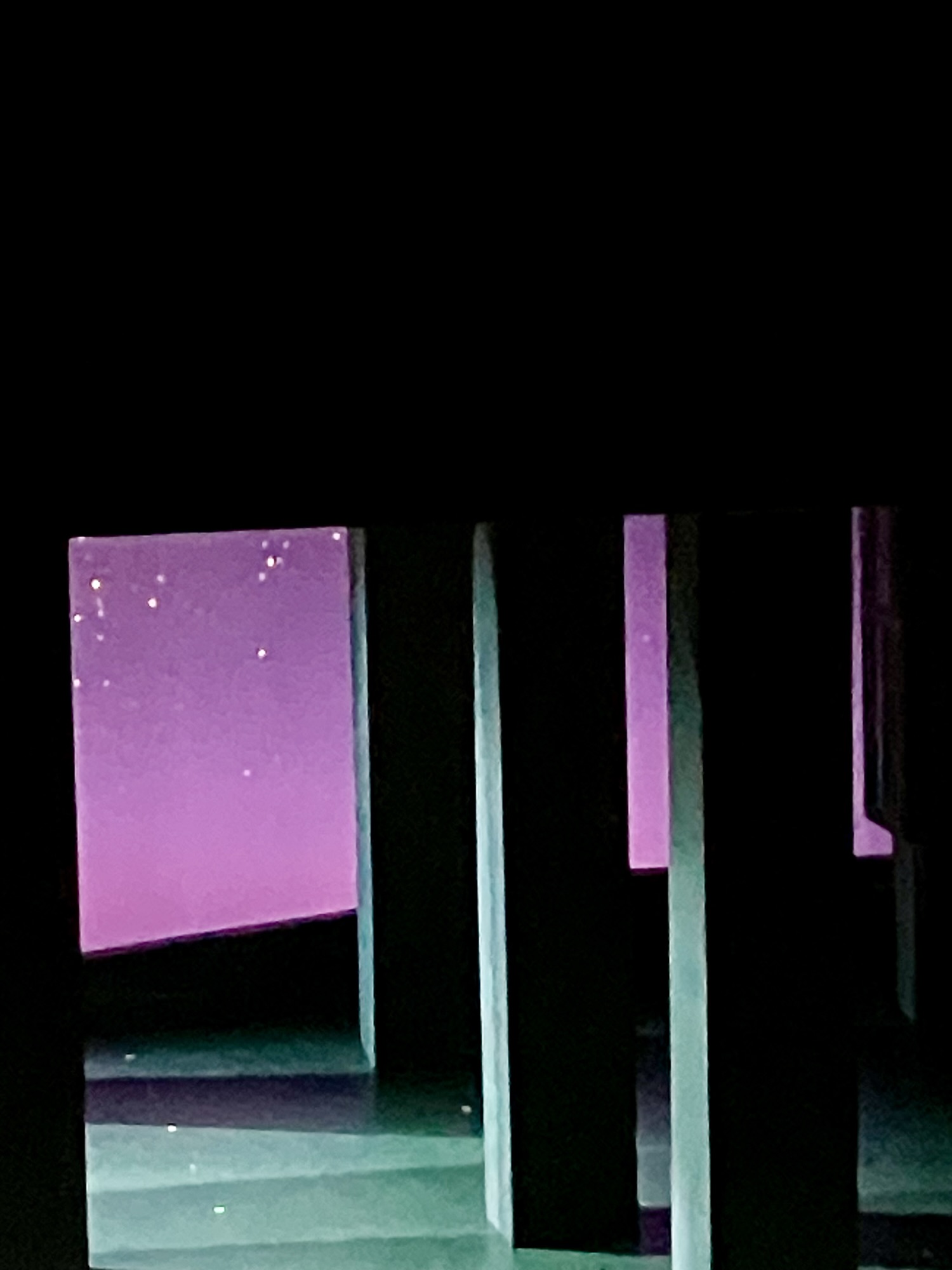
Le Parc. Avant tout une production réussie. Décors : Thierry Leproust. Lumières Jacques Chatelet.
On s’étonne alors d’invariablement décrocher en cours de route. Pourquoi ?
*
* *
C’est que la structure claire et précise du Ballet finit par tourner à la monotonie. Les jardiniers à la gestuelle mécanique, sortes de cheminots réparateurs de cet espace vert sur-artificialisé, apparaissent invariablement en début d’acte. Ils ouvrent et closent le ballet. Pourquoi pas. Mais ils auraient tout aussi bien pu intervenir au milieu des actes. L’agencement tripartite de l’œuvre conduit également le chorégraphe à rallonger inutilement la sauce à l’acte 3. Commencé dans une ambiance sonore ouatée et mystérieuse (Goran Vejvoda) qui s’accorde bien avec l’adagio sur un thème de Jean-Sébastien Bach qui lui succède et préparerait à l’abandon amoureux final, il est comme interrompu par un passage surexcité pour le danseur principal et quatre messieurs sur l’Allegro du Divertimento en si bémol K137. Fallait-il vraiment mettre l’accent sur l’égalité de durée aux dépens de la cohérence narrative ? On ne comprend pas comment le héros, monté sur ressorts quelques minutes auparavant, peut devenir l’amant à la fois apaisé et émotionnellement disponible du pas de deux final.
Le Parc montre d’une certaine manière les limites des collages musicaux. Ce défaut m’était d’ailleurs apparu dès 1994 lors de la tournée romaine. Le ballet était alors dansé sur de la musique enregistrée et l’artificialité des transitions soulignait le côté « liste de lecture » de la partition.
Mais une partition « faible » peut parfois soutenir un grand ballet. Qu’en est-il donc de la chorégraphie ? A l’origine, elle m’avait paru plaisante. Elle se présente comme une évocation de la danse baroque dans son acception la plus large. Les danseurs exécutent des ports de bras coquets et des moulinets de poignets pour faire mousser la dentelle de leurs chemises. La première partie, la rencontre du masculin et du féminin, avec ses groupes symétriques et en canon, n’est pas sans évoquer les ballets équestres de l’époque de conception de la Carte du Tendre. Les danseurs font même des petits pas de cheval. Pour le reste, le temps de Mozart correspond fort peu à l’époque et surtout à l’esprit des précieuses. La chorégraphie évoque d’ailleurs plus l’ère du préromantisme de Gardel que la danse noble de Beauchamp-Pécour (la Clélie de mademoiselle de Scudéry) ou même les prémices du ballet d’action de Noverre (qui travailla avec le grand Wolfgang sur Les Petits Riens). Les approches du couple principal pourraient évoquer une histoire du pas de deux dans le Ballet. Les danseurs évoluent d’abord en parallèle, comme pour un ballet à entrées, avant d’évoquer le menuet dramatique à l’origine du proto-ballet d’action pour enfin présenter des entrelacements des bras et des corps. Mais c’est peut-être un peu trop tirer Preljocaj vers la subtile érudition d’un Malandain. En fait, les citations baroques sont plutôt génériques et le chorégraphe se repose -beaucoup trop- souvent sur des éléments de théâtralité – regards entendus, marches circonspectes, pamoisons gracieuses- dans lesquels on ne peut s’empêcher parfois de voir du remplissage.
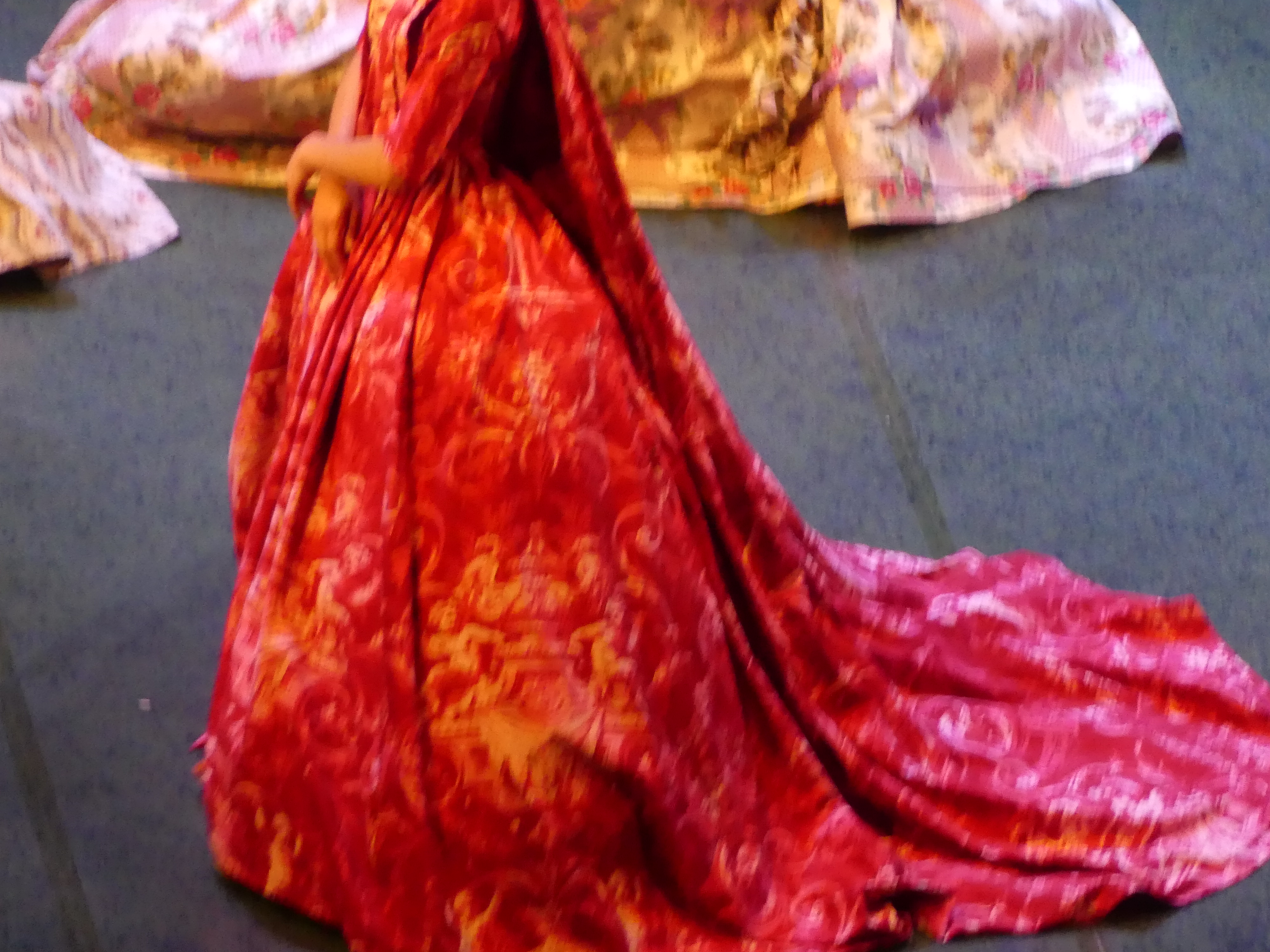
Le Parc. Avant tout une production réussie. Costumes Hervé Pierre
L’élément « contemporain » de la chorégraphie est quasiment inexistant. Lorsque les danseurs passent au sol, on ne dépasse pas les exercices de barre au sol que Roland Petit ou Serge Lifar introduisaient déjà dans leurs chorégraphies dans années 50. Même le passage du rêve de la jeune femme avec les quatre jardiniers au début de l’acte 3 était du déjà vu en 1994 : Balanchine l’avait expérimenté en 1954 dans Ivesiana (The Unanswered Question) et MacMillan l’avait rendu populaire avec son Pas chez Madame dans Manon en 1974.
Peut-être ce qui m’avait attiré il y a trente ans – «l’étiqueté contemporain » facile à digérer – est exactement ce qui aujourd’hui me tient à l’extérieur du ballet.
*
* *
Les souvenirs restent pourtant vifs. A l’époque, Isabelle Guerin et Laurent Hilaire, en alternance avec Elisabeth Maurin et Manuel Legris, tenaient les premiers rôles. Guerin était un mélange d’élégance de surface et d’animalité sous-jacente. Au moment de la défaite au jeu des chaises musicales, sa seule posture, très droite, le regard posé au sol, signifiait son humiliation outragée. Hilaire, quant-à-lui, était le parfait séduisant goujat qui allait être lentement éduqué et policé par la femme avant d’être révélé à lui-même dans la scène finale.
*
* *
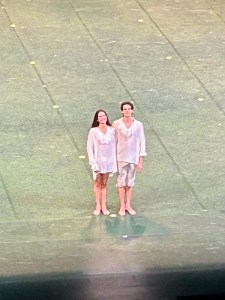
Le Parc. Hannah O’Neill et Germain Louvet
Les distributions vues lors de cette reprise ne nous ont pas tant convaincu et, en conséquence, ont moins masqué les faiblesses de la pièce.
Le 17 février, Germain Louvet, un peu minéral, est pétri d’élégance. Ses sauts manquent peut-être un peu d’envol mais on imagine qu’avec la partenaire adéquate, il aurait pu tirer quelque chose de son rôle. On sentait le vernis policé prêt à craquer des l’acte 1. Las, Hannah O’Neill reste pour sa part très extérieure dans le rôle de la jeune aimée. Durant la première partie, en l’absence de distribution et ayant oublié que la Principale porte une culote de velours rouge, notre regard s’est porté sur de nombreuses danseuses, mais pas sur elle. On pense même un moment que Sarah Kora Dayanova est l’étoile de la soirée. On aura pu au moins se concentrer sur de belles personnalités artistiques. Eléonore Guérineau est décidément primesautière et Hortense Millet-Maurin irradie de lumière sur scène.
Le couple principal ne communiquera pas vraiment de toute la soirée et le porté du baiser tournoyant du pas de deux final nous parait un peu trop athlétique pour émouvoir. On s’est ennuyé ferme.
Le 23 février, on adhère davantage. Letizia Galloni, qu’on remarquait déjà dans les ensembles le 17, était beaucoup plus dense qu’O’Neill en danseuse principale. On retrouvait cette animalité qu’on percevait chez Guérin, cette détermination aussi. Cela donnait une véracité accrue à la peinture des affres amoureuses de l’héroïne. Guillaume Diop n’est pas à ce stade de maturité d’interprétation mais il parvient à projeter un élan juvénile et des aspirations par le truchement de ses sauts faciles et de ses réceptions moelleuses. Le pas de deux final est beaucoup mieux amené par les deux artistes. Il y a une approche puis un déclic, notamment avec le porté inattendu en double tour vrillés de Galloni dans les bras de Diop ; l’absence de préparation apparente en préserve l’effet de surprise. Enfin, le long crescendo d’intimité culmine avec le baiser plané plus spirituel ici que physique.
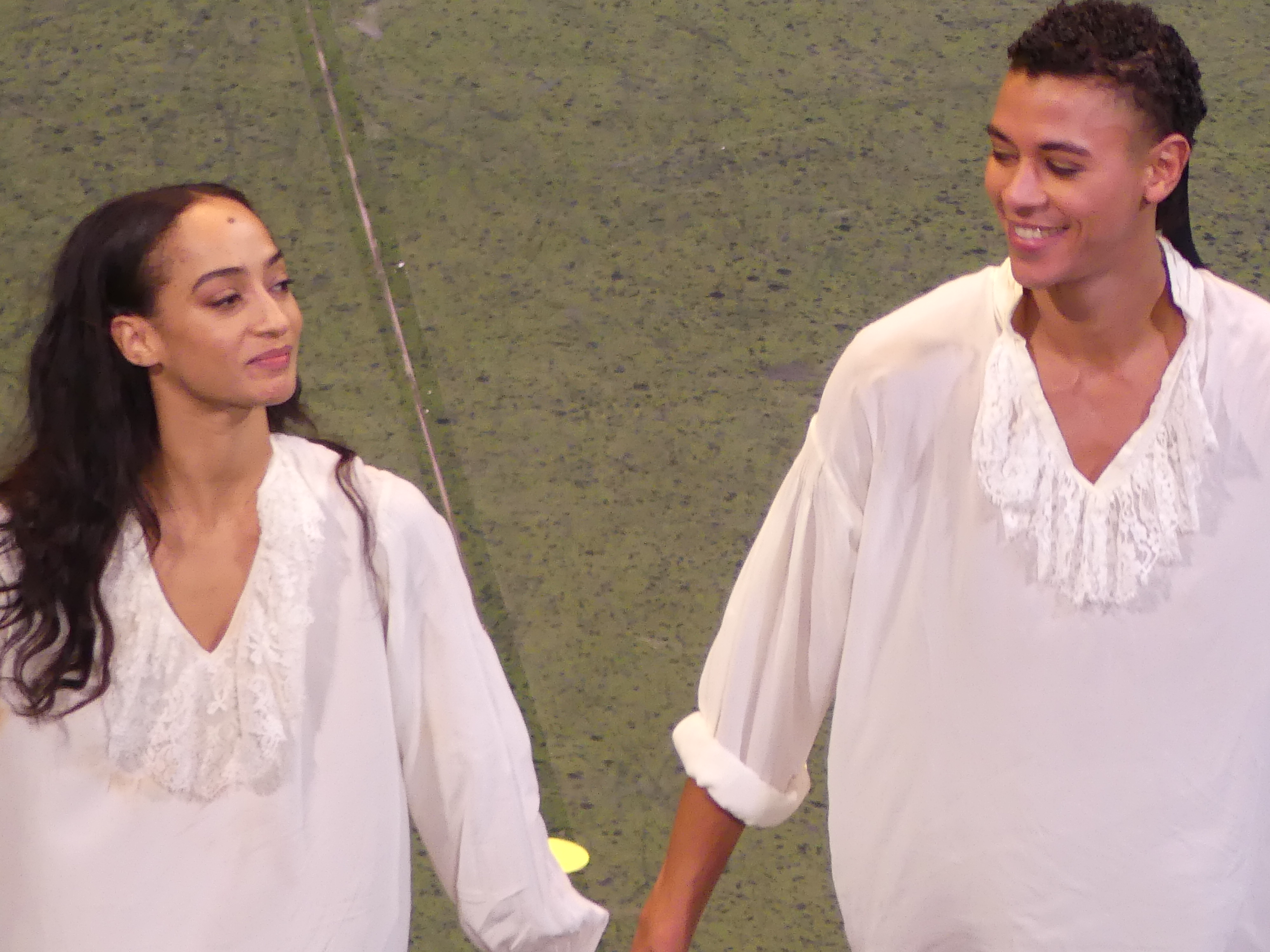
Le Parc. Letizia Galloni et Guillaume Diop.
La soirée n’est cependant, loin s’en faut, dénuée de longueurs et de redites. On s’est pris, là encore, à suivre des danseurs du corps de ballet : on a apprécié l’autorité scénique de Keita Belali, l’élégance naturelle de Fabien Revillion ou la précision chirurgicale de Chung Wing Lam dans les Jardiniers.
Mais finalement il reste certain qu’on ne courra pas à la prochaine reprise du Parc d’Angelin Preljocaj…
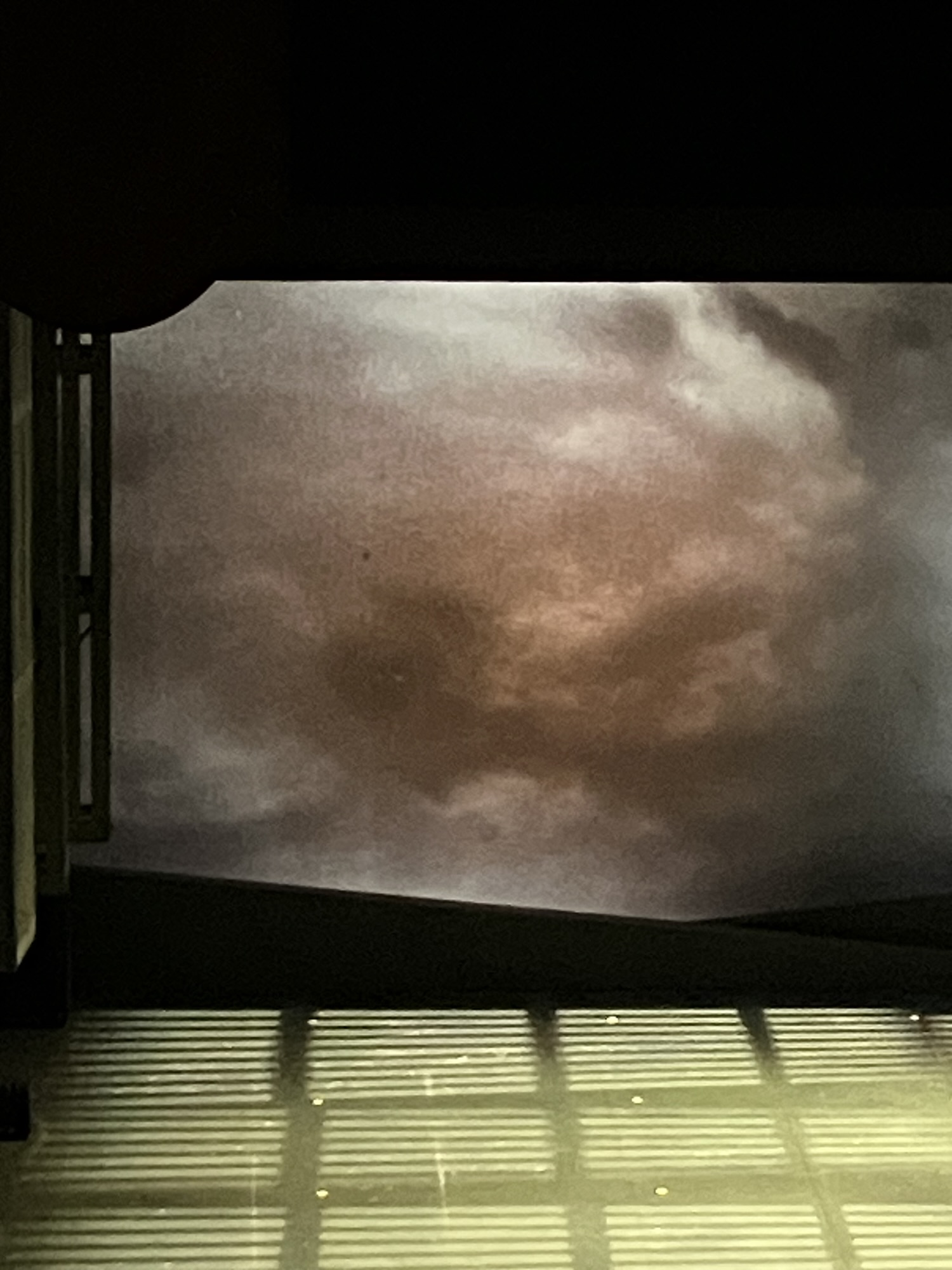
Le Parc. Avant tout une production réussie. Décors : Thierry Leproust. Lumières Jacques Chatelet.
 George Balanchine’s Theme and Variations, Mthuthuzeli November’s Rhapsodies, Christopher Wheeldon’s Corybantic Games.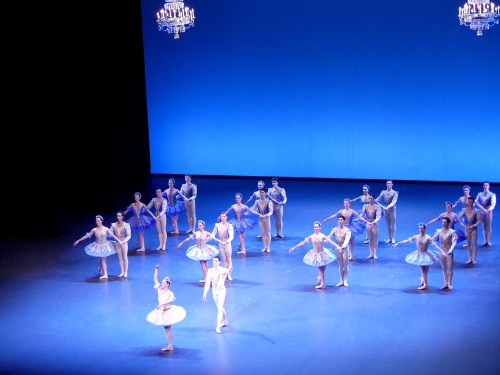
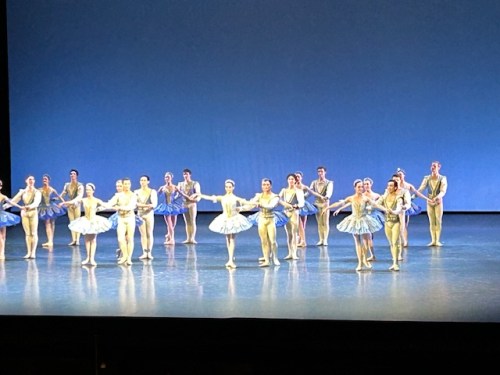


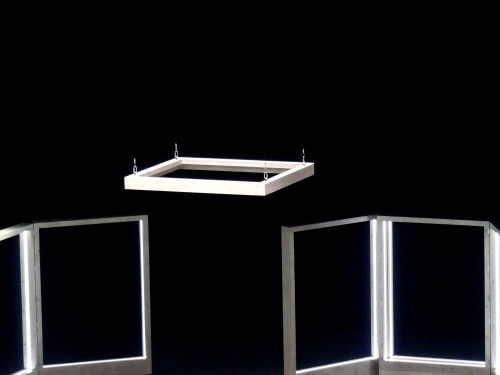


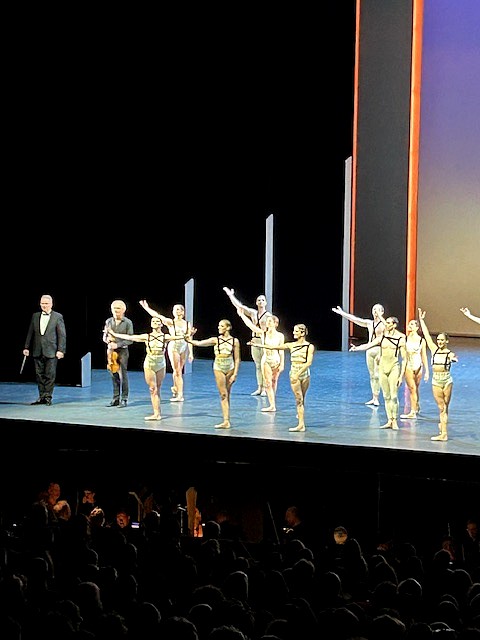
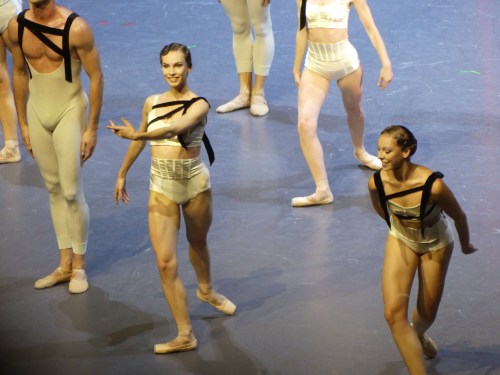

 Cléopold. Soirées du 26 octobre et du 1er novembre.

 Fenella : October 26th and November 1st.
 James : soirées du 25 octobre et du 10 novembre.
 Dans les ballets de Maurice Béjart, il n’y a jamais eu, de l’aveu même du chorégraphe lui-même, grand-chose de novateur en termes de technique. Comme souvent, les grands moments de renouveau dans le monde du ballet ne se jouent pas sur le dépassement des limites physiques de cet art mais sur un nouvel éclairage ainsi que sur des métissages réussis. Balanchine a exploré et poussé à l’extrême le ballet symphonique déjà en germe dans la Belle au bois dormant de Tchaïkovski-Petipa tandis que Lifar poussait à ses limites les volutes décoratives des Ballets russes. Plus tard, Forsythe a ajouté la structure en boucle des enchaînements ainsi que des départs de mouvements inspirés de la kinésphère labanienne au vocabulaire du ballet.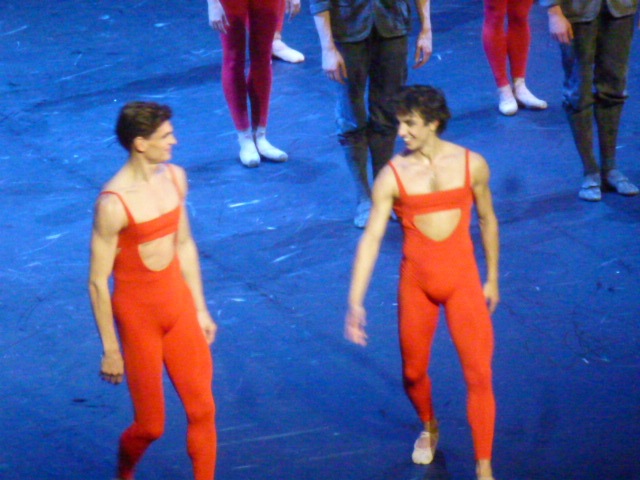




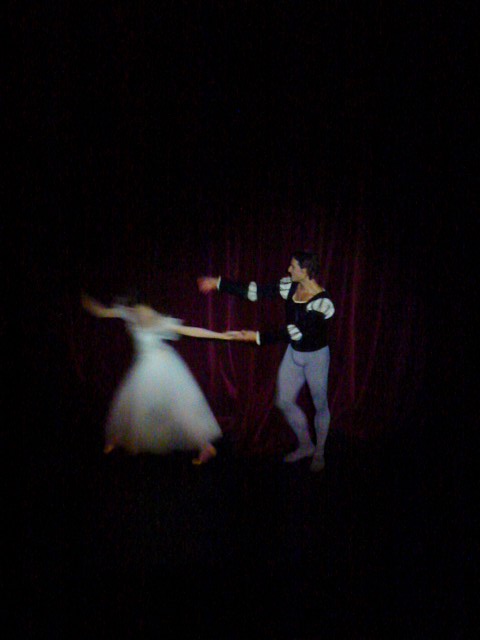 Ma première Giselle (le 3 juillet en matinée) possédait à peu près toutes les qualités qu’on attend à priori d’une Giselle. Dorothée Gilbert est une brune point trop grande avec une vivacité de bon aloi au premier acte mais aussi des pommettes légèrement creusées qui peuvent être compatible avec le modèle consomptif de l’héroïne. La délicatesse des lignes et des attaches convient parfaitement au deuxième acte.
  Le 4 juillet, avait lieu une prise de rôle bien tardive dans le rôle-titre. Alice Renavand, dont les adieux étaient programmés le 13 du même mois, est sans doute l’exemple même de tout le mal que peut faire le typecasting dans la trop courte carrière d’une artiste chorégraphique. Plutôt grande et respirant la santé, cataloguée contemporaine parce qu’après quelques années difficiles dans le corps de ballet elle a été choisie par Pina Bausch elle-même pour danser son Sacre, Alice Renavand a été peu vue dans des purs classiques. Elle a dansé
  Pour deux petites représentations dont une matinée, Myriam Ould-Braham clôturait la saison de Giselle le 16 juillet. Les voies du seigneur sont impénétrable et on se gardera bien de chercher les raisons qui ont fait qu’une danseuse émérite,
 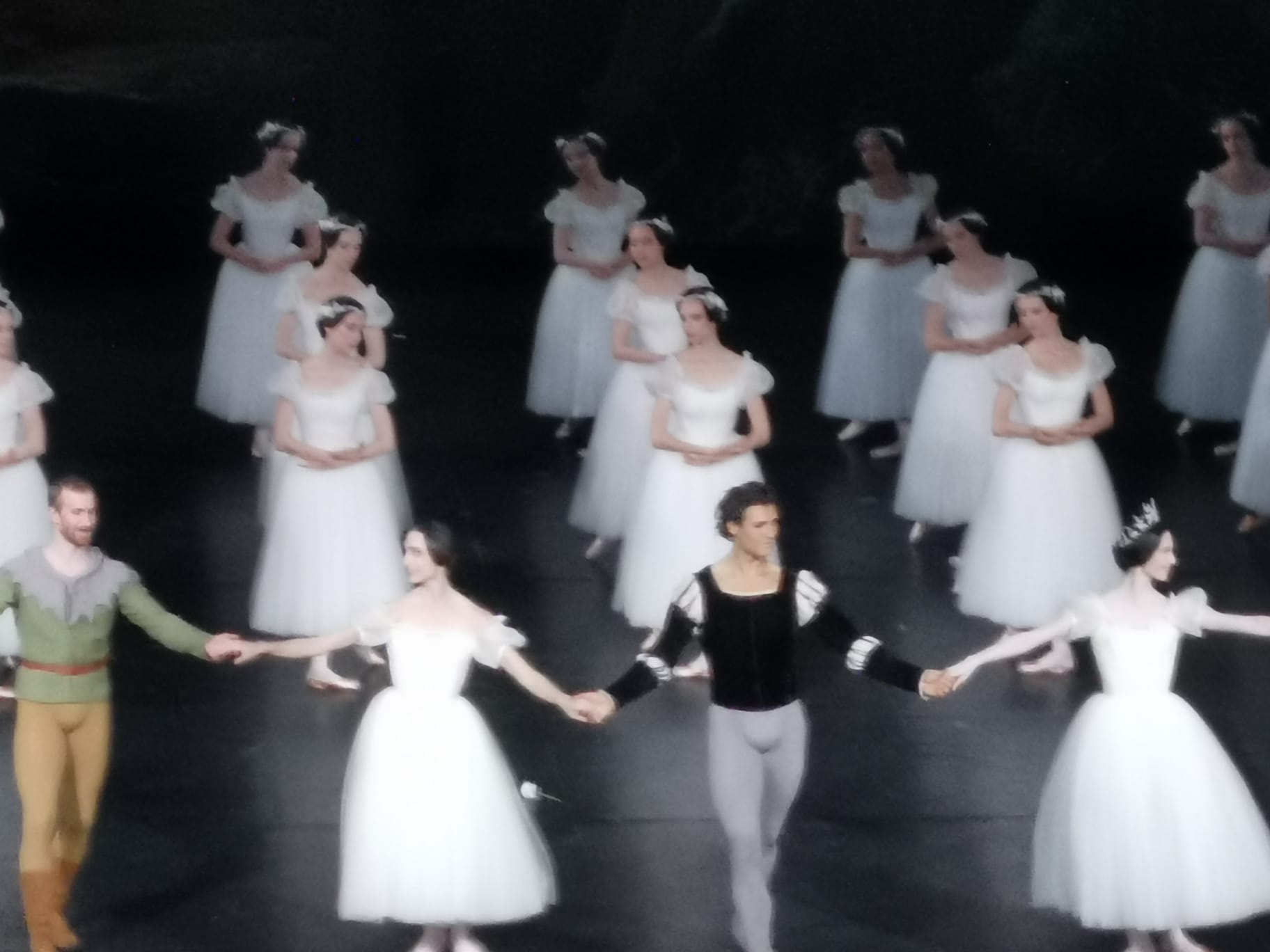 Opéra de Paris, représentations des 27 juin et 6 juillet 2022. Orchestre dirigé par Benjamin Shwartz.
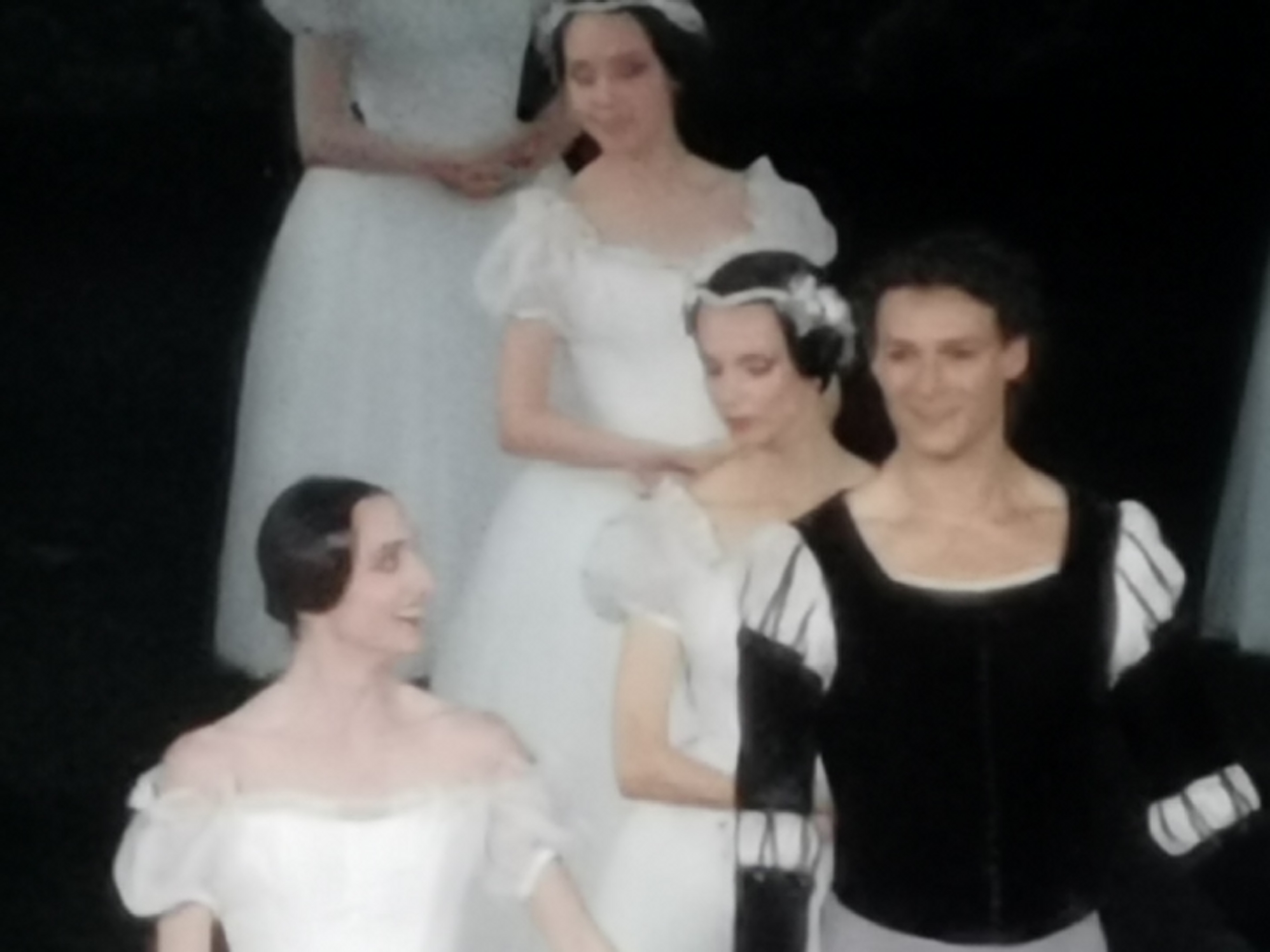 Gageons que Fabien Révillion pourrait en remontrer à la jeune génération, s’il n’assurait déjà le rôle d’Hilarion, dansé avec l’énergie du désespoir (et une pantomime un poil moins limpide que celle de Daniel Stokes quelques jours plus tard). Hannah O’Neill, vue en Myrtha sur les deux dates, conjugue irréalité lunaire et autorité royale.
 Au premier acte, Sae Eun Park ne semble prendre vie que quand Paul Marque la regarde : sa Giselle est comme éveillée par le désir de l’autre. C’est une option, mais qui campe le personnage du côté du terne là où l’on voudrait du charme. Du coup, on regarde plus Paul Marque, qui semble avoir gagné en présence : son visage n’est plus un masque (est-ce l’arête du nez qui est mieux dessinée ?). Mlle Park frappe toujours par un défaut de connexion organique entre les bras et le torse, et je lui trouve dans certaines diagonales un empressement a-musical (comme si elle disait, à la Ossipova : « que la musique me suive ! »). Lorsqu’au mitan de la fête, Giselle a un mini-arrêt cardiaque, la danseuse a des hoquets qui font signe vers Coppélia. Au second acte, les inflexions du cou et les bras en cloche sont très travaillés, mais le partenariat laisse froid. À certains détails, on comprend pourquoi : Mlle Park a des bras qui ne savent pas embrasser. Sa Giselle du second acte a peut-être compris le pardon, mais n’a pas l’expérience de l’amour. Et puis, la danseuse n’aide pas son partenaire : quand Dorothée Gilbert réapparaît pour un aller-retour de temps-levés-arabesque, soutenue par son acolyte, tout semble fluide et naturel, et le changement de direction en bout de course est miraculeusement aérien. Quand c’est Sae Eun Park, on voit l’effort du zigue qui porte, et rien du couple de scène n’est fusionnel. Dans un portrait récemment paru dans L’Équipe, Mlle Park nous apprend qu’elle a binge-watché Aurélie Dupont. Tout s’explique ! (6 juillet).
 Au soir du 29 juin, première de la distribution réunissant Dorothée Gilbert et Hugo Marchand, j’ai eu quelques minutes d’absence. En voyant un puissant Tybalt fendre l’espace, je me suis demandé : « mais qui est ce petit jeune qui danse si bien et ressemble à Mathieu Ganio, aérien sur la place du marché, terrien et viscéral dans la danse des chevaliers? ». À l’entracte, un coup d’œil à la feuille de distribution m’ôte les écailles des yeux : c’était Mathieu Ganio.


 James : « Qui ? Quoi ? C’est pas moi qué fé ça !»
 James : « Ah, oui, en effet.
 Le 7 décembre, Léonore Baulac s’essayait au rôle de Marguerite. On ne pouvait imaginer danseuse plus différente que celles dont nous avons pris l’habitude et qui sont en quelque sorte « commandées » par la créatrice du rôle, Marcia Haydée. Mademoiselle Baulac est très juvénile. Il aurait été dangereux d’essayer de portraiturer une Marguerite Gautier plus âgée que son Armand. Ses dernières interprétations en patchwork, depuis son étoilat, laissaient craindre qu’elle aurait pris cette option. Heureusement, mis à part peut-être la première variation au théâtre, un peu trop conduite et sèche, elle prend, avec son partenaire Mathieu Ganio, l’option qui lui convient le mieux : celle de la jeunesse de l’héroïne de Dumas-fils (dont le modèle,


 Le 14 décembre, c’était au tour de Laura Hecquet d’aborder le rôle de la courtisane au grand cœur de Dumas. Plus grande courtisane que dans « la virginité du vice », un soupçon maniérée, la Marguerite de Laura Hecquet se sait sur la fin. Elle est plus rouée aussi dans la première scène au théâtre. Le grand pas de deux en mauve est plus fait de vas-et-viens, d’abandons initiés suivis de reculs. Laura-Marguerite voudrait rester sur les bords du précipice au fond duquel elle se laisse entraîner. Florian Magnenet est plus virulent, plus ombrageux que Mathieu Ganio. Sa première entrée, durant la scène de vente aux enchères, est très belle. Il se présente, essoufflé par une course échevelée dans Paris. Son évanouissement est autant le fait de l’émotion que de l’épuisement physique. On retrouvera cette même qualité des courses au moment de la lecture de la lettre de rupture : très sec, avec l’énergie il courre de part et d’autres de la scène d’une manière très réaliste. Son mouvement parait désarticulé par la fatigue. A l’inverse, Magnenet a dans la scène au bois des marches de somnambule. Plus que sa partenaire, il touche par son hébétude.


 Le 19 décembre au soir, Amandine Albisson et Audric Bezard faisaient leur entrée dans la Dame aux camélias. Et on a assisté à ce qui sans doute aura été la plus intime, la plus passionnée, la plus absolument satisfaisante des incarnations du couple cette saison. Pour son entrée dans la scène de vente aux enchères, Bezard halète d’émotion. Sa souffrance est réellement palpable. On admire la façon dont cet Armand brisé qui tourne le dos au public se mue sans transition, s’étant retourné durant le changement à vue vers la scène au théâtre, en jeune homme insouciant. Au milieu d’un groupe d’amis bien choisis – Axel Ibot, Gaston incisif et plein d’humour, Sandrine Westermann, Prudence délicieusement vulgaire, Adrien Couvez, comte de N., comique à tendance masochiste et Charlotte Ranson, capiteuse en Olympe – Amandine Albisson est, dès le début, plus une ballerine célébrée (peut être une Fanny Elssler) jouant de son charme, élégante et aguicheuse à la fois, qu’une simple courtisane. Le contraste est d’autant plus frappant que celle qui devrait jouer une danseuse, Sae Eun Park, ne brille que par son insipidité. Dommage pour Fabien Révillion dont la ligne s’accorde bien à celle d’Audric Bezard dans les confrontations Armand-Des Grieux.
 James
James Albertina
 Cléopold
 Fenella
 Les Balletonautes
 Mini Naila
 Les Balletonautes