

Romeo & Juliet. Curtain calls. Guillaume Diop, Léonore Baulac and Company.
Paris Opera Ballet, Tuesday, June 15th 2021.
In the unexpected debut of Guillaume Diop — a youngster still only in the corps de ballet – he, along with his Léonore Beaulac, opted for a less-often used interpretation of the “star-cross’d lovers.” The sweet and tender thrum of their connection re-centered this ballet around youthful innocence rather than around the obsessive force of sexual desire. Shakespeare’s text leaves room for just how young these youngsters might be, even if he specifies that Juliet is a ripe thirteen…
Diop, de même que Léonore Baulac, a opté pour une interprétation moins usitée des amants « nés sous une mauvaise étoile ». Le doux et tendre continuo de leur connexion a recentré ce ballet autour de la juvénile innocence plutôt que de la force obsédante du désir. […]
“Love goes toward love, as schoolboys from their books.”
Guillaume Diop’s way of dancing reminds me of the Hugo Marchand of maybe five years ago. Like Marchand back then, Diop has style already and everything else ready to go. Unaffectedly expansive épaulement giving you the impression that his arms actually start down there at the belly-button. Long legs performing effortless and unpretentious, but huge, leaps that end in silent and soft landings only to then extend out into high arabesques without any ostentation or exaggeration. But, like Marchard back then, Diop just needs to concentrate a little bit more on enriching the control of his feet. Not that his are limp, not at all, he can certainly point them but…if he could just send a bit more energy down there and out from there, play more with the relevé, he could give them the same force as those of his unostentatiously powerful hands. And yes he will need to continue to burnish and polish those little details that only come from practice (holding on to turn-out when coming out of a phrase).
At the tender age of twenty (when men’s bodies only become fully mature and resilient around age twenty-three), Diop proved that he is already a reliable and attentive partner: reactive, confident and not stiff. With a few more years of experience in the spotlight, it is clear that he will make his partnering really swing.
But what matters more than these details is that Diop already holds the stage. He demonstrated that technique is meant to be a means, not an end in itself.
So now let us revisit the dramatic events.
Guillaume Diop […] comme l’Hugo Marchand d’il y a 4 ou 5 ans […] a déjà tout et même un peu plus ; des épaulements généreux sans être affectés qui vous donnent l’impression que ses bras sont connectés à son nombril, de longues jambes exécutant des sauts faciles et sans prétentions, quoique prodigieux, s’achevant dans de silencieuses réceptions pour enfin se développer en hautes arabesques sans ostentation ni exagération aucune. Mais comme Marchand alors, Diop doit se concentrer un peu plus pour enrichir le contrôle de ses pieds ; non pas qu’ils soient mous, car il les pointe tout à fait… mais on aimerait qu’il y transmette un peu plus d’énergie… […]
Au tendre âge de 21 ans, […] Diop s’est montré un partenaire solide et attentif : réactif, sûr de lui et sans raideur. […] [La pratique de la scène] donnera à son partnering plus de « swing ».
Diop a déjà la maîtrise de la scène. […]
“O! That I were a glove on that hand/That I might touch that cheek.
When Léonore Baulac’s Juliet pulled the curtain back on the Nurse having sex, her reaction was not about awakened senses but definitely about “eew that’s icky, I don’t want it.”
In the “morning after the wedding night” scene, here it was not about “I am physically-sated and I want more of this action until the end of days.” Instead, the rapport between R&J made you imagine that during all those hours in the dark, what they had been getting up to was exactly what you had once done: stayed up all night whispering more intently than you’d had ever even talked to anyone before, clinging to each other, whispering so as not to wake up the parents. While certainly a bit of exploring boobies and more kissing were probably involved, you sensed their innocence remained intact. My mind drifted back to a childish pact that was once sacred: make a tiny cut, smear pinkies together = blood brothers for life. The French have a great expression for this. You have discovered your “âme soeur,” your soul-mate.
Au lendemain de la nuit des noces […] R&J vous donnaient l’impression que, durant ces heures passées dans le noir, ce qu’ils avaient fait n’était rien d’autre que ce que nous avons tous fait jadis : veiller toute la nuit, murmurant intensément comme on ne l’avait jamais fait avec quelqu’un d’autre, restant collés et chuchotant de peur d’alerter les parents. Bien que cela ait sans doute entraîné un peu plus de frotti-frotta et de gros palots que d’habitude, on sentait que leur innocence était intacte. […]
“A word and a blow”
As Rosalind, a role where you don’t move very much and that has come to constitute an artistic ghetto unto itself for talented ballerinas (Isabelle Ciaravola was stuck in it for years), Hannah O’Neill gave this avatar a pleasing and cheery “oh well why the hell not” elegance.
Lady Capulet and Tybalt had clearly connived to protect Juliet from this mean and ugly world from the day she was born, but you saw nothing Oedipal in their interactions. Emilie Cozette’s pensive and emotionally-exhausted Lady Capulet made me wonder whether she too had once been a headstrong Giulietta with all the joy since worn out of her. Her impulsive slap at Juliet’s refusal to marry Paris, as well as her shocked reaction to her own gesture, illustrated that of a loving mother undone by her so-far-so-perfect child’s first public tantrum. Indeed, the most rough-handed and grouchy person in the room kept turning out to be Yannick Bittancourt’s heavy-spirited Paris.
Florian Magnenet’s Tybalt was in no way sadistic nor mean either. You could just imagine him as a strict but benevolent pater-familias of six clingy kids six years hence. He, too, cared more about protecting his little cousin than about the whole big fat fuss between the Capulets and Montagues. You could sense that the whole “us vs. them” had bloomed out of provincial boredom [Verona, even today, is a very, very, small town] and that everyone involved in the feud took it only half-seriously.
In the same interpretive vein, Pablo Legassa’s shimmering and sharp-legged Mercutio was “the guy no one can really get mad at.” [Legassa is so ready to play real leading roles, his body and soul are in that “sweet spot.”] And Marc Moreau’s “I get the joke, guys” Benvolio gave real bounce to the repartee of the boys. As Benvolio, “the nice guy,” too many dancers get too serious and fade into the background while mentally preparing to catch “the big guy’s” grand anguished backward leaps in Act III. While the back-flips were smoothly-managed rather than frightening, this fit the rapport that had been established between this sweet-dreaming Romeo and this “I have so got your back” Benvolio.
So the duel between Tybalt and Mercutio took on a specific vibe, more school-yard fight between two people saying “don’t be such an ass-hat” than the predictable fight to the death, which made their deaths all the sadder.
Rosalinde : Hannah O’Neill plaisante et joviale
Emilie Cozette, une lady Capulet pensive et émotionnellement épuisée m’a fait me demander si elle n’avait pas été jadis une Giulietta entêtée. […] Yannick Bittancourt Pâris : grognon et la main lourde. Autoritaire.
Le Tybalt de Florian Magnenet : ni méchant ni sadique. Un père de famille strict mais bien intentionné.
Le Mercutio scintillant au jeu de jambe acéré de Pablo Legassa / Marc Moreau : Benvolio, « j’ai compris la blague, les gars ! » donnait parfaitement la répartie aux autres personnages.
Du coup le duel entre Tybalt et Mercutio prit une résonnance particulière, plus querelle de cours d’école que […] prédictible combat à mort, ce qui a rendu leur mort plus triste encore.
“O! She doth teach the torches to burn bright!”
Léonore Baulac’s Juliet floated on this bubble of love and friendship and good humor. She was that well-brought-up girl whose biggest personal challenge so far had been always winning the dare of “who will jump off the swing at its highest and land the furthest out!”
From the ballroom scene to the balcony scene to the bedroom scene each step of the interplay between these two reminded me of the infinite possibilities that Breughel the Elder’ proffers in his “Children’s Games” {Kunsthistorisches Museum, Vienna}. It’s there in the choreography, but usually highlighting “patty-cake” suffices for most dancers. Here, while watching the dancers I started to make an inventory of references and to float back to those happiest days of childhood. Oh, hop-scotch, marbles, summersaults….just like when we were all just kids.
As the gentleness of a Tony from West Side Story infused Diop’s Romeo– absolutely a dreamy kid rather than a teenager with raging hormones — his connection to Baulac [she can become so responsive to what her partner is all about] replaced the expected over-heated sensual excitement with something often more true in real life: that lower-key mutual vibe that is the secret for lasting marriages. Your adored partner is in fact your best friend. This does not mean these young people were devoid of strong emotions, quite the opposite.
“When he shall die,/Take him and cut him out in little stars,/And he will make the face of heaven so fine.”
Cute detail: just before kissing Juliet for the first time, Diop’s mouth went wow into an adorable “O” as he inhaled. It was really like that boy aiming his face at you for his first kiss ever, not quite certain where it would land. So sweet.
An oft-cited quote from Nureyev speaks of a boy evolving into a man because of a young woman who “decides everything. She is passionate, head-strong, and more mature than he is.” Here with Guillaume Diop and Léonore Baulac, it was the opposite: a young man and a young woman who are equals in naïvité, equally astonished by a fate they had not anticipated. Neither really wanted to die, but just felt too ashamed to go and talk to their parents and ask for help.
Ces deux-là m’ont évoqué les infinies possibilités que Breughel le jeune présente dans sont « Jeux d’enfant » du Kunsthistorisches Museum de Vienne.
[…]
Le Roméo de Diop est plus un enfant rêveur qu’un adolescent tourmenté par sa poussée d’hormones. Sa connexion à Baulac a remplacé l’attendue excitation des sens par quelque chose de plus réaliste dans la vraie vie : cette connexion plus modérée qui est le secret des mariages qui durent. […] Un jeune homme et une jeune femme qui sont égaux en naïveté, également stupéfiés par ce sort qu’ils n’ont pu anticiper ; aucun des deux n’a jamais vraiment voulu mourir mais ils étaient trop timides pour confronter leurs parents et leur demander de l’aide.
The next day, I began describing what I saw to James. “Ah,” he said, “At the end, then, you wanted them to live so much you were ready to send them a link to a suicide hotline?” Yes, indeed. All of these kids – from Romeo to Juliet to Tybalt to Mercutio to Paris down to the Friar’s messenger – so totally didn’t deserve to, or want to, or need to, die.

Pieter Breughel the Elder : « Children’s Games ». Kunsthistorisches Museum, Vienna.


 Résumé des épisodes précédents : La réflexion sur le manque de diversité du corps de ballet de l’Opéra de Paris doit éviter plusieurs écueils. La
  Quand la ballerine entre en scène, son identité personnelle est littéralement exposée, et chaque spectateur est un ethnologue-amateur cumulant les indices – prénom, nom, visage et carnation – ainsi que les informations glanées dans la presse. Cette connaissance « hors-scène » peut colorer de tendresse le regard qu’on porte sur certaines d’entre elles (quand Dorothée Gilbert apparaît, j’entends l’accent toulousain), mais il s’agit d’un sentiment fugitif qui cède bientôt la place à l’essentiel : sa personnalité artistique.
 Par ailleurs, j’observe qu’il y a une différence entre mobiliser des données dans une logique de connaissance, et le faire avec un objectif de gestion. Dans le premier cas, il s’agit d’un travail scientifique, qui pourrait être conduit avec toute la rigueur de la

 Résumé des épisodes précédents : Contestant les

 Le second axe de la « réforme substantielle » du concours d’entrée à l’École de danse préconisé par la mission Ndiaye-Rivière consiste en une révision des « critères anatomiques de sélection ». Mais la suggestion reste floue, et pose un gros souci de logique.
 Résumé de
  Rappelons – puisque le rapport Ndiaye-Rivière n’en donne aucun – les chiffres étonnants qu’analyse Joël Laillier dans Entrer dans la danse (CNRS Éditions, 2017): en 2010, les petits rats étaient « massivement issus des franges les plus aisées et les plus cultivées de la population », avec 54% de parents occupant un emploi de cadre ou parmi les professions intellectuelles supérieures (alors qu’à l’époque cette catégorie ne représentait que 16,6% de la population active). L’auteur souligne notamment le poids de l’origine culturelle et artistique des élèves (beaucoup ayant des parents qui sont eux-mêmes artistes, architectes, journalistes, directeurs de théâtre etc.).
 On n’est pas sûr de pouvoir percer le mystère. Notamment parce que les études historiques manquent, mais aussi parce qu’en matière de parcours de danse, les bifurcations peuvent survenir vraiment très tôt.
 Mais justement, il est possible que ces occasions de rencontre aient plutôt diminué qu’augmenté depuis trente ans.
 À quand remonte la dernière tournée en province du ballet de l’Opéra, compagnie qui se veut pourtant nationale ? Pourquoi, depuis plusieurs années, faut-il compter sur des initiatives annexes de membres de la troupe (comme 3e étage, la compagnie animée par Samuel Murez) pour voir des danseurs de l’Opéra de Paris se produire dans de petites salles d’Île-de-France ? On a vraiment l’impression qu’un crétin issu du marketing a convaincu un jour Brigitte Lefèvre et son équipe que l’Opéra étant une marque, il lui fallait devenir rare et exclusive, comme un sac à main Louis Vuitton.
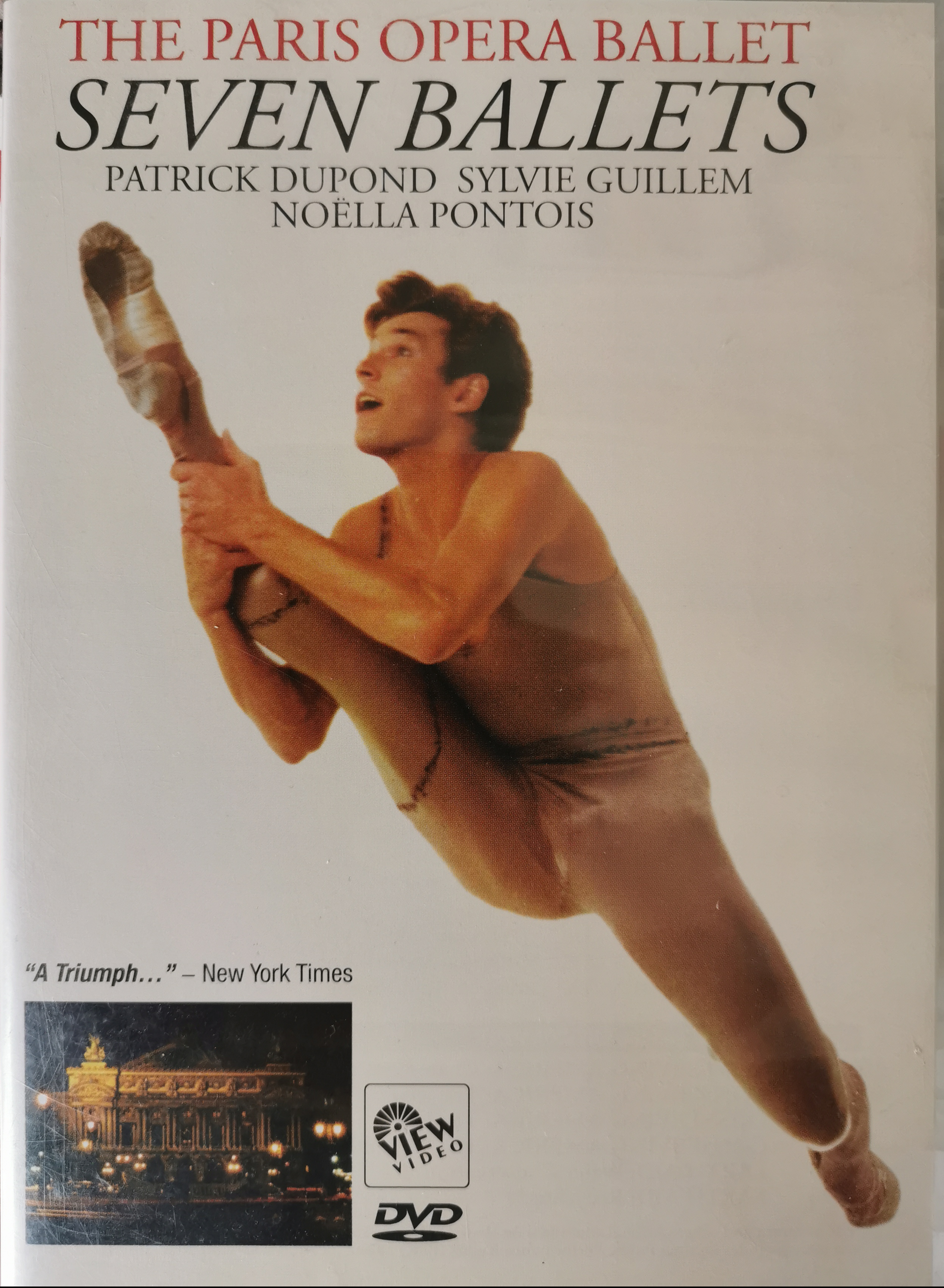 Quoi qu’il en soit, et rétrospectivement, la fin des années Noureev et l’éviction de Patrick Dupond ont peut-être marqué le début d’une éclipse du ballet en tant que spectacle grand public, touchant au-delà du cercle des initiés, à travers les retransmissions télévisuelles, notamment.
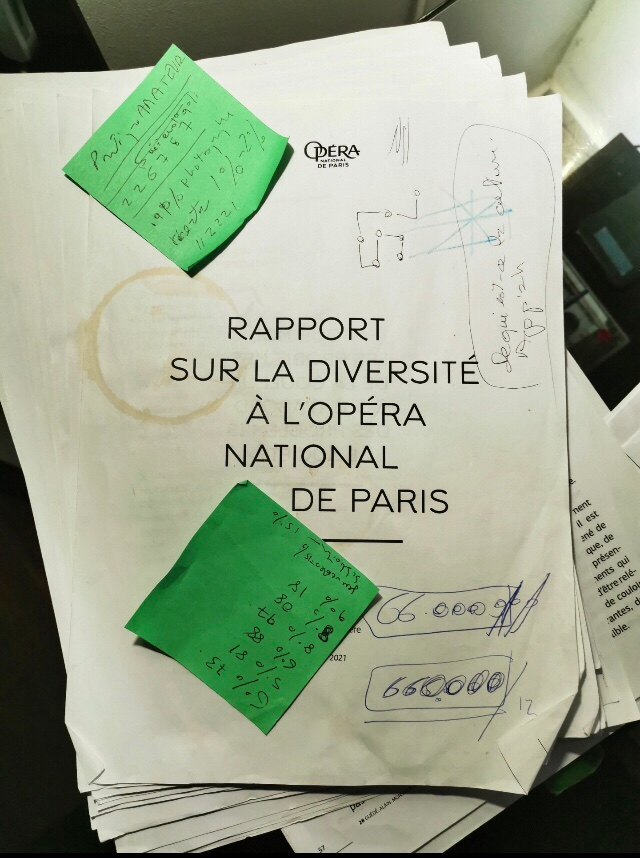 J’ai enfin lu le Rapport sur la diversité à l’Opéra national de Paris ! Qu’on me pardonne, au moment de sa parution, le style empesé et les poncifs enfilés comme des perles du texte signé par Pap Ndiaye et Constance Rivière m’ont fait caler au second paragraphe. Après avoir lu des platitudes du genre « tradition, excellence, pouvoir, tout cela a contribué à ce que l’Opéra soit, ou apparaisse, comme un lieu fermé, réservé, sur la scène comme dans les salles », j’ai laissé tomber et m’en suis tenu aux résumés faits, ici et là, dans la presse nationale.
 Soyons clair, c’est le type même d’explication holistique qui repose sur un monceau de postulats invérifiables, sans pour autant s’ancrer dans le réel.
 Implicitement, le rapport adopte donc un raisonnement de nature socio-économique. Cependant, les formulations adoptées reviennent à considérer le recrutement à l’École de danse comme s’il s’agissait de l’École Polytechnique. Écrire que sa gratuité « a permis un recrutement dans des milieux sociaux populaires au 19e siècle et jusqu’au lendemain de la Seconde Guerre mondiale et parfois encore aujourd’hui » est pour le moins incongru.

 Les Balletonautes