
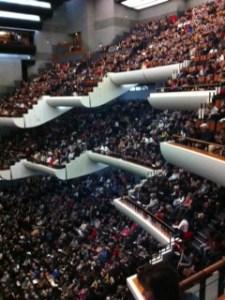
 Nureyev’s Don Quichotte at the Bastille Opera, December 14th, 2017
Even though I had heard rumors, actually seeing the two exchange conniving glances made me instantly go all soap opera: “My God, Mathias really IS cheating on Myriam with Ludmila! Where’s my damn phone? Brenda won’t believe this!”
But seriously, the alchemy of partnering is so elusive and that of casting here so labyrinthine that it’s been a very long time since the Paris Opera Ballet has let a couple blossom undisturbed. Each time I find out that my cast for a ticket bought blind would pair Mathias Heymann with Myriam Ould-Braham, I let out a little whoop. The way they fit together in every sense makes me hope they – and some others – will bring back the glory days when one said: “Thesmarnard” or “Loudilegris.”
(P.S. The POB has just got to do something about their arrogant assumption that when you buy tickets you’re just buying into a brand name. No company does this anymore, and the POB itself didn’t used to. During one run a while back, I wound up with all of one cast’s performances…and no tickets for the other four casts. Exchanging tickets with friends this time around resulted in a similar lulu).
« She’s as headstrong as an allegory on the banks of the Nile. »*
Our rival Kitri, Ludmila Pagliero, is not the kind of woman to sweep up a floor with her fan. She prefers to float above it and play with her phrasing, full of infectious good cheer. Like the rest of the cast, she elegantly avoided any florid “hispanic” flourishes. However, if controlling your fan is considered something Spanish, Pagliero nailed it, as she nailed every other technical challenge with the same unassuming grace and aplomb. She took the fan as extension of her body to the point of — during the coda of the final pas de deux — doing the fouettés with one: opening it as if it were the most natural thing to do during the doubles, shutting it down with equal ease for the singles.
« No caparisons, miss, if you please. Caparisons don’t become a young woman.”*
So, to get back to the affair, I liked/appreciated/oohed and laughed along with this couple throughout the entire evening. They were superb in their slapstick. Heymann channeled Charlie Chaplin at all the right moments with gorgeously flexed feet; Pagliero’s unerring precision – a key to comedy – made the house guffaw. As when she danced Paquita, she just has a way of making small gestures read all the way up to the top of the house.
But, even if I grinned throughout, I didn’t fall in love. Why? Is it simply that their proportions don’t reflect each other in the da Vinci way as Heymann’s limbs and timing almost eerily echo Ould-Braham’s? There is no question that Heymann-Pagliero were a couple in their own way. But no elusive mystery here, no catch-me-if-you-can. Heymann and Ould-Braham push the air away with their développés; and Pagliero is all about a teasingly lush raccourci. She’s more Michelangelo, as it were. But sometimes an outie and an innie can indeed work together. These two gave us the pleasure of watching a lovely and healthy adult relationship (the way she just abruptly, albeit super sensuously, plopped down on the big scarf on the floor in Act II and he equally abruptly, albeit super sensuously, fell upon her confirmed the manner in which they had been dancing/interacting with each other so far. These kids had been sleeping together for a good while now, grinning while taking turns stealing the covers).
“There’s a little intricate hussy for you!*
From Mrs. Malaprop’s lips to your ears.
Richard Brinsley Sheridan’s “The Rivals,” 1775.
 Don Quichotte (Minkus / Noureev d’après Marius Petipa). Représentation du mercredi 13 décembre 2017 (Myriam Ould-Braham, Karl Paquette, Alice Renavand, Dorothée Gilbert).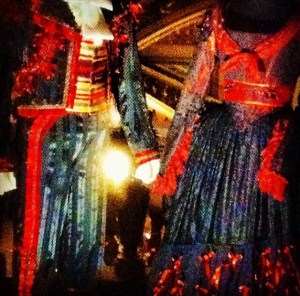


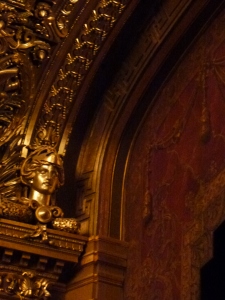
 Agon/Grand Miroir/Le Sacre du printemps.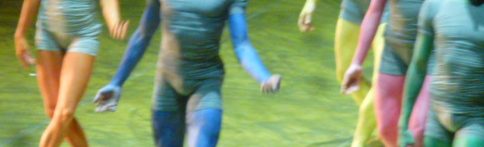
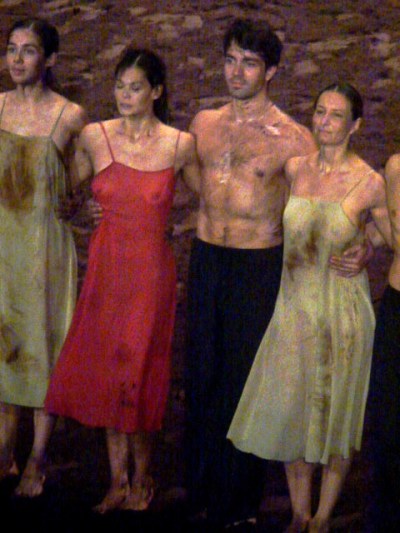
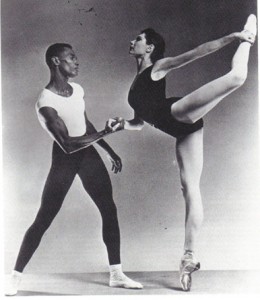
 Soirées Balanchine Teschigawara Bausch. Ballet de l’Opéra de Paris. Palais Garnier. Vendredi 3 novembre et samedi 4 novembre 2017.


 Dans son « Complete Stories of the Great Ballets », Balanchine parle très peu de la chorégraphie mais beaucoup de la musique de Tchaïkovski.


 L’Opéra a joué de malchance cette saison avec Rubis puisque deux de ses étoiles masculines majeures ont dû déclarer forfait ; tout d’abord Josua Hoffalt, qui n’a même pas pu défiler le soir de la première, puis Mathias Heymann qui a abandonné une à une ses dates, non seulement sur Rubis mais également sur Diamants. Il a fallu se passer du charme un peu macho de l’un et de la féline élasticité de l’autre.


 Émeraudes est incontestablement le maillon faible des Joyaux de Balanchine. Le chorégraphe, féru de cuisine et de métaphore culinaires, le concevait sans doute comme une mise en bouche avant le surprenant plat de résistance constitué par Rubis et le somptueux dessert de Diamants. Mais plutôt qu’une entrée, nécessaire après tout dans tout repas bourgeois qui se respecte, il a plutôt concocté un apéritif. Émeraudes reste en effet composé d’éléments aussi hétérogènes que la saucisse seiche et le gruyère placé dans le même ravier et consommé avec un verre de sangria suivi d’un de vin cuit.



 James
James Albertina
 Cléopold
 Fenella
 Les Balletonautes
 Mini Naila
 Les Balletonautes