Archives de Tag: Swan Lake

My Nights at the POB (2024 Spring / Summer collection)

A classical ballet, just like a classic book you’ve reread many – many ! – times, almost never fails to delight you again when you rediscover it. Here are some of my most recent ones at the Paris Opera ballet.

Hannah O’Neill and Germain Louvet: a most pleasant discovery

P1200303Don Quichotte on March 27th

For a while now, I’d been unconvinced by the pairing of Hannah O’Neill with Hugo Marchand. His large presence overwhelmed her and their lines and musicality did not match. He made her look small and quite pallid, which is odd considering that the smaller Gilbert never did. Maybe it’s because Gilbert is clearly a fighter while O’Neill’s persona is more demure?

But who else could she dance with? Germain Louvet? Pairing them in Don Q on March 27th proved splendid: their lines and timing and reflexes completely in synch. They even giddily broke the line of their wrists exactly when the music went “tada.”

But Don Q is a comedy.

Up until now, for me, Germain Louvet only lacked one thing as an artist: gravitas. It was impossible to find fault with his open-hearted technique, but somehow I always got the feeling that he wasn’t quite convinced when he played a prince. Some part of him remained too much a stylish young democrat of our times.

His acting could reminded me of how you tried to keep a straight face when you got cast as Romeo at an all-girl’s high school.  You tried really, really hard, but it just wasn’t you.

P1200201

Germain Louvet (Basilio) et Hannah O’Neill (Kitri).

*                                        *
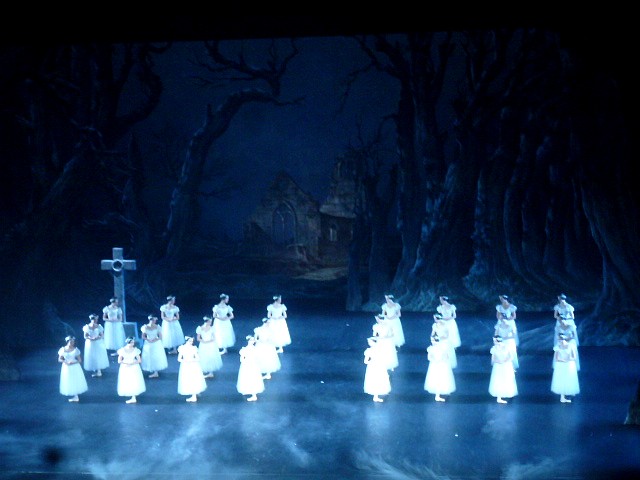
P1200348

Giselle. Saluts

Giselle on May 28th

Then something happened when Louvet stepped out on the stage on May 28th. Here was a man whose self-assurance seemed worldlier, tougher, critical distance gone. Within seconds in his pantomime with Wilfried, Louvet “was” that Old-World well-mannered man used to being obeyed and getting what he wants at any restaurant. I was convinced.

And it all came together when Hannah O’Neill answered his knock-knock.  A healthy, normal girl with no secrets who has clearly been warned about men but who has decided – on some level to this Albrecht’s surprise – that he is a good man.

Everything about O’Neill’s Giselle, from her first solo onwards, breathed restraint and modesty. She was the kind of girl who speaks so softly you cannot help but lean in to her.  Louvet’s Albrecht clearly felt this.

Once again, every little danced detail matched. But more than that, these two were literally inside the same mental space. Both of them reacted strongly to Berthe’s narrative:  O’Neill spellbound and Louvet taking that cautionary tale personally, as if Giselle’s mother had just put a hex on him. Later, when Giselle shows him her big new diamond pendant, Louvet managed the degrees of that multileveled reaction of “I must not tell her she has a scorpion crawling on her chest just yet.” And none of this felt like he was trying to steal the spotlight. He was really in the moment, as was she.

Antonio Conforti’s Hilarion had also been believable all along, his mild state of panic at the growing romance evolving into fear for her life. (His Second Act panic will be equally believable). When Conforti had rushed in as if shot out of a cannon to put a stop to the romance, you could see how Giselle knew that he was no monster. This nice Giselle’s inability to disbelieve anyone made her mad scene all the more poignant. No chewing of the scenery, her scene’s discreet details once again made us want to lean in and listen.  Giselle’s body and mind breaking down at the same time was reflected in the way O’Neill increasingly lost control, even the use, of her arms. She took me directly back to one awful day when I was crying so hard I couldn’t breathe and walked straight into a wall. Utter stunned silence in the auditorium.

Louvet’s differently shaped shock fit the character he had developed. You could absolutely believe in the astonishment of this well-bred man who had never even put one foot wrong at a reception, much less been accused of murder.

Woman, Please let me explain
I never meant to cause you sorrow or pain
So let me tell you again and again and again

I love you, yeah-yeah
Now and forever*

In Act II, you had no need of binoculars to know that the regal Roxane Stojanov  was the only possible Queen of the Wilis. Her dance filled the stage. Those tiny little bourrées travelled far and as if pulled by a string. She seemed to be movingNOTmoving. Her reaction at the end of the act to the church bells chiming dawn — a slow turn of the head in haughty disbelief — made it clear that this Queen’s anger at one man, all men, would never die. Clearly, she will be back in the forest glade tomorrow night, ready for more.

I was touched by the way Louvet’s Albrecht was not only mournful but frightened from the start. It’s too easy to walk out on the stage and say “just kill me already.” It’s another thing to walk out on the stage and say “I’ve never been so completly confused in my entire life.”

Woman, I can hardly express
My mixed emotions at my thoughtlessness
After all, I’m forever in your debt…*

P1220482

Hannah O’Neill et Germain Louvet (curtain call)

*                                        *
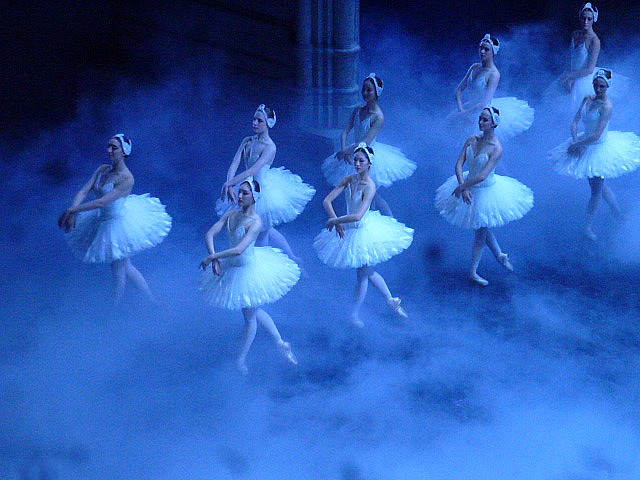
P1220593Le Lac des cygnes on June 27th

O’Neill’s unusual interpretation of Odette – under-swanned and unmannered – reminded me of Julia Roberts saying ,” “I’m just a girl standing in front of a boy asking him to love her.” No diva here. O’Neill’s swan/princess had not only been captured but promoted queen against her will. All she wants is to be seen as a normal girl. I think this take on the role might have put out some in the audience nourished by that awful horror movie’s over the top clichés. Once again I fell for the rich nuances in this ballerina’s demure and understated authority.

And here was Germain Louvet again! Elegant, well-mannered, gracious, and absolutely un-melancholy. His prince was not self-involved, yet regal with a kind of natural elegance that set him apart. I’ve met people like that.

Louvet’s at ease Siegfried just wants to dance around with his friends and has never thought much about the future.  Often the Queen Mother scene just seems like an intertitle in a silent movie: basic information needed to make a plot point. The acting can be light, as in Paris the dancers cast as queen mothers are mostly ten to fifteen years younger than their sons. Young Margaux Gaudy-Talazac, however, had believable authority and presence.  I cannot put my finger on exactly what she and Louvet did and when, but what developed was clearly the Freudian vision Nureyev had had for this ballet in the first place. “Why do you want me to go find a woman? I’m just fine here with you, mommy.” This Siegfried’s rejection of the Act Three princesses was preordained no matter what. What a pity, then, that Thomas Docquir’s flavourless Wolfgang and stiff Rothbart gave all the others little to work against.

Back to no matter what… But what if a woman unlike all other women actually exists? Hey, what if even dozens of them are lurking out there just outside the windows? Louvet’s tiny gesture, stopping to stroke a tutu as if to check it were for real as he progressed in through the hedgerow of swan maidens, made these thoughts come to life.

O’Neill and Louvet’s courtly encounters were like the water: no added ingredients, pure and liquid. O’Neill kept her hands simple – the way you actually do when you swim– and Louvet gently tried to get in close enough to take a sip but she kept slipping away from him. As he gently and with increasing confidence pushed down her arms into an embrace, you could sense that she couldn’t help but evaporate.

Their lines and timing matched once again. But I wondered if some in the audience didn’t find this delicately feminine and recognizably human Odette too low energy, not flappy enough? But she’s a figment of HIS imagination after all! This Siegfried was in no need of a hysteric and obviously desired someone calm, not fierce. [This brings me back to what doesn’t work in Marchand/O’Neill. He may appreciate her in the studio, but on stage he needs a dancer who resists him].

As Act Three took off, I found myself bemused by when I do focus, and when I don’t focus, on how this production’s Siegfried is dressed in bridal white. Louvet’s character was indeed both as annoyed and then as anguished as an adolescent. No other betrayed Siegfried in a long time has buried his face in his mother’s skirts with such fervor.

Nota Bene: All nights, in the czardas, the legs go too high. The energy goes up when it should push forward. This ancient Hungarian dance is not a cancan.

As Odile, O’Neill once again went for the subtle route. Her chimera played at re-enacting being as evanescent as water, now punctuated with little flicks of the wrist. Louvet reacted in the moment. “She’s acting strangely. Maybe I just didn’t have time last night to see this more swinging side to her?”

In Act Four, O’Neill’s Odette was no longer under a spell, just a girl who wants to be loved. No other Siegfried in a long time has dashed in with more speed and determination. As they wound and unwound against each other in their final pas de deux of doom I wondered whether I’d ever seen Louvet’s always lovely partnering be this protective. The only word for his partnering and persona: maternal.

It wasn’t a flashy performance, but I was moved to the core.

And woman
Hold me close to your heart
However distant, don’t keep us apart
After all, it is written in the stars*

*John Lennon, “Woman.” (1980)


P1220592

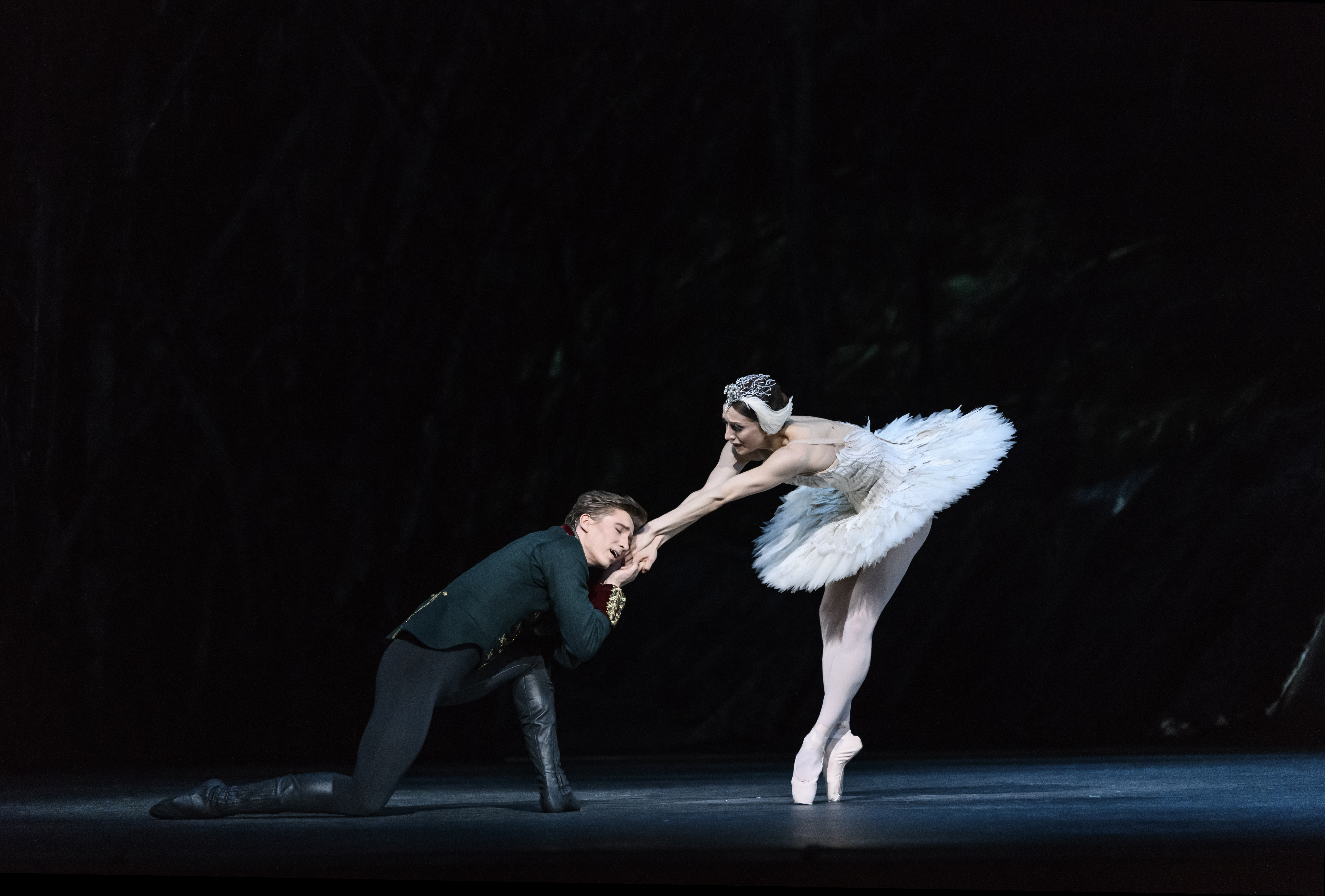
Le Lac des cygnes. Hannah O’Neill (Odette/Odile) et Germain Louvet (Siegfried).

*

 *                                       *

Sae-Eun Park : I found her and then lost her again

Gisele May 17 Sae-Eun Park and Germain Louvet
P1220423During Giselle, what I’ve been looking for finally happened. Before my eyes Sae-Un Park evolved from being a dutiful baby ballerina into a mature artist. And her partner, Germain Louvet (again!) whom I’d often found to be a bit “lite” as far as drama with another goes, came to play a real part in this awakening.

But this was not the same Albrecht, to boot. From his first entrance and throughout his dialogues with Wilfried, words from an oldie began to dance around at the back of my brain:

Well, she was just seventeen
You know what I mean
And the way she looked
Was way beyond compare
So how could I dance with another
Ooh, when I saw her standing there?*

I almost didn’t recognize Park. All the former technical mastery was still in place but it suddenly began to breathe and flow in a manner I had not seen before. She came alive. All her movement extended through a newfound energy that reached beyond from toes and fingertips and unblocked her already delicate lines. Her pantomime, her character, became vivid rather than textbook. I’ve been waiting for Park to surprise herself (and us) and here she demonstrated a new kind of abandon, of inflection, of fullness of body.

Well, she looked at me
And I, I could see
That before too long
I’d fall in love with her
She wouldn’t dance with another
Ooh, when I saw her standing there*

Throughout the ballet, Louvet and Park danced for each other and not for themselves (which had been a weakness for both to grow out of, I think). Park’s acting came from deep inside. From inside out for once, not demonstrated from without. During her mad scene, I simply put my notebook down.

Act 2 got off to a… start. Sylvia Saint-Martin clearly worked on controlling all the technical detail but danced as harshly as is her wont for now. The disconnect between her arabesque, torso, and abrupt arms, the way she rushes the music, the way her jumps travel but don’t really go anywhere…everything about her dance and stage presence just feels aggressive and demonstrative from start to stop. She finally put some biglyness into her last manège, but it was too late for me.

Well, my heart went « boom »
When I crossed that room
And I held her hand in mine

Oh we danced through the night
And we held each other tight*

There was a different kind of emotional violence to Germain Louvet’s first entrance, reacting to THIS Giselle. Along with the flowers, he carried a clear connection to the person from Act One onto the stage. You don’t always get the feeling that Giselle and Albrecht actually see each other from the backs of their heads, and here it happened. Both rivalled each other in equally feathery and tremulous beats. Their steps kept echoing each other’s. Park’s Giselle was readably trying to hold on to her memories, and moved her artistry beyond technique.  This newfound intensity for her was what I’d long hoped for. I am still impressed by how visible she made Giselle’s internal struggle as the dark forces increasingly took control of her being and forced her to fade.

I left the theatre humming as if the thrum of a cello and the delicate lift of the harp were tapping on my shoulder.

Now I’ll never dance with another, Ooh.*

*The Beatles, “How Could I Dance With Another?” (1963)
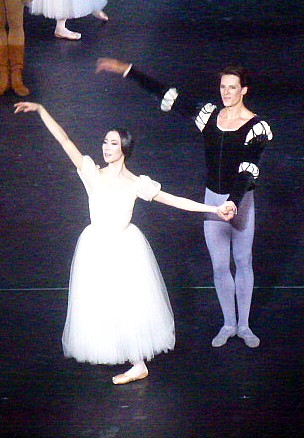
P1200388

Sae-Eun Park (Giselle) et Germain Louvet (Albrecht)

*                                        *

Swan Lake, Sae-Un Park with Paul Marque on June 28th

P1220597However, this performance saw the ballerina go back into comfort mode.

In Act 1 Pablo Legasa, as the tutor Wolfgang aka Rothbart, instantly asserted his authority over Siegfried and the audience understood in a way that it hadn’t with  Docquir whose presence didn’t still does not cross the footlights . Legasa’s tutor gleefully set up the about-to be-important crossbow as he slid it into Marque’s hands, just as he would later use that cape better than Batman. Most Rothbarts manipulate the Loïe Fuller outfit like a frenemy, at best.

The little dramatic nuances matter. Whereas Louvet’s Siegfried hadn’t really wanted to rock the boat much during Act 1 — so to be fair Docquir didn’t have that much to do — tonight Legasa repeatedly denied Paul Marque, whose Siegfried is more of a regular guy, any escape or release without express permission.

Paul Marque doesn’t possess the naturally elongated lines of Germain Louvet, but that isn’t a problem for me. Marque’s vibe feels more 19th century: dancing at its best: a restrained yet elevated 90 degrees back then was the equivalent of 180 now and every step he makes is as clearly outlined as if it popped out of an engraving. The way he worked up towards making the last arabesque in his solo arch and yearn gave us all we wanted as to insight into the internal trauma of the character.

In Act 2, Sae-Eun Park finally arrived to the delight of her fans.  She gave a very traditional and accomplished classic rendering of Odette, replete with big open back, swanny boneless wings/arms, took her time with the music and became a beautiful abstract object in Siegfried’s arms. Her solo was perfectly executed. Could I ask for anything more? Maybe?

You have to make it work for you. O’Neill remained a woman, a princess trapped in some kind of clammy wetsuit and gummy gloves that covered her fingers. Park outlined and gave a by the book performance of the expected never having been a human swan. But at least now she dances from the inside out and her arms do fully engage in dialogue with her back.

I loved the way this Siegfried reacted to all the swans. “What? You mean there’s more of them?” Marque, as in Act One, then chiselled a beautifully uplifted variation that felt true to Nureyev’s vision in the way a synthesized centeredness (thesis) encounters and surmounts a myriad of unexpected changes in direction (antithesis). Very Hegelian, was Marque’s synthesis.  Bravo, he made philosophical meanderings come alive with his body.

These lovers are lulled into the idea that escape is possible and will happen soon.

In Act 3, Legasa continues to lead the narrative. He is clearly whispering instructions into Odile’s earbud while also utilizing his cape and hands as if they were remote control.. For once Rothbart’s solo did not seem like a gratuitous interruptionsreplete with awkward landings. The pas de deux can in fact be a real pas de trois if that third wheel unspools his steps and stops and brings out the underlying waltzy rhythm of the music. Legassa tossed off those double tours with flippant ease and evil father-figure panache. Nureyev would have loved it.

Park’s Odile? Marque recognized his Odette instantly. Park did everything right but only seemed to come into her own in her solo (from where I was sitting). Even if her extended leg went up high and she spinned like a top, at the end of the pas de the audience didn’t roar.

“When Siegfried discovered he has both betrayed and been betrayed, Louvet, like a little boy, he wrapped his arms desperately tight around his mother.” Why did I write that in my notebook at the exact moment when I was watching Paul Marque in the same pantomime? I don’t quite remember, but I think it was because “mama” wasn’t what anything was about for him.

In the last Act, while Legasa acted up a storm, Marque remained nice and manly. The night before, Germain Louvet had really put all his energy into seeking Odette and fighting back against the forces of darkness. He really ran after what he wanted. Marque is maybe just not as wild by nature. Or maybe he just stayed in tune with Park? In Act 4, Park did fluttery. Lovely fluttery arms and tippy-toes that stayed on the music and worked for the audience. I observed but didn’t feel involved.

For me, only Pablo Legasa made me shiver during this Park/Marque Swan Lake. I found myself wondering what Park would have done IF a more passionate dancer like Legasa – as Louvet had been recently for her Giselle – had challenged her more. Now that I think back, Marque, too, had hit a high dramatic level when recently paired with Ould-Braham in Giselle. Maybe it’s time to end “ParkMarque.”  I like them both more and more, just not together.

P1220546

Le Lac des cygnes. Sae-Eun Park (Odette/Odile) et Paul Marque (Siegfried).

*

 *                                       *

Héloïse Bourdon: The Treasure that’s been hiding in plain sight.

You may say I’m a dreamer
But I’m not the only one*

P1220572Swan Lake, Héloïse Bourdon and Jerémy-Loup Quer, on July 12th

Then on July 12th, something long anticipated didn’t happen. Again. As she had way back then on December 26th, 2022, Heloïse Bourdon gave yet another stellar performance as Odette/Odile in Le Lac des Cygnes. At the end, as the audience roared, so many of us expected the director to come out and finally promote Bourdon to étoile (star principal). Instead all we all got do was shuffle out quietly and once again go home to wash off what was left of our mascara.

If anyone managed to find the perfect balance between woman and swan this season, it was Bourdon.  Even in the prologue, this princess showed us that she felt that danger prickling down the back of her neck just as an animal does.

As the curtain rises after this interlude, Jeremy-Loup Quer’s Siegfried puts his nightmare aside and is feeling just fine with his friends. He will later prove rather impervious to his mother’s admonitions and more boyishly cheered by her gift of the crossbow. Then, there was the moment where he looked intently at his baby throne only to turn his back on it in order to stare out of once of the the upstage window slits.

This Siegfried’s melancholic solo was infused by a kind of soft urgency, where the stops and starts really expressed a heart and mind unable to figure out which way to go. Touchingly, Bourdon would echo exactly this confused feeling in her solo in the Second Act, bringing to life the idea that Odette is both a product of Siegfried’s imagination and indeed a kindred soul.

As Wolfgang the Tutor, Enzo Saugar had made his entrance like a panther, a strong and dark-eyed presence with threateningly big hands. I instantly remembered his first splash on the stage as a very distinctive young dancer in Neumeier’s Songs of a Wayfarer at the Nureyev gala last year .  Alas, as of now, Saugar continues think those eyes and those splayed fingers suffice. This works at first glance, but goes nowhere in terms of developing a coherent evening-long narrative. He just wasn’t reactive. He was performing for himself.

So thank goodness for Heloïse Bourdon. As Odette, she uses her fingers and wrists mightily as well, but with variety and thought. Hers was a woman and swan in equal and tortured measure. When she encounters Siegfried, he is clearly instantly delighted and she is clearly a woman trapped in a weird body who hestitanly wonders whether he could actually be her saviour.

Whereas Louvet’s Siegfried had seemed to say when the bevy of swans had filled the stage, “What? The world has always been full of swans?! This is like so unbelievable,” Quer seemed to be saying, as with the Princesses later: “Pleasure to meet you, but for me there is only one swan and I’ve already found her.”

 I’d have to agree. Bourdon glowed from within without any fuss, and this was magnified by the unusual way she used her arms. Some dancers don’t connect their arms to their backs, which I hate. When dancers make their arms flow out from their backs this gives their movements that necessary juice. But here Bourdon’s arms had a specific energy that I’ve rarely seen. It flowed and contracted inward in waves from her fingers first and then pulled all the way back into her spine. I was convinced. That’s actually how you do feel and react when you are injured.

Throughout the evening, whether her swan was white or black, these two danced for each other, including not leaving the stage after a solo and staying focused for their partner from a downstage corner.  Whether in Act Two or Four, each time Rothbart tried to rip her out of Siegfried’s arms via his spell, this couple really fought to hold onto each other.  You could understand this prince’s bewilderment at a familiar/unfamiliar catch-me-if you-can Odile. (Perfectly executed, unbelievably chiselled extensions, fouettés, etcetera, blah blah, just promote her already).

Like Giselle, this Odette knew her hold on life was fading as the end of the last act approached. The energy now reversed and seemed to be pumping out from her back through her arms and dripping out of her hands and beyond her control. This Siegfried, like an Albrecht, like someone in a lifeboat, kept begging his beloved to hold fast.

The Paris Opera’s management may be blind, but the audience certainly wasn’t. I saw a lot of red eyes around me as we left the theatre in silence. Oh what the hell. As long as Heloïse Bourdon continues to get at least one chance to dance a leading role per run I can dream, can’t I?  Next time, how about giving her a Giselle for once?

Imagine there’s no heaven
It’s easy if you try
No hell below us
Above us, only sky*

*John Lennon, “Imagine” (1971).

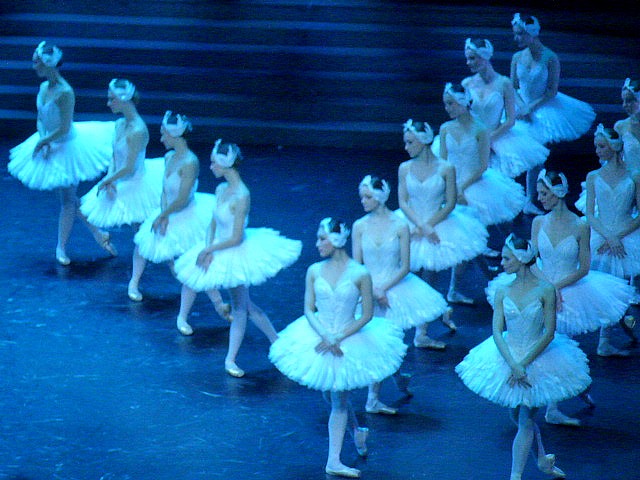
P1220639

Le Lac des cygnes. Héloïse Bourdon (Odette/Odile) et Jeremy-Loup Quer (Siegfried).
1 commentaire

Classé dans Retours de la Grande boutique

Le Lac des cygnes 2022 : des deux côtés du miroir

P1180569Dans la lecture de Rudolf Noureev, souvent décrite comme « psychanalytique », le lac n’est qu’une vision dans l’esprit troublé du prince ; trouble,  provoqué par le conflit oedipien que lui impose son précepteur (Wolfgang au premier acte et Rothbart aux trois suivants).
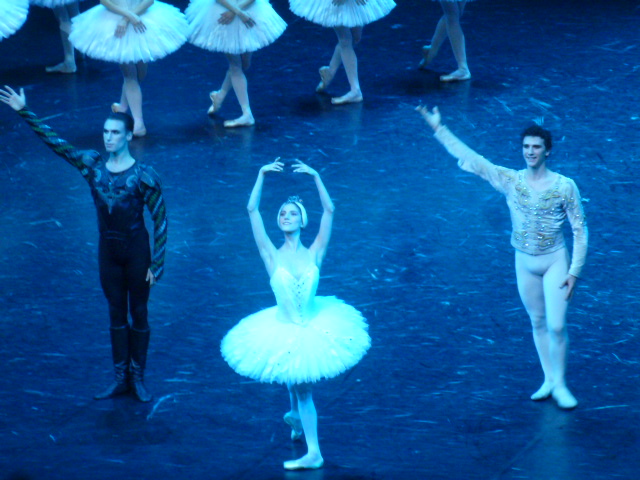
Lors de la soirée du 16 décembre dernier, j’avais donc été contrarié par l’absence de synergie entre  Siegfried et son Rothbart.

*

 *                                          *

Rien de tout cela lors de la soirée du 23 décembre. Guillaume Diop est, de par sa grande jeunesse, un prince poulain ou agneau qui regarde son précepteur avec de grands yeux naïfs. Le côté vert de ce prince est renforcée par sa silhouette, à la fois tellement proche des standards opéra mais encore si frêle qu’on s’étonne de la voir maîtriser presque tous les difficultés techniques de cette version Noureev. Mais ce qui aurait pu être ressenti comme un manque de maturité a trouvé un sens grâce au danseur qui interprétait Rothbart ce soir-là : le très beau et singulier Pablo Legasa.

Pendant tout le prologue et l’acte 1, même lorsqu’il est immobile, on a du mal à détacher son regard du danseur. Le visage de Lagasa, d’une longueur et d’une angularité accentuée pour l’occasion, le fait ressembler à un oiseau de proie même lorsqu’il est affublé des oripeaux du précepteur Wolfgang. Voilà un serviteur qui ne quitte jamais des yeux froids sa pupille. Ses interactions avec la reine (la très pertinente Lucie Mateci), sa rivale en influence auprès du prince, sont glaciales.

Celles avec le prince mettent mal à l’aise à force d’être incestueuses. Durant le pas de deux qui clôt l’acte I, alors qu’il a déposé le prince à genoux, Wolfgang Legasa plaque ostensiblement sa main droite sur l’arrière du cou du prince puis lui tourne autour sans la retirer. Lorsqu’il lui donne l’arbalète, il pose sa joue contre celle de son élève, préfigurant en version dévoyée, le contact à la fin du pas de deux de l’acte 2 entre Odette et Siegried. Enfin avant de le laisser partir à la chasse, il se met front à front avec lui.

Ce rapport est tellement fort, qu’au bord du lac, on ne doute pas un seul instant de l’irréalité d’Odette (Dorothée Gilbert) plutôt une incarnation de la féminité mûre – non pas qu’elle fasse plus âgée mais bien parce qu’il y a chez elle une plénitude qu’on comprend que recherche le prince – que femme oiseau de chair et de sang.

Dans le fond de Scène, Pablo-von Rothbart agite ses grandes ailes en musiques comme s’il faisait corps avec l’orchestre (lequel est malheureusement fort mou et imprécis depuis le début de cette série).

A l’Acte III, Legasa est toujours très présent et pas seulement concentré sur sa variation qu’il danse d’ailleurs de manière magistrale, avec une pointe de sècheresse bienvenue. Il met beaucoup d’acuité dans la pantomime du parjure, semblant littéralement couper la parole à la reine méfiante. On semble ensuite l’entendre dire, « nous sommes bien d’accord, tu veux jurer de l’aimer ET de l’épouser ». Confronté à ce magicien et à une Odile- Dorothée sereine et enjouée dans sa toute puissance (Les doubles tours attitude pris sans précipitation dans sa variation, contrairement à d’autres danseuses de cette reprise 2022, en sont une illustration), Siegfried-Guillaume, très efficace techniquement mais personnage immature et naïf, n’a aucune chance d’échapper au piège qui lui est tendu.

L’acte IV en devient d’autant plus déchirant. Pris par l’action, on ressent la complainte du corps de ballet et on s’émeut du pas de de deux entre la femme cygne résignée, vision déjà pâlissante, et le jeune inconscient qui veut encore y croire. Tout cela n’est qu’un rêve qui tourne au cauchemar. La réalité est encore une fois ramenée par le magicien de Pablo Legasa qui, pendant la confrontation finale, reproduit exactement le front à front du pas de deux masculin qui clôturait l’acte 1. Cela donne le frisson. Le précepteur-magicien préfère briser son jouet que le voir s’émanciper…

On ne peut s’empêcher de penser que sans ce vecteur Rothbart, le contraste de maturité dramatique entre Dorothée Gilbert et Guillaume Diop aurait pu être un obstacle à notre adhésion à l’histoire.

P1180620

Pablo Legasa (Rothbart), Dorothée Gilbert (Odette-Odile) et Guillaume Diop (Siegfried)

*

 *                                          *

Quelques jours plus tard, le 26 décembre, Pablo Legasa passait de l’autre côté du miroir puisqu’il interprétait à  son tour Siegfied.

Son prince semblait entièrement infusé de son expérience encore récente mais si parfaitement aboutie du maléfique magicien-précepteur. Il régissait plus comme s’il avait comme partenaire son propre Rothbart que celui de Thomas Docquir (prometteur, déjà à l’aise techniquement notamment dans la redoutable variation de l’acte 3, mais à la proposition dramatique encore imprécise).

Durant le premier acte, on pouvait sentir l’inconfort, l’appréhension et même la peur que le prince ressentait dès que son tuteur s’approchait : son dos et son cou se raidissait ostensiblement. La variation de la fin de l’acte I est ainsi déjà une confrontation. Siegfried-Pablo résiste aux impulsions imposées par Wolfgang comme il tentera de le faire plus tard à l’acte IV.

P1180636

Thomas Docquir (Rothbart), Héloïse Bourdon (Odette-Odile) et Pablo Legasa (Siegfried).

Si le Siegfried de Diop était indécis et peut-être simplement tenté par un vague échange de figure référente, le prince de Pablo Legasa est déjà en rupture de ban et en quête d’absolu. L’absolu, c’est justement l’Odette d’Héloïse Bourdon, vibrante sur ses pointes, tendue et souple comme la corde d’une arbalète. La rencontre des deux danseurs est palpitante. La pantomime est accentuée avec fougue. Les deux danseurs parlent la même langue. Héloïse Bourdon, très lyrique et intériorisée dans l’adage, donne autant à voir qu’à supputer, aussi bien à son prince qu’au public dans la salle. Ses battements d’ailes effrayés à la fin de l’acte sont très émouvants.

A l’acte III, son cygne noir est à la fois serein et claquant comme le fouet (sa variation est très maîtrisée, notamment les doubles tours attitude impeccables). Les lignes sont identiques mais l’énergie déployée est diamétralement opposée à celle du cygne blanc : alors qu’Odette était dans l’extension, Odile semble ancrée dans le sol.

Dans cet acte III, Pablo Legasa impressionne dans les variations classiques par la beauté de ses lignes et le suspendu de ses grands jetés. Il danse comme quelqu’un qui a pris possession de lui-même. Pour tout dire, ceci nous console un peu d’un acte I et II où la chorégraphie avait été quelque peu rabotée au profit de l’interprétation (dans la première variation de l’acte 1, notamment ou des sortes d’assemblés battus en tournant remplacent les doubles ronds de jambes suivi d’un piqué en arabesque ouverte si propre au style Noureev. Même dans le pas de deux du cygne noir, la ballerine pique seule en arabesque tandis que le danseur reste à pied plat dans la position « classique » du partenaire et non dans celle plus dynamique voulu par le chorégraphe).

A la réalisation de son erreur, la confiance nouvellement acquise de Pablo-Siegfried se brise littéralement nous projetant dans la tragédie de l’acte IV, fait d’embrassement charnels et de luttes désespérées. Des personnes qui ont vu Noureev danser Siegfried dans la pleine possession de ses moyens ont dit qu’il « était le cygne ». C’est un peu ce qui nous est apparu dans l’adage avec Odette-Héloïse, où les deux danseurs ne faisaient qu’une seule et même ligne ainsi que dans les derniers jetés du prince – mais ne devrait-on pas plutôt dire « envols » – qui précèdent le triomphe du magicien.

*

 *                                          *

On ressort du théâtre en se disant que décidemment Héloïse Bourdon est l’Odette-Odile la plus aboutie de l’Opéra et que Pablo Legasa sera un jour un immense Siegfried de Noureev lorsqu’il en dansera intégralement la chorégraphie.

2 Commentaires

Classé dans Retours de la Grande boutique

Les Balletos-d’or 2019-2020

Avouons que nous avons hésité. Depuis quelques semaines, certains nous suggéraient de renoncer à décerner les Balletos d’Or 2019-2020. À quoi bon ?, disaient-ils, alors qu’il y a d’autres sujets plus pressants – au choix, le sort du ballet à la rentrée prochaine, la prise de muscle inconsidérée chez certains danseurs, ou comment assortir son masque et sa robe… Que nenni, avons-nous répondu ! Aujourd’hui comme hier, et en dépit d’une saison-croupion, la danse et nos prix sont essentiels au redressement spirituel de la nation.

Ministère de la Création franche

Prix Création « Fiat Lux » : Thierry Malandain (La Pastorale)

Prix Zen : William Forsythe (A Quiet Evening of Dance)

Prix Résurrection : Ninette de Valois (Coppelia)

 Prix Plouf ! : Body and Soul de Crystal Pite, un ballet sur la pente descendante.

 Prix Allo Maman Bobo : le sous-texte doloriste de « Degas-Danse » (Ballet de l’Opéra de Paris au musée d’Orsay)

Ministère de la Loge de Côté

Prix Narration: Gregory Dean (Blixen , Ballet royal du Danemark)

Prix Fusion : Natalia de Froberville, le meilleur de l’école russe et un zest d’école française dans Suite en Blanc de Lifar (Toulouse)

Prix Plénitude artistique : Marianela Nuñez (Sleeping Beauty, Swan Lake)

Prix les Doigts dans le Nez : le corps de ballet de l’Opéra dans la chorégraphie intriquée de Noureev (Raymonda)

Ministère de la Place sans visibilité

Par décret spécial, le ministère englobe cette année les performances en ligne.

Prix Minutes suspendues : Les 56 vidéos cinéphiliques d’Olivia Lindon pendant le confinement

Prix du montage minuté : Jérémy Leydier, la vidéo du 1er mai du Ballet du Capitole.

Prix La Liberté c’est dans ta tête : Nicolas Rombaut et ses aColocOlytes Emportés par l’hymne à l’Amour

Prix Willis 2.0 : Les filles de l’Australian Ballet assument leur Corps En Tine

Prix Le Spectacle au Quotidien : les danseurs du Mikhailovsky revisitent le grand répertoire dans leur cuisine, leur salle de bain, leur rond-point, etc.

Ministère de la Ménagerie de scène

Prix Lionne blessée : Amandine Albisson dans la Folie de Giselle

Prix Sirène en mal d’Amour : Ludmila Pagliero, mystérieuse danseuse du thème russe de Sérénade

Prix bête de scène : Adam Cooper, Lermontov à fleur de peau dans le Red Shoes de Matthew Bourne (New Adventures in Pictures, Saddler’s Wells)

Prix SyndicaCygne  : Le corps de Ballet féminin de l’opéra sur le parvis du théâtre pour une entrée des cygnes impeccable par temps de grève.

Prix Gerbilles altruistes : Philippe Solano et Tiphaine Prevost. Classes, variations, challenges ; ou comment tourner sa frustration du confinement en services à la personne. Un grand merci.


Ministère de la Natalité galopante

Prix Tendresse : Dorothée Gilbert et Mathieu Ganio (Giselle)

Prix Gender Fluid : Calvin Richardson (violoncelle objet-agissant dans The Cellist de Cathy Martson)

Prix Le Prince que nous adorons : Vadim Muntagirov (Swan Lake)

Prix L’Hilarion que nous choisissons : Audric Bezard

Prix Blondeur : Silas Henriksen et Grete Sofie N. Nybakken (Anna Karenina, Christian Spuck)

Prix Vamp : Caroline Osmont dans le 3e Thème des Quatre Tempéraments (soirée Balanchine)

Prix intensité : Julie Charlet et Davit Galstyan dans Les Mirages de Serge Lifar (Toulouse)

Prix un regard et ça repart : Hugo Marchand galvanise Dorothée Gilbert dans Raymonda

Prix Less is More : Stéphane Bullion dans Abderam (Raymonda)


Ministère de la Collation d’Entracte

Prix Disette : la prochaine saison d’Aurélie Dupont à l’Opéra de Paris

Prix Famine : la chorégraphie d’Alessio Silvestrin pour At The Hawk’s Well de  Hiroshi Sugimoto (Opéra de Paris)

Ministère de la Couture et de l’Accessoire

Prix Rubber Ducky : Les costumes et les concepts jouet de bain ridicules de At the Hawk’s Well (Rick Owens).

Prix Toupet : Marc-Emmanuel Zanoli, inénarrable barbier-perruquier dans Cendrillon (Ballet de Bordeaux)

Ministère de la Retraite qui sonne

Prix de l’Écarté : Pierre Lacotte (dont la création Le Rouge et le Noir est reportée aux calendes grecques)

Prix Y-a-t-il un pilote dans l’avion ? Vello Pähn perd l’orchestre de l’Opéra de Paris (Tchaïkovski / Bach) pendant la série Georges Balanchine.

Prix Essaye encore une fois : les Adieux d’Eleonora Abbagnato

Prix de l’éclipse : Hervé Moreau

Prix Disparue dans la Covid-Crisis : Aurélie Dupont

Prix À quoi sers-tu en fait ? : Aurélie Dupont

Commentaires fermés sur Les Balletos-d’or 2019-2020

par | 4 août 2020 · 7 h 39 min

Swan Lake à Londres: lyrique à fendre les pierres

Swan Lake, chorégraphie Marius Petipa/ Lev Ivanov, chorégraphies additionnelles Liam Scarlett/Frederick Ashton, musique Tchaïkovski, décors John MacFarlane, Royal Opera House, représentation du 5 mars 2020

Était-il besoin d’affronter les frimas londoniens pour revoir le Lac des cygnes à Covent Garden en ce début mars ? Peut-être pas, car la production Scarlett, vue lors de sa création en 2018, ne mérite pas de fréquents déplacements. Mais deux fois oui, si l’on songe que la première représentation de cette reprise – qui attire les caméras et met tout le public sur son 31 – réunissait Marianela Nuñez et Vadim Muntagirov dans les rôles principaux.

Le début du premier acte, à la construction bien trop militaire, et peuplé de figures passe-partout au kilomètre, échoue à donner chair dansée à la montée d’exaltation musicale qui étreint tout auditeur de la valse.  Par la suite, le pas de trois est dansé par Benno – Marcelino Sambé, qui sacrifie un peu la propreté des pas de liaison à la suspension des sauts – en compagnie des deux petites sœurs de Siegfried, incarnées par Mayara Magri et Fumi Kaneko, dont la joliesse survit même à une robe à faux-cul. Sommé de se marier à l’occasion de son anniversaire, Siegfried promène un peu son spleen et danse enfin vraiment, tandis que les grilles du château laissent place à un décor lacustre et rocailleux. C’est là que Vadim Muntagirov régale le public d’explosives sissonnes sans élan : voilà un prince qui promet.

Et voici qu’arrive l’Odette de Marianela Nuñez, cygne qui s’égoutte et sanglote en même temps. La ballerine, sans doute au pic de sa maturité artistique, allie de manière remarquable la vivacité de mouvement et la douceur. Elle sait accélérer pour mieux allonger le temps, et le peupler d’intentions justes et maîtrisées. Durant l’adage, chaque développé précédant les tours fouettés dans les bras de son partenaire est donné avec une couleur différente. Surtout, Odette lâche la tête en arrière pendant les tours. Cette discrète prouesse soulève une myriade d’interprétations : l’oiseau s’abandonne-t-il de confiance ? la princesse prépare-t-elle son envol ? la ballerine, forte de son partenaire de rêve, fermerait-elle les yeux ? Quand la maîtrise technique se met à ce point au service du sens, l’émotion monte en spirale, et l’imagination du spectateur s’emballe.

Quand débute l’acte noir, on se dit qu’on ne saurait monter plus haut, et l’on est détrompé : l’Odile de Marianela Nuñez est comme une métamorphose. La danseuse, si lyrique avant l’entracte, est cette fois un prodige de rouerie carnassière. Les bras, animés d’un mouvement de protection dans l’acte blanc, sont ici pleinement conquérants. Les regards d’Odile ne s’adressent pas seulement à Siegfried : elle mystifie tous les participants du bal, de la reine aux courtisans, en passant par les invités. Pour la première fois, le solo du cygne noir m’a fait l’effet d’être une méditation sur la maîtrise. Comme si Odile, à ce moment-là, confirmait son pouvoir sur l’auditoire. Même impression lors des fouettés, qui sont comme la manifestation jubilatoire d’une tromperie universellement victorieuse. Lors de la diagonale de sautillés arabesque qui met fin à la coda, la ballerine, de tout son corps avançant, dit à Siegfried : « je vais te dévorer », mais recule à son approche, clamant : « pas toi !». Ce qui, en la circonstance, est mérité pour le prince-benêt, mais injuste pour le danseur, dont la prestation frise la perfection – notamment lors d’une enthousiasmante série de six double-tours en l’air.

(c) Bill Cooper, courtesy of ROH

(c) Bill Cooper, courtesy of ROH

Après un deuxième entracte – je me suis passé la tête sous l’eau pour me calmer – revoici Odette, toujours merveilleusement expressive : on croit l’entendre dire : « oui, je te pardonne, mais tout est fichu ». Tout ça avec un lyrisme à faire pleurer les pierres.

Parmi les défauts de la production Scarlett, on passera par pertes et profits la séquence des quatre princesses qui font du gringue à Siegfried, mais ça tombe à plat (et ça ne nous fait rien : dans le genre, Matthew Bourne en son Swan Lake fait diablement plus sexy). En revanche, j’ai cette fois vu du sens à la fin de l’œuvre, que la plupart des commentateurs trouvent platement anti-climax (la ballerine se jette du haut d’un rocher, Siegfried tombe longuement dans les pommes, quasiment jusqu’à la fin, avant de se relever pour repêcher la princesse morte, mais rendue à sa forme humaine) : puisque son amour est condamné, la reine se sacrifie pour libérer tous les cygnes du sortilège de Rothbart. Et les cygnes se rebellent : la séquence musicalement la plus intense de la partition n’est pas l’occasion d’une bataille entre Odette/Siegfried/Rothbart (qui a eu lieu avant), mais d’une furieuse agitation des volatiles.

(c) Bill Cooper, courtesy of ROH

(c) Bill Cooper, courtesy of ROH

(c) Bill Cooper, courtesy of ROH

Commentaires fermés sur Swan Lake à Londres: lyrique à fendre les pierres

Classé dans Blog-trotters (Ailleurs), Ici Londres!

Swan Lake in Paris: Cotton, Velvet, Silk

Le Lac des Cygnes, Paris Opera Ballet, March 11, 2019

[des extraits de l’article sont traduits en français]

Never in my life have I attended a Swan Lake where, instead of scrabbling noisily in my bag for a Kleenex, I actually dug in deeper to grab pen and bit of paper in order to start ticking off how many times the Odette and Odile did “perfect ten” developés à la seconde. Every single one was identically high and proud, utterly uninflected and indifferent to context, without the slightest nuance or nod to dramatic development. I noted around twenty-two from the time I started counting. This is horrifying. The infinite possibilities of these developés lie at the core of how the dancer will develop the narrative of the character’s transformation.

Riches have wings, and grandeur is a dream.
Sae Eun Park, this Odette-Odile, has all the skills a body would ever need, but where is the personal artistry, the phrasing, the sound of the music? I keep hoping that one day something will happen to this beautiful girl and that her line and energy will not just keep stopping predictably at the mere ends of her fingers and toes. Flapping your arms faster or slower just does not a Swan Queen make.


Made poetry a mere mechanic art.
Park’s lines and positions and balances are always camera-ready and as faultless as images reprinted on cotton fabric…but I prefer a moving picture: one where unblocked energy radiates beyond the limits of the dancer’s actual body especially when, ironically, the position is a still one. Bending back into Matthieu Ganio’s warmly proffered arms, Park’s own arms – while precisely placed –never radiated out from that place deep down in the spine. Technical maestria should be a means, not an end.

I want a lyre with other strings.
Even Park’s fouettés bothered me. All doubles at first = O.K. that’s impressive = who cares about the music? Whether in black or white, this swan just never let me hear the music at all.

Coton

Jamais je n’avais assisté à un Lac des cygnes où, au lieu de farfouiller bruyamment dans mon sac à la recherche d’un Kleenex, j’ai farfouillé  pour trouverbloc-notes et stylo afin de comptabiliser combien de fois Odette et Odile effectuaient un développé à la seconde 10.0/10.0. Chacun d’entre eux était identiquement et crânement haut placé, manquant totalement d’inflexions et indifférent au contexte […] J’en ai dénombré vingt-deux à partir du moment où j’ai commencé à compter. […]

Les lignes, les positions et les équilibres de Park sont toujours prêts pour le clic-photo et l’impression sur coton. Mais […] se cambrant dans les bras chaleureusement offerts de Mathieu Ganio, les bras de Park – bien que parfaitement placés – n’irradiaient pas cette énergie qui doit partir du plus profond de la colonne vertébrale. […]

Même les fouettés de Park m’ont gêné.

Tous double au début = Ok, c’est impressionnant = Au diable la musique !

En blanc comme en noir, ce cygne ne m’a jamais laissé entendre la musique.

Silently as a dream the fabric rose: -/No sound of hammer or of saw was there.
Mathieu Ganio’s Siegfried started out as an easy-going youth, mildly troubled by strange dreams, at ease with his privileged status, never having suffered nor even been forced to think about life in any large sense. A youth of today, albeit with delicate hands that reached out to those surrounding him.

As if the world and he were hand and glove.
Ganio’s manner of gently under-reacting reminded me – as when the Queen strode in to announce that he must now take a wife – of a young friend who once assured me that “all you have to do when your mother walks into your head is to say ‘yes, mom,’ and then just go off to do whatever you want.” Yet his solo at the end of Act I delicately unfolded just how he’d been considering that perhaps this velvet cocoon he’d been raised in may not be what he wants after all. Ganio is a master of soft and beautifully-placed landings, of arabesques where every part of his body extends off and beyond the limits of a pose, of mere line. He makes all those fussy Nureyevian rond-de-jambes and raccourcis breathe – they fill time and space — and thus seem unforced and utterly natural. When I watch him, that cliché about how “your body is your instrument” comes fully to life.

Alas, no matter how he tried, his character would develop more through interaction with his frenemy than with his supposed beloved.

Velours

Le Siegfried de Mathieu Ganio se présente d’abord comme un jeune homme sans problèmes à peine troublé par des rêves étranges, satisfait de son statut privilégié, n’ayant jamais souffert et n’ayant jamais été contraint de penser au sens de la vie. […]

Néanmoins, son solo de l’acte 1 révélait combien il commençait à considérer que, peut-être, le cocon de  velours dans lequel il avait été élevé n’était peut-être pas ce qu’il voulait, après tout. Ganio est passé maître dans le domaine des réceptions aussi silencieuses que bien placées, et des arabesques où toutes les parties du corps s’étendent au-delà des limites de la simple pose. Il rend respirés tous ces rond-de-jambe et raccourcis tarabiscotés de Noureev – ils remplissent le temps et l’espace – et les fait paraître naturels et sans contrainte.

Hélas, quoi qu’il ait essayé, son personnage s’est plus développé dans ses interactions avec son frère-ennemi qu’avec sa supposée bien aimée. […]

Great princes have great playthings.


Jérémy-Loup Quer used the stage as a canvas upon which to paint a most elegant Tutor/von Rothbart. Less loose and jazzy with the music than François Alu on the 26th, more mysterious and silken, Quer’s characterization thoughtfully pulled at the strings of this role. Is he two people? Two-in-one? A figment of Siegfried’s imagination? Of the Queen’s? A jealous Duc d’Orleans playing nice to the young Louis XV? By the accumulation of subtle brushstrokes that were gentle and soundless on the floor, and of masterfully scumbled layers of deceptively simple acting – here less violent at first vis-à-vis Siegfried during the dueling duets– Quer commanded the viewer’s attention and really connected with Ganio. His high and whiplash tours en l’air and feather-light manège during his Act III variation served to hint at just how badly this mysterious character wanted to wind Siegfried’s mind deep into the grip of the voluminous folds of his cape.

Grief is itself a med’cine.
When this von Rothbart finally lashed out in the last act – and clearly he was definitely yet another incarnation of the Tutor from Act I — both Siegfried and the audience simultaneously came to the sickening conclusion that we had all been admiring a highly intelligent and murderous sociopath.

Soie

Jérémy-Loup Quer, […] moins jazzy musicalement que François Alu le 26, est plus mystérieux et soyeux. […] Par une accumulation de subtiles touches, […], et par l’usage souverain d’une quantité d’artifices de jeu dont la simplicité n’est qu’apparente, […] Quer captait l’attention du spectateur et interagissait réellement avec Ganio. Ses hauts tours en l’air « coup de cravache » et son manège léger comme une plume durant sa variation de l’acte 3 laissaient deviner combien ce mystérieux personnage voulait aspirer la raison de Siegfried dans les volumineux replis de sa cape […] tel un sociopathe hautement intelligent et criminel.

Quotes are from the pre-Romantic poet William Cowper’s (1731-1800) Table Talk, The Taste, and his Sonnet to Mrs. Unwin.

Commentaires fermés sur Swan Lake in Paris: Cotton, Velvet, Silk

Classé dans Humeurs d'abonnés, Retours de la Grande boutique

Le Lac Albisson-Ganio : la classe et le classique

Bastille salleLe Lac des cygnes. Ballet de l’Opéra de Paris. Mercredi 14 décembre 2016.
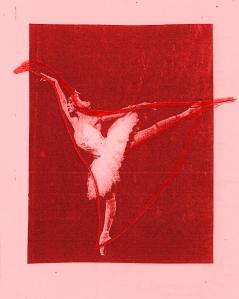
C’était l’une de ces soirées où l’on va à reculons : mauvaise journée, fatigue de fin d’année et revues mitigées de la distribution annoncée glanées de ci de là. On ronchonne en montant les escaliers, on s’installe à sa place. Le chef arrive, démarre l’ouverture. On entend des canards avant de voir des cygnes. Siegfried-Ganio dort profondément dans son fauteuil et Princesse-Albisson, belle et « statuesque » le contemple pensivement. Un petit frisson qui ne trompe pas traverse l’échine. Sommes-nous sur le point d’assister à une grande soirée ?

Cela commence pourtant par un accroc sur la prise de la toute première pirouette, mais Mathieu Ganio se reprend ensuite avec panache. Contrôlant sa technique et sa longue ligne, il nous permet de goûter pleinement, sans arrière-pensées, sa belle coordination de mouvements, sa présentation du pied et ses épaulements subtils qui en font habituellement un prince idéal. Une petite pointe d’indécision rajoute ici à la vraisemblance de ce prince qui se coince la psyché et a du mal à s’affirmer face à une maman raidie dans ses principes et un tuteur amical mais assurément omniprésent. Arrivé à la variation lente, on oublie désormais toute considération technique. Ganio installe définitivement l’atmosphère qui convient à l’acte blanc.

Dans cet acte, Amandine Albisson joue très délibérément « la carte du cygne ». Les bras sont ondoyants, le buste frémit sur la corole du tutu un peu tombant comme celui de Pavlova pour la Mort du cygne. Le prince rencontre assurément un volatile tout en plumes et une femme de chair et de cœur. L’adage est cotonneux, la variation du cygne soyeuse. L’écrin que forme le corps de ballet de l’Opéra autour de ce couple grand style reste très beau en dépit d’une vilaine et récurrente incurvation de la ligne des cygnes côté jardin.

À l’acte trois, Odile-Albisson sur-joue son cygne blanc du deux avec une délectation évidente au risque de donner du prince l’image d’une grande baderne. Mais on lui pardonne tout au vu de l’assurance, du brio chic de son intrada et de sa variation. Les fouettés simples, menés avec une belle assurance et un joli fini, avaient été introduits par des piétinés impatients pendant la série de tours hallucinés du prince. Il y a des moments où certains pas de transition donnent tout leur sens au plus attendu et prosaïque des tours de force.

Cette considération nous conduit tout naturellement à parler de François Alu. Le Rothbart de cette soirée n’est pas tant impressionnant par ses sauts (qui atteignent pourtant des sommets) que par sa capacité à varier la vitesse d’exécution et à toujours rester en situation. Durant sa variation, il est l’un des rares Rothbart à avoir le temps de jeter des regards de connivence à certains danseurs de l’assemblée en particulier, renforçant ainsi l’impression que le sombre magicien ne faisait sans doute qu’un avec le précepteur Wolfgang. La veille, distribué dans la Czardas, il avait créé tout un scénario-pantomime en introduction, derrière le corps de ballet, proposant le mariage – sans succès – à Léonore Baulac avant de se lancer dans son court solo.

Son Rothbart flamboyant laissait cependant une place au Siegfried de Ganio. L’énergie de l’un mettait en valeur la ravissante clarté de ligne et le suspendu des sauts de l’autre : Ganio, « prince blanc », portant les couleurs de sa dame, était confronté non pas à un mais à deux noirs volatiles.

À l’acte quatre, il ne restait plus qu’à se laisser porter. Albisson-Odette, résignée, touchante et pathétique magnifiait le très bel adage final de Noureev. L’opposition des lignes « aspiration-résignation » fonctionnait à merveille.

Le final fut bien un peu terni par Alu s’emberlificotant dans sa cape et s’agrippant ensuite à son casque comme un chauve à sa moumoutte. Ce souci d’intendance eut pu être réglé de manière plus élégante. Mais le désespoir de Ganio, comme englué dans la nuée de fumigènes, vint tout de même terminer sur une note de perfection cette bien belle représentation.

Ce diaporama nécessite JavaScript.

2 Commentaires

Classé dans Retours de la Grande boutique

Swan Lake: Get Your Story Here. A plot summary.

cygne-rougeThe basic story is so ridiculous even Freud would break out in giggles. A mama’s boy falls for a female impersonator really into feathers who goes by the moniker #QueenOfTheSwans. He digs her divine Virgin in White get-up but can’t stop making googly eyes at a sexy fashionista in black who turns out to be her -get this – Evil Twin. Then there’s the problem of their pimp. Since our hero has also demonstrated from the outset that he’s a limp noodle when it comes to standing up to father figures, he’ll…oh never mind. I mean, would you keep a straight face if late one night a middle-aged guy suddenly jumped out of the bushes, ripped open his Bat-cape, and exposed you to…his sequined green bodysuit?
But every time I’m actually experiencing Swan Lake, my snarkiness about the plot just evaporates. This ballet – like the best of operas — simply lets you cry in the dark over how you yourself, younger and softer and in better shape, had once been a fool for love.
What’s really weird, though, is that most people with bucket-lists think that if you’ve seen one Swan Lake you’ve seen ‘em all. Wrong. So if you don’t go see Rudolf Nureyev’s 1984 version for the Paris Opera Ballet, still fresh and juicy after all these years, you will miss out on something big: a dramatically coherent and passionately danced dreamscape. This production, for once, succeeds in forcing the tired threads of the generic story into real narrative. To boot, it gives the male dancers of the corps – sans les plumes de ma tante — as much to do as the female ones.
Many, many, versions of this ballet exist. All of the steps of the first one from 1877, created in tandem with Tchaikovsky’s music and famed as a colossal flop, seem to have been lost. Every production we see today claims to be « after the original » 1895 version as devised by Marius Petipa and Lev Ivanov for the Maryinsky Theater. Yet we probably should consider 1895’s as lost, too. Ballet, by definition, just keeps evolving.
Just imagine: not that long ago, the Prince only mimed and his bestie, Benno, did all the complicated partnering stuff. An annoying court jester still scampers about in some productions, boring everyone on either side of the footlights. Just imagine: in some productions, this big tearjerker comes to a happy end. Some constants: almost all the steps in Act II and Odile’s extended series of fouettés (where the ballerina whirls like an unstoppable top) in Act III. Imagine the challenge each leading ballerina faces: she must convince you that you must have seen two completely different leading ladies – one fragile and tender, the other violent and bad. But in some earlier versions, you did indeed see two different leading ladies…

Le Lac des Cygnes, Moscou, 1877. Une évocation du décor du 2e acte partiellement corhoborée par les sources journalistiques

Le Lac des Cygnes, Moscou, 1877. Une évocation du décor du 2e acte partiellement corroborée par les sources journalistiques

PROLOGUE (OVERTURE)
Prince Siegfried has a nightmare where he looks on helplessly as a beautiful princess falls into the clutches of a half-human bird of prey. Before his eyes, the evil succubus transforms her into a swan and carries her off into thin air.

ACT ONE: THE CASTLE
It is the prince’s birthday. A crowd of young people, Siegfried’s friends, burst into the room, along with the prince’s Tutor Wolfgang (who bears a striking resemblance to the monster in Siegfried’s dream). Siegfried, aroused from his slumber, somewhat half-heartedly joins in their revels. He’s a melancholy prince, a dreamer.
The revel is interrupted by trumpet fanfare and the Queen Mother makes her entrance. She has come to congratulate her son upon his coming-of-age, but also to remind him of normal stuff. Her birthday gifts comprise a crown (do your duty) and a crossbow (shooting could provide some pleasure perhaps in the Freudian sense). As she points to her ring finger, the Queen Mother make it clear to the prince that both objects mean it’s time he took a wife (duty and/or pleasure?). At the ball in his honor tomorrow night, he will have to choose a bride. Eew! Her son goes limp at the mere thought.
Once they are sure that momma has gone back upstairs, Siegfried’s friends try to cheer him up: two girls and a boy perform a virtuosic pas de trois. Then the Tutor tells all the girls to fluff off. He gives the prince a dance lesson that involves a strong undercurrent of aggression: it looks like a power struggle rather than an initiation to the idea of the birds and the bees. The chorus boys break into one more rousing group dance-off, full of exhilaratingly complicated combinations, as they take leave.
The prince dances a sad solo while the Tutor glares at him. He has zero right to disapprove, for he’s not the prince’s father nor even his step-father. After once more bringing the prince to his knees, this oddly dominant employee suggests Siegfried go shoot his crossbow. In most productions, the Tutor is just a fat patsy who has nothing to do with evil. I happen to appreciate how, by sneakily combining our doubts about two characters, Nureyev’s production will soon merge both the Oedipal complex and Hamlet’s troubled relationship with male authority figures into one Really Big Bird.

We hear the “Swan theme.” The stage empties.

... et la "Danse des coupes", préfiguration de la vision des cygnes.

… et la « Danse des coupes », préfiguration de la vision des cygnes.

WITHOUT A PAUSE

ACT TWO BEGINS: NIGHT AT THE LAKE. ODDLY, IT FEELS AS IF WE HAVEN’T LEFT THE CASTLE, JUST GONE INTO ANOTHER ROOM…

Le corps de ballet aux saluts de la soirée du 8 avril 2015.

Le corps de ballet aux saluts de la soirée du 8 avril 2015.

We see that creepy bird of prey again, rushing across the stage. But is it the wicked magician von Rothbart or…the Evil Twin of the Tutor? Siegfried enters, and takes aim at something white and feathery rustling in the bushes. To his astonishment, out leaps the most beautiful creature he has even seen in his life: the princess he had already discovered in his dream. But she moves in a strange fashion, like a bird. Terrified, she begs him not to shoot. But Siegfried cannot resist the urge to grab her and to ask: “who are you? Um, what are you?”
“You see this lake? It is filled with my mother’s tears, for I,” she mimes, “am Odette, once a human princess, now queen of the swans. That evil sorcerer cast a spell on us, condemning us to be swans by day but we return to almost-human form at night. The spell will only be broken when a prince swears his undying love for me and never breaks that vow.” They are interrupted, first by von Rothbart, then by the arrival of the swan maidens (a corps de ballet of thirty-two).
Surrounded by the swan maidens, Siegfried and Odette express their growing understanding of each other in a tender pas de deux, which is followed by a series of dances by the other swans. Siegfried swears he will never look at another woman. But as dawn approaches he watches helplessly as von Rothbart turns Odette back into a bird. Siegfried doesn’t know it, but the strength of his vow is about to be put to the test.

INTERMISSION

ACT THREE: THE NEXT EVENING, IN THE CASTLE’S GRAND BALLROOM
Lac détailIt’s time for the Prince’s birthday party. Guests who seem to have been called forth from the Habsburg empire – Hungary, Spain, Naples, Poland — perform provincial dances in his and our honor.
Six eligible princesses waltz about, and the Queen Mother forces Siegfried to dance with all of them. Siegfried is polite but cold: the princesses all look alike to him, and not one is his Odette. Tension increases when the prince tells his mother he doesn’t even like, let alone want, any of these dumb girls. Suddenly two uninvited guests burst into the ballroom. It’s the Tutor (or is it von Rothbart?) and a beautiful young woman, It’s Odette!
But something is odd: she’s dressed in black and much coyer and sexier than the demure and frightened creature he’d embraced last night. As they dance the famous Black Swan Pas de Deux, the fascinated prince finds himself increasingly blinded by lust. Convinced she is his Odette, simply a lot more macha today, he asks for her hand in marriage and, at the Tutor/von Rothbart’s insistence, swears undying love. [A salute with fore and middle finger raised]. At that moment, all hell breaks loose: the Black Swan bursts out laughing and points to another bird who’d been desperately beating at the window panes. “There’s your Odette, doofus!” The Black Swan is actually Odile, her evil twin! The foolish prince falls in a faint, realizing he has completely screwed things up.

PAUSE (DON’T LEAVE YOUR SEATS!)

ACT FOUR: BACK AT THE LAKE. OR STILL INSIDE THE PRINCE’S MIND?
Siegfried finds himself back at the lake, surrounded by the melancholy swan maidens. He rushes off to find Odette. She rushes in. Frantic and distraught, Odette believes that, if she wants to liberate her fellow swans, she now has no other option but to kill herself.
The swans try to comfort their queen, while the triumphant von Rothbart unleashes a storm. Odette tries to fly from him to die but our gloating villain grabs at her with his claws.
The prince finally finds Odette, barely alive. Her wings – like her heart – are broken. Nevertheless, she forgives him and they dance together one last time, their movements illustrating how lovers cling to each other even as fate and magic try to pull them apart.
In 1877, the pair just ended up drowned. What a bummer.
In 1895, choosing to jump into the lake and drown together as martyrs meant the two would be carried up to the heavens as befits a final orchestral apotheosis.
In 1933, the evil magician killed Odette. Poor prince got left with little to do. Another bummer.
In the USSR, 1945, the hero ripped off von Rothbart’s wig and the gals all dropped their feathers. Liberation narratives befitted those times, we must assume.
Tonight?
Odette looks on helplessly as Siegfried tries to do battle with the sadist that is von Rothbart. As in the “lessons” with the Tutor in the first act, the prince is brought to his knees. Is this for real? Has all of this been a dream? Do nightmares return? Bummer.

Le Lac des Cygnes. L'acte 3 et sa tempête...

Le Lac des Cygnes. L’acte final et sa tempête…

Commentaires fermés sur Swan Lake: Get Your Story Here. A plot summary.

Classé dans Hier pour aujourd'hui

Le Lac des cygnes : Par ici l’argument!

cygne-rougeL’histoire de base est tellement ridicule que Freud même en aurait eu un fou rire. Un fils à sa maman tombe raide pour un transformiste emplumé qui répond au pseudo de #ReineDesCygnes. Il en pince pour son attirail de vierge immaculée mais ne peut non plus s’empêcher d’écarquiller les yeux  à la vue de la sexy fashionista en noir qui, tenez-vous bien, se trouve être sa Jumelle Maléfique. Et puis il y a le problème de leur souteneur. Vu que notre héros s’est aussi avéré être depuis le début une chiffe molle quand il s’agit de s’opposer à une figure paternelle, il… Mais laissons tomber. Franchement, garderiez-vous votre sérieux si, en fin de soirée, un mec entre deux âges sautait hors des fourrés, écartait sa cape et vous révélait … son maillot à paillettes verdâtre ?

Mais il n’empêche qu’à chaque fois que j’assiste à un Lac des cygnes, mon esprit sardonique se dissout dans l’air. Ce ballet – comme les meilleurs opéras – vous fait pleurer dans le noir sur ce vous-même, plus jeune, plus vulnérable et en meilleure forme, qui s’est jadis ridiculisé par amour.

Ce que je trouve vraiment bizarre, en revanche, c’est tout ces gens trois étoiles guide Michelin, qui pensent que quand on a vu un Lac des cygnes on les a tous vus. Tout faux ! Donc, si vous n’allez pas voir la version Rudolf Noureev du Lac de 1984 pour le ballet de l’Opéra de Paris, encore fraîche et savoureuse après toutes ces années, vous manquerez quelque chose de rare : une production onirique dramatiquement cohérente qui, pour une fois, parvient à  tirer des ressorts usés de l’histoire un récit vrai. Par-dessus le marché, elle donne aux garçons du corps de ballet – My Tailor is Rich! – autant à danser qu’aux filles.

Beaucoup, beaucoup trop de versions de ce ballet existent. Les pas de la première de 1877, créés en même temps que la musique de Tchaïkovski et considérés comme un flop total, ont tous été perdus. Toutes les productions que nous voyons aujourd’hui clament être la réincarnation de « l’originale » de 1895 conçue par Marius Petipa et Lev Ivanov pour le Théâtre Marinsky. Peut-être d’ailleurs devrions-nous également considérer la version de 1895 comme perdue. Le Ballet est, par définition, en constante mutation.

Imaginez seulement qu’il n’y a pas si longtemps le prince mimait seulement et que son pote, Benno, se chargeait de toutes les difficultés du partenariat. Un ennuyeux bouffon batifole toujours dans certaines productions, rasant tout le monde des deux côtés de la rampe. Imaginez seulement : dans certaines productions, ce tire-larme finit par un happy end. Quelques constantes : presque tous les pas dans l’acte 2 et la série de fouettés d’Odile (quand la ballerine se met à tournoyer comme une irrésistible toupie) à l’acte III. Imaginez le défi pour chaque ballerine : elle doit vous convaincre que vous avez vu deux étoiles différentes – l’une, tendre et fragile, l’autre, violente et méchante. Il fut d’ailleurs un temps où on voyait effectivement deux danseuses différentes dans ces rôles.

Le Lac des Cygnes, Moscou, 1877. Une évocation du décor du 2e acte partiellement corhoborée par les sources journalistiques

Le Lac des Cygnes, Moscou, 1877. Une évocation du décor du 2e acte partiellement corroborée par les sources journalistiques

  PROLOGUE (OUVERTURE)

Le prince Siegfried fait un cauchemar où il assiste impuissant à la tombée d’une belle princesse dans les griffes d’un oiseau de proie à moitié humain. Devant ses yeux, le maléfique succube la transforme en cygne et se volatilise avec elle.

ACTE I : LE CHÂTEAU

C’est l’anniversaire du prince. Une foule de jeunes gens, les amis de Siegfried, font irruption dans la salle, accompagnés du tuteur du prince Wolfgang (qui ressemble étrangement au monstre du songe). Siegfried, tiré de son sommeil, se joint presque à contre cœur à leurs festivités. C’est un prince mélancolique. Un rêveur.

La fête est interrompue par une fanfare de trompettes et la reine-mère fait son entrée. Elle est venue féliciter son fils pour sa majorité mais pour lui rappeler aussi quelques fondamentaux. Ses cadeaux d’anniversaire se composent d’une couronne (fais ton devoir), d’une arbalète (la chasse peut procurer un certain plaisir, peut-être au sens freudien du terme). Lorsqu’elle désigne l’anneau à son doigt, la reine-mère exprime clairement que ces deux objets signifient qu’il est temps pour lui de prendre femme (devoir et/ou plaisir ?). Au bal donné en son honneur demain soir, il devra choisir une fiancée. Beurk ! Son fiston se ramollit rien qu’à l’idée.

Une fois surs que maman est remontée à l’étage, les amis de Siegfried essayent de lui remonter le moral : deux filles et un garçon interprètent un pas de trois virtuose. Puis, le tuteur dit aux filles d’aller batifoler ailleurs. Il donne au prince une leçon de danse qui comporte une forte charge d’agression sous-jacente : cela ressemble plus à une lutte de pouvoir qu’à une initiation au sujet des roses et des choux-fleurs. Les chorus boys se lancent alors dans une énième vibrante danse de groupe, pleine de grisantes combinaisons complexes, avant de se retirer.

... et la "Danse des coupes", préfiguration de la vision des cygnes.

… et la « Danse des coupes », préfiguration de la vision des cygnes.

Le prince danse un solo triste sous le regard réprobateur du tuteur. Il n’a aucun droit de désapprouver, n’étant ni le père ni même le beau-père du prince. Après avoir mis le prince sur les genoux encore une fois, cet employé étrangement dominateur suggère à Siegfried d’aller essayer son arbalète. Dans la plupart des productions, le tuteur est juste un gros pigeon qui ne ferait de mal à personne. Il se trouve que j’apprécie la manière dont, en combinant malignement nos doutes au sujet de deux personnages, la production de Noureev va bientôt fondre le complexe d’Œdipe et les relations troubles d’Hamlet avec les figures de l’autorité paternelle en un seul et même Grand Oiseau.

On entend le thème du cygne. La scène se vide.

SANS PAUSE

L’ACTE DEUX COMMENCE : NUIT SUR LE LAC. BIZARREMENT, IL SEMBLERAIT QUE NOUS N’AVONS PAS QUITTÉ LE PALAIS MAIS QUE NOUS SOMMES SEULEMENT PASSÉS DANS UNE AUTRE PIÈCE.

Le corps de ballet aux saluts de la soirée du 8 avril 2015.

Le corps de ballet aux saluts de la soirée du 8 avril 2015.

Nous voyons une fois encore cet inquiétant oiseau de proie, qui court à travers la scène. Mais s’agit-il du méchant magicien von Rothbart ou du jumeau maléfique du tuteur ? Siegfried entre et prend pour cible quelque-chose de blanc et de duveteux bruissant dans les buissons. À son grand étonnement, en sort la plus jolie créature qu’il ait jamais vue de sa vie : la princesse entrevue dans ses rêves. Mais elle se meut d’une étrange façon, comme un oiseau. Terrifiée, elle le supplie de ne pas tirer. Mais Siegfried ne peut résister au besoin de l’attraper et de lui demander : « Qui êtes-vous ? Euuuh. Qu’êtes-vous ? »

« Vous voyez ce lac ? Il a été rempli des larmes de ma mère, car Moi » mime-t-elle  « Je suis Odette, jadis une princesse humaine, aujourd’hui reine des cygnes. Ce méchant sorcier a jeté sur nous un sort, nous condamnant à être des cygnes le jour mais nous retournons à une forme presque humaine la nuit. Le sort ne sera brisé que si un prince me jure un amour éternel et qu’il ne se parjure pas ». Ils sont interrompus d’abord par von Rothbart, puis par l’arrivée de femmes-cygnes (un corps de ballet de trente-deux).

Entourés par ces femmes-cygnes, Siegfried et Odette expriment leur entente toujours grandissante par un tendre pas de deux suivi par une série de danses des cygnes. Siegfried jure qu’il ne posera jamais les yeux sur une autre femme. Mais alors que l’aurore pointe il regarde impuissant von Rothbart transformer a nouveau Odette en cygne. Siegfried ne le sait pas, mais son vœu va bientôt être soumis à un test.

ENTRACTE

ACTE TROIS : LE SOIR SUIVANT, DANS LA GRANDE SALLE DE BAL DU CHÂTEAU

Lac détailLe temps est venu pour la soirée d’anniversaire du prince. Les invités interprètent  des danses provinciales de l’empire des Habsbourg – Hongrie, Espagne, Naples, Pologne – en son honneur et pour notre plaisir.

Six princesses éligibles valsent dans les parages, et la reine force Siegfried à danser avec chacune d’entre elles. Siegfried est poli mais froid : ces princesses se ressemblent toutes pour lui, et aucune d’entre-elles n’est Odette. La tension monte quand le prince dit à sa mère qu’il n’apprécie ni ne veut d’aucune de ces oies blanches. Soudain, deux invités surprise font irruption dans la salle de bal. C’est le tuteur (à moins que ce ne soit von Rothbart ?) et une belle jeune femme, c’est Odette !

Mais quelque chose cloche : elle est habillée de noir et bien plus hardie et sexy que la créature sage et terrorisée qu’il avait étreinte l’autre soir. Alors qu’ils dansent le célèbre pas de deux du cygne noir, le prince se sent irrésistiblement aveuglé par la luxure.

Convaincu qu’elle est d’Odette, juste une peu plus macha aujourd’hui, il demande sa main et, à la demande insistante du Tuteur/von Rothbart, lui jure un amour éternel. [Un salut avec l’index et le majeur dressés]. À ce moment, les éléments se déchaînent : le cygne noir éclate de rire et désigne un autre oiseau frappant désespérément aux carreaux. « Voilà ton Odette, triple buse ! ». Le cygne noir n’est autre qu’Odile, son double maléfique! L’imprudent prince s’effondre évanoui, réalisant qu’il a vraiment tout gâché.

PAUSE (ON NE QUITTE PAS SON SIÈGE !)

ACTE QUATRE : DE RETOUR AU LAC. OU TOUJOURS DANS L’ESPRIT DU PRINCE ?

Siegfried se retrouve transporté au lac, entouré par les mélancoliques femmes cygnes. Il se précipite pour trouver Odette. Elle fait irruption. Affolée et  désespérée, Odette pense que, pour libérer ses camarades cygnes, elle n’a d’autre option que de se tuer.
Les cygnes tentent de consoler leur reine tandis que le triomphant von Rothbart déchaîne une tempête. Odette essaye de lui échapper mais notre ricanant vilain pose ses griffes sur elle.

Le prince trouve finalement Odette, presque morte. Ses ailes – comme son cœur – sont brisées. Néanmoins, elle lui pardonne et ils dansent ensemble une dernière fois, leurs mouvements illustrant la façon dont des amants se raccrochent l’un à l’autre même lorsque le destin et la magie essaient de les arracher l’un à l’autre.

En 1877, le couple finissait noyé. Quelle poisse.

En 1895, choisissant de se jeter dans le lac et de se noyer ensemble tels des martyrs, tous deux étaient emportés au paradis en une apothéose suggérée par les accords finaux de l’orchestre.

En 1933, le maléfique magicien tuait Odette. Le pauvre prince restait là avec bien peu à faire. Encore la poisse.

Dans l’URSS de 1945, le héros arrachait une aile à von Rothbart et toutes les filles tombaient leurs plumes. Les récits de libération convenaient à l’époque, semble-t-il.

Ce soir ?

Odette regarde Siegfried impuissante alors qu’il essaye de lutter contre le sadique qu’est von Rothbart. Comme dans la « leçon » avec le tuteur au premier acte, le prince finit à genoux. Est-ce pour de vrai ? Tout cela n’aurait-il été qu’un rêve ? Les cauchemars sont-ils récurrents ? La poisse, on vous dit.

Le Lac des Cygnes. L'acte 3 et sa tempête...

Le Lac des Cygnes. L’acte final et sa tempête…

1 commentaire

Classé dans Hier pour aujourd'hui

Le Lac : l’Argent et la Femme.

Bastille salleLe Lac des Cygnes 8/04/2015

Yannick Bittencourt a un profil de médaille. Lorsque sa mère le fait chevalier et le couronne dans la foulée (un raccourci qui m’a toujours un peu agacé dans cette version du Lac), on a l’impression de voir un jeune empereur romain idéalisé, encore vierge de tout vice, aimé de son peuple, sur la face d’un denier d’argent. Et son Siegfried possède cet éclat argenté de la pièce d’orfèvrerie toute neuve. On apprécie le ciselé de son bas de jambe, ses sissonnes explosives et ses ports de bras aux poignets vivants. Mais il ne possède pas assez de ce vert-de-gris du plié qui donne toute sa patine au reste. Ceci est particulièrement sensible dans sa variation lente. Cela dit, ce prince au visage beau jusqu’à l’inexpressivité se montre très investi dans le jeu. Il a pris très au sérieux les conseils de son directeur qui mettait l’accent sur la clarté narrative de la pantomime lors des démonstrations auxquelles il participait. Par moment, c’est même un peu trop et on frôle alors le billon de cuivre.

Le Lac des Cygnes (08/04). Hannah O'Neil et Yannick Bittencourt

Le Lac des Cygnes (08/04). Hannah O’Neill et Yannick Bittencourt

Mais la qualité de cette jeune distribution tient justement à la volonté de ses deux protagonistes de nous raconter leur histoire. Hannah O’Neill peine au début à obtenir mon suffrage. Il y a pourtant de fort jolie choses dans son Odette : le haut du corps est vivant, et ses roulés des poignets sont exquis. C’est un cygne en devenir. Elle a la jambe un tantinet pesante à mon goût pour son entrée. En revanche, l’adage avec Bittencourt est très beau. À la différence de Laura Hecquet qui reste apeurée et défiante pendant toute la première partie du duo avant d’offrir du relâché (une histoire d’amour dans l’histoire d’amour, en somme), O’Neill déploie tout l’abandon et le moelleux de sa danse pour en faire un hymne à l’âme-sœur. Son partenaire est totalement à l’unisson (il aura un peu plus de mal à l’acte 4 avec la promenade en attitude penchée. Son Odette ne cille pas, mais il découvre trop la cuisine du mouvement).

Le Lac des Cygnes. Pas de deux du

Le Lac des Cygnes. Pas de deux du « cygne noir » (08/04). Hannah O’Neill et Yannick Bittencourt

Hannah O’Neill, cygne blanc de demain, est en revanche un cygne noir confirmé. Dans l’entrada, elle a l’abattage qu’il faut, les agaceries assassines qui savent exciter la passion du prince et l’intérêt du public dans la salle (ses fouettés en revanche voyagent trop). Bittencourt, quant à lui, n’est pas parfait. Son manque de plié le fait occasionnellement ressembler à un joli poulain. Mais ses lignes et son sens de la scène rattrapent tout cela.

Au 4ème acte, on est tout près de croire au cygne blanc d’Hannah O’Neill. Il faut reconnaître qu’elle est incontestablement plus « cygne ». Hélas, elle se montre moins intense dans le jeu. L’émotion du final vient moins de ses pleurs sur les marches avant de se jeter dans le vide que des grands jetés désespérés de Bittencourt pendant son combat avec Rothbart (Karl Paquette).

La soirée fut donc inégale, certes. Mais c’est toujours excitant d’assister à l’étendue des possibles. On sort du théâtre en rêvant aux lendemains qui chantent.

3 Commentaires

Classé dans Retours de la Grande boutique

Swan Lake: Defining Gravity

Bastille salle Le Lac des cygnes at the Opéra Bastille, March 23, 2015

I will make you brooches and toys for your delight / Of bird-song at morning and star-shine at night.” R.L. Stevenson, Songs of Travel, The Vagabond.

After missing the solar eclipse on a misty wind-swept Friday morning in Normandy, then hypnotized the next day at noon on a sloshed boardwalk by an epic high tide pulled out by the moon, I chugged back to Paris. Here I witnessed, at the end of a balmy Monday evening, that the Paris Opera’s astronomers had identified a new star.

Laura Hecquet has been promoted to étoile. I only regret that Stéphane Lissner’s and Benjamin Millepied’s telescopes failed to register the planet that pulled her into orbit: Hecquet’s partner, Audric Bezard.

Laura Hecquet has every quality that American critics – whose names shall remain unmentioned — would dismiss as “too French.” Therefore, I approve. Impeccably clean technique, strength, and subtlety. No show-biz, no razzamatazz, no six o’clocks unless the original choreography specifically calls for it. She’s demure – bashful, even — and precise, and intelligent [every single comment Cléopold noted Elisabeth Maurin making while coaching another dancer magically found itself integrated into this performance]. A tall one, she makes herself appear weightless, diaphanous, other-worldly. Maybe a bit too diffident? But I think that with time, now that she has been released from ballet purgatory she will loosen up just a little bit. For years, under the previous director — whose name shall remain unmentioned — Hecquet seemed to be stuck in the position of “also-ran,” and that can do weird things to your head and to your body.

So I didn’t expect her Odette/Odile to suddenly light up like a firecracker. There is room in the history of the stage for votive candles as well as for forest fires. Hecquet burns slowly and quietly. But then after the fouéttés, she suddenly relaxed, and those swift little hops during low arabesque dévélopé plus the next hops backwards into relevé became deliciously upscale strip-tease. She will never be – and I hope she will never try to be – a Ferri or a Loudières. But she could soon seduce the kinds of people who loved Cynthia Gregory or Cynthia Harvey. Most of all, I hope she will now feel free to become an Hecquet.

One thing I’ve always appreciated about Laura Hecquet is that she lets her partner shine. Too shy to hog the spotlight, she highlights how good it feels to be in good hands.

“Nullum quod tetigit non ornavit” [“Nothing he touched he did not adorn.”] Samuel Johnson, epitaph for Oliver Goldsmith.

Audric Bezard has “it.” My only memory, even just one day after being bored to tears by the recent Neumeier opus “Le Chant de la terre,” proves a slight but significant one. The young people nestle onto an Astroturf wedge while someone yet again dances downstage to each note. And up there was Bezard. Nestling, noodling, seemingly improvising, living this day as if the sun were actually shining. He encapsulated the song of life that Mahler was talking about while lying around on a piece of plastic.

As Siegfried, Bezard’s natural magnetism combined itself with a most intelligent reading of Nureyev’s text. His Siegfried doesn’t have complexes, he’d just never really thought about anything before. He seems as at ease with being a prince as a prince is imagined to be. He likes his cohort of friends – boys and girls alike in an unselfconscious way — and when his mother brings him the crossbow and the order to marry, he focuses first on the crossbow and then slowly, slowly, starts to process the second part of his birthday offering. So he’s not a melancholy prince nor a desperate one at all from the start: this one’s just never ever felt anything deeply.

Bezard does lovely stuff in all of his variations: always driving to the end of a phrase and then pulling it into the next. He also does something American critics would also dismiss as “too French.” Every single variation, every single bravura moment, ended in the softest landing with understated poise. Three big and easeful doubles à la seconde (who needs quadruples if doubles are well-done?) get presented as if they were no big deal. At the conclusion of his big solo near the end of the first act, the one intended to signal the beginning of his unease, he eased into another perfect landing. I mean perfect: soft as feathers. No applause for what seemed like ages, because none of us could get our breath back, rapt but suddenly uneasy too. The atmosphere Bezard created made it rather obscene – despite our appreciation of his surmounting the Nureyevian technical hurdles – to intrude upon his privacy.

This Siegfried wasn’t desperate –wasn’t passionately looking for true love either — as soon as the curtain went up. I would say the solution to the puzzle emerged during the pantomime that took place when Odette and Siegfried met: “I am queen of the swans” to “ah my lady, I am a prince too, I bow down to you as is proper to our station.” I’m not sure that I’ve ever seen a meeting of swan queen and prince as casually and naturally regal. Hecquet was so unhysterical and Bezard so unfazed and both so formal that this version of the encounter – and what followed — made perfect dramatic sense. The force of their gravity had simply pulled them into each other’s orbit.

Commentaires fermés sur Swan Lake: Defining Gravity

Classé dans Retours de la Grande boutique