Archives de Catégorie: Retours de la Grande boutique

L’Opéra national de Paris est notre point d’ancrage. On y retourne toujours. On en repart totalement conquis, ou partiellement déçu, c’est selon.

Ballet de l’Opéra à New York. Orphée et Eurydice de P. Bausch : Circles

Ballet de l’Opéra en tournée à New York. Lincoln Center Festival, Friday July 20th. Eurydice : Marie-Agnès Gillot; Orphée : Stéphane Bullion; Amour : Muriel Zusperreguy.

It is not possible for me to be unbiased when it comes to Pina Bausch’s Orpheus and Eurydice. I first saw it when I was one of those third year girls. “You know, American college kids. They come over here to take their third year and lap up a little culture… They’re officious and dull. They’re always making profound observations they’ve overheard.” Yeah, guilty on all counts, BUT I did manage to “lap up a little culture” as Jerry Mulligan so dryly notes in An American in Paris. I fell in love with Paris, and more specifically but certainly not exclusively, its ballet. Orpheus and Eurydice was the first time I saw the Paris Opera Ballet, my first opera, and the first time I saw a performance at the Opera Garnier; obviously Orpheus and Eurydice holds a very special place in my heart. Honestly, though, I don’t remember a lot about the ballet itself; at this point I had stopped dancing completely for three years (it would be another two before I was forced back into class kicking and screaming… another reason to love Paris) and hadn’t begun my ballet history education. I hadn’t heard of Pina Bausch; more seriously, I can’t swear to even knowing who George Balanchine was. Yeah, that level of ballet history education. Here’s what I do remember thinking: “This is awesome.” Also, I was so distracted by the beauty of the building that I almost fell down the main staircase on the way out. Well, I’m still that clumsy, but I’d like to think I know a bit more about ballet now than I did four years (seriously?! Four years?!) ago.

So, the verdict from years later? I loved it, really. However, I don’t think this is something that I would get excited about seeing every year. Emotionally, it’s heavy and sometimes hard to get through; you do not come out of that theater uplifted, at all. Yes, the dancing was gorgeous (for the most part, more on that in a moment) but, at least personally, I was way too caught up in in the overall feeling of the piece to notice a lot of choreography. Most strikingly, in Bausch’s mind, is there a difference between mourning and peace? Because that choreography seemed eerily similar. For Bausch, it seemed like peace is more the absence of external stimuli than an emotional state originating from a person. Everyone in the Elysian Fields was a zombie. I could more readily accept that idea in Mourning; that level of grief (for a dead spouse, just for example) can numb you completely and take you out of this world, but peace? The Elysian Fields are where the ‘good’ souls go. Growing up with the idea of Heaven and Hell (paradise vs. eternal torture) it was strange to see a ‘Heaven’ filled with yes, peaceful, but also empty souls, especially after seeing how awful Hades was. Eurydice was no exception to this; she recognized Orpheus and took his hand, but it wasn’t until halfway between the underworld and the mortal world that she started caring. Oh, but when she cared… That was some truly gorgeous dancing.

What I really did love was the idea of circles. We begin with Mourning, moving through violence and peace (both stages in the mourning process) and end with? Death, more mourning. You could almost take the whole ballet as a meditation on the grieving process and even on the life’s cyclical nature. We begin with grief of the deepest nature; in the opera Orpheus literally uses his wife’s name as a cry of pain. We see the Violence (second movement) and anger of losing someone, and in this case, Orpheus’s determination to get them back. Peace, at least for Eurydice, when tragedy is accepted; Orpheus knows no peace until he, too, dies. Is this Bausch’s view of life? True peace only in accepting death? Finally, death, a final one for Eurydice and Orpheus’s first. One part of this movement that I really loved was that it was Orpheus’s singer (since he is a musician, I took this to be his soul) that embraced Eurydice when he’s ready to die while Bullion hunched with his back to the audience. At that point, his body didn’t matter; it was his soul that was still bound to life. Once the soul gave in, the body/dancer was allowed to die. When he did die, the choreography from Mourning was repeated, but by one of the dancers playing Cerebus, suggesting that even the guardian of death was grief stricken. Yes, I loved this ballet, but maybe give me another four years?

Gillot as Eurydice was perfect casting; with her long limbs she reminded me of a spider, but in a good way, the best way really. Her lines simply do not end, and the expression she gave to Bausch’s movement made me believe the ballet had been choreographed just for her. In short, glorious. I wish Eurydice danced more.

Bullion, well… I’ll just say I was unsurprised. What is it about him that fails to inspire? I don’t quite understand it. He did everything tolerably well (wobbly pirouettes but whatever, I can overlook that), but he just felt so blah. This ballet is about the most beautiful musician ever to live who loves his wife so much that he literally goes through Hell to find her and bring her back, only to lose her again. Plus, he does it all wearing beige underwear. There is no part of that description that should make anyone go ‘eh’ and yet, he did! That’s actually kind of perversely impressive.

To make the evening a bit more challenging, The State Theater is not an opera house anymore, which means there were no sub or supertitles. Thank goodness I had a cheat sheet for the plot, because I think I would have been very lost (Everyone in Hades yelling NEIN! was pretty obvious, but my German stops there.) However, as much as I would have loved to know the exact words, not having a translation made me really focus on what was trying to come through in the choreography and how the music was sung. The singer for Orpheus repeating ‘Eurydice’ over and over in the beginning was touching and Eurydice’s singer was as close to an absolute meltdown as you can get while remaining beautiful, and Gluck’s music really is beautiful. I almost like not having the words flashing in front of me as it would have been much harder to simply watch and absorb everything. All in all, a wonderful finale to the summer ballet season here in New York. See you all for NYCB on September 19.

Incredibly appropriately, I’m seeing the Greek trilogy: Apollo, Orpheus and Agon before jetting off for Paris to see the Paris Opera Ballet do… Balanchine. How perfect a circle is that?

Commentaires fermés sur Ballet de l’Opéra à New York. Orphée et Eurydice de P. Bausch : Circles

Classé dans Retours de la Grande boutique, Voices of America

Ballet de l’Opéra à New York. Giselle : This Mortal Coil

« Giselle », Ballet de l’Opéra de Paris en tournée à New York. Soirée du 18 juillet (Gilbert, Hoffalt, Hecquet). Soirée du 19 juillet (Osta, Leriche, Daniel).

Giselle has never been my cup of tea. I know, I’m sorry, please don’t yell at me.  I mean, I understood why so many people are obsessed with it: it’s the epitome of romantic ballet, one of the greatest classics ever, the most challenging role for a ballerina, etc. etc. Fine, whatever. For me, it was boring. The whole ballet felt like the story had to be there as an excuse for dancing, and the second act especially seemed like it had no plot. Consequently, I was bored.   Last night I saw the Paris Opera Ballet’s production for the first time, and that part of my ballet life is over. The Paris Opera’s tour has been the biggest ballet gift I’ve received since moving back to New York; ABT has absolutely exquisite moments every season but something usually seems a bit off. NYCB is fantastic at what it does: Balanchine, Robbins, Wheeldon, etc. but telling stories has never been their thing; even The Nutcracker (as much as I adore it) is really a series of self-contained segments that don’t really connect to an overarching narrative.  Paris Opera Ballet gave me the best of both worlds. They have the technique, that’s never even a question, but they also know how to be in the story, how to make the steps serve the narrative; they know how to make a ballet come alive, even if everyone in it is dead. I’ve said that New York audiences love to applaud when a dancer does something technically brilliant, and that’s true, but every time they did during Giselle it felt superfluous. Like, of course they can hop on their pointes, their pirouettes are perfect and they can balance forever. Who cares? That’s missing the point entirely. I’m not going to write about technique, it’s unnecessary. Instead, let’s focus on how the dancers used it.

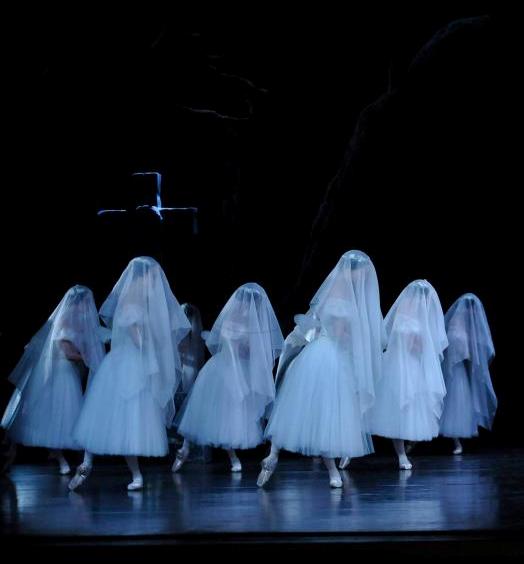
First, a word on the corps de ballet. I’m pretty hard on various companies’ corps; for me, soloists and stars simply cannot shine as brightly if the corps is a mess. It’s very distracting if there’s an arm out of place or varied timing and, frankly mistakes like that make the entire company look bad. The Paris Opera Ballet is the reason I feel like it’s not only appropriate, but necessary to insist on proper corps work. Look! This is what you could be! This is what you’re aiming for! They were together and musical, proving that those values do not have to exist in a vacuum! Instead of individual members competing for audience attention by dancing separately, they worked together and as a result the group was breathtaking as a whole. The best part about this is that because I wasn’t distracted by various legs and arms, I could focus on how very musical and, well, haunting they were (sorry, but that’s the right word). Their synchronicity gave the illusion of a forest full of Willis; because every movement of every dancer was in perfect harmony, the stage could only show a tiny fraction of the ghosts. I could almost swear that those lines went on for miles.  I’m not going to get over how truly beautiful this was anytime soon.

My two Giselles were Dorothée Gilbert and Clairemarie Osta (in her final performance). Both dancers were lovely and both are largely responsible for why I now actually enjoy this ballet. They did have slightly different approaches to the character which I’d like to address through their respective ‘mad scenes’ and second acts.

Gilbert, I felt, was the dancer that really showed Giselle losing her mind. She wavered back and forth on her pointe shoes, and instead of letting her hair fall down gracefully, she pulled half of it out of the bun, making her appear deranged. This, for her, was not supposed to be pretty. As she remembered time spent with “Loys,” Gilbert had a smile on her face and eyes that were completely glazed over while her body, almost without her realizing it, reenacted the daisy and the promise.  She ran maniacally through the crowd of villagers, but she wasn’t saying “help me, help me.” Rather, she didn’t seem to realize she was running.  As a Wili, Gilbert made the decision to keep her face completely blank; she kept her eyes glazed over. Mentally, she was dead, she didn’t consciously recognize Albrecht, and yet she knew him. Everything the girl Giselle wanted to say to Albrecht was expressed through the Wili’s movements. She couldn’t really see him or talk to him, but some small glimmer of recognition buried deep down made her protect him.

Osta, by contrast, gave her Giselle more lucidity. In act one she knew exactly what was going on but she didn’t want to believe it. When she remembered Loys’s promise and their morning together, it looked like she was going through everything to reassure herself that it actually happened. “No, I’m not crazy, he said this, he promised me… how is this happening? This can’t be real.” Osta reached out for help as she ran and when she finally got to Albrecht, it was the final realization that he would never be the man she thought (aka Loys) that killed her.  Her act two was the opposite of Gilbert’s but just as gorgeous. Her Giselle knew Albrecht; she actively wanted to protect him, but she was incorporeal and could not physically do as much as she wanted to. Physically, she was more ghostly, though her soul and mind were completely intact. She seemed to fight, to try to push beyond what she had become and break back into the mortal world in order to save Albrecht. Her interpretation made me doubt at times that Albrecht could see her; he sensed her as a protective spirit, but I’m not sure that he actually saw her as a ghost. When he woke up in front of her grave, he almost believed the entire thing had been a dream. It certainly was for me.

Shockingly, I didn’t cry either night. Normally, I’m a huge crybaby at ballets, but I was far too busy thanking God/Louis XIV/Terpsichore/ whatever deity you pray to for allowing this ballet to exist. I think that sums it up.

Commentaires fermés sur Ballet de l’Opéra à New York. Giselle : This Mortal Coil

Classé dans Retours de la Grande boutique, Voices of America

Ballet de l’Opéra à New York. « Programme français » : Warming Up

Wednesday night saw the opening of the Paris Opera’s stint in New York on their US tour. They haven’t been in New York for sixteen years, and I don’t think the audience knew quite what to expect. The program was called « French Masters of the 20th Century » and included Suite en Blanc (Lifar) L’Arlésienne (Petit) and Boléro (Béjart). Initially, this was the night I was least excited about. I’ve wanted to see Suite en Blanc for a long time (and how nice to finally see some Lifar in New York, in Balanchine’s theater no less!) but I didn’t really know that much about L’Arlésienne, and I’ve never liked the music for Boléro, so I must admit to having been less than psyched about seeing Bejart’s version. In a happy turn of events, I cannot imagine a better opening night; it was a triumph (with some very minor complaints).

Suite en Blanc was incredible. From the opening pose to the last one, time didn’t seem to exist; I just sat there and loved it. Now to details! « La Sieste », for me, seemed to be more about the choreography than the dancers. Aurelia Bellet, Marie-Solene Boulet, and Laura Hecquet were nice, but none of them made me go ‘wow!’ Seen as a whole though, it did feel very dreamy. « Thème Varié » united Cozette, Paquette and Bullion, and it went about as well as expected given that particular line up. But let’s move on. Nolwenn Daniel gave a light and bubbly quality to her « Sérénade » (which turns out to be possibly my favorite part choreography-wise). She didn’t turn the fouettés into a trick, they were just another step for her and she made them blend in. The audience didn’t know quite what to do here; we’re so used to clapping at the least provocation that by the time everyone realized that ‘Hey! Fouettés!’ she had moved on.  The « Pas de Cinq » I loved as well. Alice Revanand is definitely a dancer I want to get to know more. She reminded me a bit of a fairy, as if the steps were so natural for her that she could just sort of play and be flirty and enjoy herself. Gillot replaced Letestu in « La Cigarette ». Of course her technique is flawless, but I didn’t love her in the role. It just didn’t work with the rest of the ballet. I think I feel the same about her as I do about Sara Mearns at NYCB.  I really would have loved to see Letestu do this. Thank goodness for YouTube! Does anyone know why Letestu was replaced? Is she injured? Ganio did the Mazurka which I thoroughly enjoyed; everything was big without being too heavy, which is no small feat considering the music! Dupont and Pech did the Adage which was lovely. My problem with Dupont is lack of expression (which is weird since she “loves to act”) but here it works; she can just be pretty, that’s fine. No acting required. What was really fun to see though, is that she and Pech clicked. There were moments on stage where they looked at each other and grinned a bit; I think they were having fun, which is wonderful because I really found it wonderful too! OK, last was La Flute with Gilbert, which couldn’t have been better. When little girls say they want to be a ballerina princess when they grow up, this is what they mean. By the finale I was ecstatic; this is why I love ballet.

L’Arlesienne I loved a bit less. Ciaravola was a great Vivette; very pretty and did a convincing job of comforting poor, desperate, Belingard’s Frédéri…but he sometimes forgot to act. Don’t get me wrong, technically there are no complaints or anything but his expressions kind of went in and out. I will say that his suicide scene was masterful. People around me gasped, which is always a good sign!

Finally, Bolero. I cannot be an impartial judge here; I really -really- dislike the music so there was a snowflake’s chance in Hell that this one would become one of my favorites. I will say that I loved Nicolas Le Riche who was, in a word, intense. His movements were so powerful that it almost seemed like he was trying to hold himself back during the rocking movements and suddenly he would escape and burst out of control. This might be because of the red table and the spotlight, but he made me think of a solar storm. In any case the audience loved it.

I think I understand what the Paris Opera was trying to do with this program: Show the US that they can do everything: classical, contemporary, you name it, they’re masters both in choreography and performing. That’s going to be hammered in with Giselle and Orpheus and Eurydice, but this was their introduction and it was big. I think once the audience kind of got a feel for the company they loved it. Applause for Suite en Blanc was OK, more than polite but less than enthusiastic; for L’Arlesienne it was warm; and after Bolero there was a standing ovation. As far as introductions go, this was perfect. I think New York is more than excited to see what else they’ve brought. Oh, this is exactly the way I wanted to end my ballet season! More please!

Commentaires fermés sur Ballet de l’Opéra à New York. « Programme français » : Warming Up

Classé dans Retours de la Grande boutique, Voices of America

La Fille mal gardée : Dans la dentelle

La Fille mal gardée, représentation du jeudi 12 juillet 2012. Lise : Mélanie Hurel; Colas : Alessio Carbone; Mère Simone : Eric Monin; Alain : Adrien Couvez.

Lorsque Lise est interprétée par Mélanie Hurel, on se retrouve face à une dentelle au petit point. Quand Mélanie Hurel est en confiance, sa technique a en effet cette qualité précise du travail d’aiguille : son « fil de trace » (à la base de la dentelle d’aiguille), c’est son travail de pointe acéré, son « point de rempli », qui donne toute la richesse aux motifs de la dentelle, c’est la variété des intonations qu’elle met dans sa danse. Cette variété a fait des merveilles l’autre soir dans Fanny Elssler Pas de deux. Sa variation était un régal de changements de rythmes avec, pour finir, des équilibres tenus lui laissant le temps de lancer un œil complice à son partenaire. Dans la coda, ce sont ses pliés-oui ses pliés!- (qui sont à cette danseuse ce que serait le vélin de trame non retiré sur une dentelle de qualité), qui mettent en valeur les rapides fouettés arabesques qu’exécute Lise. Le portrait dressé par James de cette Lise reste donc valable, mais, la plénitude technique aidant, tout ici ressort avec un relief inattendu. Face à cette primesautière et malicieuse héroïne (qui reçoit des claques et des fessés de mère Simone comme s’il s’agissait d’une bruine passagère car elle sait qu’elle prendra presque immédiatement sa revanche), Alessio Carbone est un Colas au charme assuré. Cela fait longtemps qu’il joue à cache-cache avec sa tempétueuse future belle mère et il a pris goût au jeu sans jamais douter de son issue victorieuse. Cette interprétation est portée par sa technique ; une technique très française somme toute. Carbone sait aussi bien s’intégrer dans les ensembles (les grands jetés avec les paysans pendant la fête des vendanges) qu’exécuter une chorégraphie intriquée (à gauche, il est vrai) avec un fini impeccable, sans attirer l’attention sur une qualité en particulier au détriment d’une autre (ce qu’on voit trop souvent de nos jours sur les scènes internationales).

Et puis il y a Adrien Couvez en Alain ; cucu la praline touchant s’il en est. Chez lui, une fois encore, on apprécie, au-delà du jeu d’acteur qui est irrésistible, la maitrise technique, clef du timing pour ce rôle comique. Il est le seul des trois Alain qu’il m’a été donné de voir -et je les ai pourtant tous apprécié- qui ait su rendre ses multiples chutes inattendues (lors de ses descentes intempestives d’escalier, je l’ai même visualisé comme le véritable chef d’orchestre). Contrairement à la conception du rôle au Royal Ballet, il ne joue pas de manière permanente le « mauvais danseur » (voir les première 2’25 » du reportage). Au milieu de son cafouillis d’adolescent dyslexique, on surprend soudain un détail saillant, de claires cabrioles battues, un ballon impressionnant. L’Opéra donnera-t-il une chance à ce danseur singulier dans autre chose que « La Fille » qu’il interprète depuis 2007 ?

Voilà ma série des Filles terminée. Trois représentations et trois sources de satisfaction. Alors que la moitié (la meilleure ?) de la compagnie est partie aux USA, il m’a semblé revivre un temps révolu. Celui où chaque distribution danserait, à peu de cas près, le soir annoncé et où chaque proposition des interprètes serait personnelle et forte.

Oui, quoi qu’en dise la météo, nous avons un bien bel été 2012.

2 Commentaires

Classé dans Retours de la Grande boutique

La Fille mal gardée : Poupon lunaire cherche fiancée


 La Fille mal gardée. Opéra national de Paris. Représentation du 28 juin. Mélanie Hurel (Lise), Alessio Carbone (Colas), Éric Monin (Simone) et Adrien Couvez (Alain).

Au théâtre, on dit parfois d’un acteur qu’il a la gueule de l’emploi. En ce qu’elle suggère de facilité, l’expression est trompeuse. Car il faut quand même trouver tout seul l’emploi de sa gueule.

Voyez par exemple Adrien Couvez en Alain. Il a les yeux ronds comme des billes, gonfle les joues et avance des lèvres de bébé boudeur. Mais il ne suffirait pas, pour faire un Alain adorable, de sentir encore le poupon : il faut aussi danser à l’unisson de son physique. Et il s’y entend à merveille, lançant les cuisses très haut, n’importe comment, cambrant beaucoup le bassin et le haut du dos. L’exubérance du mouvement ne se dégrade jamais chez lui en mécanique, mais étonne au contraire par une élégance et une légèreté de touche assez grisantes. L’innocence ne paraît même pas jouée (c’est le comble de l’art) et on gagerait que ce danseur – déjà remarqué par Fenella il y a quelques mois – a du caoutchouc dans les hanches et les genoux.

Mélanie Hurel joue aussi intelligemment à partir de son physique. Sa Lise a grandi d’un seul coup au bon air de la campagne, et il est grand temps qu’elle quitte le foyer. Ses mimiques le disent avec éloquence, la tutelle de sa mère lui pèse visiblement. Si l’on compare les appariements vus ces derniers jours, on pourrait dire qu’Ould-Braham et Phavorin forment un duo comique, que Zusperreguy et Houette ont la chamaillerie bonhomme, tandis qu’un antagonisme, discret mais fondamental, oppose la Lise d’Hurel et la mère Simone d’Éric Monin. Les scènes où les deux personnages sont ensemble sont d’ailleurs parmi plus réussies. Bien ou mal gardée, cette petite n’en peut plus d’être fille.

Mlle Hurel est à l’aise dans la pantomime. Sa manière de danser, un peu heurtée, est adéquate dans le registre badin : la danse au tambourin avec sa mère, les échappés à la baratte, le « on joue au cheval » avec Colas, et plus généralement, tout ce qui est petit et précis. Le problème est que dès que le sentiment et le mouvement prennent de l’amplitude, la raideur s’installe, et tout ce qui devrait couler de source – les battements en cloche, par exemple, que Muriel Zusperreguy réussit si bien – dégage une impression de contrainte sur le fil, qui rompt le charme.

C’est dommage, car cette Lise bien plantée (ce n’est pas une insulte) pourrait avoir sa logique, surtout aux côtés du Colas bon gars d’Alessio Carbone, plus amant déniaisé que jeunot découvrant l’amour. Mais le danseur, au soir du 28 juin, ne semblait pas non plus très à l’aise dans les moments de bravoure. Faute de charme ineffable chez le couple principal, on regarde plus intensément les mouvements d’ensemble de la Pastorale d’Ashton, sans se lasser jamais.

1 commentaire

Classé dans Retours de la Grande boutique

La Fille mal gardée : Quand la gravure s’anime…

La Fille mal gardée, représentation du 26/06/2012. Lise : Muriel Zusperreguy; Colas : Florian Magnenet; Alain : Allister Madin; Mère Simone : Aurélien Houette.

À quoi reconnaît-on un grand ballet ? Les réponses sont multiples mais l’une d’entre elle est assurément qu’il convient à des interprètes radicalement différents. Je m’en faisais la réflexion en regardant hier soir Muriel Zusperreguy danser le rôle de Lise dans lequel j’avais vu Myriam Ould-Braham la veille. S’il fallait comparer les deux danseuses en utilisant des métaphores plastiques, on pourrait dire que là où Myriam Ould-Braham est une huile sur toile de la Renaissance avec de savants glacis et de mystérieux sfumatos, Muriel Zusperreguy serait une eau forte aux contours définis de main de maître. Avec elle, on ne se demande jamais où commence la danse et où finit le jeu. Tout est tellement clairement énoncé qu’elle semble sortir du cadre et qu’on ne doute pas que si on la rencontrait hors de scène, elle serait Lise, tout simplement : une Lise aux pointes bien ancrées dans le sol mais dont l’enthousiasme se traduit aussi par d’occasionnels envols comme ces impressionnants jetés en tournant de la coda du deuxième acte. En face d’elle, Florent Magnenet campe un Colas attentif et non dénué d’humour. On n’a pas remarqué de faiblesses techniques majeures même s’il manque parfois un peu d’abattage. Dans ce couple, on sent que la paysanne, c’est elle et que le bourgeois, c’est lui. Sans doute est-ce la raison pour laquelle la très maternelle mère Simone d’Aurélien Houette s’en méfie. Il ressemble au cadet d’une famille de notable qui n’a pas encore choisi la voie qui le fera demeurer dans sa classe d’origine. Le Alain plus godiche que stupide d’Allister Madin peut alors paraître un bon choix car lui héritera de son père. Madin, moins poupée articulée que n’était Simon Valastro dans le même rôle, fait rire par son sourire surdimensionné mais émeut aussi lorsqu’il réalise qu’il est rejeté.

Fenella me faisait remarquer qu’avec la distribution Ould-Braham-Hoffalt, les décors d’Osbert Lancaster semblaient encore plus joliment approximatifs qu’ils ne le sont habituellement. Hier soir, l’ensemble du spectacle était si homogène qu’on avait le sentiment d’être dans une gravure miraculeusement animée.

Ce diaporama nécessite JavaScript.

Commentaires fermés sur La Fille mal gardée : Quand la gravure s’anime…

Classé dans Retours de la Grande boutique

La Fille mal gardée : Les armes du printemps.

Lundi 25 juin 2012. La Fille mal gardée. Ballet de l’Opéra de Paris. Lise : Myriam Ould-Braham; Colas : Josua Hoffalt; Mère Simone : Stéphane Phavorin; Alain : Simon Valastro; un coq de basse cour : Takeru Coste.

Ce soir, dans ma loge, mon attention a soudain été attirée par un membre du public. Son visage était éclairé par un large sourire, presque trop large pour sa bouche. C’est curieux comme un sourire est beau même lorsqu’il déforme les linéaments d’un visage. Ce visage m’était familier mais pourtant…

En fait, il n’y avait rien d’étonnant à cela… N’étais-je pas à La Fille mal gardée d’Ashton ? Lise et Colas n’était-ils pas Myriam et Josua ? C’est un fait avéré. James l’a déjà éventé. Myriam c’est le printemps, c’est la fille fleur. Assurément, ce membre du public devait sourire au printemps… Esprit sérieux, j’ai tenté de déterminer les raisons qui pouvaient expliquer cette curieuse et évidente identité entre une saison, un concept, au mieux une allégorie, et une danseuse qui, après tout, est un être de chair et de sang. Myriam Ould-Braham ne joue pas la juvénilité ; elle la danse, c’est tout. Dans le duo aux rubans, elle déploie cette légèreté qui efface le déboulé pour atteindre le virevolté. Dans le Fanny Elssler-pas de deux, elle adoucit la technique par une inclinaison de la tête, mollement posée sur la tige végétale de son cou. Lorsqu’elle avance en piétinés, il y a cet adorable rebond de ses pointes sur le sol qui parle de l’impatience de la jeunesse. Un bonheur… et puis son partenaire, Josua Hoffalt, est un Colas gorgé de soleil. Il combine la rugosité du jeune mâle à l’élégance du danseur d’école. Il n’est jamais aussi bien que dans l’élévation. Son saut est généreux, entier, et ses réceptions onctueuses… Quelqu’un qui se réceptionne ainsi ne peut être que fidèle à sa foi. Lise-Myriam a fait le bon choix.

Et quand mère Simone est croquée par Stéphane Phavorin qui remue de l’arrière train comme personne et « taloche » avec verve et tendresse, quand Alain épouse la technique et la douceur de Simon Valastro et que le coq gère sa basse cour comme un adjudant-chef corse (merci Takeru Coste), le spectacle ne peut être qu’un bonheur…

Quand la technique atteint à ce point ce degré de maitrise, elle est capable de vous faire humer l’air du printemps.

Mais ce voisin, je le connais… Voyons… Poinsinet ??? Mais non, l’homme au sourire surdimensionné, c’est mon reflet dans un miroir des loges de Garnier.

Ce diaporama nécessite JavaScript.

Commentaires fermés sur La Fille mal gardée : Les armes du printemps.

Classé dans Retours de la Grande boutique

La Fille mal gardée: l’été a commencé

La Fille mal gardée. Opéra national de Paris. Représentations des 20 et 21 juin.

20 juin : Muriel Zusperreguy (Lise), Florian Magnenet (Colas), Aurélien Houette (Simone) et Allister Madin (Alain) ; 21 juin : Myriam Ould-Braham (Lise), Josua Hoffalt (Colas), Stéphane Phavorin (Simone) et Simon Valastro (Alain).

Après la soirée « Pince-moi, je rêve », le triomphe. On ne saura jamais quelle était, lors de la première représentation de Myriam Ould-Braham en tant qu’étoile, la proportion de spectateurs présents par hasard et celle des aficionados venus savourer ce moment avec elle. Qu’importe, tous sont sous le charme.

Et c’est presque trop facile, tant le rôle de Lise va bien à la ballerine. On le savait déjà : elle en a la fraîcheur et la légèreté, et son charme gracile semble faire d’elle une fille éternelle. On admire sans se lasser la mobilité presque irréelle de la donzelle : les accents de la chorégraphie d’Ashton sont tous présents, mais marqués de manière si douce et naturelle qu’on en reste ébaubi. Quand l’art masque la technique, le plaisir est à son comble.

D’autant que Mlle Ould-Braham partage la scène avec un Colas tout champêtre. Josua Hoffalt est manifestement en phase d’expansion artistique. Il assaisonne son élégance de rusticité bonhomme. Sa prestation, pas aussi sidérante que celle d’un Mathias Heymann, n’en est pas moins ébouriffante, et il fait de splendides ciseaux en grand écart latéral dans le Fanny Elssler pas de deux. S’il était une rock-star, il lancerait la mode du frisé-décoiffé. Cette Lise et ce Colas complices ne sont pas conventionnellement beaux; ils sont superbement amoureux, et c’est irrésistible. Voilà un couple qui sent le foin.

Il y a des filles qui, dès le lycée, ont l’air adulte. Elles sont charmantes, mais déjà les pieds sur terre, presque sages dans leurs frasques. La Lise de Muriel Zusperreguy fait penser à cette catégorie de femme-fruit qui saute l’étape florale. Lorsqu’elle s’imagine mariée, elle ne rêve pas sa vie, elle planifie. C’est mignon, et le bas de jambe est joliment véloce, mais ça ne fait pas exploser les cœurs de joie. D’autant que son partenaire Florian Magnenet, un peu trop prince d’allure pour un paysan, n’était apparemment pas dans un bon jour.

Allister Madin joue à merveille la blondeur d’Alain. Il serre les filles dans ses bras pour faire comme les autres, mais n’a pas bien compris à quoi ça sert. Simon Valastro incarne en revanche un jeune homme en manque d’affection. Le premier est naïf, le second est seul. Des incarnations contrastées et toutes deux remarquables.

La mère Simone de Stéphane Phavorin est un régal de truculence. Ondulant du bassin, vérifiant d’une coquette attitude son reflet dans le miroir, il cisèle des dizaines de détails. C’est un rôle où on peut sans danger en faire un peu trop, et Phavorin s’y entend, tant dans les mimiques (il tord la bouche comme personne) que dans  la prise de risque. Sa danse en sabots sur pointe n’a ni retenue ni prudence. Les arêtes de son visage en font une mère très crédible pour Mlle Ould-Braham. Plus rond de face (comme sa fille de scène), Aurélien Houette compose un personnage plus placide, mort de trouille sur la carriole à cheval (jolie trouvaille).

Commentaires fermés sur La Fille mal gardée: l’été a commencé

Classé dans Retours de la Grande boutique

Roméo et Juliette by Sasha Waltz: We Are All Fools In Love

Romeo et Juliette, Sasha Waltz

May 20, 2012: Aurelie Dupont, Herve Moreau, Nicolas Paul

Last time I wrote, I thought about spinning around and around in circles until dizziness and giggles set in. Well, it is absolutely true that spinning makes you silly, but what happens when an outside force gives you the same feeling? What do you normally do then? If you think waaaaaay back to your very early years, you might remember being wiggly and squirmy when happy (or maybe this was just me, in which case I may be oversharing). I don’t think this ever completely goes away. To this day when something makes us incredibly happy we do little twists or jumps or kicks. Finishing a great book, or during a movie at the big moment, don’t you do a happy dance, even if it’s just a little head bobble? Sasha Waltz understands this, and for that reason, I loved Romeo and Juliette.

Romeo and Juliette are supposed to be, essentially, kids, so while most traditional representations rely on the dancers’ acting ability to portray youth and first love through classical steps, here it didn’t matter too terribly much. The steps were childish happy ones for childish happy characters. Waltz turned giddiness into choreography, and I don’t think you could help but recognize that and see yourself in the characters’ joy. You make those movements yourself when you’re that happy, and so you know exactly how ecstatic the characters are. For that reason, the last pas de deux between the two of them, when the choreography is repeated, but weakly on Romeo’s part and even more exuberantly on Juliette’s, was truly heartbreaking. Instead of having Juliette wake up to a dead Romeo, Waltz gives them a good five minutes of joy upon seeing each other again. They dance like they did the night they fell in love below Juliette’s balcony. She’s so happy their plan worked and has no idea that anything is amiss until Romeo, who has been trying to fight off the effects of the poison to spend just a few more moments with Juliette, grows too weak to lift her and only then does she realize something is wrong. When he dies in her arms, there’s absolutely no hesitation from her when she decides that she can’t live without him. It’s not terribly dramatic, she doesn’t take forever to do it, there’s no big ‘oh happy dagger’ moment because everything has already been said and understood.

Deliberation would be too adult of an action for these two; they’re just children in love who don’t see the point in anything else. He dies, she stabs herself, we (the adults in the audience who do understand the immaturity of their actions) cry. We cry for the characters’ sadness, for children needlessly dead, and, maybe, we cry because we want to feel that level of joy again, even if the price is the same level of sorrow. Through simply wiggling, Sasha Waltz made us relate to and even feel what the characters felt, but we remained ourselves. We cannot escape our own minds and lives completely, but the characters do. They abandon everything and leave us here. I think part of our collective tears was a longing to be kids in love again.

Commentaires fermés sur Roméo et Juliette by Sasha Waltz: We Are All Fools In Love

Classé dans Retours de la Grande boutique

L’Histoire de Manon : le temps du bilan.

Les adieux de Clairemarie Osta ont marqué la fin des représentations de L’Histoire de Manon, ballet narratif de Kenneth MacMillan qu’on croirait fait pour Londres quand on l’y voit, et pour Paris quand on l’y admire. Le Royal Ballet y déploie son art de la pantomime, le ballet de l’Opéra de Paris lui insuffle un surcroît d’élégance. Et tous deux rendent justice au drame dansé, de l’émotion des premières étreintes à l’horreur du corps en loques.

Réminiscences et hallucinations

Les Balletonautes ont tenté de déclencher une ruée sur les librairies en revenant aux sources de l’histoire : le roman de l’abbé Prévost, qui a connu (et parfois subi) de nombreuses adaptations chorégraphiques  ou lyriques. James, qui a relu les aventures de Manon et des Grieux en pleurant, a aussi présenté les principaux personnages de l’intrigue, tandis que Cléopold a narré  la création du ballet d’Aumer en 1830. Notre intrépide ami y était-il déjà ? Il entretient le doute, et le sort le punit : une capricieuse machine à remonter le temps le projette de temps à autre dans un espace-temps indécis où, à l’ombre d’une loge à Garnier, il rencontre Poinsinet – le vrai fantôme de l’Opéra que nos lecteurs commencent à connaître. Ce dernier est imprévisible : il surgit au premier entracte de la première de la série, mais ne réapparaît qu’au second entracte de la dernière.

Pour se plonger dans un passé toujours actuel, il y a aussi  l’art du pas de deux chez MacMillan, décortiqué par Cléopold, et une vidéo de 1974, vénérable archive réunissant Antoinette Sibley et  David Wall.

Réjouissances et regrets  

Cinq couples étaient initialement programmés durant cette série ; au final, il n’y en a eu que trois et demi. Blessées, Agnès Letestu et Ludmila Pagliero n’ont pas dansé. Du coup, Isabelle Ciaravola a enchaîné les représentations, principalement avec Mathieu Ganio, et en fin de parcours avec Florian Magnenet.

Clairemarie Osta et Nicolas Le Riche, dont le partenariat est éprouvé, ont entamé et fermé la marche. La fraîcheur quasi métaphysique de la ballerine a enchanté James le soir de la première. Cléopold l’a vue moins innocente lors de la matinée des adieux.

Les prestations d’Isabelle Ciaravola et Mathieu Ganio convoquent le souvenir des créateurs du rôle – Antoinette Sibley et Anthony Dowell – et Fenella en profite pour philosopher sur les sortilèges de la beauté. Mlle Ciaravola adapte son jeu à son partenaire et épate aussi Cléopold quand elle danse avec un Florian Magnenet qui s’abandonne aux violences de la passion.

Nous n’avons pas eu l’occasion de voir Aurélie Dupont, Josua Hoffalt et Jérémie Bélingard. Mais les représentations auxquelles nous avons assisté nous ont convaincu, s’il en était encore besoin, de l’importance des seconds rôles. Fenella nous livre à ce propos de piquantes réflexions autour d’Audric Bézard, Stéphane Bullion, Aurélia Bellet et Alice Renavand.

Sans prétendre dresser un palmarès complet, quelques notations cursives. Alessio Carbone s’est montré un brillant Lescaut, aussi pervers que solaire. Nolwenn Daniel tire son épingle du jeu en maîtresse du frère corrupteur. Dans la série des G.M., Stéphane Phavorin – au premier chef – mais aussi Arnaud Dreyfus comme Éric Monin, rivalisent de morgue, de lascivité et d’expressivité. On a adoré haïr Aurélien Houette en geôlier. Tous les chefs des mendiants que l’on a vus – MM. Madin, Vigliotti, Alu – étaient grisants de légèreté.

N’oublions pas, enfin, que le sort a été bien cruel pour Christophe Duquenne. Nullement blessé, mais faute de partenaire, il a dû céder sa place en des Grieux. Ce rendez-vous manqué est sans doute un crève-cœur pour lui, et une déception pour ses admirateurs. Espérons qu’on donnera vite à ce danseur délié, enchanteur dans le Roméo de Noureev, de belles occasions de nous emballer.

Commentaires fermés sur L’Histoire de Manon : le temps du bilan.

Classé dans Humeurs d'abonnés, Retours de la Grande boutique