Archives d’Auteur: Fenella

Avatar de Fenella

À propos de Fenella

Pour ne pas rester muette, car je n'ai pas les deux pieds dans le même sabot, i will write in English.

« Racines » at the Paris Opera : How to Cook Roots

George Balanchine’s Theme and Variations, Mthuthuzeli November’s Rhapsodies, Christopher Wheeldon’s Corybantic Games.

October 17th and 18th, 2025, at the Opéra Bastille in Paris.

This new season the triple bills are advertised under teaser catch-all titles that make no sense whatsoever. The one I’ve seen twice in a row is entitled “Racines” [aka “Roots”]. Now, as far as the Paris Opera Ballet goes, what do Balanchine, November (a newcomer), and Wheeldon have to do with our “roots?” Tchaikovsky, Gershwin, Bernstein? Well, if you are an American, the latter two just might work as far as your roots go.

I walked in — and alas left — the Opera Bastille both evenings still unable to find the answer.  Came home rooted around the refrigerator, in search of comfort and inspiration. I know this sounds like what am I about to write will be pretty gnarly, but please bear with me.

Once I’m done, I’m going to finally look at the essays in the program book and see if that adds some enlightenment.

*

 *                                  *
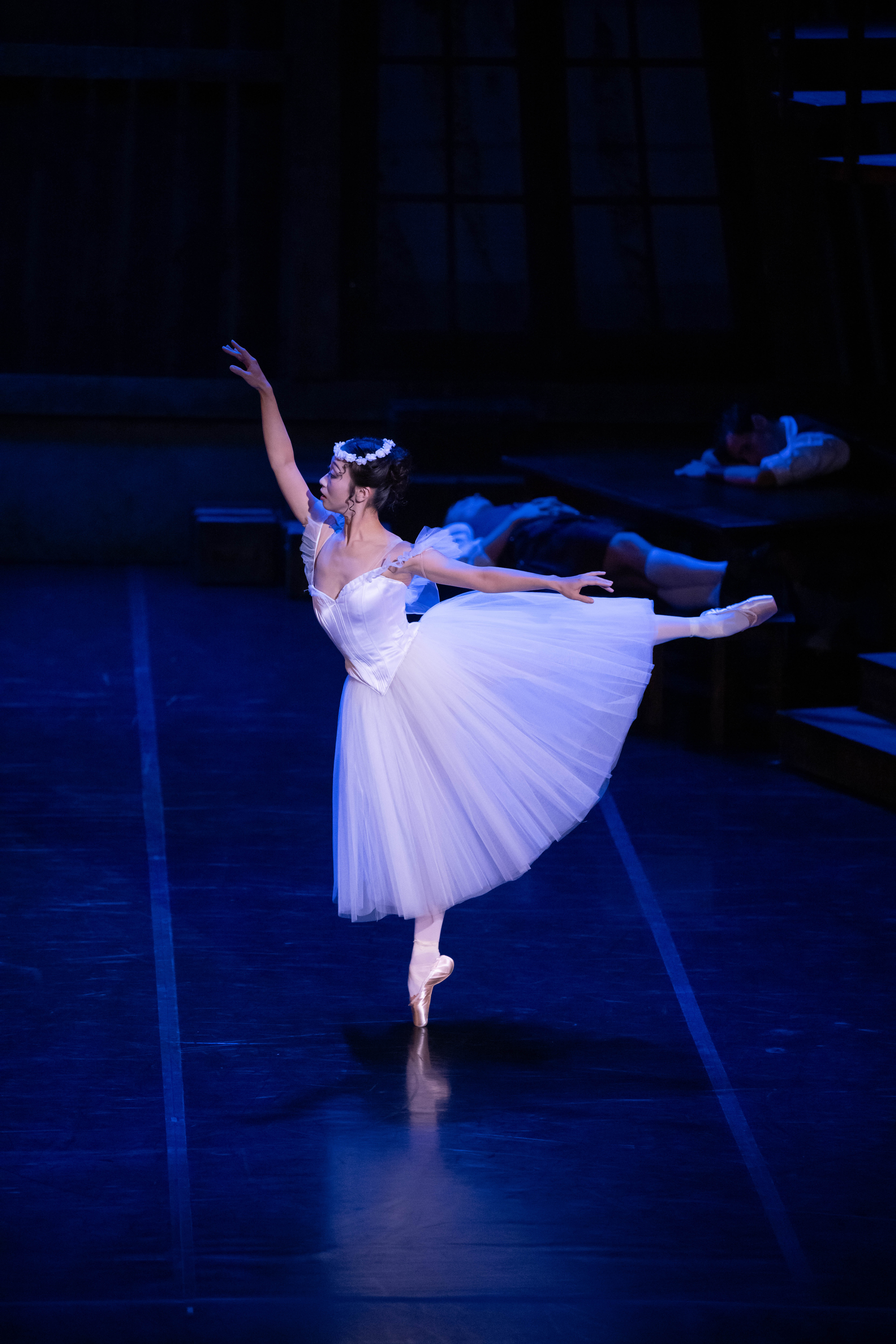
Theme & Variations.

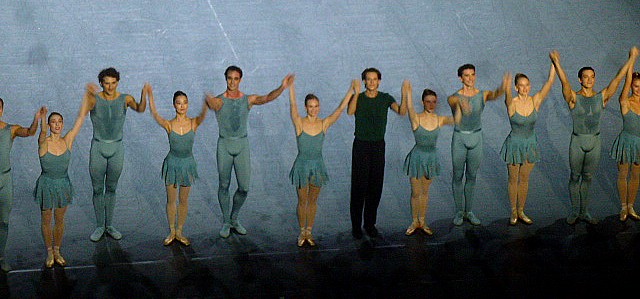
Zucchini Blossoms/ George Balanchine’s Theme and Variations (1947)

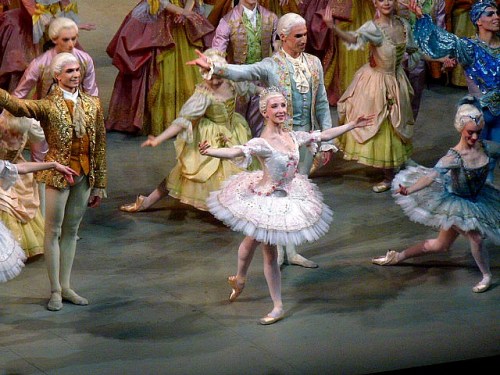
Have you ever planted zucchini in your garden? It just never stops sneakily extending its roots in all directions. By the end of the season you just cannot even look at even one more piece of your neighbor’s redundant zucchini bread. That’s Sleeping Beauty, tasty, but two long runs of it last season turned out to be more than filling.

Zucchini blossoms offer a delicate synecdoche for all that raw bounty. They are, in a sense, all the flavor concentrated into one juicy fried mouthful. Maybe this is one way to define how Theme and Variations distills Sleeping Beauty: the essence is there, minus the endless fairies.

Unfortunately, there are as many opinions out there about THE “authentic” way to dance Balanchine technique as there are recipes that do, or do not, include nutmeg. Ben Huys of THE Trusts (both Balanchine and Robbins!) was the invited coach. This ballet, despite its surprising construction – the ballerina barely gets to breathe during the first half and then mostly polonaises around for the rest – always turns out to be very tasty.

So let’s just enjoy the show and take a look at the dancers.

On October 17th, from the initial danced statement of the theme up to their deeply elegant réverances, both Bleuenn Battistoni and Thomas Docquir were still clearly inside their heads as Aurora and Désiré from last spring. And they continued to be that way, all the way through.  But, as the last time, there was just 1% missing. A dash of pepper. Battistoni reiterated the unemphatic grace of her first act Aurora: all about just the right uplift and épaulements and un-showy but oh-so centered rock-solid balances. But this performance could also use just one more pinch of spice.  Docquir, as he did last spring, concentrated on making his steps and jumps and batterie as scholastically perfect as possible. His performance wasn’t radiant. In princely roles, he seems to be fighting imposter syndrome. He rushed the music in partnering at times.

Honestly, this Theme was lovely, courtly, polished. The soft and precise landings into every pose at the end of a sequence literally pulled the audience in. I noticed that my neighbor kept leaning forward towards the stage each time, as if she had been swept up into 18th century courtesies, impelled to bow in return.
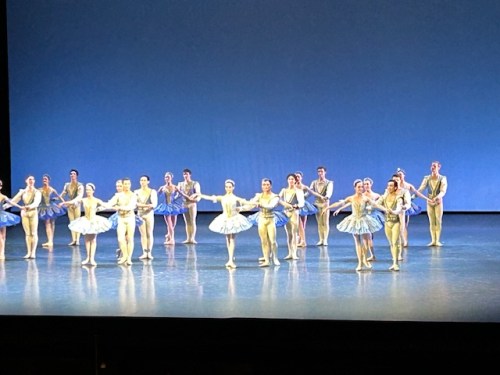
October 17th 2025. Bleuenn Battistoni & Thomas Docquir. Theme & Variations.

With Valentine Colasante and Paul Marque on October 18th, Theme felt looser and more fun. It was Beauty, but Act 3. Colasante luxuriated into the movements and teeny-weeny stretch-the-movement-out just enough beyond the axis to make a swish-swish seem new.  She danced big, fearlessly, and playfully dared to hover a microsecond too long. Both dancers caressed the air and the floor.  And there was something intriguing about the way Marque partnered: he seemed to catch her before the lifts, rather than on the way down, if that makes sense.

After the ballet, I thought about this very French concept of “la belle presentation.” Have you ever looked into a shop window in Paris where all the foodstuffs – from succulent to basic — are beautifully organized? Even bouquets of radishes are carefully placed in delicate patterns. Theme and Variations definitely suits our sense of l’art de vivre.

On both nights, I overheard complaints about the tiny corps on occasion not getting to their places and not lining up properly. Yes, yes, I did see it: one of the four girl soloists, and then especially when the male corps showed up. It’s not worth it to name names, as we have Giselle and a tour going on and are spread thin. Quite a few in the tutus and tights were newish to the stage. I find this critique particularly funny as Paris Opera Ballet is often accused of being too perfect from top to bottom.

As Balanchine would say, “who cares?”

*

 *                                  *
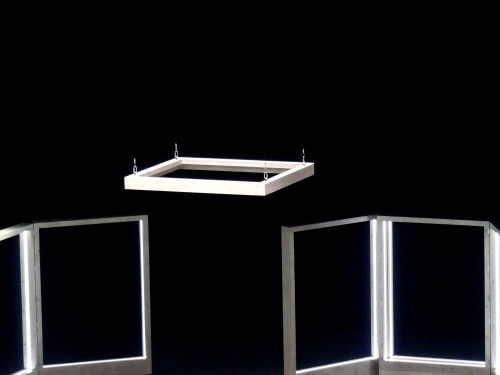
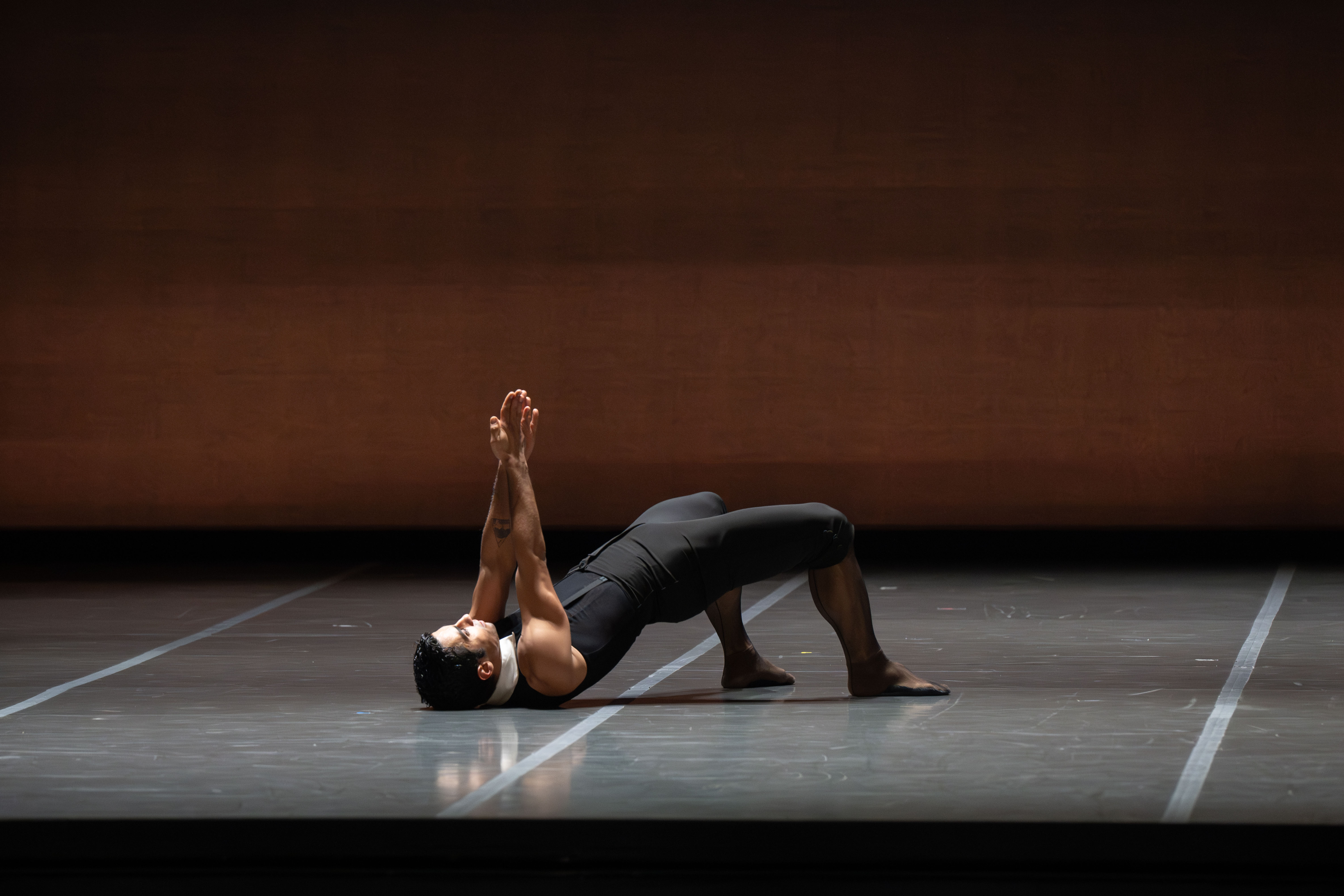
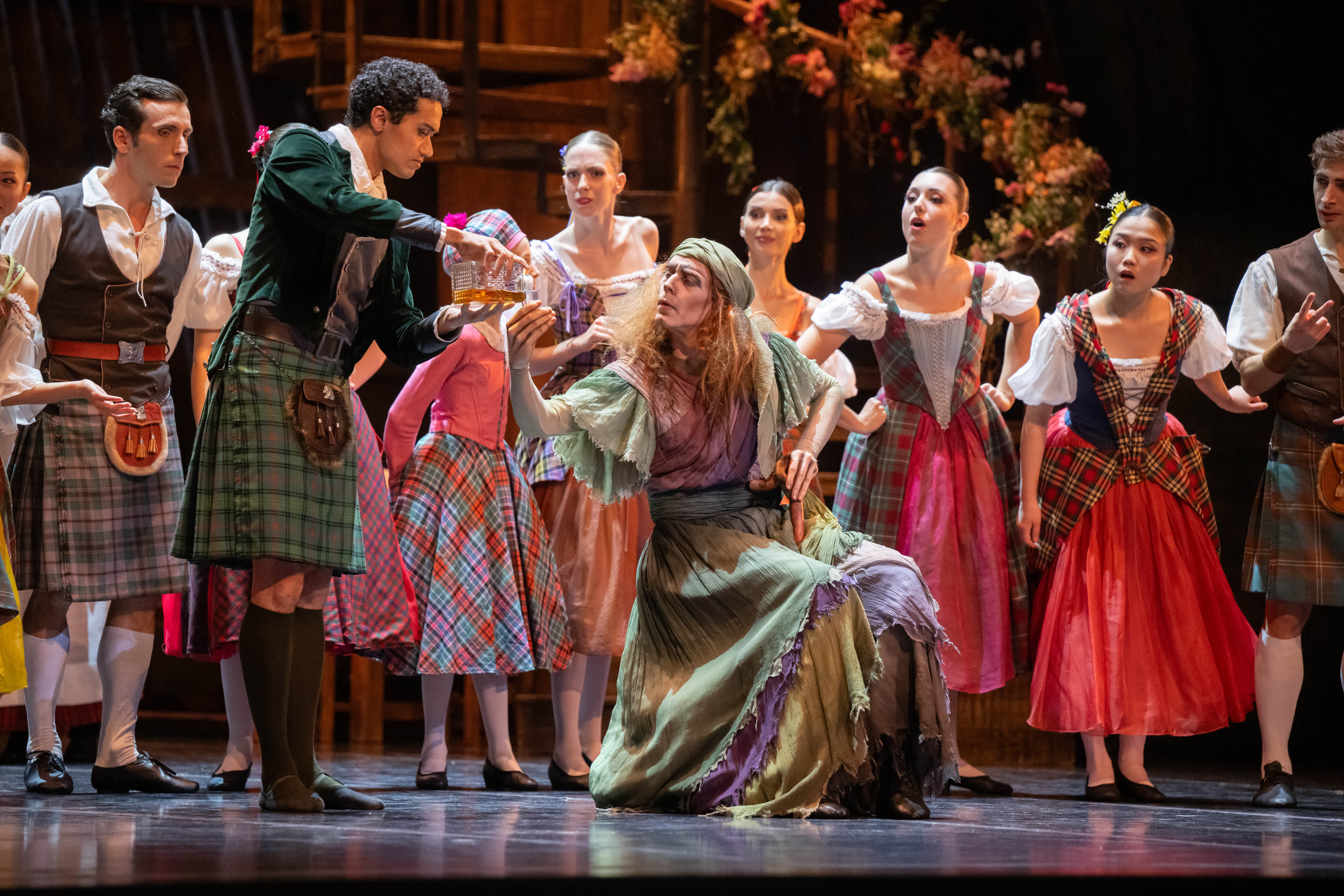
Rhapsodies. Magda Willi for Mthuthuzell November’s Rhapsodies.

Fennel and Endive /Mthuthuzeli November’s Rhapsodies (2024)

Who knows what to do with fennel or endives? Braise? Slice down in some direction and drench in lemon? No matter what, you have no answers. Maybe they just aren’t meant to be cooked.

Maybe Gershwin’s Rhapsody in Blue – by a composer who wrote pop music but wanted to be taken seriously – just isn’t meant to be used for a ballet?

Other choreographers have taken it on. In Paris, Odile Duboc did in 1999. It was insipid and has long gone into the dustbin.

Mthuthuzeli November’s take on the music has a lot more going for it. Or does it?

A clever set that leaves you puzzled, to start with.  The outlines of wooden door frames are highlighted by led lights. The frames are attached to each other and can be pulled out like accordions and wheeled around or reshaped into one square outline as clouds of dried ice float by. I thought of Olafur Eliasson’s “Inside the Horizon,” that unfolding series of slivered reflections at the Louis Vuitton Foundation. I began to recall the many times Jean Cocteau made characters walk through mirrors in his films. My seatmate – after we made a pact that we would both not put our noses into the program beforehand – concentrated hard and said she saw people trying to step away from their cellphones. A French friend had seen French windows.

So the set gets you from the get-go, even if your mind drifts back to how many choreographers have used moving sets to incite and inspire movement since the beginning of time…

And does the dance get your attention? It’s perfectly watchable, nicely thought out.

On the 17th in the lead couple Celia Drouy, sensual and rounded, was the charming girl next door. I’d love to see her in Dances at a Gathering. It was odd then, late in the piece, when she shoved away her partner, the cooly intense Axel Ibot. It seemed to come out of nowhere.

October 17th 2025. Rhapsodies.

The dance? Watchable and performed with energetic commitment by all. The cast was filled with skilled soloists who are only occasionally ever cast in big roles, such as Ibot (eye-catching here and equally focused the next night when he rejoined the corps) or Fabien Révillion (a delightful Colas long ago and a wrenching Lensky recently). I often watch for Isaac Lopes Gomes, cleanly and powerfully performing no matter what line he’s stuck in. Daniel Stokes. Juliette Hilaire. Charlotte Ranson…

Ah yes the dance. Forgot that one. Weight down but pulled up. A repeated group movement of squats in second thump forward while swaying side to side à la les drinking buddies in Prodigal Son. Open your arms to the sun and close them at varied speeds. Embracing the sky is common to almost all local world dances as well as yoga. Push and pull. As a young woman once said to me after she tried a baguette for the first time and did not want to seem ignorant: “I wasn’t amazed, but it was soft, it was crunchy, it was warm! It was soft and crunchy! Wasn’t it supposed to be soft and crunchy?”

On the 18th I think another layer got added to Rhapsodies. Letizia Galloni was laid back/avid, out-of-here/imperious, chiseled/pliant. She projected a mysterious anguish and tension which made you notice from the start that she was indeed pushing back at her partner, Yvon Demol. Even when Galloni yields, she holds something back.

Letizia Galloni is another one of those soloists whose career has switched on and off and on. Talented and eye-catching from the time she graduated the POB school, she scored La Fille Mal Gardée during the Millepied era about ten years ago. Then she faded into herself. Then disappeared. (At least here in a national company, you can go into hibernation without being fired).  But she popped up again last spring in Sleeping Beauty and offered the audience one of the loveliest Gold and Silvers I’ve seen in many a year: relaxed, imperious, generous, impeccable technically, with a sense of bounce and sweep that made us in the audience glad for her.

*

 *                                  *
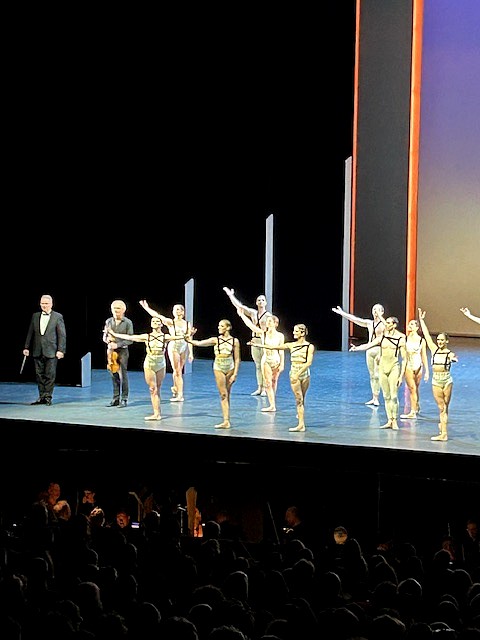
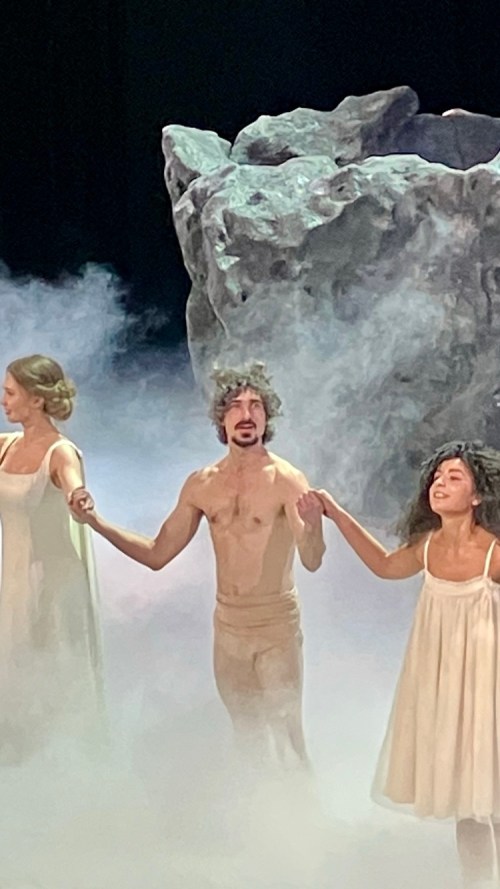
October 17th 2025. Corybantic Games.

Turnips/ Christopher Wheeldon’s Corybantic Games (2018)

Un “navet” aka turnip is the French way to say “that was a real dud.” I could have called this ballet a turkey, but we being very svelte and are only going to eat veggies today.

This thing, created for The Royal Ballet in 2018, has no structure (dramatic or balletic), no core, and dithers endlessly along. My seatmate on the 17th called it “soporific.” I thought of nastier words but simply nodded. I seriously considered skipping it on the 18th. Once was more than enough.

The pretty costumes are white with black ribbons crisscrossed across the torso that then dangle down from the shoulders. During the second night’s curtain calls, I tried to see if there was some sense to the danglers. Seems like the more of a soloist you are, the more ribbons.

The pretentious music is by Leonard Bernstein whenever he windily demands to be taken seriously. I’d call it Bride of Agon. The choreography, equally self-infatuated, proffers up innumerable quotes from just about every ballet that had an Antique World-y theme to the point that you could use it as a quiz: Note down the minute and the second where this choreographer directly cites Nijinsky, Nijinska, Robbins, Balanchine, Taylor. From Faun(s) to Apollo to Antique Elegies, this whole ballet felt like some snarky schoolboy’s inside joke. Flexed heels and upside-downsies and, as my seatmate noted, a lot of great final poses that turn out to be just a hook for more of the same. The Third Movement pas de deux ends with the guy hurling the girl up and into the wings (to be caught). Just where have I seen that one before?

It just goes on and on. I am too tired to describe it. Only a few days later I stare at my scribbled notes and all images of actual movement have faded. The steps from scene to scene – indeed within one — never get individuated. I’m looking at the cast list, filled with up-and-coming and cherished dancers and it’s painful. People tried to shine, gave it their all, but.

In the last scene, a soloist turns up (Valentina Colasante on the 17th and Roxane Stojanov on the 18th). Clearly, she is supposed to mean something, but what? Yes, I did know who the Corybantes were and that their earth mother is the fertility goddess Cybele (pretentious me) but what I didn’t see was one drop of wild ecstatic energy — not even once! — during these long minutes (37 minutes says the program, felt at least twenty minutes longer).

So now I’m looking at the program notes. Oh! Games is about Plato’s Symposium and polyamory! A less sexy or sensual ballet you will never find. No one connects. Ever. It turns out that in the fourth movement, if you look closely, the three couples are a straight, a male, and a lesbian one. Ooh! Did I look for boobies at all while three pairs of soloists in low light diddled around before settling into lovely enlaced poses on the downstage lip like teddy bears going to beddy? Seriously? As a female, I should note that women of any kind had no legal status or interest at all to Ancient Greek life or thought. Plato didn’t give a flying…hoot… about women, gay or straight. Why didn’t Wheeldon just make a dance about men being men who then tolerate a female diva who shows up for the grand finale? A fun fact is that Cybele’s male followers often castrated themselves at the apex of their delirium. Come to think about it, I don’t think that would make for a great ballet either.
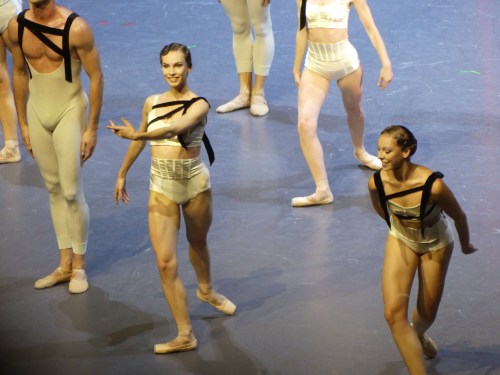
Bleuenn Battistoni & Roxane Stojanov, Corybantic Games.

As far as the title “Roots” goes, the program book insists that Wheeldon’s roots are in Greece. Seriously? He’s about as English as they come. As for Mthuthuzeli November,  the program talks less about his native origins and much more about his discovery of ballet. This program should have been entitled « Apples and Oranges with a Dried-Out Raisin on The Side. »

Could someone please pass the salt?


Commentaires fermés sur « Racines » at the Paris Opera : How to Cook Roots

Classé dans Retours de la Grande boutique

My Spring Season 2025 in Paris 2/2 : A Beauty Binge with Nymphs on the side.

In-Between The Beauties

Sylvia : ensemble.

Manuel Legris’s Sylvia, Palais Garnier, May 8th & 9th

Sandwiched in there, between Belles, we were treated to a short run of a revival/re-do of the ballet Sylvia, which had disappeared from the Paris repertoire.

I had never seen Darsonval’s 1979 version, alas. I will always regret how the Paris Opera then also deprogrammed the one I knew:  John Neumeier’s late 1990’s visually stunning version but esoteric re-interpretation of the story. It did take a while to figure out that Eros and Orion had been conflated into the same dancer by Neumeier,  yet the choreographer’s vivid sense stagecraft worked for me emotionally. All the better that Neumeier’s original naïve shepherd, Aminta/Manuel Legris himself, decided to try to piece together a new version that reached back to the ballet’s classic roots.

It was particularly odd to see most of the Sleeping Beauty casts now let loose/working overtime on this new production. While the dancers gave it their all, quite a few of the mythical beings were sabotaged by a production that included some very distracting costumes and wigs.

The Goddess Diana sports a basketweave ‘80’s Sheila Easton mohawk that would make any dancer look camp. In the role, a rather ferocious Roxane Stojanov held her head up high and ignored it, while the next evening a tepid Silvia Saint-Martin disappeared underneath the headgear to the point I had forgotten about her by the time she reappeared on stage near the conclusion. The interactions between Diana and Endymion make no sense whatsoever, particularly when you are at the top of the house and cannot see what is happening on the little raised platform at the back of the stage. Imagine trying to follow the plot when you can only see a bit of someone’s body wiggling, but without a head. Note to designers:  go sit up at the top of the house and do some simple geometric calculations of vectors, please.

To add to audience discomfort (hilarity?) with the staging at some point Eros, the God of Love, will abruptly rip open the raggedy cloak he’d been disguised in (don’t ask) in order to flash his now simply  gold-lamé-jockstrap-clad physique. On the 9th, Jack Gasztowtt managed to negotiate this awkward situation with dignity. On the 8th, having already gotten mega-entangled in his outerwear just prior to the reveal, Guillaume Diop didn’t. Seriously cringey.

There are many more confusing elements to this version, including the strong presence of characters simply identified as “A Faun” (Francesco Mura both nights) and “A Nymph” (a very liquid Inès MacIntosh on the 8thand a  floaty  Marine Ganio on the 9th).  But what’s with the Phrygian bonnets paired with Austrian dirndls? The Flames of Paris meet the Sound of Music on an Aegean cruise?

In Act 3, some characters seem to wear Covid masks. So please keep the choreography, but definitely junk these costumes!

Despite these oddities, dancers were having serious fun with it, as if they had been released from their solemn vow to Petipa while serving Beauty.

On the 8th of May, Germain Louvet’s fleet of foot and faithful shepherd Aminta charmed us. His solo directed towards Diana’s shrine touched in how grounded and focused it was. His Sylvia, Amandine Albisson, back after a long break, seemed more earthbound and more statuesque than I’d ever seen her, only really finding release from gravity when she had to throw herself into and out from a man’s arms.  But when Albisson does, gravity has no rules. Usually you use the term “partnering” to refer to the man, but I always have the feeling that she is more than their match. When I watch Albisson abandon all fear I often think back to Martha Swope’s famous photograph of Balanchine’s utterly confident cat Mourka as she flies in the air. When it’s Albisson, everything gravity-defying, up to and including a torch lift, feels liberatingly feline rather than showy or scary.

Here the hunter Orion is less from Ovid and more of a debauched pirate straight out of Le Corsaire. On the 8th, Marc Moreau at first moved with soft intention, clearly more of a suitor than a rapist where Sylvia was concerned. You felt kind of sorry for him. His switch to brutality made sense: being unloved is bad enough for a guy, being humiliated by a girl in front of his minions would make any gang leader lash out.

Marc Moreau (Orion), Amandine Albisson (Sylvia) and Germain Louvet (Aminta)

On the 9th, I had to rub my eyes. Bleuenn Battistoni – that too demure Beauty – provided the relaxed and flowing and poignant princess I had hoped to see way back in March. Nothing dutiful here. Already in the first tableau, without doing anything obviously catchy, her serene and more assertive feminine authority insured that the audience could immediately tell she was the real heroine – an eye-catching gazelle. Maybe Beauty is just too much of a monument for a young dancer? Inhibiting?  Ironically, at the end of the season, I would see Albisson let loose as Beauty. The tables will have turned.

I was drawn to Paul Marque’s melancholy and yearning shepherd Aminta. At a certain point, Sylvia will be prodded by Diana to shoot her suitor. Albisson did. Here Battistoni (and who in any case would obey Saint-Martin’s dry Diana?) clearly does by accident, which made the story juicier. Battistoni’s persona was vulnerable, you stopped looking at the “steps” even during the later Pizzicati solo, which she tossed off with teasing and pearly lightness. Everything I had hoped for in Battistoni’s Beauty showed up here.

Sylvia : Paul Marque et Bleuenn Battistoni

*

 *                                    *

The Belles Are Ringing

La Belle au Bois Dormant’s second series. Opera Bastille, June 27th,July 6th and 7th.

Guillaume Diop et Amandine Albisson (Désiré et Aurore le 7 juillet).

And then, boom, Albisson full out in Sleeping Beauty on July 7th.  As fleet of foot as I knew her to be, neither allegory nor myth but a real and embodied character. Whereas she had seemed a bit too regal as Sylvia, here came the nymph. Delicate and gracious in the way she accepted the compliments of all of her suitors, Albisson created a still space around her whence she then began to enchant her princes. She looked soundless.

Guillaume Diop, who had proven a bit green and unsettled earlier this series, woke up his feet, leaned into his Second Act solo as he hadn’t before – a thinking presence, as someone remarked to me – and then went on to be galvanized by his partner and freed by the music.

Perhaps Diop, like everyone else on the stage, was breathing a sigh of relief. For this second series of Beauties in June/July, the brilliant and reactive conductor Sora Elisabeth Lee replaced the insufferable Vello Pähn. During the entire first series in March and April, this Pähn conducted as slowly and gummily if he were asleep, or hated ballet, or just wanted to drag it out so the stagehands got overtime. With Sora Elisabeth Lee, here the music danced with the dancers and elated all of us. During the entire second series, Bluebirds were loftier, dryads were more fleet-footed. Puss and Boots had more punch and musical humor. Sora Elisabeth Lee gave the dancers what they needed: energy,  punchlines, real rhythm. This was Tchaikovsky.

So this second series was a dream.

On July 6th, Germain Louvet proved that he has grown into believing he can see himself as a prince. I say this because I was long perturbed by what he said as a young man in his autobiography (written before you should really be writing an autobiography).  An assertive prince, a bit tough and perfectly cool with his status as Act Two starts. And then he began unfurling his solo, telling his story to the heavens. His arms had purpose, his hands yearned. And when he saw his Beauty, Hannah O’Neill, it was an OMG moment.

As it had been destined to be. O’Neill’s coltish and gracious and sleek, sweetly composed and well-mannered maiden from Act One was now definitely a damsel in need of a knight in shining armor. She was his dream, no question. She began her Second Act solo as if she were literally pushing clinging ivy aside, her arms moving slowly and filling into spaces at the end of each phrase. No wonder that Louvet’s prince became increasingly nervous seconds later while trying to find his girl in among the sleepers. You could feel his tension. “Are they all dead? Was the Lilac fairy just fooling with me?” And, oh, Act Three. The way he presented his belle, the way they danced for each other.

Hannah O’Neill (Aurore) et Germain Louvet (Désiré)

But of all the Beauties, I will never forget Leonore Baulac’s carefree and technically spot-on interpretation, maybe because I just can’t find a way to describe this June 27th performance in words. Fabulous gargouillades? The way she made micro-second connections with all four of her suitors (and seemed to prefer the one in red)? The way everything was there but nothing was forced? The endless craft you need to create the illusion of non-stop spontaneity? The way Marc Moreau just suited her? Those supported penchées and lean backs in the Dream Scene as one of the most perfect distillations of call and response I have ever seen?

Both Baulac and Moreau sharply etched their movements but always made them light and rounded and gracious. Phrases were extended into the music and you could almost hear whispered words as they floated in the air. They parallelled each other in complicity and attack to the point that the first part of the final pas de deux already felt as invigorating as a coda.

Léonore Baulac et Marc Moreau (Aurore et Désiré).

You can never get enough of real beauty. Let’s hope 2025’s Paris fall season will be as rich in delight.

Commentaires fermés sur My Spring Season 2025 in Paris 2/2 : A Beauty Binge with Nymphs on the side.

Classé dans Retours de la Grande boutique

Better Late than Never. My Spring Season 2025 in Paris : A Beauty Binge: 1/2

Sleeping Beauty/La Belle au Bois Dormant. Paris, Opera Bastille.

March 11, 13, 22 and April 3rd, 2025.

Stagecraft

Sleeping Beauty made me fall in love with ballet but at the same time, each time I see it, I begin wonder just why at some point (I still cannot pinpoint when), this ballet starts taking too long. Something could be cut. But what, where, when? And why?

I’m still stuck pondering this question decades later, even as this ballet makes me feel like a bee just gob-smacked by all the pollen out there on stage, bemusedly happy to just sit and watch a swarm of dancers bumble around in all the colors of its endlessness.

March 13th and April 3rd. During first intermission, I met up with some young American dancers. To my dismay, they assumed that Bluenn Battistoni had just graduated from the Paris Opera Ballet school and was being given her first big chance. I tried to argue that the French style, like the French people, is modest and reserved, more about perfection rather than chutzpah. (The company has been eternally misunderstood by those many American critics who value flash). But I didn’t even manage to convince myself. Battistoni’s dancing is absolutely stunning and technically polished, but her stage presence was way too reserved – over-calm — this performance. I’m not saying she needs to sell out, just learn to catch the limelight a little more. She’s completely assured but not assertive enough. With the right coach I am sure Battistoni will move from inward-looking glow into eye-catchingly demure radiance.

Battistoni, on the second night, channeled a newly skippy feel to her hops and gargouillades. She was asserting herself more, aha, but remained soft-spoken.

Bleuenn Batistoni (Aurore) et Guillaume Diop (Désiré)

Inès McIntosh on March 11th was more extraverted but she, like Battistoni, would probably be better served right now by Balanchine’s clever abstraction of Sleeping Beauty’s formal magic: Theme and Variations. That is not to say that McIntosh didn’t offer a powerful mini-mad scene after her finger was pricked. McIntosh has undeniable presence, but she hasn’t yet grown into projecting that kind of distillation of womanliness offered by so many of the Auroras I’ve seen from Fonteyn on down.  In the Vision Scene, she just didn’t know how to project vulnerability and yearning.   At the end of the evening I left the theatre humming Don Q instead of SB.

Ines McIntosh. Aurore

March 22nd. Powerful yet demure radiance is exactly what Héloïse Bourdon embodies these days. She just glows. In her one shot this season as Princess Aurora, I was delighted by how she reminded me in her solos of where the choreography and music echo bits and pieces of her Fairy godmothers’ variations. The Prologue had come together to shape the personality of this princess. Bourdon’s hard-earned stagecraft (don’t get me started again on all the reasons she should have promoted ages ago) offers a gift to the audience. You don’t have to be a balletomane to feel that something big is happening, but if you are a balletomane you relish her mastery of both steps and nuance all the more. I was bewitched.

Bourdon Docquir March 22

On other nights I was reduced to sitting back and basking in the authority and easy confidence of the same Bourdon’s repeated brief stints as Sixth Fairy during the Prologue. This variation is normally given to THE Lilac Fairy, but alas Nureyev morphed Lilac into a separate and, when not mimed with authority, utterly insipid panto role. Why turn the juiciest solo into a random outing with no follow-through? Instead of a powerful ballerina/catalyst, THE fairy turns out to be a random junior dancer in a cut-out costume dominated by a big wig à la Lina Lamont from Singing in the Rain insipidly miming – with one cast exeption – “Oh Carabosse, you shouldn’t have come. No, no, no.”

Bourdon’s suitors in Act One clearly appreciated this well-bred Aurora in bloom.  “A rose? How kind of you.” She wasn’t “selling it” in a flashy way, nevertheless the people sitting near me literally screamed at the end of the adagio and a young man right behind me gasped in shock when she pricked her finger. Yeah, sure, vox populi. But I was equally enthralled by such gracefully and authoritatively danced intelligence. During the Vision scene, Bourdon’s control and release and way of finishing each phrase now evoked memories of the way she had danced at her birthday party. Each act had you plunge deeper and deeper into all the facets and colors that are buried in a diamond.

Of course, Bourdon has one great advantage over the other two Auroras I saw: on-stage experience in the ballet. The last time this ballet was given in Paris was over a decade ago, so neither Battistoni nor McIntosh have had the luxury to start out as a little fairy, get the music and production into their bones and muscle memory, watch and learn from the stars while in the wings or milling about dressed for a mazurka. Stagecraft takes years.

Part of my reticence about the Beauties could be blamed on the hard-working and well-meaning Prince Desirés of both Thomas Docquir and Guillaume Diop. As most of the company’s male principals had decided to hang out over at the Palais Garnier and devote themselves to performing in Mats Ek’s Appartment rather than be involved in this run, basically there were few men left.

Both, as if they were relief pitchers, were scheduled to partner at least two if not three ballerinas. Where is the rehearsal time then to craft intimacy in dance and drama with your partner? Where is the time to work on your own role?

As I noted to myself during Act Two: “McIntosh seems better on her own and fills the space when she is the dream.” Act Three: “Fish dives with Docquir not thrilling. Steps executed, zero connection, she seems like a doll instead of a woman. Isn’t this supposed to be a wedding?”

Perhaps Thomas Docquir (March 11th and March 22nd) has simmered too long in secondary roles, including endless iterations of Rothbart, to be “the one.”  He has clearly been working on refining his technique (solid from the start but now more polished, elastic, finessed, held up high) and elongating his lines. But, seriously, it is now time for Docquir to build up his self-confidence and stop avoiding the spotlight. When he came out on the stage in Act Two…both times few in the audience caught on that he was supposed to be the star.  His Vision scene solo was made for some nice lines, yet the longing was missing. He didn’t ever challenge McIntosh to do that one percent more and when I next saw him with Bourdon my always accentuate-the-positive seatmate made an interesting comment. “If even he can’t believe that he is a prince, then why should she believe him? [pause] Then why should I?”

Guillaume Diop (Désiré)

Guillaume Diop (March 13th and April 3rd) is so talented and cheerfully radiant – and known — that even if he’s sometimes just a bit too all over the place (not only Etoile but  in-demand fashion icon), the audience just takes to him before he even takes a second step. I saw him twice with Battistoni and clearly he learns fast and carries over new ideas from performance to performance. By the second performance I saw, the partnering between their had developed. Intense eye-contact led to easier connection.

He’s a very attentive partner – boy does he just know how to hold out his hand and whip his girl into pirouettes with concentrated nonchalance — and as a soloist he has impressive elevation and strength (those barrel turns). But he has got to keep working on refining his feet, still just a bit forgotten as they are too far away from his head, and he especially needed to re-ground his plié (I winced a few times on the 13th). While he knows how to stretch out of his balances, he’s begun to sit back on his standing leg and is not pulling up enough through his hip…a sign of being tired. He’s dancing too much and this worries me. Nevertheless, I am curious to how partnering a much more seasoned stage partner during the next run – Amandine Albisson — might galvanize him. Two young-uns is cute. Young talent rubbing up against stagecraft often results in more.

To be Continued…

2 Commentaires

Classé dans Retours de la Grande boutique

Opera Bastille, l’Isola Disabitata : Broken Hearts, Broken Hart

Commentaires fermés sur Opera Bastille, l’Isola Disabitata : Broken Hearts, Broken Hart

Classé dans Retours de la Grande boutique

In Paris Two Paquitas, at long last…

At the Opera Bastille, December 17 and 18, 2024

What would it have looked like in the end if Giselle’s heart had not been broken, Albrecht had forgotten about Bathilde in two seconds flat, and they lived happily ever after? Their names would be Valentine Colasante and Guillaume Diop. Their courtship would be bathed in sunshine from beginning to end.

What would it look have looked like if Swanhilda had been kidnapped by campy gypsies? She would have gotten her desired Franz in the end by hook or by crook, and the two of them would be called Léonore Baulac and Marc Moreau. A rainbow would smile upon them.

img_9175

Paquita. December 17th (Valentine Colasante, Guillaume Diop, Pablo Legasa). Curtain call.

On December 17th, the light and unpretentious manner of Colasante’s Paquita made the audience root for her from start to finish. But to me, she seemed a bit…tame (for lack of a better word). This girl would either be saved by a prince charming, or not.  Diop’s youthfully eager hero made his “blink and I’m done” attraction to her quite clear. And Colasante’s Paquita seemed to fluff up every time she was around him. He’s a very nice guy and a caring partner, an Albrecht with no secret story. 

Diop kind of overdid it in his first solo, trying to impress his partner, as if he had been coached by Nicolas Le Riche for better or for worse. What I mean is that Le Riche had glorious talent and a penchant for rousing the audience with his split leaps even if that meant sacrificing precision. You might have seen a few off-finishes, a right leg that turned in too early before marvelous leaps and, much less visibly, “my toes aren’t completely stretched right now.”  But the audience clearly did not care for such picky details. He got it all back into control as the evening went on. This very young étoile will hopefully use Manuel Legris as his model instead from now on: he’s got the talent to be the kind of star who never sacrifices precision for expression nor the other way around and still delights an audience.

For me, I wonder whether Valentine Colasante could make more of a contrast between 1) the 1840’s-ish first act of mime and terre à terre caressing of the floor by the foot (the realm of Carlotta Grisi, the first Paquita as well as the first Giselle) and 2) the full-out Petipa of the second act. She could have used really broken-in and more tapered toe shoes at first before later switching to those shiny modern ones when really needed. I wonder if her coach didn’t somehow convince this lovely ballerina, who makes dancing seem as natural as breathing, to dance “small and controlled.”

At some point I could not stop thinking about how everything had been so correct and well-rehearsed and pretty for hours now that maybe a bit of acceleration and deceleration of the phrasings would be welcome.  All the partnering had been perfectly worked out and Diop did a great job on making the lifts work. But why was I actually thinking about the technique of partnering as I was watching, rather than swept away? 

By the last act I was “OK, whatever, I’m not having a bad time. Maybe clean and pearly is just fine. Maybe rehearse it hard and just do it is all you need?” Their lines really matched, elegantly classical and not flashy. The audience around me was barely breathing, completely entranced by some kind of fairy magic. For me the last travelled lines in the last big pas could have travelled more, but did anyone around care other than me? No.

A night later the “feel” was very different, but why feel you need to choose between apples and oranges or sunshine and a rainbow? 

*

 *                                        *

Whereas Valentine Colasante had shaped a Paquita gently doubtful but confused and insecure about her origins,  Baulac’s Paquita was “nope, I know this is not right. I’m better than all of this. Hm. Maybe I can start getting attention by just swishing my skirt.” Her Swanhilda, cheerily resourceful from the get-go, helped give the limp narrative a bit more of a dramatic arc than it normally has. In Scene Two at the tavern, Baulac was definitely trying to save her Franz from losing his life to bad wine, and was way more focused on making the most out of the opportunities for slapstick. No damsel in distress, this one.

Instead of a ready, willing, and able youth, Marc Moreau, as soon as he appeared onstage, defined space around himself as a perfectly poised Lucien d’Hervilly , a gentleman in no way boyish but definitely open to adventure. His technique was precise, but he didn’t forget about the big picture either. 

In Léonore Baulac’s radiant Paquita, there was no way that Marc Moreau was going to find a Giselle. Perhaps a little adventure might happen in the woods with a naughty sylph, very flirty and strong-willed from the start? Nope, not that either. This man had no chance of getting away, and he didn’t mind at all.  Moreau and Baulac’s lifts felt more naturally floated and less “rehearsed” than the night past. Everything felt more reactive than activated. At one point, he slid his hand gently down her arm from her shoulder to her wrist before a turn. Yesterday that same moment had been “I’ve got the wrist, let’s go.” During the last act, I began to fantasize about seeing Baulac and Moreau dance an iridescent and inflected Theme and Variations.

img_6736

Paquita, December 18th (Léonore Baulac, Marc Moreau, Pablo Legasa). Curtain call.

*

 *                                        *

What’s so weird about Pierre Lacotte’s reinvention of Paquita is that despite its numerous dramaturgical faults, it works for the audience. And this big ball of fluff actually works much better now that it is housed at the Opera Bastille. As opposed to the tight box that is the Palais Garnier’s stage, here all the endless group dances (from the waltzes to the children’s polonaise) do in fact get space to breathe and be danced big…albeit not always with the music and often messily aligned. 

However, a breath of air does not excuse the other weaknesses that this yet another Pierre Lacotte staging of yet another 19th century ballet always had in the first place. The plot summary provided in the fat program (save your money and just invent your own plot) will never rhyme or reason with what you see on stage. And, frankly, certain aspects of the plot have gotten even fuzzier due to a bigger venue with more distant sightlines.

Who on earth can tell that the evil governor’s much more youthful daughter (as we see it) in fact happens to be his sister (not to mention that we are often unsure whether he wants Lucien killed or Paquita). I’d always thought Bathilde in Giselle was kind of a loser role, but Dona Serafina? She appears, dances a little, sits down stage left and then just fades from view until curtain.  Both Nais Dubosq (a bit of a wallflower on the 17th ) and Fanny Gorse (more assertive on the 18th  if that is humanly possible) tried to give this impoverished role a bit of visibility. 

And then this: from nowhere in the house now – OK, maybe from the front row — can you now even begin to decipher what is written on that “marble slab” in Act One ? But the worst part is that, due to sitting even further away than normal at the Opera Bastille, “the locket,” [our heroine’s “get out of jail free” card] becomes even more spectacularly illegible, too. Why couldn’t repeated locket pantomime have been a priority in Lacotte’s eye? Maybe give the little thing a Giselle/Bathilde kind of big awkward necklace visibility? Instead, the “key to the mystery” is pinned to the dancer’s skirt in a way that cannot be seen. Perhaps the hip level location is historically correct. But I bet the pendant was bigger, maybe against a darker skirt, and its original theft accompanied by mime of a more semaphoric variety.  It’s now been just about two decades that I’ve watched Lacotte’s reconstruction of this “lost ballet.” Only once did I actually notice Inigo steal the locket in the first place. This needs to be seen, maybe à la Basilio stealing the innkeeper’s money bag.  The dancer’s fault? No. Lacotte should have made a lot of the panto way bigger.

On both nights, Pablo Legasa was wasted as the manipulative Inigo. Like Audric Bezard once was, he’s getting stuck in character roles when he’s really a danseur noble. Legasa’s acting responds to his ballerina, he’s just not a ham. So it was logical that he was no macho gypsy king on either night. With the gentle Colasante, he was Berthe, worried about a daughter who dances too much. When facing off with a tricksy Baulac, Legasa morphed into a hapless Doctor Coppelius, naturally. 

Speaking of Coppelia. Why doesn’t the company perform one of the greatest ballets ever created for it? Why are reconstructed first acts buried in a vault at the school, only to be exhumed for the Paris public maybe once about every fifteen years? And why, instead of letting Lacotte dig himself a deep hole with his swan song – the dreadful Le Rouge et le Noir – hadn’t management simply asked him to come in and toss off an act three?

2 Commentaires

Classé dans Retours de la Grande boutique

In Toulouse : Does Gluck Make Me Feel Like Dancing ?

Gluck’s Sémiramis/Don Juan. Ballet du Capitole. October 26th and 27th, 2024.

I once sat next to an annoying frat boy at an Upper East Side dinner party who thought a clever conversation starter was “I adore Berlioz. What kind of music do you like?” I sighed. “Oh, anything that I feel I could dance to, so I’m not into Berlioz.” Eyebrows pointed in alarm, he sneered, “so you like disco?!” and then talked to other people for the rest of the night. OK, I still do have fond memories of dancing like a demon to disco. But I with hindsight I realize what else I could have said: “I’m into dance, yes, but most of all I love it when I can watch bodies find a story and their own truth in music.”

*

 *                                 *

Settled back in my seat in Toulouse in October, that long forgotten exchange popped up while I listened to Jordi Savall conduct the dance suite from Christoph Willibald Glück’s Iphigenia. The audience is treated to an extended overture before even one dancer will set a foot on the stage. As the straight-backed and craggy Savall elegantly led his brilliantly cheery Orchestre Le Concert des Nations into the final rousing chaconne, I definitely felt I had heard a story displayed through music. I felt like dancing.

I was really intitrigued by the fact that what followed would be re-imaginings of the first ever story ballets, revisited. Of course the choreographies have been lost, but here you would have authentic 18th century scores, neither intended as intermezzi in a larger opera (think Les Indes galantes, for example) nor bits of hit songs squished together in the typical patchwork ballet scores of that time (think Ivo Kramer’s subtly re-invented La Fille mal gardée, in the Ballet du Capitole’s repertoire/archives). In its time, “real” music for a ballet was revolutionary. Can this music still make us feel?

Sémiramis

BNC_0111

Ballet du Capitole de Toulouse. Programme Gluck. Photographie David Herrero.

Ángel Rodriguez’s ballet to the music for Glück’s ballet Sémiramis followed apace. As there was no plot summary in the program, odd, hummm, I’d read up about the original play by Voltaire and was ready for anything…except to be served up something rather abstract. A divertissement, after all that?

Of course, silly, I don’t think I would have wanted to witness a dancing Semiramis waving around a vial of poison or being stabbed to death in slow-motion mime either, but here we ended up from the start back to the plotless dance interlude. Rodriguez’s piece, albeit a quite skilful and visually absorbing “divertissement,” was exactly the genre that Glück and the long-forgotten choreographer Gaspare Angiolini were trying to get away from in the first place.

We start – in silence, odd, as we have a lot of Glück to get through– with a giant lump/tumulus center stage that begins to winkle out some women.

The lump turns out to be a mass of iridescent fabric that will spend its time slowly spooling itself up to the rafters (until its inevitable swoosh back down in order recreate the tumulus from before).

The women squeak like birds as they rise up from the lump as if lofted by strings. They wiggle arms and waggle fingers, rise and swoon, swoop and then bend their knees, trace some kind of semaphoric language in the air. Later they will form circles. Men next emerge from the fabric lump. The music does start at some point and from then on these seven men and seven women continue to spiral around each other, touch and go, bodies hang off bodies and are carefully placed back on the ground in various configurations. There’s a duet for two who cup their hands for some reason.

BNC_0665

Ballet du Capitole de Toulouse. Programme Gluck. Sémiramis. Kayo Nakazato & Jeremy Leydier. Photographie David Herrero.

The lifts are almost always horizontal, with bent knees and flexed feet, gently Kylian in feeling. At some point, random lone women successively meander straight across the back of the stage just in front of the ever-rising backcloth. This visual distraction was not the best of ideas because: at just about the same moment during both matinees my eyes hooked onto the cloth (ooh it’s gone from gold to blue!) and my mind drifted towards memories of those poignant moments when Thierry Malandain takes fabric and makes it a real partner in the story.

Even if I found my mind channelling too many other choreographers who do all this better, I can’t say I was bored. Sémiramis was pleasantly soothing. The dancers were utterly committed (and in the case of Philippe Solano, explosive). But by the time we got to the troupe all running forward in slow motion — oh Lord, that gimmick — I felt a bit stuck.

BNC_0969

Ballet du Capitole de Toulouse. Programme Gluck. Philippe Solano. Photographie David Herrero.

Much later, I ran across a really touching text by Ángel Rodríguez in the Capitole’s magazine. The choreographer dedicates this piece to his mother and all the other women who hold up at least half of the sky. Did I see happening onstage? Not really. But it’s a lovely idea.

*

 *                                 *

Don Juan

BNC_2223

Ballet du Capitole de Toulouse. Programme Gluck. Photographie David Herrero.

Edward Clug found a better balance between plot and abstraction in his Don Juan. As Molière is mother’s milk to the French – everybody here is forced to study his plays in high school – light references were all this audience needed in order to situate themselves in the goings on.

Could this piece travel outside of France? Most possibly: the tragedy of Semiramis is niche. The Latin Lover, for better or worse, is a universal cliché.

We begin and end with the vivid image of the dancers hovering (glowering?) in a semi-circle around a man on the ground in an upside-down Christ pose, only to smother and then extract him from a mosh pit of arms and legs. In this piece, too, arms and knees get bent, feet get flexed, but here all these limbs serve to push the idea of a story into the foreground.

The set and props by Marko Japelj, and costumes by Leo Kulas, are minimal yet perfectly evocative. Moveable semi-transparent dark partitions pierced by Neo-Mauresque arabesques were wheeled around to create spaces you could recognize (a convent, a secluded garden, the dinner party). A giant “stone” horse gets rolled in to advance the action, along with a stiff red skirt that was inhabited and incarnated in multiple and specifically recognisable ways.

BNC_1890

Ballet du Capitole de Toulouse. Programme Gluck. Photographie David Herrero.

Yes, this is very hard to describe, but it works.

During the October 26th Saturday matinee, Alexandre De Oliveira Ferreira’s Don was a peacock from the start, emerging from the puddle with flounce and go, ready for the sighs and air kisses that were his due: a cheery Teflon Narcissus, chillingly incapable of feelings or regrets right down to the moment he meets his sorry end. On Sunday, Ramiro Gómez Samón’s shaped a more sensual, sexually-ambiguous, and more ambivalent Don. His interpretation proved perhaps more compelling and seductive, to me.

On Saturday, Marlen Fuerte Castro’s Donna Elvira was implacable and forceful from start to stop. She seemed to incarnate The Commander (whom we never see) more than his confused child. To me, Solène Monnereau’s alternately soft and sharp and more womanly Elvira seemed more true to Molière (and later Da Ponte): she used her body to trace a theatrical (albeit abstracted) arc from confused woman in love, to woman disappointed in love, to Fury bent upon revenge.

bnc_7707

Ballet du Capitole de Toulouse. Programme Gluck. Kleber Rebello et Solène Monnereau. Photographie David Herrero.

My only real quibble is the lack of “screen time” devoted to that trope – the scheming lovable rascal who speaks power to power (or at least to the audience) – the manservant Sganarelle (Leporello to some of you). He’s the audience’s ally. Dinner party trash-talking Don Juans may seem handsome at first but, boy, those Sganarelle-types always turn out to be so much more fun once you get them out there on the dance floor.

BNC_1258

Don Juan. Philippe Solano (Sganarelle). Photographie David Herrero

Philippe Solano’s version of Sganarelle – a speedy, elastic, and sarcastic presence — had the snarky wit of a court jester. Kleber Rebello a day later, differently delicate and perhaps even more sarcastic, also spoke to me. What a pity the choreographer did think to give them the last word. Both times, when it was all over during the happy (and deserved) applause, my mind flew back to the way Paul Taylor gives his “little girl” a pause and a sweeping arms-out bow at the very end of Esplanade, a moment that the dancer can choose to execute either with reverence or with sass. I would have loved have seen that done here.

If you are in Barcelona in March, or Paris in May, snap up tickets to see the Ballet du Capitole dance to the music of a fabulous tiny orchestra. You won’t regret it, and may even find you may feel like dancing. Why not ?


Commentaires fermés sur In Toulouse : Does Gluck Make Me Feel Like Dancing ?

Classé dans Retours de la Grande boutique

Opening Night at the Paris Opera Ballet. Will We Get Into The Groove?

P1220672

Défilé. Dorothée Gilbert.

The Défilé du Corps de Ballet de L’Opéra de Paris

+ An Evening of Forsythe/Inger (and Stromile)

October 9, 2024

After months of being forced to sit on the sidelines (and literally stay out of the way) in Paris due to the Olympics, shortly followed by Fashion Week parasiting normally public spaces, encore!, I really needed to feel I was back at home at the Palais Garnier and get back into the groove. To be lifted out of my seat by cheering dance instead of being forced to watch basketball. Instead, my reward for being a good and patient Parisian turned into maybe the dullest, most monotonous, outing I’ve experienced in quite a while.

Yes, I am grumpy. Here’s why.

On September 14th, I had decided to ignore the last Olympic Grande parade on the Champs Elysées and instead burrowed down into the Opéra Bastille’s Amphithéatre to watch a public rehearsal with some young dancers cast in the upcoming revival of William Forsythe’s Blake Works. This hour-long session was not at all about the pursuit of the Perfect Ten. Albeit physically demanding, ballet is an art, not a sport. You don’t need to nail it. The goal is not getting a ball into a little basket, nor scoring a goodie bag.

Instead of breaking records, another question proved more pressing. Not all that long after this ballet had been created for the Paris Opera Ballet in 2016 “how to keep Blake Works alive and how to keep it feeling new” clearly obsessed both the new cast as well as the spectators. After the rehearsal was over, one audience member during Q&A asked about “getting it right.” Ayman Harper’s — a Forsythe veteran — response summarized what he was here to do: to get the dancers to “feel and go with the flow.”

During this public rehearsal, the Paris company’s ballet master – Lionel Delanoë, himself the winsome and sharp creator of a role in Forsythe’s masterpiece, “In The Middle” – did not stop beaming at the dancers from his front row seat in this intimate space. Harper, a guy with a slouch and an oomph and fun hair, kept saying: “That was beautiful. Just beautiful. But maybe you could try this?”

Roughly (as I was not doing steno), Ayman Harper pitched it like a dude:

“ There is no authoritative version of any Forsythe ballet. Bill believes that once you do that – fix it, nail it – a work of art is dead. If you impose the way you must move every single second onto the dancers, if you give them too much information and over-explain it, you will have killed it and put it in a box. Art needs to be like air, inhaled and exhaled.” This rehearsal master (eight years in Frankfurt) also added why “Bill” insists upon remaining so loose about the future of his works. “The man himself could say, ‘ooh! Now I have the chance to change something that has been bothering me for years/oh that bores me now/um, I just don’t need to insist upon it this way. Your body is different so just do it your way’.” This approach is not about the “après moi le deluge” attitude of the many long-dead dance makers who still engender bodice-ripping fights from beyond the grave amongst their legal heirs. This “guardian of the temple’s” attitude was more about “if the dancers learn to love to do it, then we can all share in the fun.” This is a very cool idea. But does “making it work for you” really keep a ballet alive? Can new generations not just outline, but live in, the step? Do new kids even know what the ancient word “groove” even means? Will they ever feel it?

Jazz has always been both structured and unstructured, too. Coach Ayman Harper kept playing with making the dancers feel/pounce upon/vary the rhythms, push the musicality out into a personal space. Ground a step. Pull one in. Forget about being “in a pirouette.” “Let yourself just follow the impulse. No imitation, no study-the- video, no make it look nice. Listen, listen, listen to the music.Groove. Let yourself go. Be here now. (Heads nodding to the sounds, concentrating) 5-6-7-8 GO!” That’s how you keep it alive.

“The steps are there-ish. Just trust the music. More that than that, play with the music!” And then he asked. “Maybe try a staccato here, hunhah, hunhah, make us look at your arms doing what your feet are doing down below. Go inside the music, hunh, hunh. One, two? What about one uh! two? One uhuha two? What feels good? “

The ballet coach’s kids struggled at first. But you could see a glimmer. When they get it, they will light a forest fire.

*

 *                                  *

P1220719

Blake Works. Curtain calls

This infinity of possibilities was not necessarily confirmed at the Fall Season Paris Opera Ballet Gala [redux] on October 9th (The “Opening Gala,” now stretches across several nights. I didn’t manage to score tickets to the first).

After the Grande Défilé du corps de ballet — an annual autumn delight of floofy tutus, white satin, all the company simply walking forward to us in waves encased in their unattainable style and elegance — the mood dropped as we were forced to watch, after a short pause:

A neo-Forythian pastiche by a My’Kal Stromile. Jesus, there are just too many neo-Forsythers out there. Oh boy, was this Word for Word a downer. The costumes were by CHANEL (all caps in the program). Maybe that was the point as Paris Fashion Week (s) had just happened?

So hats off to Jack Gasztowtt for his energy and the way he took his assignment as well as his role as partner to Hannah O’Neill most seriously despite the inanity of the entire ballet. The rest of the cast fussed and fluffed about in their lush costumes by CHANEL. A lot of bourrés (piétinées in French) were involved, Guillaume Diop (a young Etoile so often so good) seemed to be channelling runway attitude. He was relaxed and poised…but way too “lite.” The always “there” Valentina Colasante had nothing left to work with as she hopped and stretched her infinite lines in a void. Rubens Simon catches the eye, tries, but had little to do. But what can you do if there is no point in the first place? Overall, this thing did not engender the feeling that “a good time had been had by all.”

I could not even vaguely comprehend why the audience was being forced to watch My’Kal Stromile’s intermezzo until the cleverly snarky end. Aha. During the Defilé du Corps de Ballet prior, all the dancers of the company and the school had descended the raked stage with superb and stately aplomb in order to salute their devoted fans from the lip of the stage. Here, as the finale of Stromile’s Word for Word finally arrived, the dancers turned their backs to us and stalked equally elegantly and solemnly back to upstage, like models done with the runway. Wow, how clever. Who’d a thunk it? I felt nothing.

I needed a drink. Surprise! Not only was the Grand Foyer privatized for a corporate evening, so was the Avant Foyer along with the Glacier. After the Paris Olympics, the last thing I needed was to be kept out of, yes, yet another fan zone because I didn’t have a QR access code. I scored a place squeezed to the side under a low ceiling to grumble to myself and then spill half my glass because someone in the packed crowd had bumped hard into my elbow.

Second Act, here comes the Forsythe (ooh ForsytheS!). This will get me back up on Cloud Nine, I know it.

No it didn’t.

Before Blake Works will finally happen, let’s insert Forsythe’s Rearray, a once spectacular duo that had been composed upon the bodies of Sylvie Guillem and Nicholas LeRiche.

P1220714

Takeru Coste, Roxane Stojanov & Loup Marcault-Derouard. Forsythe’s Rearray.

Now it’s a trio? All I can say is that the actor-dancer Takeru Koste’s ever-growing gravitas becomes all the more eye-catching. He pulls you into his moves. There’s no story in this duo, now trio, but he gives the piece a badly-needed mysterious sostinato. All I can say is that for Roxanne Stojanov – or for any dancer until the end of time — stepping into Guillem’s shoes is often just too daunting. Stojanov has her own way of moving and is always committed to what she does. This pièce d’occasion is just not just for her at this point in her career. Poor junior soloist Loup Marcault-Derouard tried with little to do, to make an impression. He kind of did. But what can you do if you are cast as the pointless third wheel in a pointless bore?

The lights go half up and down as we twitch in our seats during the pause. Here it comes, Forsythe’s well-rehearsed Blake Works!!!

In the sour aftertaste of everything up to now, I really, really, needed to wallow in a luminous ballet you could only describe as Petipa meets Woodstock. I really needed the feeling of an Ancient meets a Modern at a bar: you graze him with your elbow, he lurches back and then lurches forward and catches your wrist. You look into each other’s eyes and it starts. He’d almost fallen off his stool, so you end up on the dance floor where you show off your ballet moves while he grooves. The disco light shimmers and pulses and you are more alive and in the flow than you will ever be ever again.

It was a nice enough Blake Works, albeit sometimes too studied. Dancing Forsythe should always about suddenly something will happen that you didn’t expect and you are figuring out on the spot just how to skedaddle on and in and out from there. I always like to remind people that Forsythe himself was once, long ago and far away, the Long Island champion of a now forgotten ‘60’s dance called “The Mashed Potato.” Anything is possible.

As the coach had said:” Do it your own way. If I impose the way you must move every second, give you too much information, over-explain it, I will have killed it and put it in a box. Art needs to be like air, inhaled and exhaled without needing to think about having to do it.”

Inès MacIntosh, Caroline Osmont, Pablo Legasa: all had bounce and go and jazz. No poses, just pauses within the music. That’s good. . . Hohyun Kang has a spark and draws your eye to her. Kang tries, but for the moment she is sometimes too diffident. On the other hand, the chic and of course competent Hugo Marchand quietly had his own fun but made zero attempt to engage the audience, so utterly cool and disengaged that he turned me off. I guess he’s saving all his energy for Mayerling next month. To me, he was just slumming.

P1220721

Hohyun Kang, Florent Melac & Léonore Baulac. Forsythe’s Blake Works I.

The always vibrant and focussed and breathing Léonore Baulac, who has this ballet in her bones, was seconded by a discretely powerful Germain Louvet. Louvet’s cool and manly presence made you forget that François Alu had even ever had a part in this, let alone created the role. Louvet was more about catching than pushing his partner around. Their duet,“The Color In Anything,” breathed in a very new way. Both partnering and being with a partner in real life can turn into who dominates. Here, the duet evolved into questions about finessing the complexities of living on stage together instead of offstage anger suddenly dragged out under the spotlight. I prefer it done this way. Beaulac and Louvet made Blake Works work for them and for us in equal measure.

Alas, after yet another claustrophobic intermission, my brain was simply too fried, my mood too dark, to take in any more neo-classic post-modern ballets. I had no grey cells left for Johan Inger’s inventive Impasse. I was fascinated and Inger does absolutely get people moving about in satisfying ways. I just couldn’t get into it, alas. But I’d like to see it again once day – just in another context. How weird is that?

Frankly, for a gala, shouldn’t you vary the program? Too much of one thing is both too much and not enough.

Commentaires fermés sur Opening Night at the Paris Opera Ballet. Will We Get Into The Groove?

Classé dans Retours de la Grande boutique

My Nights at the POB (2024 Spring / Summer collection)

A classical ballet, just like a classic book you’ve reread many – many ! – times, almost never fails to delight you again when you rediscover it. Here are some of my most recent ones at the Paris Opera ballet.

Hannah O’Neill and Germain Louvet: a most pleasant discovery

P1200303Don Quichotte on March 27th

For a while now, I’d been unconvinced by the pairing of Hannah O’Neill with Hugo Marchand. His large presence overwhelmed her and their lines and musicality did not match. He made her look small and quite pallid, which is odd considering that the smaller Gilbert never did. Maybe it’s because Gilbert is clearly a fighter while O’Neill’s persona is more demure?

But who else could she dance with? Germain Louvet? Pairing them in Don Q on March 27th proved splendid: their lines and timing and reflexes completely in synch. They even giddily broke the line of their wrists exactly when the music went “tada.”

But Don Q is a comedy.

Up until now, for me, Germain Louvet only lacked one thing as an artist: gravitas. It was impossible to find fault with his open-hearted technique, but somehow I always got the feeling that he wasn’t quite convinced when he played a prince. Some part of him remained too much a stylish young democrat of our times.

His acting could reminded me of how you tried to keep a straight face when you got cast as Romeo at an all-girl’s high school.  You tried really, really hard, but it just wasn’t you.

P1200201

Germain Louvet (Basilio) et Hannah O’Neill (Kitri).

*                                        *

P1200348

Giselle. Saluts

Giselle on May 28th

Then something happened when Louvet stepped out on the stage on May 28th. Here was a man whose self-assurance seemed worldlier, tougher, critical distance gone. Within seconds in his pantomime with Wilfried, Louvet “was” that Old-World well-mannered man used to being obeyed and getting what he wants at any restaurant. I was convinced.

And it all came together when Hannah O’Neill answered his knock-knock.  A healthy, normal girl with no secrets who has clearly been warned about men but who has decided – on some level to this Albrecht’s surprise – that he is a good man.

Everything about O’Neill’s Giselle, from her first solo onwards, breathed restraint and modesty. She was the kind of girl who speaks so softly you cannot help but lean in to her.  Louvet’s Albrecht clearly felt this.

Once again, every little danced detail matched. But more than that, these two were literally inside the same mental space. Both of them reacted strongly to Berthe’s narrative:  O’Neill spellbound and Louvet taking that cautionary tale personally, as if Giselle’s mother had just put a hex on him. Later, when Giselle shows him her big new diamond pendant, Louvet managed the degrees of that multileveled reaction of “I must not tell her she has a scorpion crawling on her chest just yet.” And none of this felt like he was trying to steal the spotlight. He was really in the moment, as was she.

Antonio Conforti’s Hilarion had also been believable all along, his mild state of panic at the growing romance evolving into fear for her life. (His Second Act panic will be equally believable). When Conforti had rushed in as if shot out of a cannon to put a stop to the romance, you could see how Giselle knew that he was no monster. This nice Giselle’s inability to disbelieve anyone made her mad scene all the more poignant. No chewing of the scenery, her scene’s discreet details once again made us want to lean in and listen.  Giselle’s body and mind breaking down at the same time was reflected in the way O’Neill increasingly lost control, even the use, of her arms. She took me directly back to one awful day when I was crying so hard I couldn’t breathe and walked straight into a wall. Utter stunned silence in the auditorium.

Louvet’s differently shaped shock fit the character he had developed. You could absolutely believe in the astonishment of this well-bred man who had never even put one foot wrong at a reception, much less been accused of murder.

Woman, Please let me explain
I never meant to cause you sorrow or pain
So let me tell you again and again and again

I love you, yeah-yeah
Now and forever*

In Act II, you had no need of binoculars to know that the regal Roxane Stojanov  was the only possible Queen of the Wilis. Her dance filled the stage. Those tiny little bourrées travelled far and as if pulled by a string. She seemed to be movingNOTmoving. Her reaction at the end of the act to the church bells chiming dawn — a slow turn of the head in haughty disbelief — made it clear that this Queen’s anger at one man, all men, would never die. Clearly, she will be back in the forest glade tomorrow night, ready for more.

I was touched by the way Louvet’s Albrecht was not only mournful but frightened from the start. It’s too easy to walk out on the stage and say “just kill me already.” It’s another thing to walk out on the stage and say “I’ve never been so completly confused in my entire life.”

Woman, I can hardly express
My mixed emotions at my thoughtlessness
After all, I’m forever in your debt…*

P1220482

Hannah O’Neill et Germain Louvet (curtain call)

*                                        *

P1220593Le Lac des cygnes on June 27th

O’Neill’s unusual interpretation of Odette – under-swanned and unmannered – reminded me of Julia Roberts saying ,” “I’m just a girl standing in front of a boy asking him to love her.” No diva here. O’Neill’s swan/princess had not only been captured but promoted queen against her will. All she wants is to be seen as a normal girl. I think this take on the role might have put out some in the audience nourished by that awful horror movie’s over the top clichés. Once again I fell for the rich nuances in this ballerina’s demure and understated authority.

And here was Germain Louvet again! Elegant, well-mannered, gracious, and absolutely un-melancholy. His prince was not self-involved, yet regal with a kind of natural elegance that set him apart. I’ve met people like that.

Louvet’s at ease Siegfried just wants to dance around with his friends and has never thought much about the future.  Often the Queen Mother scene just seems like an intertitle in a silent movie: basic information needed to make a plot point. The acting can be light, as in Paris the dancers cast as queen mothers are mostly ten to fifteen years younger than their sons. Young Margaux Gaudy-Talazac, however, had believable authority and presence.  I cannot put my finger on exactly what she and Louvet did and when, but what developed was clearly the Freudian vision Nureyev had had for this ballet in the first place. “Why do you want me to go find a woman? I’m just fine here with you, mommy.” This Siegfried’s rejection of the Act Three princesses was preordained no matter what. What a pity, then, that Thomas Docquir’s flavourless Wolfgang and stiff Rothbart gave all the others little to work against.

Back to no matter what… But what if a woman unlike all other women actually exists? Hey, what if even dozens of them are lurking out there just outside the windows? Louvet’s tiny gesture, stopping to stroke a tutu as if to check it were for real as he progressed in through the hedgerow of swan maidens, made these thoughts come to life.

O’Neill and Louvet’s courtly encounters were like the water: no added ingredients, pure and liquid. O’Neill kept her hands simple – the way you actually do when you swim– and Louvet gently tried to get in close enough to take a sip but she kept slipping away from him. As he gently and with increasing confidence pushed down her arms into an embrace, you could sense that she couldn’t help but evaporate.

Their lines and timing matched once again. But I wondered if some in the audience didn’t find this delicately feminine and recognizably human Odette too low energy, not flappy enough? But she’s a figment of HIS imagination after all! This Siegfried was in no need of a hysteric and obviously desired someone calm, not fierce. [This brings me back to what doesn’t work in Marchand/O’Neill. He may appreciate her in the studio, but on stage he needs a dancer who resists him].

As Act Three took off, I found myself bemused by when I do focus, and when I don’t focus, on how this production’s Siegfried is dressed in bridal white. Louvet’s character was indeed both as annoyed and then as anguished as an adolescent. No other betrayed Siegfried in a long time has buried his face in his mother’s skirts with such fervor.

Nota Bene: All nights, in the czardas, the legs go too high. The energy goes up when it should push forward. This ancient Hungarian dance is not a cancan.

As Odile, O’Neill once again went for the subtle route. Her chimera played at re-enacting being as evanescent as water, now punctuated with little flicks of the wrist. Louvet reacted in the moment. “She’s acting strangely. Maybe I just didn’t have time last night to see this more swinging side to her?”

In Act Four, O’Neill’s Odette was no longer under a spell, just a girl who wants to be loved. No other Siegfried in a long time has dashed in with more speed and determination. As they wound and unwound against each other in their final pas de deux of doom I wondered whether I’d ever seen Louvet’s always lovely partnering be this protective. The only word for his partnering and persona: maternal.

It wasn’t a flashy performance, but I was moved to the core.

And woman
Hold me close to your heart
However distant, don’t keep us apart
After all, it is written in the stars*

*John Lennon, “Woman.” (1980)


P1220592

Le Lac des cygnes. Hannah O’Neill (Odette/Odile) et Germain Louvet (Siegfried).

*

 *                                       *

Sae-Eun Park : I found her and then lost her again

Gisele May 17 Sae-Eun Park and Germain Louvet

P1220423During Giselle, what I’ve been looking for finally happened. Before my eyes Sae-Un Park evolved from being a dutiful baby ballerina into a mature artist. And her partner, Germain Louvet (again!) whom I’d often found to be a bit “lite” as far as drama with another goes, came to play a real part in this awakening.
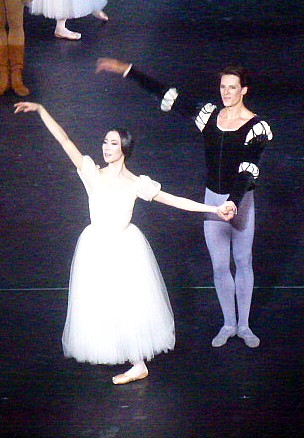
But this was not the same Albrecht, to boot. From his first entrance and throughout his dialogues with Wilfried, words from an oldie began to dance around at the back of my brain:

Well, she was just seventeen
You know what I mean
And the way she looked
Was way beyond compare
So how could I dance with another
Ooh, when I saw her standing there?*

I almost didn’t recognize Park. All the former technical mastery was still in place but it suddenly began to breathe and flow in a manner I had not seen before. She came alive. All her movement extended through a newfound energy that reached beyond from toes and fingertips and unblocked her already delicate lines. Her pantomime, her character, became vivid rather than textbook. I’ve been waiting for Park to surprise herself (and us) and here she demonstrated a new kind of abandon, of inflection, of fullness of body.

Well, she looked at me
And I, I could see
That before too long
I’d fall in love with her
She wouldn’t dance with another
Ooh, when I saw her standing there*

Throughout the ballet, Louvet and Park danced for each other and not for themselves (which had been a weakness for both to grow out of, I think). Park’s acting came from deep inside. From inside out for once, not demonstrated from without. During her mad scene, I simply put my notebook down.

Act 2 got off to a… start. Sylvia Saint-Martin clearly worked on controlling all the technical detail but danced as harshly as is her wont for now. The disconnect between her arabesque, torso, and abrupt arms, the way she rushes the music, the way her jumps travel but don’t really go anywhere…everything about her dance and stage presence just feels aggressive and demonstrative from start to stop. She finally put some biglyness into her last manège, but it was too late for me.

Well, my heart went « boom »
When I crossed that room
And I held her hand in mine

Oh we danced through the night
And we held each other tight*

There was a different kind of emotional violence to Germain Louvet’s first entrance, reacting to THIS Giselle. Along with the flowers, he carried a clear connection to the person from Act One onto the stage. You don’t always get the feeling that Giselle and Albrecht actually see each other from the backs of their heads, and here it happened. Both rivalled each other in equally feathery and tremulous beats. Their steps kept echoing each other’s. Park’s Giselle was readably trying to hold on to her memories, and moved her artistry beyond technique.  This newfound intensity for her was what I’d long hoped for. I am still impressed by how visible she made Giselle’s internal struggle as the dark forces increasingly took control of her being and forced her to fade.

I left the theatre humming as if the thrum of a cello and the delicate lift of the harp were tapping on my shoulder.

Now I’ll never dance with another, Ooh.*

*The Beatles, “How Could I Dance With Another?” (1963)

P1200388

Sae-Eun Park (Giselle) et Germain Louvet (Albrecht)

*                                        *

Swan Lake, Sae-Un Park with Paul Marque on June 28th

P1220597However, this performance saw the ballerina go back into comfort mode.

In Act 1 Pablo Legasa, as the tutor Wolfgang aka Rothbart, instantly asserted his authority over Siegfried and the audience understood in a way that it hadn’t with  Docquir whose presence didn’t still does not cross the footlights . Legasa’s tutor gleefully set up the about-to be-important crossbow as he slid it into Marque’s hands, just as he would later use that cape better than Batman. Most Rothbarts manipulate the Loïe Fuller outfit like a frenemy, at best.

The little dramatic nuances matter. Whereas Louvet’s Siegfried hadn’t really wanted to rock the boat much during Act 1 — so to be fair Docquir didn’t have that much to do — tonight Legasa repeatedly denied Paul Marque, whose Siegfried is more of a regular guy, any escape or release without express permission.

Paul Marque doesn’t possess the naturally elongated lines of Germain Louvet, but that isn’t a problem for me. Marque’s vibe feels more 19th century: dancing at its best: a restrained yet elevated 90 degrees back then was the equivalent of 180 now and every step he makes is as clearly outlined as if it popped out of an engraving. The way he worked up towards making the last arabesque in his solo arch and yearn gave us all we wanted as to insight into the internal trauma of the character.

In Act 2, Sae-Eun Park finally arrived to the delight of her fans.  She gave a very traditional and accomplished classic rendering of Odette, replete with big open back, swanny boneless wings/arms, took her time with the music and became a beautiful abstract object in Siegfried’s arms. Her solo was perfectly executed. Could I ask for anything more? Maybe?

You have to make it work for you. O’Neill remained a woman, a princess trapped in some kind of clammy wetsuit and gummy gloves that covered her fingers. Park outlined and gave a by the book performance of the expected never having been a human swan. But at least now she dances from the inside out and her arms do fully engage in dialogue with her back.

I loved the way this Siegfried reacted to all the swans. “What? You mean there’s more of them?” Marque, as in Act One, then chiselled a beautifully uplifted variation that felt true to Nureyev’s vision in the way a synthesized centeredness (thesis) encounters and surmounts a myriad of unexpected changes in direction (antithesis). Very Hegelian, was Marque’s synthesis.  Bravo, he made philosophical meanderings come alive with his body.

These lovers are lulled into the idea that escape is possible and will happen soon.

In Act 3, Legasa continues to lead the narrative. He is clearly whispering instructions into Odile’s earbud while also utilizing his cape and hands as if they were remote control.. For once Rothbart’s solo did not seem like a gratuitous interruptionsreplete with awkward landings. The pas de deux can in fact be a real pas de trois if that third wheel unspools his steps and stops and brings out the underlying waltzy rhythm of the music. Legassa tossed off those double tours with flippant ease and evil father-figure panache. Nureyev would have loved it.

Park’s Odile? Marque recognized his Odette instantly. Park did everything right but only seemed to come into her own in her solo (from where I was sitting). Even if her extended leg went up high and she spinned like a top, at the end of the pas de the audience didn’t roar.

“When Siegfried discovered he has both betrayed and been betrayed, Louvet, like a little boy, he wrapped his arms desperately tight around his mother.” Why did I write that in my notebook at the exact moment when I was watching Paul Marque in the same pantomime? I don’t quite remember, but I think it was because “mama” wasn’t what anything was about for him.

In the last Act, while Legasa acted up a storm, Marque remained nice and manly. The night before, Germain Louvet had really put all his energy into seeking Odette and fighting back against the forces of darkness. He really ran after what he wanted. Marque is maybe just not as wild by nature. Or maybe he just stayed in tune with Park? In Act 4, Park did fluttery. Lovely fluttery arms and tippy-toes that stayed on the music and worked for the audience. I observed but didn’t feel involved.

For me, only Pablo Legasa made me shiver during this Park/Marque Swan Lake. I found myself wondering what Park would have done IF a more passionate dancer like Legasa – as Louvet had been recently for her Giselle – had challenged her more. Now that I think back, Marque, too, had hit a high dramatic level when recently paired with Ould-Braham in Giselle. Maybe it’s time to end “ParkMarque.”  I like them both more and more, just not together.

P1220546

Le Lac des cygnes. Sae-Eun Park (Odette/Odile) et Paul Marque (Siegfried).

*

 *                                       *

Héloïse Bourdon: The Treasure that’s been hiding in plain sight.

You may say I’m a dreamer
But I’m not the only one*

P1220572Swan Lake, Héloïse Bourdon and Jerémy-Loup Quer, on July 12th
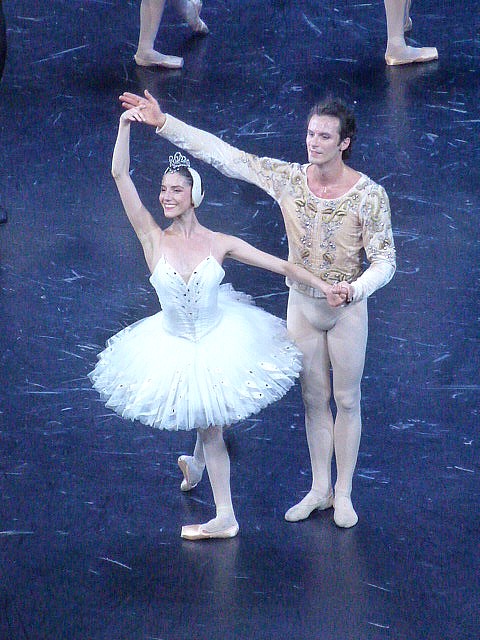
Then on July 12th, something long anticipated didn’t happen. Again. As she had way back then on December 26th, 2022, Heloïse Bourdon gave yet another stellar performance as Odette/Odile in Le Lac des Cygnes. At the end, as the audience roared, so many of us expected the director to come out and finally promote Bourdon to étoile (star principal). Instead all we all got do was shuffle out quietly and once again go home to wash off what was left of our mascara.

If anyone managed to find the perfect balance between woman and swan this season, it was Bourdon.  Even in the prologue, this princess showed us that she felt that danger prickling down the back of her neck just as an animal does.

As the curtain rises after this interlude, Jeremy-Loup Quer’s Siegfried puts his nightmare aside and is feeling just fine with his friends. He will later prove rather impervious to his mother’s admonitions and more boyishly cheered by her gift of the crossbow. Then, there was the moment where he looked intently at his baby throne only to turn his back on it in order to stare out of once of the the upstage window slits.

This Siegfried’s melancholic solo was infused by a kind of soft urgency, where the stops and starts really expressed a heart and mind unable to figure out which way to go. Touchingly, Bourdon would echo exactly this confused feeling in her solo in the Second Act, bringing to life the idea that Odette is both a product of Siegfried’s imagination and indeed a kindred soul.

As Wolfgang the Tutor, Enzo Saugar had made his entrance like a panther, a strong and dark-eyed presence with threateningly big hands. I instantly remembered his first splash on the stage as a very distinctive young dancer in Neumeier’s Songs of a Wayfarer at the Nureyev gala last year .  Alas, as of now, Saugar continues think those eyes and those splayed fingers suffice. This works at first glance, but goes nowhere in terms of developing a coherent evening-long narrative. He just wasn’t reactive. He was performing for himself.

So thank goodness for Heloïse Bourdon. As Odette, she uses her fingers and wrists mightily as well, but with variety and thought. Hers was a woman and swan in equal and tortured measure. When she encounters Siegfried, he is clearly instantly delighted and she is clearly a woman trapped in a weird body who hestitanly wonders whether he could actually be her saviour.

Whereas Louvet’s Siegfried had seemed to say when the bevy of swans had filled the stage, “What? The world has always been full of swans?! This is like so unbelievable,” Quer seemed to be saying, as with the Princesses later: “Pleasure to meet you, but for me there is only one swan and I’ve already found her.”

 I’d have to agree. Bourdon glowed from within without any fuss, and this was magnified by the unusual way she used her arms. Some dancers don’t connect their arms to their backs, which I hate. When dancers make their arms flow out from their backs this gives their movements that necessary juice. But here Bourdon’s arms had a specific energy that I’ve rarely seen. It flowed and contracted inward in waves from her fingers first and then pulled all the way back into her spine. I was convinced. That’s actually how you do feel and react when you are injured.

Throughout the evening, whether her swan was white or black, these two danced for each other, including not leaving the stage after a solo and staying focused for their partner from a downstage corner.  Whether in Act Two or Four, each time Rothbart tried to rip her out of Siegfried’s arms via his spell, this couple really fought to hold onto each other.  You could understand this prince’s bewilderment at a familiar/unfamiliar catch-me-if you-can Odile. (Perfectly executed, unbelievably chiselled extensions, fouettés, etcetera, blah blah, just promote her already).

Like Giselle, this Odette knew her hold on life was fading as the end of the last act approached. The energy now reversed and seemed to be pumping out from her back through her arms and dripping out of her hands and beyond her control. This Siegfried, like an Albrecht, like someone in a lifeboat, kept begging his beloved to hold fast.

The Paris Opera’s management may be blind, but the audience certainly wasn’t. I saw a lot of red eyes around me as we left the theatre in silence. Oh what the hell. As long as Heloïse Bourdon continues to get at least one chance to dance a leading role per run I can dream, can’t I?  Next time, how about giving her a Giselle for once?

Imagine there’s no heaven
It’s easy if you try
No hell below us
Above us, only sky*

*John Lennon, “Imagine” (1971).

P1220639

Le Lac des cygnes. Héloïse Bourdon (Odette/Odile) et Jeremy-Loup Quer (Siegfried).

1 commentaire

Classé dans Retours de la Grande boutique

Pina Bausch at the Paris Opera: Bleu Blau Blues

IMG_8596As we trod in a daze down the stairs of the Palais Garnier after an uninterruped 1 hour and 50 minutes, the elegant Italian who had been sitting next to me apologized for having repeatedly kept checking the time on her bright phone in the dark. Ten minutes in, she’d already felt as if she was being personally tortured. Her day had already been long and painful enough. Then a delightful older Parisian lady I know bounced over and declared emphatically that she had been practically lifted out of her seat and insisted she we would go out for a drink to celebrate such a galvanizing theatrical experience. A usually luminous young woman we three know seemed out of breath: energized, confused, and alarmed. Before she carefully slipped away from us, Maria whispered that her thoughts — About men? About women?  About anything? — had just been turned completely upside down by this, the first time she had ever seen a ballet by
… Pina Bausch.

That something invented in the 1970’s by a woman could still either torment or vivify the women of today means that this ballet has not lost its relevance.

You could drive a person crazy
You could drive a person mad
First you make a person hazy
So a person could be had!

The hook in Pina Bausch’s Blaubart/Barbe-Bleue is that of how soundscape and space and movement and emotion cannot be disconnected.  We witness the endless, yet intermittent, manipulation of an onstage reel-to-reel tape wound and rewound by a very powerful — but very confused — everyman. At the push of a button, the machine burped out tiny slivers of Bartok’s original opera. And then another push of the button killed it off. Then repeated, repeatedly.

Therefore: beware, this ballet is a long haul, and might just drive you crazy. If you edited out the incessant repetitions of Bartok phrases and Bausch phrasings, the whole evening could have been ding-dong bell and over and let’s go out for that much-needed drink in fifteen minutes flat. This is definitely not a “date-night” ballet. Or maybe it is?  At least as a warning sign?

You’re crazy
You’re a lovely person
You’re a moving
Deeply maladjusted
Never to be trusted
Crazy person yourself

 From the start, Bluebeard is in some kind of combat of egos with a woman in a flesh pink dress. She’s not taking this abuse lying down (well, actually often she is, when she’d not plastered against a wall or slithering off a chair).

Slinky dresses, out-there loud femininity always mattered to Bausch, as did deconstructing men from XL jackets down to their smalls and uninhibited display of tiny biceps. Deconstruction of any and all stereotypes had always been this choreographer’s thing. Bausch relates to my generation’s  view of male/female relationships: OK, let’s just admit that we the same but different, that we are all are messed up, that we are all brilliantly confused? Is a middle ground even possible?

A person that
Titillates a person and then leaves her flat
Is crazy
He’s a troubled person
He’s a truly crazy person himself

IMG_8639

Léonore Baulac et Tareku Coste

I was completely taken in by Bluebeard’s and Judith’s passionately intense symbiotic disharmony. The interiority and unstoppable feral energy of their repeated actions bound us to their toxic relationship.

At the start, SHE is the one pulling and manipulating his seemingly dead-weight body, yet HE is the one that keeps insisting upon collapsing upon her over and over and again and again. As we near the end, it takes HIM an excruciatingly long time to drag HER limp body, lying heavily inert upon his stomach –  as awkward and heavy as dead bodies truly are –  backwards and to and fro and to and fro and to across the stage. Their all-out performances were more than hypnotic, they were witchcraft. Against your will, you sank — increasingly defenceless and desperate for air — under their spell. 

Takeru Koste as Bluebeard channeled a long career built out of honing his craft in little actor/dancer parts into this one great big theatrical presence. This was clearly the role of a lifetime. Léonore Baulac gave us all the colors of Judith.  She can be one of the most reactive dancers when she is galvanised by a partner’s body and eyes.  

I think Koste and Baulac’s determined commitment to making their combat of the sexes wear us down took twisted control of everyone in the audience (even the reluctant lady). I can honestly say that the choreography works in the sense that I felt rubbed raw by the incessant re-re-re-re-enactment of the claustrophobia that an obsessive relationship creates.

Spoiler alert: if you’d seen Baulac’s Juliet when the Capulets force her into her wedding dress, you will relate to her face when Koste’s Bluebeard carefully and slowly and literally smothers her body in layer upon layer of his other dead wives’ dresses, leaving her almost unable to move. Almost. She resists fate for one more time. And I cannot get the image out of my head of this Judith rushing to and fro in one last burst of exhausted febrility. Larded in fabric, Baulac scuttled about upon her tiny footpads. She was like a mouse that still tried to run away after its head had already been partly chomped off. That’s when my heart, already heavy, broke. Along with hers.

Then you leave a person dangling sadly
Outside your door
Which could only make a person gladly
Want you even more

 The thing with Bausch that I think many of us always wired into was the fact that she pitied men and women in equal measure. We are always pushing and pulling at each other with extreme pitiless energy, always arguing. Here the twenty demi-soloists (the slaughtered wives and the previous incarnations of Blue?) were more than perfect and utterly out there as they theatrically fell, or crashed into or artfully dangled from the walls. I guess I need to mention the stage covered with a forest of dead leaves to swish and the occasional dead pillow.

What is wrong?
Where’s the loose connection?
How long, O Lord, how long?

As we left the theatre, my three girlfriends finally asked me: “well?”  I don’t think anyone was ready for a comment on the recorded music – of all things — not the dance. Clearly, the music is sliced up just the way each of Bluebeard’s wives had been. But one aspect of the music above all would have been my complaint way back in 1977, too. I hate the heavy German translations of “obscure” languages. The vowels and consonants and sonorous lines go poof. None of my three friends reacted to my plaint, until I said, “what would you think of someone dancing to something inspired by Rigoletto, Carmen, or Onegin if sung in German?” Pause the reel, please. I must confess that I have been listening to Bartók since I was a child and so I’m a bit of a purist.

Knock-knock! Is anybody there?

Knock-knock! It really isn’t fair.

Perhaps Bluebeard the dancer was really playing around with a real console onstage in 1977? Trying to get any kind of recorded music to work way back then, even just in the rehearsal room, must have indeed been an additional challenge, and now it still is but in a different way. I recently saw a reel-to-reel console in a museum of technology! Why are we so good at advancing technology but so lousy at ending feminicide?

Not only the German bothered me, but the deliberately bad quality of the sound bothered me. Of course, that was Bausch’s point:  in most cases, our lives are just as bad as tinny musical phrases repeated over and over again unto toxicity. The words we spit at each other mean nothing. The real melody is always just out of reach.

You impersonate a person better
Than a zombie should

IMG_8626

Quotes (out of order) from Stephen Sondheim’s Company.

Commentaires fermés sur Pina Bausch at the Paris Opera: Bleu Blau Blues

Classé dans Retours de la Grande boutique

La Sylphide in Toulouse : pick your team !

SYL2-7250

La Sylphide. Ballet du Capitole de Toulouse. Tiphaine Prevost. Photographie David Herrero

In Toulouse, one cast danced from the outside in, the other from the inside out. One was clean and sufficed for a Saturday night out, but the second cast on a Sunday matinée took us on a journey.

I’ve become so accustomed to the Paris  Opéra’s Taglioni/Lacotte Schneitzhoeffer score that I was refreshed by the way Lovenskiold’s music begins in a proto-Verdian fashion. A quick explosion of tutti brass and drums instantly gives way to the plangent tone of a solo cello and then crescendos begin again.

As dandelion puffballs waft across a scrim during the overture, we see the back-story: while walking along the heath, the little boy James exasperates his girl companion. Effie cannot see the delightful ageless fairy beckoning to him. The boy’s fate is sealed: he will always be chasing after what he cannot catch.

But that’s his choice. Are you, or will you be, Team Syphide or Team Effie, up in the air or feet planted on the ground?

To my surprise, be it Bournonville or Lacotte,, sometimes I find myself  rooting for Effie, the all too human girl. During both performances last weekend in Toulouse, I found myself solidly Team Effie, for very different reasons.

SYL2-7272

La Sylphide. Alexandra Surodeeva. Photographie, David Herrero.

Saturday, October 21

It’s really a matter of taste, but I have never been fond of the modern Russian classical ballet style. It’s too “top model.” There the point is to get from one camera-ready pose to the next rather than exploring danced-through phrases. A case in point: I cringed each time Alexandra Surodeeva  launched clearly and deliberately from flat-footed arabesque to, hop!, full-pointe. No full-footed juicy relevés initiated by plié and the toes, just a haul-up using the hamstrings and the butt muscles. The extended leg gets stuck up in the air like a salute. The snapshot will be gorgeous as Surodeeva has beautiful lines. Her fluffy ronds de jambe and batterie just after yet another pose then left me cold.  Her rather earthbound leaps in hard shoes led to noisy landings (in a pose). So for me, this Sylphide just didn’t happen. Surodeeva was just too much of a technically strong dancer, too healthy, too embodied. Her arms, both stiff and flappy, seemed more Balanchine than Bournonville. Each double pirouette turned out rather wobbly and approximate, which seemed odd for such a polished technician.

Instead, Nancy Osbaldeston’s feminine and elfin Effie won me over. Why was she not cast in the principal role?  She’s delicate and dancey, soft on the ground and fleet of foot, and her phrasing, and the way she shapes her steps… lets you hear the music. Just lovely.

On this Saturday, Alexandre De Oliviera Ferreira’s goofy and bouncy Gurn – his beautifully expansive explosion of a solo lifted the house — matched with Rouslan Savdenov’s equally unromantic James. Poor Effie, what a choice! Alas, Savdenov, who can reach out and stretch in the direction of his movements in the soli, sculpting beautiful shapes out of thin air, was just not believable as a dreamer. Indeed, he played the role from the outside. “I will now pretend to see a vision in white, I will now pretend to get mad, now I will now smile big, now my face will go blank as I manage the manège.” I felt sorry for him. He was like a light bulb with the switch awry. But he was dancing by himself, I guess.

Simon Catonnet’s Madge was strong and funny and crisp, but  — surprisingly for this gifted character dancer – his pantomime as the witch was emphatic without being effective and clear. A bit Sturm und Drang. Once the overture gets out of the way, the score becomes positively Rossinian in the way all the downbeats call for their match in mime. Catonnet’s Madge, beautifully limber down to her fingertips, seemed to be listening to her own music.

SYL2-7065

La Sylphide. Ballet du Capitole de Toulouse. Simon Catonnet (Madge) et Alexandre De Oliveira Ferreira (Gurn). Photographie David Herrero.

What made everything work at both performances was the really, really, together corps that often included soloists from the other day. The company is light and noiseless and together and without any stiff gestures or poses. The really charming Scottish reel in Act One brought the house down both times. The plethora of fairies filling the stage in perfect unison in Act Two brought sighs from the audience.

In Act Two, Savedanov’s James continued his aggressive pursuit of the sylph, who did those abrupt relevés again.  When Surodeeva-Syphide’s wings fell off, I was shocked for the wrong reason. I had never noticed that she had borne wings in the first place.

SYL3-1014

La Sylphide. Kayo Nakazato. Photographie David Herrero.

Sunday , October 22

Due to an injury, the third cast  Sylphide ended up dancing with the first cast James. As the fairy and human never partner but only touch each other once, this is do-able. But what about the mime, the connection? Will they pull off the drama, inhabit space so much together you imagine they actually have been touching throughout?

The answer became yes.

Kayo Nakazato’s Sylphide, as of the opening tableau, was pliant and in the music.  In the first scene, here you had feet rolling without a need to hop up, a body in movement between poses, a smooth and silky presence. She danced it all out soundlessly. Her smooth and un-posed movements and the supple and alive nape of the neck let that almost feline aspect of all fairies come out. “Catch me if you can! Pet me if you can! In the meantime, I will just perch up on a shelf, watching you, as I settle down my fluffy self. I know you want me.” Legs never higher up than needed, beautiful cupped-in and un-showy delicate lines. In Act Two, she caught a butterfly! I had seen simply two hands clap the night before, uncertain what that had meant. When she would die, in a final arc just like a butterfly pierced by a pin, the audience held its breath.

Her James, Ramiro Gómez Samón, was really talking to himself and to his vision throughout. He gazed at the women he was torn between and then tried to look into his heart. His smile was melancholy, distant. He even managed to remind us (through light mime) that he had been the little boy in the prologue. He was bigger than Savdenov, rounder with a softer plié.  In this role where you are supposed to be as fanciful as nut who chases after butterflies, Gómez Samón’s James was clearly more at ease with all the choreographic changes of direction and changes of heart. That this Sylphide looked into his eyes really helped.

SYL1-2227

La Sylphide. Ramiro Gomez Samón (James). Photographie David Herrero.

Kléber Rebello’s  Gurn proved to be an actor and dancer more “French” than yesterday’s, more subtle. “Oh, of course, I always loved you. And by the way, why exactly are we in this mess in the first place? Don’t forget – no stress — I’m here for you.”  But also, just who wouldn’t want to marry Rebello’s Gurn after his first act solo? What placement, uplifted ballon, épaulement, pliés that go somewhere! Seriously, girlfriend, this one is boyfriend material.

Rebello was definitely the more dignified spurned suitor. He eagerly responded to every mood of Tiphaine Prévost’s anxious and alive Effie, so clearly worried about her fiancé’s sanity from the start. He even managed to make gentle uplift out of the fact that the only girl available to dance the reel with him was a little one. Whereas De Oliviera Ferreira’s Gurn dutifully disappeared into the second row with his partner, Rebello’s Gurn kept presenting the girl to her advantage. A real gentleman.

Kudos go to Tiphaine Prévost’s Effie, too, who made her role as The Girl Next Door both beautiful and believable up to the end. Her bride on that walking diagonal at the finale had accepted a “marriage of reason” that will probably turn out well, but she was clearly not happy to be back in that accursed forest again.  Nor was the mother, Solène Monnnereau for both performances, who elegantly and subtly reacted in kind to each of her successive daughter’s moods.

SYL1-2248

La Sylphide. Ballet du Capitole. Tiphaine Prévost (Effie) et Ramiro Gomez Samón (James). Photographie David Herrero.

And what a witch! Jérémy Leydier’s scary and grumpier Madge seemed to almost snake out of the fireplace in Act One. His timing and force made me think of a gnarly wisteria carefully planning to take all the time it needed to rip apart an iron grille…his masterful mime made James’s doom all that more inevitable and preordained.  Maybe I’m Team Madge? Like mom, she’s an inventive cook and only wants to keep you from marrying Mr. Wrong.

SYL1-2313

La Sylphide. Jérémy Leydier (Madge). Photographie David Herrero.

Commentaires fermés sur La Sylphide in Toulouse : pick your team !

Classé dans Blog-trotters (Ailleurs), France Soirs