Archives de Tag: Celia Drouy

« Racines » at the Paris Opera : How to Cook Roots

George Balanchine’s Theme and Variations, Mthuthuzeli November’s Rhapsodies, Christopher Wheeldon’s Corybantic Games.

October 17th and 18th, 2025, at the Opéra Bastille in Paris.

This new season the triple bills are advertised under teaser catch-all titles that make no sense whatsoever. The one I’ve seen twice in a row is entitled “Racines” [aka “Roots”]. Now, as far as the Paris Opera Ballet goes, what do Balanchine, November (a newcomer), and Wheeldon have to do with our “roots?” Tchaikovsky, Gershwin, Bernstein? Well, if you are an American, the latter two just might work as far as your roots go.

I walked in — and alas left — the Opera Bastille both evenings still unable to find the answer.  Came home rooted around the refrigerator, in search of comfort and inspiration. I know this sounds like what am I about to write will be pretty gnarly, but please bear with me.

Once I’m done, I’m going to finally look at the essays in the program book and see if that adds some enlightenment.

*

 *                                  *
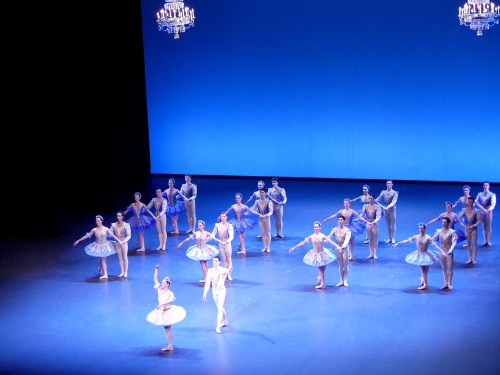
Theme & Variations.

Zucchini Blossoms/ George Balanchine’s Theme and Variations (1947)

Have you ever planted zucchini in your garden? It just never stops sneakily extending its roots in all directions. By the end of the season you just cannot even look at even one more piece of your neighbor’s redundant zucchini bread. That’s Sleeping Beauty, tasty, but two long runs of it last season turned out to be more than filling.

Zucchini blossoms offer a delicate synecdoche for all that raw bounty. They are, in a sense, all the flavor concentrated into one juicy fried mouthful. Maybe this is one way to define how Theme and Variations distills Sleeping Beauty: the essence is there, minus the endless fairies.

Unfortunately, there are as many opinions out there about THE “authentic” way to dance Balanchine technique as there are recipes that do, or do not, include nutmeg. Ben Huys of THE Trusts (both Balanchine and Robbins!) was the invited coach. This ballet, despite its surprising construction – the ballerina barely gets to breathe during the first half and then mostly polonaises around for the rest – always turns out to be very tasty.

So let’s just enjoy the show and take a look at the dancers.

On October 17th, from the initial danced statement of the theme up to their deeply elegant réverances, both Bleuenn Battistoni and Thomas Docquir were still clearly inside their heads as Aurora and Désiré from last spring. And they continued to be that way, all the way through.  But, as the last time, there was just 1% missing. A dash of pepper. Battistoni reiterated the unemphatic grace of her first act Aurora: all about just the right uplift and épaulements and un-showy but oh-so centered rock-solid balances. But this performance could also use just one more pinch of spice.  Docquir, as he did last spring, concentrated on making his steps and jumps and batterie as scholastically perfect as possible. His performance wasn’t radiant. In princely roles, he seems to be fighting imposter syndrome. He rushed the music in partnering at times.

Honestly, this Theme was lovely, courtly, polished. The soft and precise landings into every pose at the end of a sequence literally pulled the audience in. I noticed that my neighbor kept leaning forward towards the stage each time, as if she had been swept up into 18th century courtesies, impelled to bow in return.
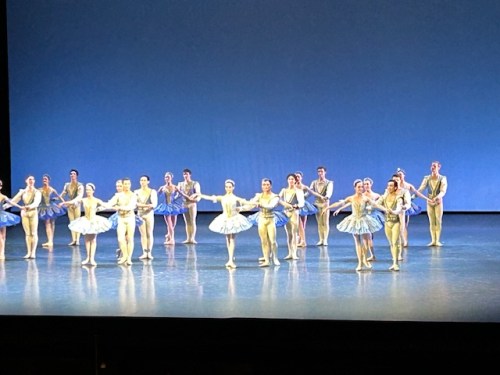
October 17th 2025. Bleuenn Battistoni & Thomas Docquir. Theme & Variations.

With Valentine Colasante and Paul Marque on October 18th, Theme felt looser and more fun. It was Beauty, but Act 3. Colasante luxuriated into the movements and teeny-weeny stretch-the-movement-out just enough beyond the axis to make a swish-swish seem new.  She danced big, fearlessly, and playfully dared to hover a microsecond too long. Both dancers caressed the air and the floor.  And there was something intriguing about the way Marque partnered: he seemed to catch her before the lifts, rather than on the way down, if that makes sense.

After the ballet, I thought about this very French concept of “la belle presentation.” Have you ever looked into a shop window in Paris where all the foodstuffs – from succulent to basic — are beautifully organized? Even bouquets of radishes are carefully placed in delicate patterns. Theme and Variations definitely suits our sense of l’art de vivre.

On both nights, I overheard complaints about the tiny corps on occasion not getting to their places and not lining up properly. Yes, yes, I did see it: one of the four girl soloists, and then especially when the male corps showed up. It’s not worth it to name names, as we have Giselle and a tour going on and are spread thin. Quite a few in the tutus and tights were newish to the stage. I find this critique particularly funny as Paris Opera Ballet is often accused of being too perfect from top to bottom.

As Balanchine would say, “who cares?”

*

 *                                  *

Rhapsodies. Magda Willi for Mthuthuzell November’s Rhapsodies.

Fennel and Endive /Mthuthuzeli November’s Rhapsodies (2024)

Who knows what to do with fennel or endives? Braise? Slice down in some direction and drench in lemon? No matter what, you have no answers. Maybe they just aren’t meant to be cooked.

Maybe Gershwin’s Rhapsody in Blue – by a composer who wrote pop music but wanted to be taken seriously – just isn’t meant to be used for a ballet?

Other choreographers have taken it on. In Paris, Odile Duboc did in 1999. It was insipid and has long gone into the dustbin.

Mthuthuzeli November’s take on the music has a lot more going for it. Or does it?

A clever set that leaves you puzzled, to start with.  The outlines of wooden door frames are highlighted by led lights. The frames are attached to each other and can be pulled out like accordions and wheeled around or reshaped into one square outline as clouds of dried ice float by. I thought of Olafur Eliasson’s “Inside the Horizon,” that unfolding series of slivered reflections at the Louis Vuitton Foundation. I began to recall the many times Jean Cocteau made characters walk through mirrors in his films. My seatmate – after we made a pact that we would both not put our noses into the program beforehand – concentrated hard and said she saw people trying to step away from their cellphones. A French friend had seen French windows.

So the set gets you from the get-go, even if your mind drifts back to how many choreographers have used moving sets to incite and inspire movement since the beginning of time…

And does the dance get your attention? It’s perfectly watchable, nicely thought out.

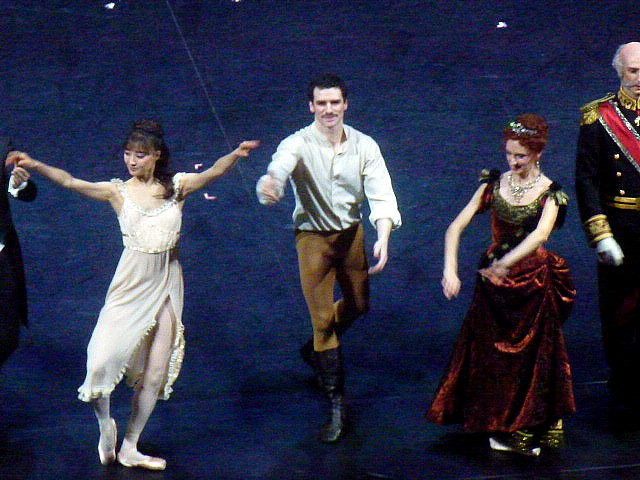
On the 17th in the lead couple Celia Drouy, sensual and rounded, was the charming girl next door. I’d love to see her in Dances at a Gathering. It was odd then, late in the piece, when she shoved away her partner, the cooly intense Axel Ibot. It seemed to come out of nowhere.

October 17th 2025. Rhapsodies.

The dance? Watchable and performed with energetic commitment by all. The cast was filled with skilled soloists who are only occasionally ever cast in big roles, such as Ibot (eye-catching here and equally focused the next night when he rejoined the corps) or Fabien Révillion (a delightful Colas long ago and a wrenching Lensky recently). I often watch for Isaac Lopes Gomes, cleanly and powerfully performing no matter what line he’s stuck in. Daniel Stokes. Juliette Hilaire. Charlotte Ranson…

Ah yes the dance. Forgot that one. Weight down but pulled up. A repeated group movement of squats in second thump forward while swaying side to side à la les drinking buddies in Prodigal Son. Open your arms to the sun and close them at varied speeds. Embracing the sky is common to almost all local world dances as well as yoga. Push and pull. As a young woman once said to me after she tried a baguette for the first time and did not want to seem ignorant: “I wasn’t amazed, but it was soft, it was crunchy, it was warm! It was soft and crunchy! Wasn’t it supposed to be soft and crunchy?”

On the 18th I think another layer got added to Rhapsodies. Letizia Galloni was laid back/avid, out-of-here/imperious, chiseled/pliant. She projected a mysterious anguish and tension which made you notice from the start that she was indeed pushing back at her partner, Yvon Demol. Even when Galloni yields, she holds something back.

Letizia Galloni is another one of those soloists whose career has switched on and off and on. Talented and eye-catching from the time she graduated the POB school, she scored La Fille Mal Gardée during the Millepied era about ten years ago. Then she faded into herself. Then disappeared. (At least here in a national company, you can go into hibernation without being fired).  But she popped up again last spring in Sleeping Beauty and offered the audience one of the loveliest Gold and Silvers I’ve seen in many a year: relaxed, imperious, generous, impeccable technically, with a sense of bounce and sweep that made us in the audience glad for her.

*

 *                                  *
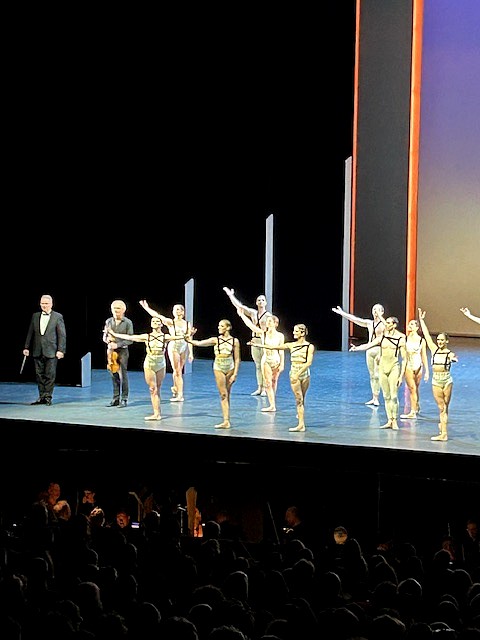
October 17th 2025. Corybantic Games.

Turnips/ Christopher Wheeldon’s Corybantic Games (2018)

Un “navet” aka turnip is the French way to say “that was a real dud.” I could have called this ballet a turkey, but we being very svelte and are only going to eat veggies today.

This thing, created for The Royal Ballet in 2018, has no structure (dramatic or balletic), no core, and dithers endlessly along. My seatmate on the 17th called it “soporific.” I thought of nastier words but simply nodded. I seriously considered skipping it on the 18th. Once was more than enough.

The pretty costumes are white with black ribbons crisscrossed across the torso that then dangle down from the shoulders. During the second night’s curtain calls, I tried to see if there was some sense to the danglers. Seems like the more of a soloist you are, the more ribbons.

The pretentious music is by Leonard Bernstein whenever he windily demands to be taken seriously. I’d call it Bride of Agon. The choreography, equally self-infatuated, proffers up innumerable quotes from just about every ballet that had an Antique World-y theme to the point that you could use it as a quiz: Note down the minute and the second where this choreographer directly cites Nijinsky, Nijinska, Robbins, Balanchine, Taylor. From Faun(s) to Apollo to Antique Elegies, this whole ballet felt like some snarky schoolboy’s inside joke. Flexed heels and upside-downsies and, as my seatmate noted, a lot of great final poses that turn out to be just a hook for more of the same. The Third Movement pas de deux ends with the guy hurling the girl up and into the wings (to be caught). Just where have I seen that one before?

It just goes on and on. I am too tired to describe it. Only a few days later I stare at my scribbled notes and all images of actual movement have faded. The steps from scene to scene – indeed within one — never get individuated. I’m looking at the cast list, filled with up-and-coming and cherished dancers and it’s painful. People tried to shine, gave it their all, but.

In the last scene, a soloist turns up (Valentina Colasante on the 17th and Roxane Stojanov on the 18th). Clearly, she is supposed to mean something, but what? Yes, I did know who the Corybantes were and that their earth mother is the fertility goddess Cybele (pretentious me) but what I didn’t see was one drop of wild ecstatic energy — not even once! — during these long minutes (37 minutes says the program, felt at least twenty minutes longer).

So now I’m looking at the program notes. Oh! Games is about Plato’s Symposium and polyamory! A less sexy or sensual ballet you will never find. No one connects. Ever. It turns out that in the fourth movement, if you look closely, the three couples are a straight, a male, and a lesbian one. Ooh! Did I look for boobies at all while three pairs of soloists in low light diddled around before settling into lovely enlaced poses on the downstage lip like teddy bears going to beddy? Seriously? As a female, I should note that women of any kind had no legal status or interest at all to Ancient Greek life or thought. Plato didn’t give a flying…hoot… about women, gay or straight. Why didn’t Wheeldon just make a dance about men being men who then tolerate a female diva who shows up for the grand finale? A fun fact is that Cybele’s male followers often castrated themselves at the apex of their delirium. Come to think about it, I don’t think that would make for a great ballet either.
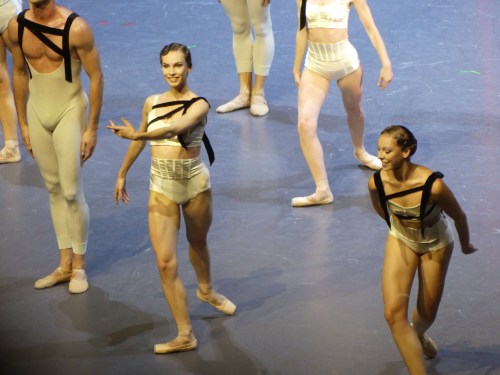
Bleuenn Battistoni & Roxane Stojanov, Corybantic Games.

As far as the title “Roots” goes, the program book insists that Wheeldon’s roots are in Greece. Seriously? He’s about as English as they come. As for Mthuthuzeli November,  the program talks less about his native origins and much more about his discovery of ballet. This program should have been entitled « Apples and Oranges with a Dried-Out Raisin on The Side. »

Could someone please pass the salt?


Commentaires fermés sur « Racines » at the Paris Opera : How to Cook Roots

Classé dans Retours de la Grande boutique

Mayerling : bilan tardif

Les Balletotos se sont cotisés pour voir trois distributions différentes du Mayerling de Sir Kenneth MacMillan. Tels des boas constrictors qui auraient mis du temps à digérer leur proie volumineuse, ils se résolvent enfin à vous en rendre compte. Fenella est enragée, Cléopold assommé et James… juste tombé sur la tête?

*

 *                                               *

JamesJames : représentation du 30 octobre 2024.

J’ai trouvé la recette pour passer une bonne soirée à coup sûr : voir le spectacle à travers les yeux de quelqu’un d’autre. J’ai longtemps hésité à revoir Mayerling, dont j’avais fait une overdose lors de son entrée au répertoire de l’Opéra de Paris. Pour cette année, une revoyure serait le maximum. J’ai même failli revendre ma place, mais une charmante amie qui avait pourtant une journée bien chargée a insisté pour découvrir l’œuvre, et je ne pouvais pas la laisser en plan. Et me voilà arpentant tous les couloirs et escaliers de Garnier – et il y en a de lépreux – pour narrer les nombreuses péripéties de chaque acte, détailler les interactions entre les personnages, donner des pistes pour reconnaître les perruques, tenter de rabouter tout cela à la géopolitique de l’Empire austro-hongrois, avant qu’il soit temps de nous faufiler en troisièmes loges.
Et là, miracle, la magie du spectacle opère. À chaque instant, je vérifie que les épisodes annoncés (« tu vas voir, dans la scène du bal, Rodolphe danse, non pas avec son épouse, mais avec la sœur de celle-ci ! ») sont compréhensibles, et du coup, suis attentif au moindre détail (tiens, je ne souvenais pas ce qui déclenche cette entorse à l’étiquette : sa mère, déjà, lui manifeste une horrible froideur). C’est comme si l’œil brillant de ma voisine contaminait mon regard. De blasé, me voilà neuf.
Oh, tout n’est pas parfait. Les quatre zigues qui harcèlent le prince pour lui faire embrasser la cause de la Hongrie manquent de rudesse et ne dansent pas toujours ensemble (ils seront plus à leur aise à l’auberge au deuxième acte ; il s’agit de damoiseaux Busserolles, Lopes Gomes, Marylanowski et Simon).

P1220748

Mathieu Ganio et Héloïse Bourdon. Répétition à l’amphithéâtre Olivier Messian. 12 octobre 2024.

Mais il y a Mathieu Ganio, dont on voit cette saison les derniers feux ; le danseur-acteur donne toute la palette de son art dans le rôle du prince Rodolphe. On voit à travers lui la morgue, la rage, les doutes, la névrose. À chaque pas de deux – et il y en a de nombreux – il adapte son style à sa partenaire et à la situation de cœur de son personnage : dragueur insolent avec la princesse Louise (Ambre Chiarcosso), il est las mais sensuel avec son ancien collage Marie Larisch (Naïs Duboscq), avant de se faire effrayant et glaçant de violence dédaigneuse avec son épouse Stéphanie (Inès McIntosh très touchante en fétu de paille). Approchant sa mère (Héloïse Bourdon, toute de grâce avec tout le monde et toute de glace avec lui), on le voir redevenir enfant. Au deuxième acte, lors de la scène de la taverne, il fait montre d’une élégance inentamée aussi bien pour son solo de caractère que lors du duo avec Mitzi Caspar (une Clara Mousseigne un poil trop élégante).

Alors que la névrose du prince progresse, Mary Vetsera prend son ascendant : Léonore Baulac incarne avec une crâne détermination le seul personnage qui dialogue d’égale à égal avec le prince ; le passage où elle inverse les rôles (Rodolphe avait terrorisé Stéphanie avec un pistolet, elle fait de même) scelle le pacte de mort qui occupera le dernier acte. Dans le rôle de Bratfisch, serviteur fidèle de Rodolphe, Jack Gasztowtt est presque trop grand et élégant, mais il habite avec précision sa partition, et avec sensibilité son rôle d’amuseur (2e acte) qu’on ne regarde plus (3e acte).

*

 *                                               *

cléopold2Cléopold : représentation du 5 novembre 2024.

Sans doute parce que je n’avais pas comme l’heureux James pour sa soirée une charmante voisine à mes côtés, je n’ai pas eu d’épiphanie face au mastodonte Mayerling. Le ballet apparait toujours avec ses mêmes gros défauts, sa myriade de personnages accessoires, notamment féminins, le tout encore aggravé par cette spécialité de l’Opéra de distribuer les rôles plus selon la hiérarchie de la compagnie que selon la maturité physique des interprètes. C’est ainsi que le 5 novembre, dans son pas de deux du « dos à dos » avec Rodolphe, Célia Drouy, par ailleurs fine interprète, a l’air d’être la petite sœur de son partenaire et non sa mère. Sylvia Saint-Martin tire son épingle du jeu en Marie Larisch. Sa pointe de sécheresse donne à l’intrigante comtesse une image vipérine qui s’accorde avec le premier pas de deux qu’elle a avec le prince héritier tout en enroulements-déroulements – notamment le double tour en l’air achevé en une attitude enserrant le partenaire- . Marine Ganio est quant à elle très touchante ; aussi bien dans son solo de jeune mariée où, malgré les signes contraires donnés pendant le bal, elle espère encore trouver dans le prince héritier un mari, que dans le pas de deux « monstre à deux têtes » de la chambre nuptiale.

P1220766

Marine Ganio (Sophie), Francesco Mura (Bratfisch) et (? ahhh La confusion des personnages multiples et vides)

On l’aura compris, on se raccroche au pas de deux comme un marin naufragé aux planches éparses du navire englouti. MacMillan reste un maître incontesté du genre. Et qu’importe si chacun des personnages féminins qu’il dépeint à part peut-être Mary Vetsera se voit refuser toute progression dramatique. Chacune d’entre elles reste l’allégorie d’un type de relation avec le prince héritier.

C’est pourquoi on ne voit guère en Mayerling qu’une tentative ratée de surenchérir sur le succès de Manon, créé quatre ans auparavant. La scène la plus emblématique de cet échec est à ce titre celle de la taverne qui tente de transposer, de manière pataude, l’acte « chez Madame » de Manon. En effet, on y trouve une myriade de prostituées qui se dandinent et se chamaillent. Un personnage masculin secondaire exécute une variation aussi bouffonne qu’acrobatique (Francesco Mura donne à ce numéro de Bratfisch une jolie bravura, entre relâché –les roulis d’épaules- et énergie coups de fouet des sauts). Un personnage secondaire féminin danse une variation sensuelle (Clara Mousseigne atteint les critères techniques du rôle sans parvenir à donner corps à sa Mizzi Caspar). Un quatuor de messieurs fait des grands jetés dans tous les sens (Les Hongrois de carton-pâte qui jusque-là ressemblaient plutôt à des polichinelles sortant de leur boite – MacMillan aurait mieux fait de ne pas aborder le volet politique si c’était pour le traiter de cette manière). La police vient enfin gâcher la fête.

Seulement voilà, dans Manon, la scène chez Madame vient faire avancer l’action : des Grieux, voit sa fiancée volage revenir à lui. Lescaut, qui favorise ce retour de flamme après avoir été la cause même du départ de l’héroïne, perd la vie. Manon est arrêtée et va être déportée en Louisiane. Dans Mayerling, la scène n’apporte pas grand-chose au développement de l’action. Que nous importe que Rodolphe propose le suicide à Mizzi Caspar quand la chorégraphie ne nous a suggéré aucune vraie intimité, même sensuelle, entre les deux personnages. Peut-être aurait-il dû proposer le marché à Bratfisch. Cela aurait, peut-être, donné une raison d’exister à ce personnage accessoire se résumant à ses deux variations.

Invariablement, cette scène inutile émousse suffisamment mon attention pour me trouver indifférent à un moment pivot du ballet, celui du salon de la Baronne Vetsera où, durant un tirage de cartes truqué, Marie Larisch finit de tourner la tête à la jeune écervelée Mary Vetsera – le rôle féminin principal- qui, depuis le début du ballet, ne faisait que passer.

Il faut donc attendre la moitié de la soirée pour rentrer dans le vif du sujet et c’est sans compter encore deux autres scènes parfaitement inutiles : la réception au palais de la Hofburg où on nous inflige tous les proches et illégitimes de la famille impériale (en amant de Sissi, Pablo Legasa est grossièrement sous employé) et la scène à la campagne  (beaucoup de décors et de figurations pour un coup de fusil).

C’est un peu comme si MacMillan, qui avait su condenser la Manon de l’abbé Prévost, n’avait pas su sélectionner les épisodes les plus significatifs qui ont conduit le prince au tombeau. Un ballet n’est pas un livre d’Histoire et multiplier les notes de bas de page ne fait assurément pas une bonne histoire.

P1220781

Hohyun Kang et Paul Marque (Mary et Rodolphe).

Mais venons-en –enfin !- aux personnages principaux. En Rodolphe, Paul Marque, assez compact physiquement, torturé et introverti, nous crée des frayeurs au début du ballet. Il cherche ses pieds lors de sa première variation (ses chevilles tremblent sur les pirouettes et même en échappés). Le pas de deux avec la sœur de Stéphanie (Luna Peigné) est un peu périlleux avec des décentrés ratés. On craint un peu pour la jeune danseuse. Cela s’améliore par la suite. Paul Marque joue très bien la maladresse et l’inconfort. Il semble déplacé au milieu de tous ces ors et ces fastes. Il est même touchant dans la scène de chasse, avalé qu’il est par son lourd manteau et sa toque. Il est aussi un morphinomane poignant mais convainc moins en Hamlet sur Danube, dans ses confrontations avec le crâne.

Pour le drame, on se repose alors sur Hohyun Kang qui, assez charmante et lumineuse dans ses premières scènes de presque figuration, se mue assez vite en liane à l’élasticité toxique. Sa Mary est un petit animal qui ronronne et griffe tout à tour. A l’acte 3, la scène de la mort, avec ses portés-synthèses de tous les autres pas de deux avec les autres interprètes féminines, est d’un effet monstrueux.

Mary-Hohyun accrédite l’idée d’un vrai sacrifice consenti. Elle semble rester complètement dans l’exaltation jubilatoire du suicide romantique. Je préfère la version où la jeune fille recule au dernier moment et est emportée par la folie de Rodolphe qu’elle a activement encouragée. Le choix présenté par Kang et Marque est cependant très valide.

Mais Dieu qu’il faut patienter pour en arriver là ; et que de fois on a cru sombrer dans les bras de Morphée avant ce dénouement.

P1220778

Hoyun Kang (Mary), Paul Marque (Rodolphe) et Silvia Saint-Martin (Marie Larisch).

*

 *                                               *

FenellaFenella : soirée du 13 novembre 2024

SHOOT! 

Mayerling by Sir Kenneth MacMillan, Paris Opera Ballet at the Palais Garnier, November 13th, 2024. 

Even if you put a gun to my head, I will never ever go see this ballet again. 

The potential dramatic arc keeps shooting itself in the foot as hordes of pointless people keep disturbing the crime scene. This cacophony of characters only serves to distract and, worse, confuse an audience unversed in the minutiae of minor late 19th century Central European history.  

During the early scene at a ball, once again I just kept trying to guess who’s who, as did the two women sitting in front of me who were leaning in and actively chatting to each other. “Archduchess Gisela,” seriously? Who?  Who cares? Who even cared back then? The character is a non-character, a company member who was just wasted playing a titular extra. (At least 18 roles have names in the cast list).

 So there. Now back to the topic at hand. What I saw. And it didn’t start well. 

Then, after having been absolutely gobsmaked by an Emperor Franz Joseph doing heavy squats in second when he was supposed to be leading a Viennese waltz with upright elegance, I started to sink down in my seat. I will not out the very young dancer who perpetrated this assault on the waltz as either he was not, or was seriously badly, coached. Clearly, more attention was paid to his wig and costume. If you are going to be so historically correct that you give specific names to minor characters…maybe you should pay attention to little details such as how a waltz is properly danced? 

P1220759

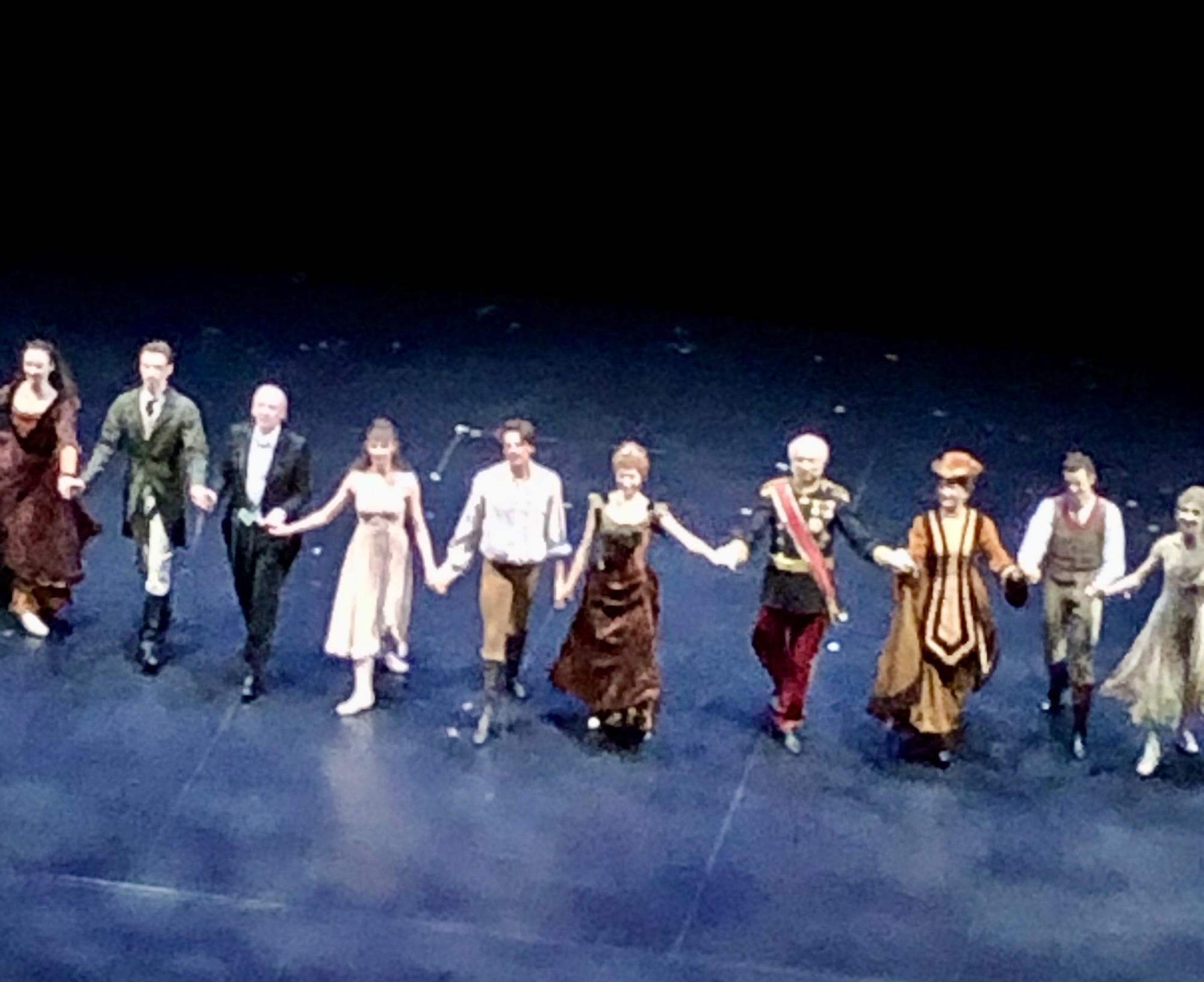
Curtain calls. The too many characters

Oh yes. The leads.  

Germain Louvet as Crown Prince Rudolph nailed it. He’s grown into his talent. He’s gone from being a youthfully pretty star into this manfully expressive artist, all without losing a sliver of his lines and elan. He’s really in the zone right now and, despite the fact that I think this ballet is a total waste, he made it work for us in the audience. From his first entrance as Rudolf, Louvet set out a complicated but readable persona: already anguished, brusque; very proper manners if required but clearly not a fool, not naive (and not as mad as others, such as his mother, assume he is).  

 As his mother, Empress Elizabeth, Camille Bon did impose a calm presence. You could tell she was his mother from scene to scene, no matter what the hat or hair. In their only intimate encounter, the one in her bedroom, there was no doubt that this woman hated to be touched by her son. The little kiss goodbye on the forehead never fails to pin down what kind of mother the dancer has shaped. Alas, later on, when Elizabeth dances pointlessly with a lover who suddenly pops up in the deserted ballroom, neither radiated charisma (not to mention desire). Why not just ERASE Sissi’s pointless boyfriend “Colonel Bay Middleton” Cast member #9? I wanted to remove him at gunpoint. No one in the audience has ever been able to tell who the hell he is supposed to be. 

As Rudolph’s battered bride, Countess Stephanie, Inès McIntosh proved naively helpless, but not hopeless and definitely not a ninny. You started to cheer for her: if only her new husband could tell that she’s just as melancholic as he is! Just not as crazy. And if only her new husband could see that her body does match his in lines and energy. Both Louvet and McIntosh have an unassuming way of lifting and extending their legs that makes the high lines seem natural. Neither of the two kicks or flings their legs about needlessly. Their extensions soar up softly and take time to soak in the music. They’d make a nice couple, given a chance.  

Heloïse Bourdon, whom I had once seen playing Rudolfs’s mother with cold fire, was unrecognizable (in the best way) here as Countess Larisch. Healthy, sane, pragmatic – you almost could imagine that the Habsburg Empire wouldn’t have fallen if she’d been Franz Joseph’s Pompadour rather than Rudolph’s enabler. Actually, her countess seemed more wry and disabused than enabling. Yes, a Pompadour: elegant, smart, knows someone will always hate her for where she comes from. 

img_9106

Mayerling. Curtain Call.

By first intermission, I was already thinking about the busy 1953 Warner Brother’s cartoon Duck Amuck, where Bugs Bunny progressively erases Daffy Duck. And now, please, for Act Two: 

CUT the tavern scene with Mizzi Caspar, which provides zero dramatic purpose or emotional payoff. I mean, this endless scene finally fizzles out when Mizzi — whom we have not seen before …and will never see again – gets taken home by another man who probably has a name in the program? He might be #10 or #11, who cares? Waving papers around (ooh, plot clue) is something to be saved for a close-up in a BBC miniseries.  

As Mizzi, however, Marine Ganio infused her persona with the voluptuous Viennese charm of what they call “Mädls:” « Girlies » with hearts of brass.  

Some can even manage, like Ganio, to be one of the boys when dancing to Liszt’s Devil’s Waltz with four pointless Hungarians.  [Don’t even ask me about the score. I want to burn it]. OK, maybe do not FULLY ERASE the tavern scene entirely but please:  just EDIT OUT these “Hungarian” Jack In The Boxes from the entire ballet. I was rather annoyed that James did not find them rough and rustic enough. Le Sigh, they are supposed to be noblemen aka elegantly sinuous whisperers, not tough guys. 

Louvet’s Rudoph was the happiest and least tormented when dancing with Marine Ganio’s Mizzi, even when he was pulling her in too manaically. Their yearning to stretch matched, their arms – even when in tight couronnes — matched. There was a story ready to be told here, but that would have been a different ballet. 

Please CUT the ennnndless scene of the Habsburg Fireworks and thereby CUT the out-of-place diva impersonating “Katharina Schratt”, Franz Joseph’s actress mistress, as she sings to boring effect to live piano accompaniment.  And CRUMPLE UP AND THROW OUT: The Hunt, oh god please. OK, Rudolph killing someone, by accident or on purpose,  is based on a true story. As the guy already is a drug and sex addict, syphilitic, and just plain nuts, does this excuse to make a prop gun go pop…add anything to the narrative?  

Most of all: CUT CUT CUT Bratfisch, the loyal coachman, OR at least please give him enough to do to make him identifiable! As is, he is a 5th  Jack In The Box, but a lonely one who dances alone. As this character is 8th out of 18 in the playbill you might not notice that he was the first guy you saw on the snowy stage of Act One Scene One. Antoine Kirscher, eh? Didn’t he also get cast as the naughty coachman (aka the guy with a horsewhip) in Neumeier’s La Dame aux camellias? Here Kirscher couldn’t quite make as much of a sassy statement in the endless tavern scene, hampered by the fact you had no idea who he was supposed to be. Now seriously dated Groucho Marx references don’t help the younger ones in the audience.  Nor could you tell that the sad guy in the last scene in the churchyard was someone you’d seen before. Even with two solos, it’s a non-role and no dancer, none, has been given enough to chew on to really make it work.  

Oh, and by the way, one of the many pretty girls who’d been popping in and out for at least an act and a half then turns out to be the starring female role: Mary Vetsera, the last of Rudoph’s mistresses, the only one who turns out willing to die with/for him. Bluenn Battistoni. Clearly not naïve: she’s a girl of our time who has seen too much perversion on the internet that she thinks  doing  “x”(spellcheck just censored me) on a first date is normal. Battistoni’s Mary was clearly not a drama queen with death wish either. Just a girl…and perhaps Louvet’s Rudolph was a bit too careful with his ballerina during the final flippy- flappy too-much is not enough MacMillan partnering.   

Honestly, by the time the action got around to Mary, at some point after the tavern or  the hunt, I must have been weirdly smiling: I was now thinking about that 1952 cartoon “Rabbit Seasoning” where Bugs asks his nemesis whether Elmer Fudd should shoot him now or shoot him later. If this ballet ever shows up in the Paris Opéra repertory again, I swear I shall scream, like Daffy Duck, “I demand that you shoot me now!

Commentaires fermés sur Mayerling : bilan tardif

Classé dans Humeurs d'abonnés, Retours de la Grande boutique

Les Balletos d’Or de la saison 2021/2022

P1000938

Gravure extraite des « Petits mystères de l’Opéra ». 1844

Après une année d’interruption due à la crise sanitaire, les Balletos d’Or reviennent pour la saison 2021-2022. L’attente était, bien sûr, à son comble ! On a décidé de limiter le nombre de prix  au quota habituel – pas question de tout dédoubler pour rattraper l’annulation de l’an passé –, mais aucunement de se restreindre en termes de distribution de baffes.

Ministère de la Création franche

Prix Création (ex-aequo) : Thierry Malandain relit Fokine dans L’Oiseau de feu (Malandain Ballet Biarritz) et dans Daphnis et Chloé (Ballet du Capitole)

Prix Recréation : John Neumeier pour son Dörnroschen (Ballet de Hambourg)

Prix de Saison : Kader Belarbi (Ballet du Capitole de Toulouse). Trois programmes seulement mais que des créations !

Prix Cher et Moche : conjointement attribué à Pierre Lacotte et Aurélie Dupont pour Le Rouge et le Noir, ratage en roue libre…

Prix Musical : Johan Inger pour Bliss sur la musique de Keith Jarrett

Prix Dispensable : Dominique Brun fait prendre un coup de vieux au Sacre de Nijinsky (Opéra de Paris)

Ministère de la Loge de Côté

Prix au Pied Levé : Mathieu Contat en Basilio de dernière minute (1er janvier 2022)

Prix Mieux vaut tard que jamais : Alice Renavand en Giselle

Prix Révélation : Bleuenn Battistoni. La Demoiselle d’honneur (DQ), Gamzatti (Bayadère), Giselle (Pas de deux des vendangeurs et bien plus…)

Prix Affirmation : Simon Catonnet (Ballet du Capitole de Toulouse) se révèle en danseur-acteur-chanteur (Yvette Guilbert. Toulouse-Lautrec de Kader Belarbi).

Prix (se) de rôle  : Philippe Solano danse un Albrecht ardent face à la très romantique Jessica Fyfe

Ministère de la Place sans visibilité

Prix Tourbillon : Gianmaria Borzillo et Giovanfrancesco Giannini (Save the last dance for me au CND)

Prix Fusion : David Coria et Jann Gallois dans Imperfecto. Le Flamenco et la danse contemporaine se rencontrent (Théâtre National de Chaillot).

Prix Adorables : Margarita Fernandes et Antonio Casalinho (Coppélia de Roland Petit)

Prix Soulève-moi si tu peux : Sae Eun Park qui n’aide pas franchement ses partenaires sur l’ensemble de la saison.

Prix Mouvement perpétuel : Myriam Ould-Braham et Germain Louvet. Pas de deux du divertissement du Songe d’une nuit d’été de Balanchine.

Ministère de la Ménagerie de scène

Prix l’Esprit volète : Hugo Layer. L’oiseau dans l’Oiseau de feu de Thierry Malandain

Prix La Mer : Sirènes de Martin Harriague

Prix Popeye : François Alu pour son spectacle Complètement Jeté

Prix Olive : La couleur d’Aurélie Dupont quand elle a nommé François Alu étoile

Prix Bête de scène : Hamid Ben Mahi pour ses solos autobiographiques Chronic(s) et Chronic(s) 2

Ministère de la Natalité galopante

Prix Pas de deux : Alina Cojocaru et Alexandr Trusch (Dörnroschen)

Prix Blind Date : La relecture de l’adage à la Rose de Fabio Lopez (La Belle au Bois dormant. Compagnie Illicite)

Prix La Muse et son Poète : Myriam Ould-Braham et Francesco Mura (La Bayadère)

Prix Séduction : Oleg Rogatchev, Colas ravageur dans La Fille mal gardée (Ballet de Bordeaux)

Prix (se) de la Bastille : Celia Drouy conquiert le plateau en amazone (Hippolyte, Le Songe d’une nuit d’été)

Ministère de la Collation d’Entracte

Prix Capiteux : Alvaro Rodriguez Piñera (La Rose / La Sorcière) dans La Belle de Fabio Lopes et une mère Simone pas dénuée d’épines (La Fille mal gardée)

Prix du Poids : Paul Marque gagne en consistance dramatique depuis son Étoilat (ensemble de la saison)

Prix Coxinha (croquette brésilienne) : Kader Belarbi pour ses intermèdes dansés de Platée. Également attribué à l’inénarrable Catcheur (inconnu) et L’Oiseau de Carnaval (Jeremy Leydier).

Prix Pêche Melba : Ludmila Pagliero, délicieuse de féminité en Titania (Le Songe d’une nuit d’été)

Prix grignotage : Les chorégraphies d’Hofesh Shechter, plus captivantes par petits bouts dans « En Corps » de Cédric Klapisch que sur une soirée entière.

Ministère de la Couture et de l’Accessoire

Prix Je veux ces couleurs pour mes robes : Lynette Mauro, créatrice des costumes de Like Water for Chocolate (Royal Ballet)

Prix Sorcière: Jason Reilly (Carabosse, Belle au Bois dormant de Stuttgart)

Prix Grelots : Les fantastiques costumes de danses basques de la Maritzuli Konpainia

Prix Rideau : Honji Wang et Sébastien Ramirez mettent le rideau du Faune de Picasso au centre de leur création (Ballet du Capitole)

Prix Fatal Toupet : la perruque d’Audric Bezard dans Le songe d’une nuit d’été de Balanchine.

Ministère de la Retraite qui sonne

Prix de la Myopie invalidante : Aurélie Dupont privant Myriam Ould Braham d’un quota correct de dates en Giselle.

Prix Émotion : le dernier Roméo sur scène de Federico Bonelli

Prix Tu nous manques déjà : Davit Galstyan (Ballet du Capitole)

Prix I Will Be Back : Aurélie Dupont. Encore combien d’années de programmation Dupont après le départ de Dupont?

Prix Je vous ferai « Signes » : Alice Renavand, les adieux reprogrammés. Après sa Giselle, on préférerait qu’elle nous fasse Cygne…

Commentaires fermés sur Les Balletos d’Or de la saison 2021/2022

Classé dans Blog-trotters (Ailleurs), France Soirs, Humeurs d'abonnés, Ici Londres!, Ici Paris, Retours de la Grande boutique