Archives d’Auteur: Fenella

Avatar de Fenella

À propos de Fenella

Pour ne pas rester muette, car je n'ai pas les deux pieds dans le même sabot, i will write in English.

Così : The Arctic Semi-Circle

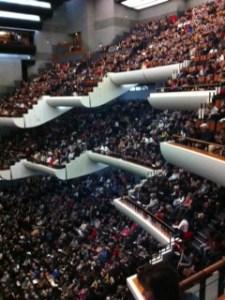
P1010032Mozart’s Così fan tutte via Anne Teresa De Keersmaeker at the Palais Garnier, January 28, 2017.

Brrr, it’s been cold in Paris. But if you want to really feel your soul freeze and shrivel, run to see the sextet of singers studiously navigating around their icy, pointless, and smoothly dancing avatars (not from the Paris Opera Ballet, but ATDK’s imported folk) in this new production of Così Fan Tutte.

This opera is supposed to be about how easily we misunderstand life. How badly we know each other and ourselves, yet how fiercely we yearn for human warmth, for certainty, for love. Mozart was born to teach us how to laugh in the face of those blizzards of emotion that can temporarily blind us to, oh, just about everything we lie to ourselves about. In this new production, Mozart turns out to have left the room…

Nothing ever happens to any man that he is not formed by nature to bear. [Marcus Aurelius, Meditations, Book V, 18]

If Mozart’s music and Da Ponte’s text both nudge us to dare to live and learn from our mistakes, this staging concentrates upon testing the audience’s capacity for stoic attention. Thought and craft get yoked to a nice, clean, predictable – and very monotonous – exercise. The staging refuses to invite the audience to in. The fault must be laid at the feet of the choreographer and director, Anne Teresa De Keersmaeker. And perhaps at those of Philippe Jordan, who delivered a most odd, dry, and percussive reading of the score.

All things from eternity are of like forms and come round in a circle. [Book II, 14]

The blindingly white and empty set — from the white Mylar floors traced with a few symmetrical circling patterns (remember fooling around with a “Stylograph Kit” as a child?) to the plexiglass side panels that echo a bare lightbulb’s light, to the whitewashed fire-screen upstage – while harsh, might still have provided a magnificent big space to fill with movement. Alas, that was not to be.

So what happened? Small happened.

At the end of the overture, the entire cast marched in — right in step to the music — parked itself crisply downstage on the stencils, and then swayed in a semicircle – some with mouths open, some closed — for about twenty minutes.

You see, “the concept” is that each singer is assigned a dancing avatar, an echo, a shadow: like the Anna 1 and Anna 2 in Kurt Weill’s “The Seven Deadly Sins.” OK, parallel worlds. But then don’t just plop each singer downstage to stand and deliver. Is that old-fashioned staging or what? If on top of that you add dancing shadows that barely interact with anybody while making moves intended to be vaguely illustrative, distance on the part of the viewer soundly sets in. I found myself resorting to the supertitles: the words flashing above the stage provided so much more drama than what was spread out down below: a tiny alphabet of steps at a loss for words.

The flaccidly-conceived stage action radiated no one’s id, no one’s ego. All of the dances or dancelike steps by anyone involved, whether tied directly to a singer’s line or to an orchestral flourish, were relentlessly “on the beat” and scrupulously mild. In the end, the warmth of a singer’s voice sometimes prevailed. But should you ever feel the urge to watch puppets who really know how to make their bodies sing, let me suggest we reserve tickets for an evening at the Salzburger Marionettentheater.

Whatever this is that I am, it is a little flesh and breath, and the ruling part. [Book II, 2].

As the evening wore on I began to imagine branding what I was seeing as the Isadora Duncan 9.0 Etch-A-Sketch kit: find that solar plexus, sway and swoop your upper body, lift your arms and now sway side to side bigger, walk-skip-shimmy, bend your knees (for the singers especially), or sweep your bent legs backward like a skater on dry land (that’s Don Alphonso’s avatar). Return to your place and stand around. Slowly collapsing to the ground by singer or dancer proved the Great Big Leitmotif. At one point during tonight’s performance, I completely spaced out on both singer and dancer during a major aria and let my eyes close. When I reopened them, I rediscovered the pair lurking near the same marks, swaying pleasantly, still stolidly ignoring each other as before.

Movement got mildly more engaged and a bit more individuated during the second half. A double did something wildly new. But, alas, it turned out to be “I can’t get the goddamn lawnmower to start” (bend down, pull one arm up hard, repeat, repeat). OK, that could be some kind of physical metaphor for frustration, but when this is all you remember in sharp outlines from a performance only a few hours later, that’s probably not a good sign.

Many a contemporary choreographer has taken a simple concept and simple steps and made a stage fill and shimmer in unexpected ways. But this basic vocabulary of steps, repeated with careful and skilled monotony for three ice-bound hours stuck in my craw. It was like an evening at a chic restaurant spent repeatedly staring in disbelief at the appearance of yet another tiny emulsion stranded on a big white plate.

Remember this, that there is a proper value and proportion to be observed in the performance of every act. [Book IV, 35]

Commentaires fermés sur Così : The Arctic Semi-Circle

Classé dans Ici Paris, Retours de la Grande boutique

Sense and Sensitivity at Swan Lake

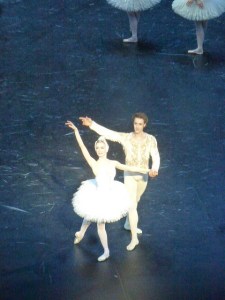
BastilleLe Lac des cygnes at the Palais Garnier on December 7, 2016

It is a truth universally acknowledged, that a single man in possession of a good fortune, must be in want of a wife. [Jane Austen, Pride and Prejudice, Chapter 1]

And sometimes even an enchanted princess is in want of a suitable husband. Myriam Ould-Braham, my swan on December 7th, lasered a pensive and inquisitive gaze at the sleeping prince during “Siegfried’s Nightmare, “ the prologue to Nureyev’s version for the Paris Opera Ballet. Just before getting caught in the clutches of Dr. Evil, she tried to touch the man of her dreams but could only use her eyes, the arch of her neck, and a roll of the shoulder. This episode – a moment where the Prince slumbers decoratively – became Sleeping Beauty in reverse, as if a happy end were still in sight.

Barely into Act 1, I then voted too for Mathias Heymann’s Prince Desiré [yes, I am making this mistake on purpose] whose every movement designated him a paragon of the decent values and that strange unease with reality that a strict upper-class upbringing imposes. A prince charming, a misunderstood Darcy, his arms reached out and his hands said “welcome” to all, yet he’d clearly been taught that his place was to stand quietly apart from the crowd.

p1130649

Odette and Mathias / Myriam and Siegfried on the evening of December 13th

Siegried and Odette’s encounter in Act II again seemed like something out of Jane Austen. Restrained and almost evasive pantomime conversation, tentatively articulated hope, was embedded in perfectly chiseled but un-fussy movement. When Ould-Braham shyly grasped Heymann’s hand and slowly brought it to her cheek, I felt that very intimate shock that can happen when someone French you are attracted to finally asks if they might call you “tu.” While I adore the memory of adamantly passionate and feisty ballerinas like Makarova, let’s leave some space in the room for drama queens who whisper rather than shout. Experiencing such performances can be no less intense.

Ould-Braham chose to understate the obvious – flappyflappyswanny arms were put on indefinite hold. But her gorgeous giant arabesques — replete with arms unfolded from the bottom of her back, more Nike than bird — will find their way into textbooks, despite not being poses at all, not vogued, but soft and breathing.

I often tell people unused to ballet: look, all the movement is metaphor. So if a man’s line perfectly follows the woman’s a split second later, his arms and legs seeming to be inspired by her, it means love. But this is rare, and this is what I witnessed. Heymann’s movements flowed through and beyond Austen’s painfully joyous comment: « I must learn to be content with being happier than I deserve.”

p1130627

Siegfried and Myriam / Odile et Mathias. December 13th.

Then I gloated, watching Ould-Braham silkily rip apart the so-old cliché that nice girls don’t have it in them to be a Black Swan. Just give ‘em a tube of scarlet lipstick and yell: “123 go!” The Act 3 pas de deux became a real “dance-off.” Heymann – completely “on” — soared and floated: hey, is this his dream or is he just dreamily perfect? Then Ould-Braham opted for an all too rare series of simple but perfectly cooked fouettés with such a soft and controlled landing that I “oohed.” When Ould-Braham’s Odile softly puckered a teasing air-kiss at our fellow just before launching into the great big arabesque hops backwards, she totally reflected her partner’s – and our — willingness to be awed by her slinky grace and charm.

This pair must have worked long and hard in the studio to strip away all the corny and crass flourishes that encrusted themselves onto these two roles. Circus tricks can be tremendously entertaining, and entertaining an audience is what you want to do. But why not pare it all down once in a while and go back to the pure beauty of the basics? A Jane Austen attitude does indeed suit the personalities of these two artists.

If you think that “To be fond of dancing was a certain step towards falling in love,” sounds a bit tepid, I found that this pair’s quiet and un-gaudy and sandpapered approach gave new life to our beloved old warhorse. Restrained ardor can be titanic in its own way, dear reader, and can teach us — most unexpectedly — that it is what we have hungered for.

4 Commentaires

Classé dans Retours de la Grande boutique

Swan Lake: Get Your Story Here. A plot summary.

cygne-rougeThe basic story is so ridiculous even Freud would break out in giggles. A mama’s boy falls for a female impersonator really into feathers who goes by the moniker #QueenOfTheSwans. He digs her divine Virgin in White get-up but can’t stop making googly eyes at a sexy fashionista in black who turns out to be her -get this – Evil Twin. Then there’s the problem of their pimp. Since our hero has also demonstrated from the outset that he’s a limp noodle when it comes to standing up to father figures, he’ll…oh never mind. I mean, would you keep a straight face if late one night a middle-aged guy suddenly jumped out of the bushes, ripped open his Bat-cape, and exposed you to…his sequined green bodysuit?
But every time I’m actually experiencing Swan Lake, my snarkiness about the plot just evaporates. This ballet – like the best of operas — simply lets you cry in the dark over how you yourself, younger and softer and in better shape, had once been a fool for love.
What’s really weird, though, is that most people with bucket-lists think that if you’ve seen one Swan Lake you’ve seen ‘em all. Wrong. So if you don’t go see Rudolf Nureyev’s 1984 version for the Paris Opera Ballet, still fresh and juicy after all these years, you will miss out on something big: a dramatically coherent and passionately danced dreamscape. This production, for once, succeeds in forcing the tired threads of the generic story into real narrative. To boot, it gives the male dancers of the corps – sans les plumes de ma tante — as much to do as the female ones.
Many, many, versions of this ballet exist. All of the steps of the first one from 1877, created in tandem with Tchaikovsky’s music and famed as a colossal flop, seem to have been lost. Every production we see today claims to be « after the original » 1895 version as devised by Marius Petipa and Lev Ivanov for the Maryinsky Theater. Yet we probably should consider 1895’s as lost, too. Ballet, by definition, just keeps evolving.
Just imagine: not that long ago, the Prince only mimed and his bestie, Benno, did all the complicated partnering stuff. An annoying court jester still scampers about in some productions, boring everyone on either side of the footlights. Just imagine: in some productions, this big tearjerker comes to a happy end. Some constants: almost all the steps in Act II and Odile’s extended series of fouettés (where the ballerina whirls like an unstoppable top) in Act III. Imagine the challenge each leading ballerina faces: she must convince you that you must have seen two completely different leading ladies – one fragile and tender, the other violent and bad. But in some earlier versions, you did indeed see two different leading ladies…

Le Lac des Cygnes, Moscou, 1877. Une évocation du décor du 2e acte partiellement corhoborée par les sources journalistiques

Le Lac des Cygnes, Moscou, 1877. Une évocation du décor du 2e acte partiellement corroborée par les sources journalistiques

PROLOGUE (OVERTURE)
Prince Siegfried has a nightmare where he looks on helplessly as a beautiful princess falls into the clutches of a half-human bird of prey. Before his eyes, the evil succubus transforms her into a swan and carries her off into thin air.

ACT ONE: THE CASTLE
It is the prince’s birthday. A crowd of young people, Siegfried’s friends, burst into the room, along with the prince’s Tutor Wolfgang (who bears a striking resemblance to the monster in Siegfried’s dream). Siegfried, aroused from his slumber, somewhat half-heartedly joins in their revels. He’s a melancholy prince, a dreamer.
The revel is interrupted by trumpet fanfare and the Queen Mother makes her entrance. She has come to congratulate her son upon his coming-of-age, but also to remind him of normal stuff. Her birthday gifts comprise a crown (do your duty) and a crossbow (shooting could provide some pleasure perhaps in the Freudian sense). As she points to her ring finger, the Queen Mother make it clear to the prince that both objects mean it’s time he took a wife (duty and/or pleasure?). At the ball in his honor tomorrow night, he will have to choose a bride. Eew! Her son goes limp at the mere thought.
Once they are sure that momma has gone back upstairs, Siegfried’s friends try to cheer him up: two girls and a boy perform a virtuosic pas de trois. Then the Tutor tells all the girls to fluff off. He gives the prince a dance lesson that involves a strong undercurrent of aggression: it looks like a power struggle rather than an initiation to the idea of the birds and the bees. The chorus boys break into one more rousing group dance-off, full of exhilaratingly complicated combinations, as they take leave.
The prince dances a sad solo while the Tutor glares at him. He has zero right to disapprove, for he’s not the prince’s father nor even his step-father. After once more bringing the prince to his knees, this oddly dominant employee suggests Siegfried go shoot his crossbow. In most productions, the Tutor is just a fat patsy who has nothing to do with evil. I happen to appreciate how, by sneakily combining our doubts about two characters, Nureyev’s production will soon merge both the Oedipal complex and Hamlet’s troubled relationship with male authority figures into one Really Big Bird.

We hear the “Swan theme.” The stage empties.

... et la "Danse des coupes", préfiguration de la vision des cygnes.

… et la « Danse des coupes », préfiguration de la vision des cygnes.

WITHOUT A PAUSE

ACT TWO BEGINS: NIGHT AT THE LAKE. ODDLY, IT FEELS AS IF WE HAVEN’T LEFT THE CASTLE, JUST GONE INTO ANOTHER ROOM…

Le corps de ballet aux saluts de la soirée du 8 avril 2015.

Le corps de ballet aux saluts de la soirée du 8 avril 2015.

We see that creepy bird of prey again, rushing across the stage. But is it the wicked magician von Rothbart or…the Evil Twin of the Tutor? Siegfried enters, and takes aim at something white and feathery rustling in the bushes. To his astonishment, out leaps the most beautiful creature he has even seen in his life: the princess he had already discovered in his dream. But she moves in a strange fashion, like a bird. Terrified, she begs him not to shoot. But Siegfried cannot resist the urge to grab her and to ask: “who are you? Um, what are you?”
“You see this lake? It is filled with my mother’s tears, for I,” she mimes, “am Odette, once a human princess, now queen of the swans. That evil sorcerer cast a spell on us, condemning us to be swans by day but we return to almost-human form at night. The spell will only be broken when a prince swears his undying love for me and never breaks that vow.” They are interrupted, first by von Rothbart, then by the arrival of the swan maidens (a corps de ballet of thirty-two).
Surrounded by the swan maidens, Siegfried and Odette express their growing understanding of each other in a tender pas de deux, which is followed by a series of dances by the other swans. Siegfried swears he will never look at another woman. But as dawn approaches he watches helplessly as von Rothbart turns Odette back into a bird. Siegfried doesn’t know it, but the strength of his vow is about to be put to the test.

INTERMISSION

ACT THREE: THE NEXT EVENING, IN THE CASTLE’S GRAND BALLROOM
Lac détailIt’s time for the Prince’s birthday party. Guests who seem to have been called forth from the Habsburg empire – Hungary, Spain, Naples, Poland — perform provincial dances in his and our honor.
Six eligible princesses waltz about, and the Queen Mother forces Siegfried to dance with all of them. Siegfried is polite but cold: the princesses all look alike to him, and not one is his Odette. Tension increases when the prince tells his mother he doesn’t even like, let alone want, any of these dumb girls. Suddenly two uninvited guests burst into the ballroom. It’s the Tutor (or is it von Rothbart?) and a beautiful young woman, It’s Odette!
But something is odd: she’s dressed in black and much coyer and sexier than the demure and frightened creature he’d embraced last night. As they dance the famous Black Swan Pas de Deux, the fascinated prince finds himself increasingly blinded by lust. Convinced she is his Odette, simply a lot more macha today, he asks for her hand in marriage and, at the Tutor/von Rothbart’s insistence, swears undying love. [A salute with fore and middle finger raised]. At that moment, all hell breaks loose: the Black Swan bursts out laughing and points to another bird who’d been desperately beating at the window panes. “There’s your Odette, doofus!” The Black Swan is actually Odile, her evil twin! The foolish prince falls in a faint, realizing he has completely screwed things up.

PAUSE (DON’T LEAVE YOUR SEATS!)

ACT FOUR: BACK AT THE LAKE. OR STILL INSIDE THE PRINCE’S MIND?
Siegfried finds himself back at the lake, surrounded by the melancholy swan maidens. He rushes off to find Odette. She rushes in. Frantic and distraught, Odette believes that, if she wants to liberate her fellow swans, she now has no other option but to kill herself.
The swans try to comfort their queen, while the triumphant von Rothbart unleashes a storm. Odette tries to fly from him to die but our gloating villain grabs at her with his claws.
The prince finally finds Odette, barely alive. Her wings – like her heart – are broken. Nevertheless, she forgives him and they dance together one last time, their movements illustrating how lovers cling to each other even as fate and magic try to pull them apart.
In 1877, the pair just ended up drowned. What a bummer.
In 1895, choosing to jump into the lake and drown together as martyrs meant the two would be carried up to the heavens as befits a final orchestral apotheosis.
In 1933, the evil magician killed Odette. Poor prince got left with little to do. Another bummer.
In the USSR, 1945, the hero ripped off von Rothbart’s wig and the gals all dropped their feathers. Liberation narratives befitted those times, we must assume.
Tonight?
Odette looks on helplessly as Siegfried tries to do battle with the sadist that is von Rothbart. As in the “lessons” with the Tutor in the first act, the prince is brought to his knees. Is this for real? Has all of this been a dream? Do nightmares return? Bummer.

Le Lac des Cygnes. L'acte 3 et sa tempête...

Le Lac des Cygnes. L’acte final et sa tempête…

Commentaires fermés sur Swan Lake: Get Your Story Here. A plot summary.

Classé dans Hier pour aujourd'hui

Le Lac des cygnes : Par ici l’argument!

cygne-rougeL’histoire de base est tellement ridicule que Freud même en aurait eu un fou rire. Un fils à sa maman tombe raide pour un transformiste emplumé qui répond au pseudo de #ReineDesCygnes. Il en pince pour son attirail de vierge immaculée mais ne peut non plus s’empêcher d’écarquiller les yeux  à la vue de la sexy fashionista en noir qui, tenez-vous bien, se trouve être sa Jumelle Maléfique. Et puis il y a le problème de leur souteneur. Vu que notre héros s’est aussi avéré être depuis le début une chiffe molle quand il s’agit de s’opposer à une figure paternelle, il… Mais laissons tomber. Franchement, garderiez-vous votre sérieux si, en fin de soirée, un mec entre deux âges sautait hors des fourrés, écartait sa cape et vous révélait … son maillot à paillettes verdâtre ?

Mais il n’empêche qu’à chaque fois que j’assiste à un Lac des cygnes, mon esprit sardonique se dissout dans l’air. Ce ballet – comme les meilleurs opéras – vous fait pleurer dans le noir sur ce vous-même, plus jeune, plus vulnérable et en meilleure forme, qui s’est jadis ridiculisé par amour.

Ce que je trouve vraiment bizarre, en revanche, c’est tout ces gens trois étoiles guide Michelin, qui pensent que quand on a vu un Lac des cygnes on les a tous vus. Tout faux ! Donc, si vous n’allez pas voir la version Rudolf Noureev du Lac de 1984 pour le ballet de l’Opéra de Paris, encore fraîche et savoureuse après toutes ces années, vous manquerez quelque chose de rare : une production onirique dramatiquement cohérente qui, pour une fois, parvient à  tirer des ressorts usés de l’histoire un récit vrai. Par-dessus le marché, elle donne aux garçons du corps de ballet – My Tailor is Rich! – autant à danser qu’aux filles.

Beaucoup, beaucoup trop de versions de ce ballet existent. Les pas de la première de 1877, créés en même temps que la musique de Tchaïkovski et considérés comme un flop total, ont tous été perdus. Toutes les productions que nous voyons aujourd’hui clament être la réincarnation de « l’originale » de 1895 conçue par Marius Petipa et Lev Ivanov pour le Théâtre Marinsky. Peut-être d’ailleurs devrions-nous également considérer la version de 1895 comme perdue. Le Ballet est, par définition, en constante mutation.

Imaginez seulement qu’il n’y a pas si longtemps le prince mimait seulement et que son pote, Benno, se chargeait de toutes les difficultés du partenariat. Un ennuyeux bouffon batifole toujours dans certaines productions, rasant tout le monde des deux côtés de la rampe. Imaginez seulement : dans certaines productions, ce tire-larme finit par un happy end. Quelques constantes : presque tous les pas dans l’acte 2 et la série de fouettés d’Odile (quand la ballerine se met à tournoyer comme une irrésistible toupie) à l’acte III. Imaginez le défi pour chaque ballerine : elle doit vous convaincre que vous avez vu deux étoiles différentes – l’une, tendre et fragile, l’autre, violente et méchante. Il fut d’ailleurs un temps où on voyait effectivement deux danseuses différentes dans ces rôles.

Le Lac des Cygnes, Moscou, 1877. Une évocation du décor du 2e acte partiellement corhoborée par les sources journalistiques

Le Lac des Cygnes, Moscou, 1877. Une évocation du décor du 2e acte partiellement corroborée par les sources journalistiques

  PROLOGUE (OUVERTURE)

Le prince Siegfried fait un cauchemar où il assiste impuissant à la tombée d’une belle princesse dans les griffes d’un oiseau de proie à moitié humain. Devant ses yeux, le maléfique succube la transforme en cygne et se volatilise avec elle.

ACTE I : LE CHÂTEAU

C’est l’anniversaire du prince. Une foule de jeunes gens, les amis de Siegfried, font irruption dans la salle, accompagnés du tuteur du prince Wolfgang (qui ressemble étrangement au monstre du songe). Siegfried, tiré de son sommeil, se joint presque à contre cœur à leurs festivités. C’est un prince mélancolique. Un rêveur.

La fête est interrompue par une fanfare de trompettes et la reine-mère fait son entrée. Elle est venue féliciter son fils pour sa majorité mais pour lui rappeler aussi quelques fondamentaux. Ses cadeaux d’anniversaire se composent d’une couronne (fais ton devoir), d’une arbalète (la chasse peut procurer un certain plaisir, peut-être au sens freudien du terme). Lorsqu’elle désigne l’anneau à son doigt, la reine-mère exprime clairement que ces deux objets signifient qu’il est temps pour lui de prendre femme (devoir et/ou plaisir ?). Au bal donné en son honneur demain soir, il devra choisir une fiancée. Beurk ! Son fiston se ramollit rien qu’à l’idée.

Une fois surs que maman est remontée à l’étage, les amis de Siegfried essayent de lui remonter le moral : deux filles et un garçon interprètent un pas de trois virtuose. Puis, le tuteur dit aux filles d’aller batifoler ailleurs. Il donne au prince une leçon de danse qui comporte une forte charge d’agression sous-jacente : cela ressemble plus à une lutte de pouvoir qu’à une initiation au sujet des roses et des choux-fleurs. Les chorus boys se lancent alors dans une énième vibrante danse de groupe, pleine de grisantes combinaisons complexes, avant de se retirer.
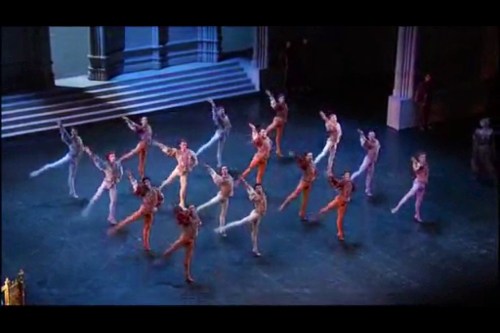
... et la "Danse des coupes", préfiguration de la vision des cygnes.

… et la « Danse des coupes », préfiguration de la vision des cygnes.

Le prince danse un solo triste sous le regard réprobateur du tuteur. Il n’a aucun droit de désapprouver, n’étant ni le père ni même le beau-père du prince. Après avoir mis le prince sur les genoux encore une fois, cet employé étrangement dominateur suggère à Siegfried d’aller essayer son arbalète. Dans la plupart des productions, le tuteur est juste un gros pigeon qui ne ferait de mal à personne. Il se trouve que j’apprécie la manière dont, en combinant malignement nos doutes au sujet de deux personnages, la production de Noureev va bientôt fondre le complexe d’Œdipe et les relations troubles d’Hamlet avec les figures de l’autorité paternelle en un seul et même Grand Oiseau.

On entend le thème du cygne. La scène se vide.

SANS PAUSE

L’ACTE DEUX COMMENCE : NUIT SUR LE LAC. BIZARREMENT, IL SEMBLERAIT QUE NOUS N’AVONS PAS QUITTÉ LE PALAIS MAIS QUE NOUS SOMMES SEULEMENT PASSÉS DANS UNE AUTRE PIÈCE.

Le corps de ballet aux saluts de la soirée du 8 avril 2015.

Le corps de ballet aux saluts de la soirée du 8 avril 2015.

Nous voyons une fois encore cet inquiétant oiseau de proie, qui court à travers la scène. Mais s’agit-il du méchant magicien von Rothbart ou du jumeau maléfique du tuteur ? Siegfried entre et prend pour cible quelque-chose de blanc et de duveteux bruissant dans les buissons. À son grand étonnement, en sort la plus jolie créature qu’il ait jamais vue de sa vie : la princesse entrevue dans ses rêves. Mais elle se meut d’une étrange façon, comme un oiseau. Terrifiée, elle le supplie de ne pas tirer. Mais Siegfried ne peut résister au besoin de l’attraper et de lui demander : « Qui êtes-vous ? Euuuh. Qu’êtes-vous ? »

« Vous voyez ce lac ? Il a été rempli des larmes de ma mère, car Moi » mime-t-elle  « Je suis Odette, jadis une princesse humaine, aujourd’hui reine des cygnes. Ce méchant sorcier a jeté sur nous un sort, nous condamnant à être des cygnes le jour mais nous retournons à une forme presque humaine la nuit. Le sort ne sera brisé que si un prince me jure un amour éternel et qu’il ne se parjure pas ». Ils sont interrompus d’abord par von Rothbart, puis par l’arrivée de femmes-cygnes (un corps de ballet de trente-deux).

Entourés par ces femmes-cygnes, Siegfried et Odette expriment leur entente toujours grandissante par un tendre pas de deux suivi par une série de danses des cygnes. Siegfried jure qu’il ne posera jamais les yeux sur une autre femme. Mais alors que l’aurore pointe il regarde impuissant von Rothbart transformer a nouveau Odette en cygne. Siegfried ne le sait pas, mais son vœu va bientôt être soumis à un test.

ENTRACTE

ACTE TROIS : LE SOIR SUIVANT, DANS LA GRANDE SALLE DE BAL DU CHÂTEAU
Lac détailLe temps est venu pour la soirée d’anniversaire du prince. Les invités interprètent  des danses provinciales de l’empire des Habsbourg – Hongrie, Espagne, Naples, Pologne – en son honneur et pour notre plaisir.

Six princesses éligibles valsent dans les parages, et la reine force Siegfried à danser avec chacune d’entre elles. Siegfried est poli mais froid : ces princesses se ressemblent toutes pour lui, et aucune d’entre-elles n’est Odette. La tension monte quand le prince dit à sa mère qu’il n’apprécie ni ne veut d’aucune de ces oies blanches. Soudain, deux invités surprise font irruption dans la salle de bal. C’est le tuteur (à moins que ce ne soit von Rothbart ?) et une belle jeune femme, c’est Odette !

Mais quelque chose cloche : elle est habillée de noir et bien plus hardie et sexy que la créature sage et terrorisée qu’il avait étreinte l’autre soir. Alors qu’ils dansent le célèbre pas de deux du cygne noir, le prince se sent irrésistiblement aveuglé par la luxure.

Convaincu qu’elle est d’Odette, juste une peu plus macha aujourd’hui, il demande sa main et, à la demande insistante du Tuteur/von Rothbart, lui jure un amour éternel. [Un salut avec l’index et le majeur dressés]. À ce moment, les éléments se déchaînent : le cygne noir éclate de rire et désigne un autre oiseau frappant désespérément aux carreaux. « Voilà ton Odette, triple buse ! ». Le cygne noir n’est autre qu’Odile, son double maléfique! L’imprudent prince s’effondre évanoui, réalisant qu’il a vraiment tout gâché.

PAUSE (ON NE QUITTE PAS SON SIÈGE !)

ACTE QUATRE : DE RETOUR AU LAC. OU TOUJOURS DANS L’ESPRIT DU PRINCE ?

Siegfried se retrouve transporté au lac, entouré par les mélancoliques femmes cygnes. Il se précipite pour trouver Odette. Elle fait irruption. Affolée et  désespérée, Odette pense que, pour libérer ses camarades cygnes, elle n’a d’autre option que de se tuer.
Les cygnes tentent de consoler leur reine tandis que le triomphant von Rothbart déchaîne une tempête. Odette essaye de lui échapper mais notre ricanant vilain pose ses griffes sur elle.

Le prince trouve finalement Odette, presque morte. Ses ailes – comme son cœur – sont brisées. Néanmoins, elle lui pardonne et ils dansent ensemble une dernière fois, leurs mouvements illustrant la façon dont des amants se raccrochent l’un à l’autre même lorsque le destin et la magie essaient de les arracher l’un à l’autre.

En 1877, le couple finissait noyé. Quelle poisse.

En 1895, choisissant de se jeter dans le lac et de se noyer ensemble tels des martyrs, tous deux étaient emportés au paradis en une apothéose suggérée par les accords finaux de l’orchestre.

En 1933, le maléfique magicien tuait Odette. Le pauvre prince restait là avec bien peu à faire. Encore la poisse.

Dans l’URSS de 1945, le héros arrachait une aile à von Rothbart et toutes les filles tombaient leurs plumes. Les récits de libération convenaient à l’époque, semble-t-il.

Ce soir ?

Odette regarde Siegfried impuissante alors qu’il essaye de lutter contre le sadique qu’est von Rothbart. Comme dans la « leçon » avec le tuteur au premier acte, le prince finit à genoux. Est-ce pour de vrai ? Tout cela n’aurait-il été qu’un rêve ? Les cauchemars sont-ils récurrents ? La poisse, on vous dit.

Le Lac des Cygnes. L'acte 3 et sa tempête...

Le Lac des Cygnes. L’acte final et sa tempête…

1 commentaire

Classé dans Hier pour aujourd'hui

Giselle… Si les fleurs pouvaient parler #FlowerPower

Carte postale 1900Margaux à Lili :

Ma vie est vraiment top ! J’suis au soleil, tranquille, devant la petite maison de cette très gentille veuve un peu névrosée. Elle ne fait de mal à personne ; elle agite juste un peu les bras pour mimer des machins un peu lugubres du genre « mourir », « morte » et « ressuscitée d’entre les morts ». La maison est proprette, le terreau bio, comme il se doit dans un village perdu au milieu de nulle part, et mes pétales sont devenues d’un blanc crémeux, d’un duveteux… C’est bien simple, ces derniers jours, je me passe allègrement de mousse coiffante.

Sa fille Giselle est trop choute, un peu comme nous les marguerites ; même si on n’est pas des fleurs de la haute, on a une élégance naturelle, on relève le menton, on s’bouge et on donne envie de sourire aux gens.

Un jour, quelqu’un me la posera, « LA question » ! En attendant, j’maîtrise.

Le seul bémol du bled c’est ce type, Hilarion. Tu sais, celui qui fait son mec parce qu’il a du boulot ? Il arrête pas d’accrocher des trucs au clou qu’est juste au dessus d’ma tête. Les bouquets, c’est déjà pas top – les fleurs des champs sont d’un vulgaire et leur conversation d’un rasoir. Attends : les A-beeeeeeilles ! Mais alors quand c’est des lapins morts, j’ai juste envie d’pleurer. Le sang goutte sur mes pétales et ensuite j’ai plus qu’à prier pour qu’il pleuve. Beurk !

Attends ! Attends !!! Ouhhh, v’la un joli minet qui s’amène ! Tiens, bizarre, il a une épée et son pote s’en va la cacher dans la chaumière d’en face, là où les mauvaises herbes ont l’habitude de zoner. Huuuum !

Il fait du flan à Giselle ! Il lui court après ou quoi?

Wesh, ça y est ! Le thème musical est lancé ! Giselle me regarde, mais c’est qu’elle va m’choisir !!! Je vais être candidate à « ZE Quouestionne ». Une star de la télé réalité ! Bon, à plus, j’m’arrache !

Ça fait mal ! Plus que j’aurais pensé. Et la façon dont tout-ça s’est terminé m’a vraiment vexée.

J’ai ESSAYÉ de dire à G « Fais gaffe, monsieur beau gosse, c’est qu’des problèmes, même si je l’trouve mimi aussi. » Mais ce troudu m’a arraché un autre pétale, sournoisement- comme si deux épilations c’était pas déjà plus qu’assez. Du coup mon « IL T’AIME, PAS-DU-TOUT » est passé complètement hors radar. Et puis, tu vas halluciner, ensuite il m’a j’tée ! Quel saligaud. Encore heureux que son poteau avait mis son épée à l’abri.

Alors me voilà, faisant tapisserie sur le côté, cul par-dessus-tête et définitivement en vrac du côté pétale. Mais ce que je peux tout de même voir avec ma petite figure jaune boudeuse, ça ne m’plais pas du tout.

Le nouveau, le mimi, il s’avère que c’est un TO-TAL IMPOSTEUR. Fiancé genre depuis toujours, à une espèce de riche pétasse.

Par contre, je fais un come back de fou. La brave fille vient juste partager notre selfie « Il m’aime, Un peu, beaucoup… » avec «Amis et Connaissances ». ENFIN ! Tout le monde a maintenant pigé c’que j’essayais de dire depuis le début.

C’est trop triste que Giselle ait dû mourir. Je l’aimais bien.

:(((

*

*                                                  *

Lili à Margaux :

Tu ne connais pas ta chance, tu t’es juste fait débiner. BON D’ACCORD, déchiquetée aussi. C’est pire.

Aujourd’hui, ton mec, le prince, a pointé son nez dans notre serre fraiche et a fait couper une brassée d’entre nous au dessus de la cheville par Wilfrid ; tu sais, son copain.

Donc me voilà, au milieu de nulle part, de nuit avec mes sœurs, congelée et complètement flippée. Tu le crois, ça, Albrecht – c’est son vrai nom – nous a emmené là-bas, genre au milieu de méga-nulle-part et s’est contenté de nous larguer toutes sur la première tombe venue. Brrrrrrrr !

Un pathétique bouquet de fleurs des champs nous avait devancées sur la tombe. C’est confirmé, la rubrique des abeilles crevées est leur seul sujet de conversation.

….

Dernières nouvelles :

La forêt est dirigée par une bonne femme pas commode qui – le croiras-tu ? – chaque soir à minuit, empoigne de quelconques feuillages, des brindilles, bref si elle n’en trouve pas, tout ce qui lui tombe sous la mire (tu me pardonneras l’homonymie) et puis, crois-le ou pas, se met à agiter dans tous les sens ces quelques choses afin de convoquer toutes ces autres nénettes hyper déprimées.

Puis elles piétinent en rond toute la nuit, de très, mais alors de très très mauvaise humeur. Le gazon se plaint d’affreux maux de tête !

Attends un peu ! Tu me disais que Giselle était morte ? Mais la voilà ! Bon, c’est vrai qu’elle est toute pâlote.

Et ne voilà-t-il pas qu’elle fait des avances à Albrecht ! Elle lui verse même sur la tête un escadron de fadasses petites fleurs des bois. Hé ! Mamzelle Perfection ! Ça t’aurait fait mal de nous faire participer à la place ?

Quant à l’autre pimbêche de reine des zombies, madame Myrna, Mirza, ou je ne sais plus de quel nom ronflant elle s’épelle : sérieusement, est-ce qu’elle peut ignorer que ses brindilles sont incroyablement allergiques à tout objet en forme de « t » ? C’est un coup à les faire crever.

Elle a deux meilleures copines qui se font appeler dans le programme, tiens-toi bien…, Moyna et Zulma, sans blague…

Cet endroit est bourré de cas cliniques…

Margo, toi et les lapins serez heureux d’apprendre que les fiancées viennent juste de jeter ce ringard d’Hilarion dans le lac.

Oooh, je te le donne en mille, G et A se fredonnent ton thème l’un à l’autre. Trop bien ! Marguerites en force !

Ne me vire pas de ta liste d’amis, mais peut-être te trompais-tu au sujet du « pas du tout » ? J’dis ça, j’dis rien.

Après pas mal d’émois, les voilà tous partis. Whouuuu !

Enfin à part Albrecht. Il est tout suant et je pense que ses batteries sont sérieusement à plat.

Mais, mais,… il se dirige vers nous avec ce regard qui dit, j’ai besoin de prendre LA pose (dramatique).

Que va-t-il faire ? Choisir l’une d’entre nous ? Ça ne serait pas équitable.

Ou alors en prendre quelques-unes, et nous lâcher une par une sur la tête afin que nous soyons non seulement laissées seules dans cette damnée forêt mais encore obligées de lutter contre la baisse de réseau consécutive à une chute ?

Il ne pourrait pas juste nous ramener toutes à la maison ?

Pour sûr, j’opterais bien pour cette dernière solution. Mais cela voudrait dire sans doute qu’il nous recyclerait en nous donnant à sa femme. Rien que d’y penser… Beuuuurk !

Parfois, c’est tout de même moche la vie d’une fleur, hein ?

VDF

Carte postale 1900bis

1 commentaire

Classé dans Humeurs d'abonnés

Giselle…If The Flowers Had Their Say #FlowerPower

Carte postale 1900Daisy to Lily:

 I love my life. I get to sit in the sun in front of the little house of a nice, if kinda neurotic, widow lady. She does no harm, just waves her arms around miming gloomy stuff like “dying,” “dead,” and “rising from the dead.” House is clean, the plant food organic as it should be in a village in the middle of nowhere, and my petals have become so creamy white and super fluffy these days that I can even skip the conditioner.

Her daughter, Giselle, is a real sweetheart, kind of like us daisies: even if we’re not a noble flower we do have natural elegance, hold our heads up high, wave a lot, and make people smile.

One day, someone will ask me “the question.” But while waiting, I’m chill.

The only real downer in this nabe is that Hilarion guy. You know, the one who thinks he’s a big hotshot because he has a job?  He keeps hanging things up on the hook right above my head. The bouquets are bad enough – flowers from the field are so tacky and such boring conversationalists. I mean: bees? Puhlease. But when it’s the dead rabbits I just want to cry. They drip blood on my head and all I can do is pray for rain. Gross.

…..

Wait a minute. Ooh, a cute new guy just showed up. Weird, he’s got a sword and his man friend goes to hide it in that cottage across the way where the Weeds hang out. Hm.

He’s putting to moves on Giselle. Is he chasing her or what?

OMG, it’s happening! The theme song has started! Giselle is looking at me, no, she’s reaching for me…I’m gonna be a contestant on “The Question?” A reality star! Gotta go!

…..

 That hurt more than I expected. And the way the whole thing panned out really hurt my feelings.

 I TRIED to tell G. “Watch out, Mr. Handsome looks like such bad news, even if I think he’s cute, too.” But then the asshole yanked out yet another petal on the sly – as if even two just plucked wasn’t like so much more than enough. So my cry of  “he loves you not, BFF!” went totally off her radar. Then he, get this, just tossed me away. What a creep. Good thing his bro had taken away that sword.

So here I am, kind of off to the side, upside-down and definitely the worse for wear petal-wise. But what I can still see with my little yellow frowny face, I do not like.

 The cute new guy turned out to be a TOTAL fraud. He’s a…PRINCE! Engaged to some rich bitch since, like, forever.

 But I’m having the most amazing comeback. That sweet girl just shared our “He Loves Me, Not” selfie — even with acquaintances.  FINALLY everybody got into what I had been trying to say in the first place.

 Pity Giselle had to die, though. I liked her.

: (((

 *

*                                                 *

Lily to Daisy:

 You are soooo lucky you only got seriously dissed.  OK, shredded too. This is worse.

 Today your prince guy showed up at our excellent hothouse and had Wilfried — his pal, you know, the one who’s always worried and hiding stuff — chop a bunch of us off at the ankles.

 So here I am in the middle of nowhere at night with my sisters, freezing and freaked out. Would you believe it, Albrecht – that’s his real name — took us out here into like mega-nowhere and just plonked the bunch of us on some random grave. Creepy!

 A pathetic bunch of wildflowers already beat us to the tomb. Yup, confirmed, all they can talk about are dead bees.

…..

 So here’s what’s goin’ down:

 The forest is ruled by this really tough female who – every single midnight, would you believe it? – grabs some foliage, twigs, whatever if she can’t find the myrrrh (they try really hard to hide from both spells and spell-check) and then, believe it or not, waves around the whatever so as to summon up all these other severely depressed females.

 They then stomp around all night in a really, really, bad mood. The grass have developed major migranes.

 …..

 Wait a minute. You said Giselle was dead. But here she is! Does look kind of pale though.

And she’s putting the moves on Albrecht. Even dropping a posse of dinky little woodland flowers on his head. Hey, Miss Perfect, what would have been so uncool about using us instead?

As for hoity-toity zombie queen Ms. Myrna, Myrtle, or whatever fab way she spells her name: can she seriously not know that twigs are incredibly super-allergic to all objects shaped like a “t?” Makes them pass out?

She’s got two besties who call themselves in the program book, get this, Moyna and Zulma. Not kidding.

This place is full of nutcases.

…..

Daisy, you and the rabbits will be happy to hear that the girlfriends have just dumped that loser Hilarion into the lake.

Ooh and get this. G & A keep humming your theme song to each other. Cool! All power to the Daise’!

Don’t unfriend me, but maybe you were wrong about the “he loves me not” stuff? Just thinkin.’

…..

After a lot of commotion they’ve all gone.  Whew.

 Except for Albrecht. He’s all sweaty and his batteries are thisclose to dying.

….

Uh, oh. He’s heading towards us with that “I need a flower to strike a pose [dramatic]” look.

What will he do? Pick just one of us? That would be so unfair.

Or grab a few, and then drop us on our heads one after the other, so that we’re not only still out alone in a goddamn forest but battling those kinds of concussions that makes our wireless go down?

Couldn’t he just take us all back home?

Obviously I’d prefer this last one.

 But that would probably mean he’d recycle us off to his wife.

Come to think of it: eeew.

Sometimes being a flower really sucks, doesn’t it?

 WTF just happened to us?

 The “F,” of course, is for “flower.”

Carte postale 1900bis

Commentaires fermés sur Giselle…If The Flowers Had Their Say #FlowerPower

Classé dans Humeurs d'abonnés

Giselle: a plot summary

What we now consider the greatest ballet of the Romantic era, Giselle, premiered at the Paris Opera on June 28, 1841. Still deemed to provide one of the richest dramatic challenges for both a ballerina and her partner, this ballet encapsulates all the themes characteristic of Romantic theater and Gothic literature: inevitably tragic love stories, noblemen in disguise, innocent and betrayed heroines, a mad scene, vibrant local color giving way to moonlit forest glades, all of this topped by a heavy dose of the supernatural. Listen to the music with your eyes. Adolphe Adam’s score, resplendent with topical leitmotifs, sprucely antedates Wagner’s “discovery” of the form.

*

*                      *

 ACT I [50 minutes]

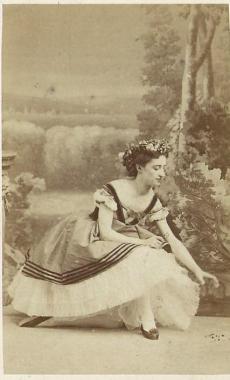
Martha Murawiewa. Paris,1863

Martha Murawiewa. Paris,1863

Giselle is the loveliest girl in a fairy-tale-like village lost somewhere in the Rhineland of the Romantic imagination. She will have two passions: her love for the dance and her love for Loys, a mysterious but handsome newcomer to the village. She will have two problems: her mother (who fears her daughter will wear out her heart by dancing too much and become a Wili, a restless dancing ghost) and Hilarion (a lowly games-keeper, Giselle’s very jealous self-anointed fiancé).
As this is a melodrama, when the curtain rises we must first encounter the anti-hero as he sets the plot in motion: Hilarion, toting either a bouquet or a brace of coneys (depends on the production), places his offering longingly at the entrance to the hut where Giselle and her mother live. But you can sense something is wrong. He’d make an okay son-in-law, but is he sexy? (Depends on the production, but usually the role is interpreted as a thankless and self-defeating exercise).

But the next guy — swooping down into Giselle’s bucolic valley replete with cape, sword, and shadowed by an intrusive but shrewd valet (called Wilfried in the program)– is indeed sexy and most confident of his charms. This elegant mystery man calling himself “Loys” sees no reason to deposit mere offerings before the girl’s door and then back away. He jauntily knocks on the door in triple rhythm, as Adolphe Adam’s music does its lovely variation on “Hickory Dickory Dock.”
As if just awakened, our beautiful heroine bursts out of her house, all abounce. By nature, she walks on air.

Pavlova. London, 1925

Pavlova. London, 1925

Her attraction to the elegant stranger who calls himself “Loys” is a no-brainer. But her modesty forms a kind of wall around her that this newcomer yearns to breach. Giselle, not by nature untrusting, nevertheless relies on a daisy to tell her if her new suitor’s aims are true. “He loves me, he loves me not.” Here is one case where French trumps English: the music in 3/4  time includes a winding and regretful phrase which ends in a question just where a French woman of the 19th century would touch the last petal. This superstitious gesture involves a soft chant of more than just two options: 1) he loves me 2) a little 3) a lot 4) passionately 5) unto madness 6) …not at all. “Unto madness” will perversely prove to define these characters’ lives.
Alas – even if her self-assured suitor tries to increase the odds by cheating – the flower proves prophetic at this moment: he loves her maybe a little but really not at all. The music’s “daisy theme” will haunt them both, from its fractured return during the mad scene to its odd reappearance (as led astray by a cello) for their duet in Act II…

Hilarion returns and bothers the couple. Village life goes on.

The usual harvest festival becomes especially exciting once an aristocratic hunting party arrives. The villagers decide to entertain them with dances. Giselle, prevented by her fretful mother from dancing, presents two of her friends who outdo each other in a technically demanding duet. One of the grand ladies, Bathilde, takes such a particular liking to Giselle that she asks her father, the Duke of Courland, if she might offer her own necklace to the young girl.

Overjoyed by such a gift, Giselle’s happiness grows when she is anointed « Harvest Queen. » Her mother cannot stop her from dancing with and for her friends.

Alas, meanwhile, the suspicious Hilarion actively seeks proof that Loys is not the regular guy he claims to be. He finds it in Loys’s hut: a sword, which by law and custom is forbidden to simple folk.
In fact, Loys is really Albrecht, a nobleman in disguise and who has been long affianced to Bathilde. Unmasked by Hilarion in front of everybody, Albrecht tries to make light of the situation. Giselle, realizing that she is about to lose the only man she has ever loved, begins to lose her mind. Desperately fighting against the darkness that fills her heart – and whether she has a heart attack or stabs herself with Albrecht’s sword depends on the production and the ballerina – she races about, haunted by old melodies, especially that of the “daisies.” Her invisible flowers now clearly shout his “I love you not.” Desperate for any love that is true, real and selfless, she hurls herself into her mother’s arms. And drops dead.

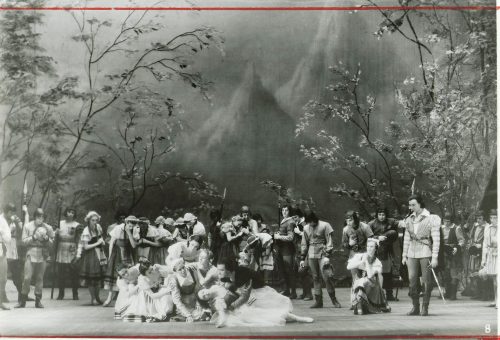
Bolshoï. US tour 1959

Bolshoï. US tour 1959

Intermission

*

*                      *

ACT II [50 minutes]

The moonlit second act takes place in a forest glade located somewhere between the village cemetery and a lake. We are in the realm of the Wilis, a ghostly tribe of beautiful young women who had died in despair just before their wedding day. Jilted by their fiancés, these girls are forever condemned to rise out of their graves each night under the spell of their queen, Myrtha.

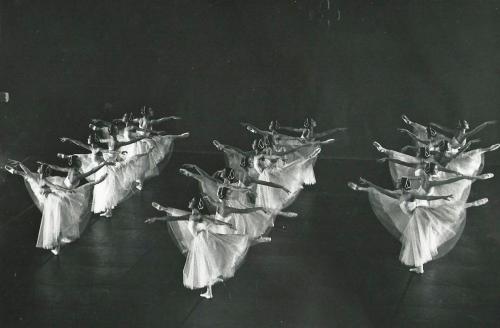
Paris Opera Ballet 1990's

Paris Opera Ballet 1990’s

Myrtha dances three solos in a row upon her entrance, all of them exercises in control and release…woe betide one without bounce, a steely softness, and natural gravitas. Thus the wilis embark each night to exact ritual revenge on all men – all of them, not just those who cheat and lie — by luring them one a time into their midst and then forcing each to dance until, exhausted, he dies.
The woebegone Hilarion, bringing flowers to Giselle’s grave, becomes their first victim during this night. But Giselle, summoned from her tomb to be initiated as a Wili, does all in her power to save their next target: Albrecht. He has finally understood that the daisy lied to them both: he loves her, passionately.

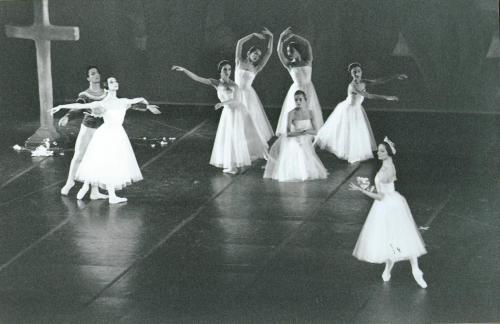
Platel Belarbi Arbo 1990

Platel, Belarbi, Arbo. Paris Opera Ballet 1990’s

Giselle’s pleas that Myrtha let him go fall on deaf ears. So our heroine tries to lull Albrecht and protect him by moving only gently and slowly. But they both get carried away be her now truly fatal passion for dancing. To everyone’s surprise, Albrecht is still breathing when the sound of bells signaling dawn shatters the power of the Wilis. Giselle’s superhuman ability to love and to forgive has broken the spell. She may/must now return to her grave to rest in eternal peace. If Albrecht does not die, he realizes that this means he is condemned to something worse: life.
He will remain alone with his memories. Unto madness, perhaps. We will never know how his story ends.


At the Palais Garnier in Paris from May 28th through June 5th, 2016.
Choreography by Jean Coralli and Jules Perrot. Music by Adolphe Adam.
Story by Théophile Gautier and Jules-Henri Vernoy de Saint-Georges, after Heinrich Heine, 1841.

Commentaires fermés sur Giselle: a plot summary

Classé dans Hier pour aujourd'hui

Un argument pour Giselle

Ce que nous considérons aujourd’hui comme le plus grand des ballets de l’ère romantique, eut sa première à l’Opéra de Paris le 28 juin 1841. Aujourd’hui encore réputé pour offrir un des plus riches défis dramatiques à la ballerine comme à son partenaire, ce ballet encapsule tous les thèmes caractéristiques du théâtre romantique et de la littérature gothique : amours inévitablement tragiques, gentilshommes déguisés, héroïnes innocentes et trahies, une scène de la folie, vibrante couleur locale laissant la place à une clairière au clair de lune, tout cela surmonté d’une grosse dose de surnaturel. Écoutez la musique avec vos yeux. La partition d’Adolphe Adam, resplendissante de leitmotivs topiques, anticipe gracieusement la « découverte » par Wagner du procédé.

*

*                      *

 Acte I [50 minutes]

Martha Murawiewa. Paris,1863

Martha Murawiewa. Paris,1863

Giselle est la plus jolie fille d’un village de conte de fées perdu quelque part dans une région du Rhin rêvée par les Romantiques. Elle a deux passions : son amour pour la danse et son amour pour Loys, un nouveau venu au village, aussi mystérieux qu’il est beau. Elle a deux problèmes : sa mère (qui craint que sa fille n’épuise son cœur à trop danser et qu’elle ne devienne une Willi, un insatiable fantôme dansant) et Hilarion (un humble garde-chasse, le fiancé autoproclamé et jaloux de Giselle).

Comme il s’agit d’un mélodrame, lorsque le rideau se lève, il nous faut rencontrer d’abord cet anti-héros tandis qu’il met l’action sur les rails : Hilarion, trimbalant soit un bouquet soit une paire de lièvres (cela dépend de la production), dépose soupirant son offrande à l’entrée de la chaumière où vivent Giselle et sa mère. Mais on peut d’ores-et-déjà sentir que quelque chose ne va pas. Ce gars-là ferait un beau-fils acceptable, mais est-il sexy ? (Là aussi cela dépend de la production, mais généralement le rôle est interprété comme une tâche ingrate et punitive).

Car voilà que le garçon suivant, qui fait irruption dans la vallée bucolique de Giselle, tout de cape, d’épée, et de valet aussi intrusif que malin – appelé Wilfried dans le programme – est, lui, on ne peut plus sexy et conscient de son charme. Cet élégant homme mystère, se faisant appeler « Loys », ne voit aucune raison valable de déposer une offrande devant la maison de la jeune fille pour ensuite s’éclipser. Il toque avec désinvolture à la porte sur un compte de trois, alors que la musique d’Adam offre une jolie variation « sur l’air du tra dé ri dé ra, et tra la la la. ».

Comme si elle venait de s’éveiller, notre jolie héroïne jaillit de sa maison, toute sautillante. Par nature, elle marche sur les airs.

Pavlova. London, 1925

Pavlova. London, 1925

Son attirance pour l’élégant étranger qui répond au nom de « Loys » ne fait aucun doute. Mais sa pudeur dresse une sorte de muraille autour d’elle que ce nouveau venu ne demande qu’à battre en brèche. Giselle, bien que n’étant pas de nature méfiante, s’en remet néanmoins à une marguerite pour lui dire si les intentions de son nouveau soupirant sont sincères. « Il m’aime, il ne m’aime pas ». Voilà un cas ou le français l’emporte sur l’anglais : la musique en 3/4 déroule un thème plein de regrets qui évoque la question qu’une femme du XIXe siècle poserait en effeuillant le dernier pétale. Ce geste superstitieux convoque une douce mélopée qui compte plus que deux options : 1) Il m’aime 2) un peu 3)beaucoup 4) passionnément 5) à la folie 6) pas du tout ; «À la folie » se révélera cruellement à propos pour définir le destin des personnages du drame.

Hélas – même si son soupirant, très sûr de lui, essaye de conjurer le sort en trichant – la fleur semble prophétiser la réalité du moment : il aime un peu mais pas vraiment à la folie. La musique du « thème de la marguerite » les hantera tous deux, de son retour fracturé pendant la scène de la folie à sa réapparition bizarre (dévoyée par le violoncelle) pendant le duo de l’acte II.

Hilarion revient et dérange le couple. La vie du village suit son cours.

L’habituelle fête des vendanges devient particulièrement passionnante lorsqu’arrive une aristocratique partie de chasse. Les villageois décident de les divertir par des danses. Giselle, empêchée de danser par sa soucieuse de mère, présente deux de ses amis qui se surpassent l’un l’autre durant un duo techniquement exigeant. L’une des nobles dames, Bathilde s’entiche à ce point de Giselle qu’elle demande à son père, le duc de Courlande, si elle peut offrir son collier à la jeune fille.

Parée de ce collier princier, Giselle est élue reine des vendanges. Elle obtient enfin la permission de danser devant ses camarades.

Pendant ce temps, le suspicieux Hilarion recherche la preuve que Loys n’est pas le monsieur tout le monde qu’il prétend être. Il la trouve dans la cabanes de Loys : une épée, qui par loi et coutume est interdite aux gens du commun.

En fait, Loys n’est autre qu’Albrecht, un gentilhomme déguisé en paysan depuis longtemps fiancé à Bathilde.

Démasqué par Hilarion devant toute l’assemblée, Albrecht tente de mettre au clair la situation. Giselle, réalisant qu’elle est sur le point de perdre le seul homme qu’elle ait jamais aimé, commence à perdre la tête. Se battant désespérément contre les ténèbres qui remplissent son cœur – qu’elle meure d’une crise cardiaque ou qu’elle se poignarde avec l’épée d’Albrecht dépend de la production ou de la ballerine – elle déambule, hantée par de vieilles mélodies, tout particulièrement celle de la « marguerite » ; ces fleurs invisibles qui maintenant lui crient tout fort « pas du tout ». Avide de trouver de l’amour qui soit vrai, réel et dévoué, elle se précipite dans les bras de sa mère. Elle tombe morte à ses pieds.

Bolshoï. US tour 1959

Bolshoï. US tour 1959

Entracte.

*

*                      *

ACTE II [50 minutes]

Le second acte, éclairé au clair de lune, prend place dans une clairière située entre le cimetière du village et un lac. Nous sommes au royaume des Willis, une fantomatique tribu de jeunes femmes mortes avant leur mariage. Abandonnées par leur fiancé, ces jeunes filles sont à jamais condamnées à sortir chaque nuit de leur tombe sous le charme maléfique de leur reine, Myrtha.

Paris Opera Ballet 1990's

Paris Opera Ballet 1990’s

Myrtha danse trois solos à la suite, chacun d’entre eux étant un exercice de contrôlé-relâché. Malheur à celles qui sont dépourvue de ballon, d’une douceur implacable et d’une gravité naturelle. Commence alors le rituel de vengeance des Willis envers les hommes – tous les hommes et pas seulement ceux qui ont trompé ou menti – les attirant dans leur rangs puis les forçant à danser jusqu’à ce qu’épuisés, ils meurent.

Hilarion éploré, apportant des fleurs sur la tombe de Giselle, sera leur première victime. Mais Giselle, convoquée hors de sa tombe pour être initiée en tant que Wili, fait tout en son pouvoir pour sauver leur prochaine victime : Albrecht. Il a finalement compris que la marguerite leur avait menti à tous les deux : il aime Giselle passionnément.

Platel Belarbi Arbo 1990

Platel Belarbi Arbo 1990’s

Sa supplique à Myrtha de le laisser aller a rencontré une sourde oreille. Giselle essaye donc d’épargner Albrecht en bougeant le plus doucement et le plus lentement possible ; cependant ils sont comme emportés par sa désormais fatale passion pour la danse. À la surprise générale, Albrecht respire encore lorsque le son des cloches signalant l’aurore met fin au pouvoir de Willis.

La surhumaine capacité d’amour et de pardon de Giselle a rompu le maléfice. Elle va pouvoir – elle doit maintenant – retourner à sa tombe pour y jouir de la paix éternelle. Si Albrecht ne meurt pas, il réalise que cela signifie qu’il est condamné à quelque chose de pire : la vie.

Il restera seul avec ses souvenirs, jusqu’à la folie peut-être. Nous ne saurons jamais comment l’histoire se termine.

Au palais Garnier du 28 mai au 5 juin 2016
Chorégraphie Jean Coralli et Jules Perrot. Musique, Adolphe Adam.
Argument de Théophile Gautier et Jules-Henri Vernoy de Saint Georges, d’après Heinrich Heine.

Commentaires fermés sur Un argument pour Giselle

Classé dans Hier pour aujourd'hui

Ra/Ro/Ba/Pk : Have a nice day!

P1010032March 29, 2016, Palais Garnier: Ratmansky, Robbins, Balanchine, Peck.
The evening was…nice. Lightweight. No, as corporate America calls it: “lite.”

“Oil, vinegar, sugar and saltness agree: to make out the dinner, full certain I am.”

During a short evening in Paris that seemed endless — marketed as an unprecedented resurrection of the New York piano-ballet “tradition,” (Oh really? Again?) — I slumped mournfully in my seat. The evening offered no sass, no fun, no spirit, no vinegar. Just niceties to nibble upon, that never dished out a full meal.

“Here lies David Garrick, describe me, who can/an abridgment of all that was pleasant in man.”

Just before dying in 1774, Oliver Goldsmith tried to respond to the actor Garrick’s joshing challenge that they write each other’s obituaries. Goldsmith entitled his version “Retaliation,” and it’s a fine and sassy and bitchy text. Indeed very New York ca. 1974 in spirit, where « piano ballets » had recently been born, and all of us were cynical about nearly everything.

I should probably not equate the Piano Ballet — as invented by Robbins and as a genre into which Balanchine took minor excursions — with a great hammy actor nor with Edmund Burke (whom Goldsmith likens to « a dish of tongue with brains on the side »). Yet I wondered, as the single or duo pianos continued to percuss no matter what, whether Ratmansky and Peck – in a program chosen by Millepied seemingly to retaliate against what he perceived to be a too French company (whatever that cliché means) — hadn’t simply added a last, but a most pale, page to the Balanchine/Robbins graveyard book. As the Trocks via Peter Anastos skewed it so right way back then: “Yes, Virginia, another piano ballet.”

P1110661

The only memory I had the next morning of either Ratmansky’s “Seven Sonatas” or Peck’s “In Creases,” was of Marc Moreau presenting joyous and swift and even almost ironic enjoyment of the steps both of them. But what were the steps?

“Who, too deep for his hearers, still went on refining/and thought of convincing, while they thought of dining.”

Beyond Moreau, I sat there thinking that both ballets were…nice. Pleasant, easy to digest, perfect for sucking up to a sponsor on corporate evenings. Indeed, this night at the Palais Garnier was one where, yet again, preparations for yet another privatized cocktail party shut off the Grand Foyer – and even the Avant Foyer — to the dismay of the little people, aka the normal ticket-paying audience. Perhaps not every idea “made in America” is worth celebrating.

Ratmansky’s “Seven Sonatas” with three utterly committed couples swooping about to Scarlatti did include some nice images. One was where the dancers seemed to form a lock around a dancer who served as a key. The piece served up many nice bits of “stop and go and go around in between.” But the dance ultimately provided no surprises nor did it offer any real technical challenges. Looked comfy, danced with utter ease by the gang of six dancers…nice. Channeled a bit of Robbin’s “Interplay” at one moment and then reverted back to a totally Scalieri to Mozart ratio by staying very on the music. I kept thinking it was over and then it continued to continue, sweetly, on. When the thing finally ended, I scribbled to myself: “ooh kay, we’ve finally finished off all the music. Let us kneel down then, then.”

“But let us be candid, and speak out our mind/If dunces applauded, he paid them in kind.”

If the Anglo media accords genius status to Ratmansky, and now Peck, I say fine but just don’t bash me on the head with it. For I have zero, zero, visual memories (and I am not that old) of the latter’s piece (except for a bit of grinning maestra, again, provided by Marc Moreau) as I sit here one day later. That normally doesn’t happen to me. And the thing only lasted 12 minutes, so who’s fault is this black-out? Not that of the dancers.

I should not have been thinking throughout Peck’s In Creases, “wow, instead of white ankle socks the men in this plotless ballet get black ones!” Nor that Philip Glass had invented easy-listening music. I sat there going: “Ah, Raveau; ah Guérineau, ah, Barbeau, ah Moreau…hiiiiii!” when I should have been thinking, “wow, I can’t even think at all.” The saddest thought? No reason to return to see the ballet again. It was nice. But it’s over.

Sandwiched in the middle, the “begats.” An homage to “Our fathers, who art in heaven” aka Robbins and Balanchine, whom Millepied as director seemed to imagine had never been danced here before.

“Who peppered the highest was surest to please.”

Robbins created the lightly camp “Other Dances” for a pair naughty and nice: Makarova and Baryshnikov. They clearly knew they had become larger than life and perhaps chafed at having been anointed ambassadors of the “Russian soul” by adoring — if slightly annoying — audiences. All those folklorish embellishments just served to add on to a, by then, tired in-joke about being defined as Slavic, Russian or even Polish – where is Latvia? – whatever. Being born in the USSR was all that they had in common as dancers and people, really.

Here Ludmila Pagliero used a neat trick of having her feet always hesitate a split second before caressing the surface of the stage, her keyboard, the way the greatest pianists’ fingers are sometimes are wont to do. And Matthias Heymann brought his elegant precision to the table and seemed to float above it.
But…

“Here lies honest Richard, whose fate I must sigh at/Alas, that such frolic should now be so quiet.”

…But both seemed to be missing something: a hammy awareness of, and a catering to, the audience’s expectations. Long before Instagram, Robbins had slyly implied this to the world out there beyond the steps he set. “Other Dances” is what today we could consider the selfie of two stars, replete with ironic hashtags. Neither Pagliero nor Heymann is a diva or divo, a full-out “monstre sacré” replete with attitude…not yet. For now, I cannot imagine Pagliero sweeping into a rehearsal studio in a floor-length mink, loosely waving a long cigarette holder while coiffed by a turban. Nor, for the moment, can I imagine Heymann tap dancing on TV with Liza or, like Nureyev, dealing with Miss Piggy in violent and hilarious ways. For the moment, their stage personas are too nice. But I hold out hope for both of them.

“And Dick with his pepper shall heighten the savour/Our Cumberland’s sweet–bread its place shall obtain.”

And so on to Balanchine’s short little piece of fluff, Duo Concertant. Myriam Ould-Braham’s fiery and delicate feel for space met Karl Paquette’s gentle, sweet, honest, moves. She relaxed into his superb partnering. Yet, while Ould-Braham does bring to mind Kay Mazzo’s spidery use of her limbs, here we could have used someone casting a Bézard, a Marchand, a Bélingard, a little bit of pepper, a hint of danger to match Stravinsky’s musical challenge. Two people listening to a piano and then going off to dance from time to time – is that totally undramatic, even a bit lazy on the part of the choreographer, or what? This lightweight thing needs a hint of spice, as in “Our Will shall be wild fowl, of excellent flavor”, to cite Goldsmith again. Peter Martins could seem as beautiful as Paquette at first, but Martins always turned out to be as cold as a herring, even slightly dangerous. Martins’s blonde hair hid a shark’s fin. Here, even in Balanchine lite, make it more wild, not nice.

“Our Dodds shall be pious, our Kenricks shall lecture/Macpherson write bombast, and call it a style/Our Townshend make speeches, and I shall compile.”

No. This rather nice program will not become part of my personal anthology, sorry…

Commentaires fermés sur Ra/Ro/Ba/Pk : Have a nice day!

Classé dans Retours de la Grande boutique

Romeo & Juliet : Quick to Haste Some Noble Work of Love to Do [Baulac, Louvet, Bertaud and company]

Bastille salle« Romeo & Juliet », April 1.

First I will save Baulac and Louvet for further down in the text. For I want to speak of Sébastien Bertaud now. From the moment he came out on stage – as Christophe Duquenne used to do – Bertaud gave his part that serious amplitude and natural charisma that can often go lacking when one is cast as only the Third Man. Here, clearly devoted to and used to picking up after his more immature bros and so pacifically at ease in the Verona nabe, Bertaud’s Benvolio clearly became the narrator of the evening’s events.

One of the coolest things Nureyev invented for his version of R&J turns out to be the Romeo backflips as repeatedly aborted by a Benvolio who has just told him their Juliet is dead. This wonderfully odd series of jumps — where both men should seem to be a breath away from both falling over together — only works when a dramatic, even electric, arc has been created between the two. Louvet/Romeo’s beautiful limbs fell trustingly all over the place. Bertaud/Benvolio, as he had defined the character, tried to rein him in just one more time. I’ve probably never seen a messier and more glorious and heart-breaking rendition of trust between male friends.

When will someone ever have the brains to cast this instinctive and incisive actor as Romeo? Bertaud can do anything, dance-wise, that his brethren do: he even didn’t let himself be intimidated by Emmanuel Thibault’s jazzy and opulent and soooo-still-in-his-dancing-prime Mercutio.

And I wasn’t focussing on Benvolio because the cast was lacking. Quite the contrary. Intensely holding back, Laurent Novis and Stéphanie Romberg shaped perhaps the most aristocratic pair of Lord and Lady Capulets—always dignified, used to playing by the rules, but fired just up unto the limits emotion can bear. They brought “this is not a question we are willing to discuss” to sad life. Then Yann Challioux squeezed every technical drop from the variation Nureyev gives Paris, but had set up its arrival through a consistently clear and elegant presence. Fanny Gorse, sexy and sharp to lines, made Rosalind come alive and stand out from the crowd.

Ah, so, yes, then the leads.

Germain Louvet’s Romeo? Utterly charming at play-acting. Long lines, beautifully arched arabesque, and beautiful feet (whose energy and natural pliancy needs to be pushed and polished just a little bit more). He seems generous with his dance and in his partnering. For now, he’s still a bit of the young thoroughbred who shall certainly become a champion stallion within a year or two.

This youthful energy worked well with Léonore Baulac’s unbridled Juliet. Her not girl/not woman proved greedy for life and love and not concerned at all with making pretty for us. Which made it all the prettier, for she made no point of breaking up the steps for show. Every combination unfolded easefully in a way that you just didn’t even think about “now this is a double assemblé.” She just danced, because steps are how you tell a story. Was she with the orchestra or was the orchestra under Simon Hewett’s baton keeping up with this ball of fire (ugly ploops from the winds, as usual, excepted)? Her Juliet was a girl in a great hurry. The balcony scene became very swift and direct, rather than soft. And I was won over by this impulsive approach, as by the way she seemed to aim her dance at and include those of us at the very top of the amphitheater. Think Kate Winslet arching her neck, on the prow of the Titanic, reaching out to grab at life.

P1110606“Ay, soon upon the stage of life,
Sweet, happy children, you will rise
To mingle in its care and strife,
Or early find the peaceful skies.
Then it be yours, while you pursue
The golden moments, quick to haste
Some noble work of love to do,
Nor suffer one bright hour to waste.”

Daniel Clement Colesworthy, 1876.

Commentaires fermés sur Romeo & Juliet : Quick to Haste Some Noble Work of Love to Do [Baulac, Louvet, Bertaud and company]

Classé dans Retours de la Grande boutique