Archives de Tag: Jeremy -Loup Quer

My Nights at the POB (2024 Spring / Summer collection)

A classical ballet, just like a classic book you’ve reread many – many ! – times, almost never fails to delight you again when you rediscover it. Here are some of my most recent ones at the Paris Opera ballet.

Hannah O’Neill and Germain Louvet: a most pleasant discovery

P1200303Don Quichotte on March 27th

For a while now, I’d been unconvinced by the pairing of Hannah O’Neill with Hugo Marchand. His large presence overwhelmed her and their lines and musicality did not match. He made her look small and quite pallid, which is odd considering that the smaller Gilbert never did. Maybe it’s because Gilbert is clearly a fighter while O’Neill’s persona is more demure?

But who else could she dance with? Germain Louvet? Pairing them in Don Q on March 27th proved splendid: their lines and timing and reflexes completely in synch. They even giddily broke the line of their wrists exactly when the music went “tada.”

But Don Q is a comedy.

Up until now, for me, Germain Louvet only lacked one thing as an artist: gravitas. It was impossible to find fault with his open-hearted technique, but somehow I always got the feeling that he wasn’t quite convinced when he played a prince. Some part of him remained too much a stylish young democrat of our times.

His acting could reminded me of how you tried to keep a straight face when you got cast as Romeo at an all-girl’s high school.  You tried really, really hard, but it just wasn’t you.

P1200201

Germain Louvet (Basilio) et Hannah O’Neill (Kitri).

*                                        *
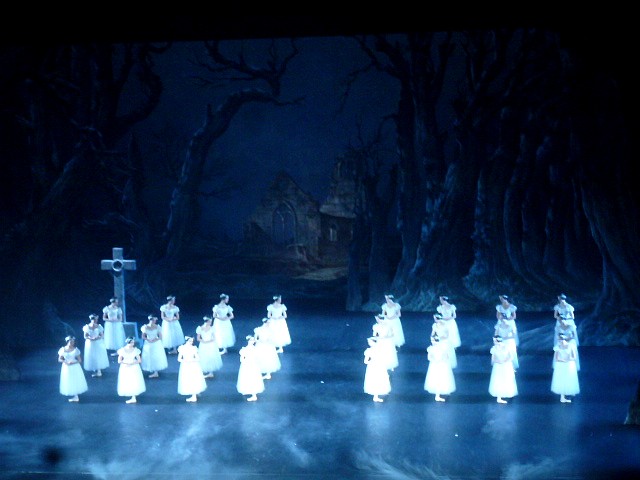
P1200348

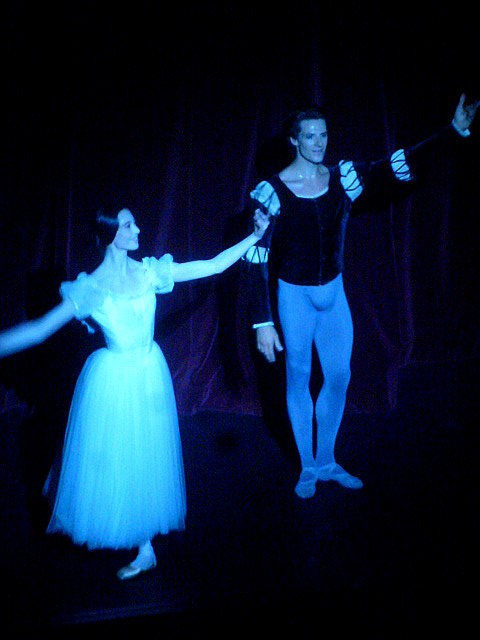
Giselle. Saluts

Giselle on May 28th

Then something happened when Louvet stepped out on the stage on May 28th. Here was a man whose self-assurance seemed worldlier, tougher, critical distance gone. Within seconds in his pantomime with Wilfried, Louvet “was” that Old-World well-mannered man used to being obeyed and getting what he wants at any restaurant. I was convinced.

And it all came together when Hannah O’Neill answered his knock-knock.  A healthy, normal girl with no secrets who has clearly been warned about men but who has decided – on some level to this Albrecht’s surprise – that he is a good man.

Everything about O’Neill’s Giselle, from her first solo onwards, breathed restraint and modesty. She was the kind of girl who speaks so softly you cannot help but lean in to her.  Louvet’s Albrecht clearly felt this.

Once again, every little danced detail matched. But more than that, these two were literally inside the same mental space. Both of them reacted strongly to Berthe’s narrative:  O’Neill spellbound and Louvet taking that cautionary tale personally, as if Giselle’s mother had just put a hex on him. Later, when Giselle shows him her big new diamond pendant, Louvet managed the degrees of that multileveled reaction of “I must not tell her she has a scorpion crawling on her chest just yet.” And none of this felt like he was trying to steal the spotlight. He was really in the moment, as was she.

Antonio Conforti’s Hilarion had also been believable all along, his mild state of panic at the growing romance evolving into fear for her life. (His Second Act panic will be equally believable). When Conforti had rushed in as if shot out of a cannon to put a stop to the romance, you could see how Giselle knew that he was no monster. This nice Giselle’s inability to disbelieve anyone made her mad scene all the more poignant. No chewing of the scenery, her scene’s discreet details once again made us want to lean in and listen.  Giselle’s body and mind breaking down at the same time was reflected in the way O’Neill increasingly lost control, even the use, of her arms. She took me directly back to one awful day when I was crying so hard I couldn’t breathe and walked straight into a wall. Utter stunned silence in the auditorium.

Louvet’s differently shaped shock fit the character he had developed. You could absolutely believe in the astonishment of this well-bred man who had never even put one foot wrong at a reception, much less been accused of murder.

Woman, Please let me explain
I never meant to cause you sorrow or pain
So let me tell you again and again and again

I love you, yeah-yeah
Now and forever*

In Act II, you had no need of binoculars to know that the regal Roxane Stojanov  was the only possible Queen of the Wilis. Her dance filled the stage. Those tiny little bourrées travelled far and as if pulled by a string. She seemed to be movingNOTmoving. Her reaction at the end of the act to the church bells chiming dawn — a slow turn of the head in haughty disbelief — made it clear that this Queen’s anger at one man, all men, would never die. Clearly, she will be back in the forest glade tomorrow night, ready for more.

I was touched by the way Louvet’s Albrecht was not only mournful but frightened from the start. It’s too easy to walk out on the stage and say “just kill me already.” It’s another thing to walk out on the stage and say “I’ve never been so completly confused in my entire life.”

Woman, I can hardly express
My mixed emotions at my thoughtlessness
After all, I’m forever in your debt…*

P1220482

Hannah O’Neill et Germain Louvet (curtain call)

*                                        *
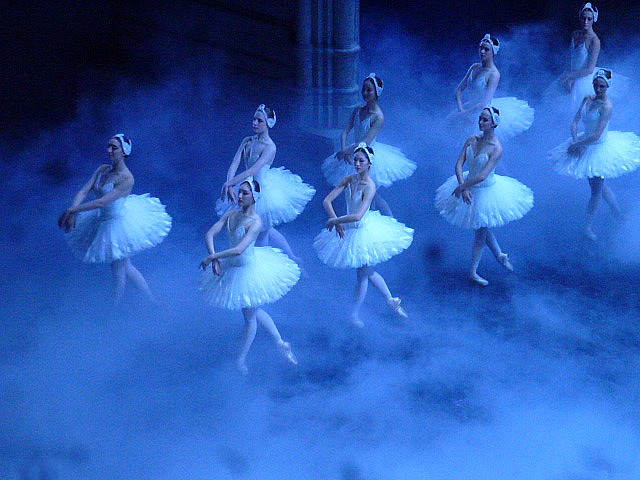
P1220593Le Lac des cygnes on June 27th

O’Neill’s unusual interpretation of Odette – under-swanned and unmannered – reminded me of Julia Roberts saying ,” “I’m just a girl standing in front of a boy asking him to love her.” No diva here. O’Neill’s swan/princess had not only been captured but promoted queen against her will. All she wants is to be seen as a normal girl. I think this take on the role might have put out some in the audience nourished by that awful horror movie’s over the top clichés. Once again I fell for the rich nuances in this ballerina’s demure and understated authority.

And here was Germain Louvet again! Elegant, well-mannered, gracious, and absolutely un-melancholy. His prince was not self-involved, yet regal with a kind of natural elegance that set him apart. I’ve met people like that.

Louvet’s at ease Siegfried just wants to dance around with his friends and has never thought much about the future.  Often the Queen Mother scene just seems like an intertitle in a silent movie: basic information needed to make a plot point. The acting can be light, as in Paris the dancers cast as queen mothers are mostly ten to fifteen years younger than their sons. Young Margaux Gaudy-Talazac, however, had believable authority and presence.  I cannot put my finger on exactly what she and Louvet did and when, but what developed was clearly the Freudian vision Nureyev had had for this ballet in the first place. “Why do you want me to go find a woman? I’m just fine here with you, mommy.” This Siegfried’s rejection of the Act Three princesses was preordained no matter what. What a pity, then, that Thomas Docquir’s flavourless Wolfgang and stiff Rothbart gave all the others little to work against.

Back to no matter what… But what if a woman unlike all other women actually exists? Hey, what if even dozens of them are lurking out there just outside the windows? Louvet’s tiny gesture, stopping to stroke a tutu as if to check it were for real as he progressed in through the hedgerow of swan maidens, made these thoughts come to life.

O’Neill and Louvet’s courtly encounters were like the water: no added ingredients, pure and liquid. O’Neill kept her hands simple – the way you actually do when you swim– and Louvet gently tried to get in close enough to take a sip but she kept slipping away from him. As he gently and with increasing confidence pushed down her arms into an embrace, you could sense that she couldn’t help but evaporate.

Their lines and timing matched once again. But I wondered if some in the audience didn’t find this delicately feminine and recognizably human Odette too low energy, not flappy enough? But she’s a figment of HIS imagination after all! This Siegfried was in no need of a hysteric and obviously desired someone calm, not fierce. [This brings me back to what doesn’t work in Marchand/O’Neill. He may appreciate her in the studio, but on stage he needs a dancer who resists him].

As Act Three took off, I found myself bemused by when I do focus, and when I don’t focus, on how this production’s Siegfried is dressed in bridal white. Louvet’s character was indeed both as annoyed and then as anguished as an adolescent. No other betrayed Siegfried in a long time has buried his face in his mother’s skirts with such fervor.

Nota Bene: All nights, in the czardas, the legs go too high. The energy goes up when it should push forward. This ancient Hungarian dance is not a cancan.

As Odile, O’Neill once again went for the subtle route. Her chimera played at re-enacting being as evanescent as water, now punctuated with little flicks of the wrist. Louvet reacted in the moment. “She’s acting strangely. Maybe I just didn’t have time last night to see this more swinging side to her?”

In Act Four, O’Neill’s Odette was no longer under a spell, just a girl who wants to be loved. No other Siegfried in a long time has dashed in with more speed and determination. As they wound and unwound against each other in their final pas de deux of doom I wondered whether I’d ever seen Louvet’s always lovely partnering be this protective. The only word for his partnering and persona: maternal.

It wasn’t a flashy performance, but I was moved to the core.

And woman
Hold me close to your heart
However distant, don’t keep us apart
After all, it is written in the stars*

*John Lennon, “Woman.” (1980)


P1220592

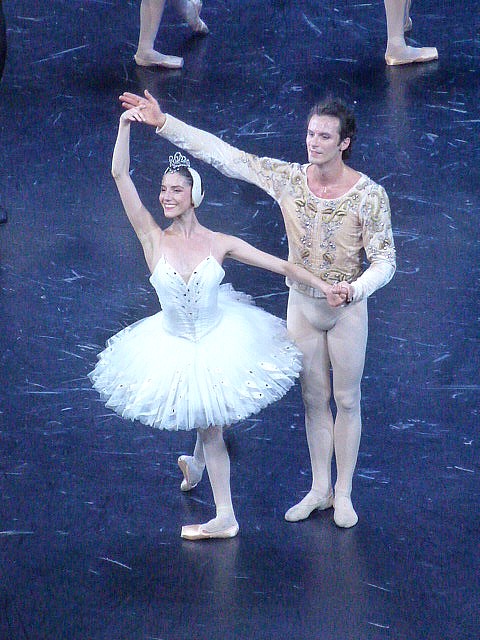
Le Lac des cygnes. Hannah O’Neill (Odette/Odile) et Germain Louvet (Siegfried).

*

 *                                       *

Sae-Eun Park : I found her and then lost her again

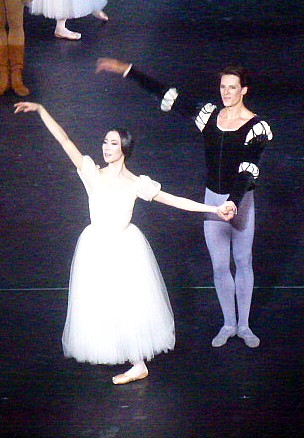
Gisele May 17 Sae-Eun Park and Germain Louvet
P1220423During Giselle, what I’ve been looking for finally happened. Before my eyes Sae-Un Park evolved from being a dutiful baby ballerina into a mature artist. And her partner, Germain Louvet (again!) whom I’d often found to be a bit “lite” as far as drama with another goes, came to play a real part in this awakening.

But this was not the same Albrecht, to boot. From his first entrance and throughout his dialogues with Wilfried, words from an oldie began to dance around at the back of my brain:

Well, she was just seventeen
You know what I mean
And the way she looked
Was way beyond compare
So how could I dance with another
Ooh, when I saw her standing there?*

I almost didn’t recognize Park. All the former technical mastery was still in place but it suddenly began to breathe and flow in a manner I had not seen before. She came alive. All her movement extended through a newfound energy that reached beyond from toes and fingertips and unblocked her already delicate lines. Her pantomime, her character, became vivid rather than textbook. I’ve been waiting for Park to surprise herself (and us) and here she demonstrated a new kind of abandon, of inflection, of fullness of body.

Well, she looked at me
And I, I could see
That before too long
I’d fall in love with her
She wouldn’t dance with another
Ooh, when I saw her standing there*

Throughout the ballet, Louvet and Park danced for each other and not for themselves (which had been a weakness for both to grow out of, I think). Park’s acting came from deep inside. From inside out for once, not demonstrated from without. During her mad scene, I simply put my notebook down.

Act 2 got off to a… start. Sylvia Saint-Martin clearly worked on controlling all the technical detail but danced as harshly as is her wont for now. The disconnect between her arabesque, torso, and abrupt arms, the way she rushes the music, the way her jumps travel but don’t really go anywhere…everything about her dance and stage presence just feels aggressive and demonstrative from start to stop. She finally put some biglyness into her last manège, but it was too late for me.

Well, my heart went « boom »
When I crossed that room
And I held her hand in mine

Oh we danced through the night
And we held each other tight*

There was a different kind of emotional violence to Germain Louvet’s first entrance, reacting to THIS Giselle. Along with the flowers, he carried a clear connection to the person from Act One onto the stage. You don’t always get the feeling that Giselle and Albrecht actually see each other from the backs of their heads, and here it happened. Both rivalled each other in equally feathery and tremulous beats. Their steps kept echoing each other’s. Park’s Giselle was readably trying to hold on to her memories, and moved her artistry beyond technique.  This newfound intensity for her was what I’d long hoped for. I am still impressed by how visible she made Giselle’s internal struggle as the dark forces increasingly took control of her being and forced her to fade.

I left the theatre humming as if the thrum of a cello and the delicate lift of the harp were tapping on my shoulder.

Now I’ll never dance with another, Ooh.*

*The Beatles, “How Could I Dance With Another?” (1963)
P1200388

Sae-Eun Park (Giselle) et Germain Louvet (Albrecht)

*                                        *

Swan Lake, Sae-Un Park with Paul Marque on June 28th

P1220597However, this performance saw the ballerina go back into comfort mode.

In Act 1 Pablo Legasa, as the tutor Wolfgang aka Rothbart, instantly asserted his authority over Siegfried and the audience understood in a way that it hadn’t with  Docquir whose presence didn’t still does not cross the footlights . Legasa’s tutor gleefully set up the about-to be-important crossbow as he slid it into Marque’s hands, just as he would later use that cape better than Batman. Most Rothbarts manipulate the Loïe Fuller outfit like a frenemy, at best.

The little dramatic nuances matter. Whereas Louvet’s Siegfried hadn’t really wanted to rock the boat much during Act 1 — so to be fair Docquir didn’t have that much to do — tonight Legasa repeatedly denied Paul Marque, whose Siegfried is more of a regular guy, any escape or release without express permission.

Paul Marque doesn’t possess the naturally elongated lines of Germain Louvet, but that isn’t a problem for me. Marque’s vibe feels more 19th century: dancing at its best: a restrained yet elevated 90 degrees back then was the equivalent of 180 now and every step he makes is as clearly outlined as if it popped out of an engraving. The way he worked up towards making the last arabesque in his solo arch and yearn gave us all we wanted as to insight into the internal trauma of the character.

In Act 2, Sae-Eun Park finally arrived to the delight of her fans.  She gave a very traditional and accomplished classic rendering of Odette, replete with big open back, swanny boneless wings/arms, took her time with the music and became a beautiful abstract object in Siegfried’s arms. Her solo was perfectly executed. Could I ask for anything more? Maybe?

You have to make it work for you. O’Neill remained a woman, a princess trapped in some kind of clammy wetsuit and gummy gloves that covered her fingers. Park outlined and gave a by the book performance of the expected never having been a human swan. But at least now she dances from the inside out and her arms do fully engage in dialogue with her back.

I loved the way this Siegfried reacted to all the swans. “What? You mean there’s more of them?” Marque, as in Act One, then chiselled a beautifully uplifted variation that felt true to Nureyev’s vision in the way a synthesized centeredness (thesis) encounters and surmounts a myriad of unexpected changes in direction (antithesis). Very Hegelian, was Marque’s synthesis.  Bravo, he made philosophical meanderings come alive with his body.

These lovers are lulled into the idea that escape is possible and will happen soon.

In Act 3, Legasa continues to lead the narrative. He is clearly whispering instructions into Odile’s earbud while also utilizing his cape and hands as if they were remote control.. For once Rothbart’s solo did not seem like a gratuitous interruptionsreplete with awkward landings. The pas de deux can in fact be a real pas de trois if that third wheel unspools his steps and stops and brings out the underlying waltzy rhythm of the music. Legassa tossed off those double tours with flippant ease and evil father-figure panache. Nureyev would have loved it.

Park’s Odile? Marque recognized his Odette instantly. Park did everything right but only seemed to come into her own in her solo (from where I was sitting). Even if her extended leg went up high and she spinned like a top, at the end of the pas de the audience didn’t roar.

“When Siegfried discovered he has both betrayed and been betrayed, Louvet, like a little boy, he wrapped his arms desperately tight around his mother.” Why did I write that in my notebook at the exact moment when I was watching Paul Marque in the same pantomime? I don’t quite remember, but I think it was because “mama” wasn’t what anything was about for him.

In the last Act, while Legasa acted up a storm, Marque remained nice and manly. The night before, Germain Louvet had really put all his energy into seeking Odette and fighting back against the forces of darkness. He really ran after what he wanted. Marque is maybe just not as wild by nature. Or maybe he just stayed in tune with Park? In Act 4, Park did fluttery. Lovely fluttery arms and tippy-toes that stayed on the music and worked for the audience. I observed but didn’t feel involved.

For me, only Pablo Legasa made me shiver during this Park/Marque Swan Lake. I found myself wondering what Park would have done IF a more passionate dancer like Legasa – as Louvet had been recently for her Giselle – had challenged her more. Now that I think back, Marque, too, had hit a high dramatic level when recently paired with Ould-Braham in Giselle. Maybe it’s time to end “ParkMarque.”  I like them both more and more, just not together.

P1220546

Le Lac des cygnes. Sae-Eun Park (Odette/Odile) et Paul Marque (Siegfried).

*

 *                                       *

Héloïse Bourdon: The Treasure that’s been hiding in plain sight.

You may say I’m a dreamer
But I’m not the only one*

P1220572Swan Lake, Héloïse Bourdon and Jerémy-Loup Quer, on July 12th

Then on July 12th, something long anticipated didn’t happen. Again. As she had way back then on December 26th, 2022, Heloïse Bourdon gave yet another stellar performance as Odette/Odile in Le Lac des Cygnes. At the end, as the audience roared, so many of us expected the director to come out and finally promote Bourdon to étoile (star principal). Instead all we all got do was shuffle out quietly and once again go home to wash off what was left of our mascara.

If anyone managed to find the perfect balance between woman and swan this season, it was Bourdon.  Even in the prologue, this princess showed us that she felt that danger prickling down the back of her neck just as an animal does.

As the curtain rises after this interlude, Jeremy-Loup Quer’s Siegfried puts his nightmare aside and is feeling just fine with his friends. He will later prove rather impervious to his mother’s admonitions and more boyishly cheered by her gift of the crossbow. Then, there was the moment where he looked intently at his baby throne only to turn his back on it in order to stare out of once of the the upstage window slits.

This Siegfried’s melancholic solo was infused by a kind of soft urgency, where the stops and starts really expressed a heart and mind unable to figure out which way to go. Touchingly, Bourdon would echo exactly this confused feeling in her solo in the Second Act, bringing to life the idea that Odette is both a product of Siegfried’s imagination and indeed a kindred soul.

As Wolfgang the Tutor, Enzo Saugar had made his entrance like a panther, a strong and dark-eyed presence with threateningly big hands. I instantly remembered his first splash on the stage as a very distinctive young dancer in Neumeier’s Songs of a Wayfarer at the Nureyev gala last year .  Alas, as of now, Saugar continues think those eyes and those splayed fingers suffice. This works at first glance, but goes nowhere in terms of developing a coherent evening-long narrative. He just wasn’t reactive. He was performing for himself.

So thank goodness for Heloïse Bourdon. As Odette, she uses her fingers and wrists mightily as well, but with variety and thought. Hers was a woman and swan in equal and tortured measure. When she encounters Siegfried, he is clearly instantly delighted and she is clearly a woman trapped in a weird body who hestitanly wonders whether he could actually be her saviour.

Whereas Louvet’s Siegfried had seemed to say when the bevy of swans had filled the stage, “What? The world has always been full of swans?! This is like so unbelievable,” Quer seemed to be saying, as with the Princesses later: “Pleasure to meet you, but for me there is only one swan and I’ve already found her.”

 I’d have to agree. Bourdon glowed from within without any fuss, and this was magnified by the unusual way she used her arms. Some dancers don’t connect their arms to their backs, which I hate. When dancers make their arms flow out from their backs this gives their movements that necessary juice. But here Bourdon’s arms had a specific energy that I’ve rarely seen. It flowed and contracted inward in waves from her fingers first and then pulled all the way back into her spine. I was convinced. That’s actually how you do feel and react when you are injured.

Throughout the evening, whether her swan was white or black, these two danced for each other, including not leaving the stage after a solo and staying focused for their partner from a downstage corner.  Whether in Act Two or Four, each time Rothbart tried to rip her out of Siegfried’s arms via his spell, this couple really fought to hold onto each other.  You could understand this prince’s bewilderment at a familiar/unfamiliar catch-me-if you-can Odile. (Perfectly executed, unbelievably chiselled extensions, fouettés, etcetera, blah blah, just promote her already).

Like Giselle, this Odette knew her hold on life was fading as the end of the last act approached. The energy now reversed and seemed to be pumping out from her back through her arms and dripping out of her hands and beyond her control. This Siegfried, like an Albrecht, like someone in a lifeboat, kept begging his beloved to hold fast.

The Paris Opera’s management may be blind, but the audience certainly wasn’t. I saw a lot of red eyes around me as we left the theatre in silence. Oh what the hell. As long as Heloïse Bourdon continues to get at least one chance to dance a leading role per run I can dream, can’t I?  Next time, how about giving her a Giselle for once?

Imagine there’s no heaven
It’s easy if you try
No hell below us
Above us, only sky*

*John Lennon, “Imagine” (1971).

P1220639

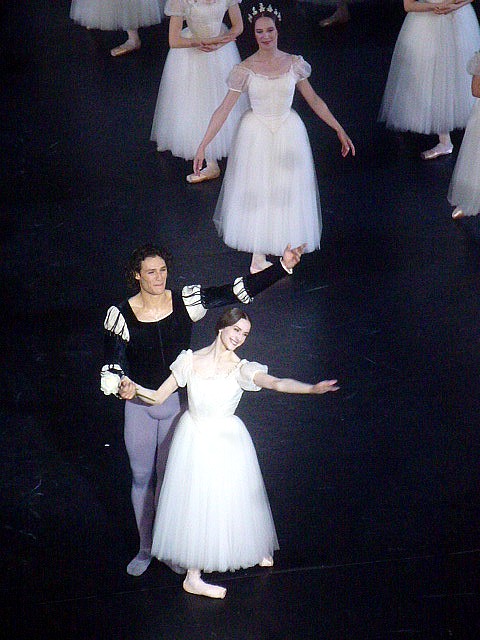
Le Lac des cygnes. Héloïse Bourdon (Odette/Odile) et Jeremy-Loup Quer (Siegfried).
1 commentaire

Classé dans Retours de la Grande boutique

Giselle : romances avec ou sans paroles

P1200348

Giselle. Saluts

Giselle. Ballet de l’Opéra de Paris. représentations du 27 et du 28 mai 2024.

Je ne pensais pas que cela puisse arriver, mais c’est arrivé. J’ai fait une overdose de Giselle ! Au bout de quatre représentations espacées de quelques jours, j’ai craint un moment de ne plus trouver les ressources émotionnelles nécessaires pour rester sensible à la pléthorique pantomime du premier acte et aux fumigènes du second. Il faut dire que la production de l’Opéra de Paris, au répertoire depuis 1998, n’aide pas. L’esthétique calendrier des postes, les maisons de toiles peintes, les costumes trop juponnés et les perruques de matrones des Willis au deuxième acte lassent.

Et depuis le début de la série, je grince des dents à la vue du stupide praticable en fond de scène par lequel rentrent de non moins stupides hallebardiers lorsqu’arrive la Chasse. Quelle cour chasserait en compagnie de lourdeaux en cuirasse, casque et cotte de maille ? De plus, pour cette reprise, les bords extérieurs de la pente sont inélégamment couverts d’un scotch très voyant visible dès le niveau des premières loges. La vraisemblance ne semble être requise que pour les spectateurs de l’orchestre et du balcon. Même assemblée de manière plus discrète, cette pente artificielle n’apporte pas grand-chose à l’action (elle demande à Wilfried, l’écuyer hyperactif, de courir dans tous les sens encore plus vite qu’à l’accoutumée, tel une gerbille en mal d’exercice dans sa cage à roue) et même la gêne : cet élément de décor rend trop prégnant le départ des figurants « nobles », bariolés de couleurs vives, pendant la scène de la folie.

Pour cette reprise enfin, les costumes masculins du premier acte commencent à accuser le poids des ans. Les pourpoints des Albrecht surtout, d’un beige aux coquets reflets irisés à l’origine (un contre-sens) commencent à prendre des reflets grisâtres dans leurs plis qui font sale.

Autant dire qu’avec la perspective d’encore deux représentations, je n’étais pas bien disposé. Dommage pensais-je, la représentation du 27 mai étaient l’une des plus attendues de la saison avec celle des adieux de Myriam Ould-Braham : Marianela Nuñez, la très célèbre ballerine du Royal Ballet venait y faire l’une de ses deux apparitions cette saison…

*

 *                                               *

P1220459

Hugo Marchand et Marianela Nuñez et Valentine Colasante (saluts)

Mais en ce soir du 27, on oublie vite toutes ses réserves. Le couple que forment Marianela Nuñez et Hugo Marchand, sans recherche d’esbroufe, loge de petits trésors dans les détails. Dans un premier acte où il n’y a pas grand-chose techniquement pour l’étoile féminine, Nuñez offre une pantomime naturelle, à la fois ciselée et ouverte à l’improvisation du moment. Elle marque par exemple ses attentes et sa déception à sa sortie de la maison par de petits haussements d’épaule ou des hochements de tête qu’on ne s’étonnerait pas d’observer dans les rues aujourd’hui. C’est ce même naturel qu’avait déployé Hugo Marchand dès sa première entrée lorsqu’il se traitait lui-même de baderne pour avoir oublié de retirer son épée… La pantomime est suffisamment accentuée pour être vue de loin et sans jumelles depuis les inconfortables sièges de l’amphithéâtre. Le taquinage amoureux entre Giselle et Albrecht est donc captivant. Durant le final de la première danse avec le corps de ballet, Marianela Nuñez fait une petite torsion de côté inattendue lors du premier porté comme si elle allait déjà s’asseoir sur l’épaule de son partenaire. Cela donne du naturel à l’ensemble. La diagonale sur pointe est menée dans le même esprit de sérénité, sans rupture avec la psychologie ouverte et solaire du personnage principal. On apprécie les amples tours attitude qui précèdent les piqués arabesques.

Cette unique démonstration de technique pour la ballerine était préparée par le pas de deux des vendangeurs défendu avec beaucoup de chien par Andrea Sarri et Nine Seropian, deux partenaires qui, de prime abord, ne sont pas très assortis physiquement. Sarri, au beau ballon, parvient à transformer, en artiste consommé, ses rares petits accrocs en moments de théâtre. Nine Seropian, un peu trop grande pour Sarri, montre de jolies qualités de moelleux dans ses variations.

L’ambiance générale de ce premier acte, très insouciante, n’est assombrie que lorsque Albrecht-Hugo pose des yeux inquiets sur le médaillon armorié que lui présente Giselle-Marianela.

Après cette acmé de joie, la scène de la folie parvient à nous prendre par surprise. Marianela Nuñez trouve là encore de petits détails captivants. Lorsqu’elle se détache d’Albrecht figé dans une pose comme le reste du plateau, elle caresse la main gauche de son partenaire jusqu’au bout des doigts avant de s’arracher à lui et débuter sa Folie. Toute cette scène est marquée par une violence presque vériste qui contraste avec la douceur distillée pendant tout le reste de l’acte. Il y a beaucoup d’effets de cheveux que la ballerine porte très longs. Ses rires ont presque des accents cruels au moment de l’épisode de l’épée. On court à tombeau ouvert vers le funeste dénouement.

Comme pour toutes ces Giselle où l’acte 1 est réussi, il ne reste plus qu’à se laisser porter par l’acte 2. On retrouve la Myrtha pleine d’autorité de Valentine Colasante et on approuve l’exécution d’Hilarion par les Willis, tant son incarnation par Jeremy-Loup Quer en faisait au premier acte un personnage plus vindicatif qu’amoureux. Hugo Marchand fait une belle entrée noble et Marianela Nuñez est une Giselle aux très beaux piqués arabesque : l’arabesque elle-même n’est pas très haute mais le piqué à une qualité planée-flottée réellement fantomatique. Il y a ce très beau moment où Marchand reçoit la pluie de marguerites sur son visage ; on y voit comme l’ondoiement d’un nouveau-né. Giselle-Marianela est un véritable ange protecteur. Les deux danseurs dansent dans un parfait unisson. C’est pour cette série le seul couple où, durant la première rencontre, le garçon prend la peine d’atterrir en même temps que sa partenaire au moment des croisements en tombé – pas de bourré – assemblé.

Albrecht-Hugo, qui cisèle ses variations (tours attitudes rapides soutenus, entrechats très dessinés et mains semblant chercher l’oxygène), semble totalement à la merci de sa Giselle heureusement bienveillante. La réconciliation est faite. Lorsqu’il disparaît dans sa tombe, le doux fantôme semble même tenter d’enfin donner sa main à l’amant repentant. Elle lui échappe pourtant une dernière fois. Albrecht-Hugo n’a plus que ses marguerites comme preuve tangible de son ultime rencontre avec l’être aimé.

En sortant du théâtre, on se dit qu’au fond, cette distribution de grande classe arrivait à point pour relancer notre dernière ligne droite de représentations du ballet romantique par excellence…

Ce diaporama nécessite JavaScript.

*

 *                                               *

P1220493

Hannah O’Neill (Giselle) et Germain Louvet (Albrecht)

Mais retourner voir Giselle dès le lendemain était tout de même une gageure et on traînait un peu des pieds pour s’y rendre. Après une soirée où la salle était tellement enthousiaste, comment allait-on revenir à des étoiles-maison sans être déçu ? On va cependant encore une fois faire l’expérience d’une bonne surprise.

Germain Louvet, qu’on avait déjà vu aux côtés de Sae Eun Park, recompose entièrement son Albrecht  pour sa nouvelle partenaire Hannah O’Neill. Pour elle, il est un prince qui ne cherche pas spécialement à dissimuler ses origines. Lorsqu’il rencontre Giselle, il ne lui fait pas le petit coup d’épaule traditionnel à l’Opéra de Paris ; il la lui touche délicatement puis s’agenouille et lui fait un baise-main. Tout le badinage avec O’Neill est empreint de ces bonnes manières. La Giselle d’Hannah O’Neill n’apparaît pas à proprement parler naïve, au moins du point de vue social. Elle flirte sans arrière-pensée avec un jeune homme dont elle sait qu’il n’appartient pas à son monde. Elle sait refuser ses baisers avec une forme de grâce primesautière. Le petit jeu des bises de la main – piqué attitude est plein de vivacité. Les interactions d’O’Neill avec les paysans sont naturelles. On lui pardonne donc une diagonale sur pointe avortée qui ne l’empêche pas de rester dans son personnage.

P1220486

Antonio Conforti (Hilarion) et Hannah O’Neill (Giselle)

Du côté des seconds rôles, Antonio Conforti est un émouvant trouble-fête en Hilarion. Il accentue bien la pantomime tout en fixant toujours sa Giselle avec des yeux ardents et un désespoir poignant. Les deux vendangeurs sont des nouveaux venus dans le rôle. Saki Kuwabara et Rubens Simon dansent affilés ; leur prestesse les rend aigus comme une jolie gravure.

Au moment des révélations, la gravure tourne à l’eau forte. Giselle-Hannah ne prend pas la peine de dire à Bathilde « mais c’est lui mon fiancé ». Elle regarde figée d’horreur la pierre scintillante de la bague de la noble dame. Il ne lui avait pas tout dit ! Pourtant Albrecht-Germain ne fait à aucun moment planer le doute. Il se montre froid avec sa fiancée officielle. O’Neill rend très violent l’épisode de l’épée. Sa chute après la reprise des pas qu’elle dansait avec son amant en compagnie des paysans est très brusque. Le désespoir d’Hilarion, figé dans une pose finale contournée, presque expressionniste, est frappant. On a été captivé par ce premier acte.

P1220470

Roxane Stojanov (Myrtha)

À l’acte 2, l’attente de la réunion des deux héros est magistralement entretenue par la Myrtha de Roxane Stojanov dont la danse poétique a quelque chose de liquide comme le lac où elle va précipiter ses victimes. Ses bras en revanche, très fluides, semblent saluer un ciel étoilé. Le corps de ballet et les deux Willis orchestrent la montée dans la tension maléfique.

Hannah O’Neill fait une entrée très preste avec son tourbillon de sautillés. Dans sa première variation, ses fouettés arabesque sur plié très profonds, très nuageux, suspendent le temps. Pendant tout l’acte, les deux amants communiquent silencieusement, par la danse et par l’harmonie des lignes. C’est une romance sans paroles là où la veille on avait assisté à une conversation. Les équilibres sont beaux dans l’adage : dans son grand rond de jambe où elle s’enroule en attitude autour de son partenaire, Hannah O’Neill est tellement en apesanteur que Louvet n’a pas besoin de la soutenir. Albrechr-Germain trouve des accents héroïques dans ses variations. Il contrôle les  rapides pirouettes attitude en dehors au point d’avoir le temps de faire des mouvements de tête vers Giselle.

P1220482

Hannah O’Neill et Germain Louvet (saluts)

À la fin, Giselle-Hannah glisse lentement vers la tombe. Son amant essaye de saisir le bas du tutu qui lui échappe comme s’il s’agissait d’un nuage immatériel. Il se couche sur le socle de la croix à la manière de ces pleureuses de bronze qu’on voit sur les tombes chic du Père Lachaise avant de tracer à reculons un chemin de lys ; un ultime hommage à la belle disparue.

On ne regrette pas d’être venu.

Une reprise, vite !

1 commentaire

Classé dans Retours de la Grande boutique

Programme Robbins à Paris 1/3 : En Sol majeur … et en mineur

P1120363

Erté. Projet de décor pour En Sol de Robbins (1975)

Le programme Robbins au ballet de l’Opéra de Paris s’est achevé le vendredi 10 novembre. En Sol (1975), In the Night (1971) et Le Concert (1956), des ballets faisant partie du répertoire récurent de l’Opéra, avaient déjà été réunis en 2008 lors de l’hommage au chorégraphe pour les dix ans de sa disparition. Ils étaient alors associés à Triade, une pièce de l’étoile montante de l’époque, aujourd’hui déchue dans la grande boutique : Benjamin Millepied.

Vos serviteurs ont vu quatre soirées de ce programme. Ils ont décidé de consacrer un article par ballet.

*

 *                                               *

cléopold2Cléopold. Soirées du 26 octobre et du 1er novembre.

Sur le concerto en Sol de Ravel, un chef d’œuvre curieux dans lequel deux mouvements aux syncopations jazzy encadrent un adage d’influence mozartienne, Jerome Robbins avait réglé un ballet dans le cadre d’un festival Ravel au New York City Ballet. De toutes les pièces créées pour le festival au mois de mai 1975, seuls ce ballet et le Tzigane de Balanchine ont survécu. Dès décembre 1975, ils furent représentés sur la scène de l’Opéra de Paris. Les créateurs new yorkais des deux ballets, Suzanne Farrell et Peter Martins, avaient été invités à danser avec le ballet de l’Opéra pour la première avant que Ghislaine Thesmar, la plus balanchinienne des étoiles françaises de l’époque, ne reprenne les deux ballets aux côtés de Mickaël Denard (Tzigane) et Jean Guizerix (En Sol).

À l’occasion de cette translation à l’Opéra, le ballet, qui s’appelait à New York « Concerto in G Major », devint « En Sol » (non Concerto en Sol) et bénéficia d’une production originale. Les décors et costumes d’origine de Rouben Ter-Arutunian furent remplacés par de nouveaux  par Erté, un dessinateur et créateur de costumes pour le théâtre et le music-hall depuis les années 20. Ce représentant génial du style Art Déco, inspiré aussi bien par Paul Poiret que par Léon Bakst, imagina pour l’Opéra un fond de scène bleuté évocateur où un soleil géométrique surplombe des vagues et des nuages stylisées. Les costumes du corps de ballet, essentiellement blancs pour les hommes mais relevés des motifs de vagues du décor, évoquent des costumes de bains des années folles. Cette production est aujourd’hui celle dans laquelle le ballet est dansé à New York sous le titre de « In G Major », le « Concerto » ayant été abandonné comme à Paris.

Avec son esthétique inspirée des Roaring Twenties, ses nymphettes et  ses marlous de plage, En Sol pourrait avoir un petit côté « Le Train Bleu » mais le ballet, sans argument, est fort éloigné du vaudeville au centre du ballet de Cocteau et Milhaud. C’est une œuvre où Robbins pose un regard sur sa double identité de chorégraphe. Les premier et troisième mouvement tirent leur énergie de Broadway, où il a excellé, mais font également penser aux premiers opus néo classiques de Robbins comme Interplay (créé en 1945, la même année que Fancy Free) ou même The Concert (1956). Les cinq filles et les cinq garçons qui font assaut de facéties sont tout à la fois de jeunes vacanciers mais peuvent aussi bien évoquer les petits crabes que les enfants aiment taquiner dans les rochers ou les toiles de tentes et de parasols qui oscillent sous les coups du vent du large.

Le pas de deux central, qui, comme le mouvement musical est plus classique, est un joyau de partenariat. Robbins y cite son maître Balanchine – le pas de deux débute par un face à face du danseur et de la danseuse dans une diagonale jardin-cours similaire à celui de Ballet Imperial ou de Diamonds – ainsi que lui-même – le porté final est celui d’un des pas de deux d’In The Night. Lorsque je l’ai découvert en 1991, Carole Arbo sous la direction de Robbins et aux bras de Laurent Hilaire, avec ses beaux bras et ses épaulements naturels, ressemblait à ces vaillantes mais poétiques graminées qui bruissent doucement, posées sur des dunes.

*                                               *

Mais qu’en est-il de cette reprise 2023 ?

Le corps de ballet est bien réglé. Il parvient, en dépit d’une direction d’orchestre un tantinet pâteuse, à projeter l’énergie nécessaire aux deux mouvements jazzy. On apprécie particulièrement l’énergie des garçons, avec en tête Fabien Révillion et Antonio Conforti. L’énergie dégagée est roborative. Mais bien entendu, tout cela ne prend véritablement tout son sel que lorsque le couple central prend la commande du plateau.

P1190743

Il faudra donc attendre la deuxième soirée pour le goûter pleinement. Le 26 octobre, Hannah O’Neill et Hugo Marchand font chacun de jolies choses de leur côté – O’Neill a la ligne élégante et le décalé mutin sans être aguicheur, Marchand est sculptural et léger à la fois. Mais la rencontre entre les deux danseurs n’a pas lieu. Est-ce le fait d’une interprétation un peu trop fruitée de la part du danseur ou d’un trop grand contrôle de la part de la ballerine dans le partenariat ? En tous cas, l’adage est truffé de petits accrocs, de posés sur pointes précautionneux. C’est dommage.

P1190748

Hugo Marchand et Hannah O’Neill. Soirée du 26/10

Lors de la matinée du 1er novembre, on passe dans une toute autre dimension. Amandine Albisson est une apparition royale sur la plage avec ce moelleux et cette élégance un tantinet distante qui la distinguent des autres baigneuses. Sa première scène avec les garçons a quelque chose de l’adage à la Rose dans La Belle au Bois dormant. Sa longue diagonale de coupés jetés n’est pas sans rappeler les penchés d’Aurore sur l’épaule des membres du corps de ballet à l’acte 1. Jeremy-Loup Quer est ce qu’il faut mâle et élégant. Lorsqu’il entre sur scène, on imagine bien un prince Désiré rencontrant le monde des algues et des néréides. Le grand adage, empreint d’une parfaite harmonie, se fait paisible dialogue. Les deux danseurs parviennent à créer un sentiment d’intimité. La scène devient une plage désertée de baigneurs.

À travers cette représentation, il nous était rappelé combien Robbins, chorégraphe de comédie musicale célébré, était peut-être avant tout un géant de l’idiome classique.

*

 *                                               *

Notre rédactrice anglophone a vu les mêmes soirées que Cléopold. Son ressenti général est le même que son collègue sur les distributions mais son analyse se focalise sur d’autres points.

FenellaFenella : October 26th and November 1st.
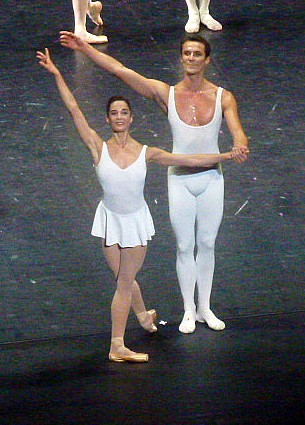
I really liked the leads of In G Major when they danced around to Ravel’s jazzy score with the corps.

With the male corps, Hannah O’Neill seemed light and very comfortable, certain of her charm, a bit mysterious. Of all the Paris Opera dancers, she really caught the Balanchinean art of the micro-hip thrust and used it with easy grace and no vulgarity. (Remember, all of his career, Robbins remained in awe of Balanchine and was wont to quote him). My impression was of a dancer both sculptural and liquid at the same time.

Hugo Marchand was very conspicuously doing some razzamatazz, playful and jolly with the girls. He reminded me of Carpeaux’s sculpture of “La Dance,”  where the Spirit of the Dance slyly eggs on his entourage to do more. But then…

While the leads had been lithe and fun when interacting with their beachmates, when they were left all alone on the bare stage for the central pas de deux… for me the magic just didn’t happen.

In his autobiography, Marchand describes his instant connection with Dorothée Gilbert and how his request to partner her was equally denied by the company director for years. Because of that, we’ve had fewer years of the symbiotic Gilbert/Marchand than we would have liked, and now, as she is about to retire, this always interesting young man is on the hunt for a new real partner.

I often do admire Hannah O’Neill the soloist. But I’m not sure this new coupling is going be “it.” Just go look up the photos on their Instagram accounts.  They both look good, but whereas his hands flame out, at precisely the same microsecond hers are still curling in. What looks good and interesting in the studio – and clearly a working and respectful partnership is going on here — does not necessarily translate into a new and incandescent onstage relationship, at least for now.

Even as he gently swished his partner around, Marchand seemed too carefully precise. O’Neill lost her wry “Who Cares?” lift and umph and made shapes. Nothing seemed dangerous or unpredictable, just rehearsed.

The question that the central adagio poses is this: even if we hold hands, are you dancing around me, to me, with me, or – I wish! — as if you lived inside of me? The pas has a deceptively courtly coolness but its inbuilt sweep should work for the audience no matter what. The walking theme and then the swoops or the unexpected ooh-là-là lifts are  there for the taking. But if there is no build up, no path to mirror the music’s sostenuto tension, no eager yearning to be repressed or expressed…just the elegant unfurling of two ribbons of exactly the same colour…  If they don’t connect, than this ballet becomes mere eye candy.

*                                               *

When Amandine Albisson took on the male corps (girl corps being offstage) I thought “wow now this gal is definitely not one to leave alone with your boyfriend.”

From her first entrance up until the last note Albisson, lushly afloat from tip to toe, rode on the sinuous waves of sound in luxurious synch.  It was as if she had serenely stepped off of that clamshell upon which she has been perfectly and slyly balanced since 1879 in Bouguereau’s painting of Venus at the Musée d’Orsay. As in the painting a corps de ballet of naiads and tritons gazed up from the frothy waves in awe.  Was she dancing or surfing? Whatever, Albisson never stopped being that goddess in motion.

As boyfriends go, an eager Jérémy Loup-Quer actively asserted his presence from the start, his hands infused with eager energy, trying to access his inner Apollo.

As opposed to the other night, here in the pas de deux everything lifted up and out. Loup-Quer gained in intensity and became increasingly attentive and magically tender. With deference and tact, each time after a lift or pose he so gently floated his precious back down to take on a new wave of movement that you couldn’t wait for the next one. Perfect partnering.  While he can still go off his axis on turns as a soloist, Loup-Quer spinned his Albisson as softly as if only she knew how to re-align his body. The pin-drop silent audience held its breath throughout. I think most of us were having a flashback to a moment long ago, one where we too had once walked hand in hand with someone in quiet awe of just what was happening, on a deserted beach, just after sunset.

P1190803

Amandine Albisson et Jeremy-Loup Ker. Matinée du 1/11

*

 *                                               *

L’ami James est indépendant. Cela lui a permis de voir deux distributions différentes de celles de ses collègues. Cet homme pressé vous en parle en coup de vent.

JamesJames : soirées du 25 octobre et du 10 novembre.
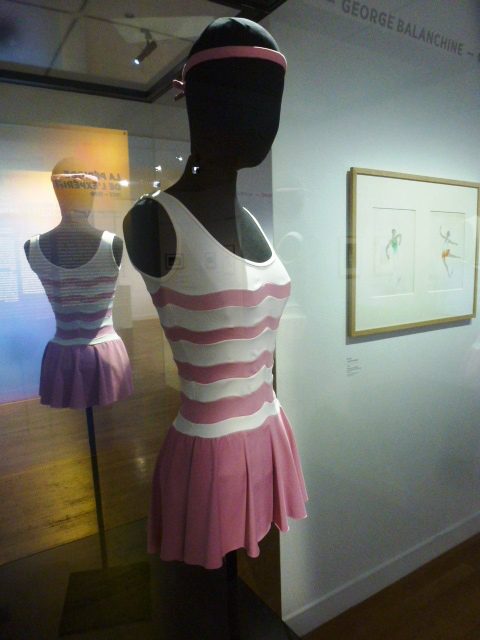

Lacan en aurait fait des jeux de mots, Erté en a fait un décor : il y a une relation entre la musique de Ravel et l’ensoleillement de la station balnéaire où baguenaudent les donzelles et damoiseaux d’En Sol. À la plage, chacun est en représentation, tout en affectant le naturel : tout le difficile est que cela dupe le nigaud (dans la vie sociale) et sur scène, que cela se voie, mais pas trop. À ce jeu, la seconde ballerine vue sur cette série de représentations, (Myriam Ould-Braham, 10 novembre) a un coup d’avance sur la première (Léonor Baulac, 25 octobre) : art du déhanché discret, coup d’œil qui filtre à droite et à gauche, bras délicats et mains mutines, Mlle O.-B., d’une juvénilité inentamée, concentre tous les regards. À plusieurs semaines de distance, les deux danseuses se partagent le même partenaire, Germain Louvet, qui, chaque fois, danse plus pour la salle que pour ses partenaires. Avec Mlle Baulac, le pas de deux de promenade manque de tension, tandis qu’il est chargé d’enjeux quand Myriam Ould-Braham prend les commandes. Sans doute une question d’alchimie.

P1120360

En sol, costume du corps de ballet par Erté.

1 commentaire

Classé dans Retours de la Grande boutique

Balanchine: au milieu de l’Atlantique

P1180698

Who Cares? Décors Paul Gallis (détail).

Deux parties, deux ambiances. À vol d’oiseau, le trajet entre Saint-Pétersbourg (Ballet impérial) et New York (Who Cares ?) vous fait passer l’entracte quelque part au milieu de l’Atlantique. La première pièce du programme Balanchine, qui est en partie un brouillon des créations postérieures de George, m’a d’abord fait l’effet d’un exercice de style. Le soir de la première, Ludmila Pagliero et Paul Marque semblaient en démonstration pour le Balanchine Trust : « T’as vu ? Je fais tout, même les bizarreries, comme tu m’as dit ! ». C’est à la fois impressionnant de maîtrise, et bien froid. Le lendemain, Héloïse Bourdon et Audric Bezard, techniquement moins à l’aise, racontent une histoire – intrigue de cour et un peu de cœur –, et ce souffle de tension amoureuse fait qu’on cesse de regarder sa montre pour vérifier la différence entre temps objectif et temps ressenti (9 février). Quasiment un mois plus tard, Hannah O’Neill et Marc Moreau, étrennant leur étoile nouvelle, font revenir la pièce sur le versant formel. Las, à un moment, le cavalier fait tourner sa cavalière de manière un peu trop penchée, et  par la suite, sa tension devient douloureusement visible. Souhaitons que l’étoilat permette à damoiseau Moreau de dompter le stress (4 mars).

Dans Who Cares ?, il m’a fallu attendre la deuxième représentation pour voir le style qui manquait à la première, du côté des filles : Charline Giezendanner, dans Do Do Do, a le déhanché et le roulement d’épaule jazzy. C’est discret, chic et charmant. Non contente d’entraîner Gregory Dominiak dans son sillage, elle donne in fine l’impression, par des retirés musicalement impérieux, de donner elle-même le tempo à l’orchestre. C’est grisant (soirées des 9 février et 4 mars). Il faudrait plusieurs Charline pour donner du peps aux évolutions du corps de ballet féminin. Il y a aussi Dorothée Gilbert, flirteuse en chef dans The Man I Love : la ballerine a le déhanché balanchinien voluptueux, mais sans ostentation : cet art d’être le style sans le montrer est délicieux (9 février). On retrouvera la même impression, en moins canaille, chez Ludmila Pagliero (4 mars).

Côté garçons, Germain Louvet donne l’impression d’être une projection des fantasmes des trois filles avec lesquelles il danse : c’est l’homme idéal, celui qui n’existe que dans tes rêves, mon chou (8 février). Jeremy-Loup Quer (9 février) comme Mathieu Ganio (4 mars), ont une présence plus réelle. On s’amuse à voir dans les trois filles qu’ils courtisent autant de new-yorkaises : pour Quer, l’amoureuse (Mlle Gilbert), l’impétrante (Roxane Stojanov, Embraceable You), la pétulante (Bianca Scudamore, Who Cares ?). Pour Ganio, celle qui fait ses premiers pas dans le monde (Mlle Pagliero), l’intello qu’on croise au Metropolitan Museum (Laura Hecquet), et la libérée, celle qui virevolte dans Central Park (Hannah O’Neill).

Commentaires fermés sur Balanchine: au milieu de l’Atlantique

Classé dans Retours de la Grande boutique