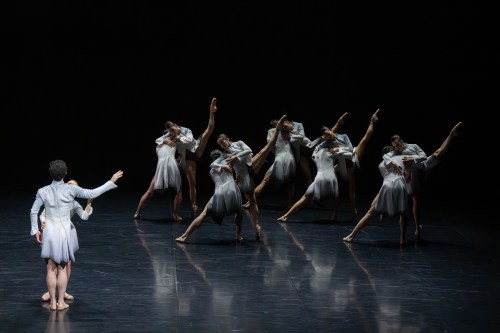
Archives de Tag: french

Paris Opera’s Romeo and Juliet : leave the studio, fill the stage!

Roméo et Juliette, Paris Opera Ballet, Opera Bastille, April 7, 8, and 17, 2026. Choreography by Rudolf Nureyev, Music by Sergei Prokofiev, Sets and Costumes [sort of] by Ezio Frigerio

Not one of the three evenings I attended was “bad.” But not one couple pierced me to the core, either. I realize I made a weird note during one performance: “Why is this ballet just not happening?”

Perhaps I could not concentrate because another tragedy was playing out on stage at the same time. What has the Paris Opera management done to Ezio Frigerio’s claustrophobically textured and vivid scenic environment? I thought I was hallucinating. No fountain? All the rich backcloths and detailed carvings replaced by what were basically sky templates enlarged off the internet? A cheap showroom bed plonked in the middle of an empty warehouse is now the crypt? Speaking of cheap, the regilt mobile flies were way too flashy.

The lighting design remains unchanged, yet the sets that the lighting refracted off have now mostly disappeared, along with about half the extras. The downstage “alea jacta est” dice players were rendered invisible both at curtain up and curtain down. The Duke of Verona, who appears upstage to force the warring clans to put down their swords was literally invisible all three nights. On the other hand, the guests entering the Capulet doors, who once had become shadows behind a scrim, are painfully visible as they head for the wings obscured by…nothing. Can it get worse? Yes. During the balcony scene, a spot hits the couple. Without the fountain, it lofts the shadow of their heads onto the bland backdrop that now only consisted of an out-of-focus polaroid moon. The result look exactly like an upside down “wow” emoticon.  Do better next time, guys.

*

 *                                                       *

April 7th
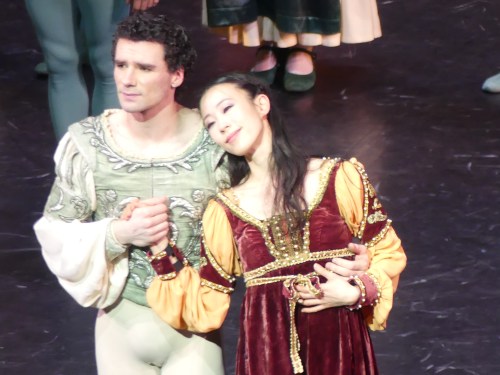
Paul Marque and Sae Eun Park Performance on April 7th.

I have come to like Sae Eun Park, the performer. I have come to like Paul Marque in the same vein. I continue to dislike seeing them dance together. When Park/Marque is cast they continue to radiate the calm of their clearly pleasant rehearsal room relationship. When they are alone or with others they can glow, they react. Germain Louvet catalyzed a striking vulnerability in Park’s Giselle.  In Sylvia, you just yearned for the wildly ardent Marque to end up happily ever after with Bluenn Battistoni…

They are very much “in like,” but their chemistry lacks radiance, abandon. There is no electric “spark” between them, only a comfort zone. Yet they continue to be scheduled as dramatic leads together …

Maybe something was off from the start because the first real potential girlfriend you had already seen — Sylvia Saint-Martin’s icy, dry, and monotone Rosalind — made you already wonder what was wrong with this Romeo. Why would any young man in his right mind waste time trying to flirt with a humorless poppet? Overheard during intermission: “there was no Rosalind tonight, just a bunch of identical girls.” Ouch.

Sae Eun Park’s Juliet was light and quick and warm, but soon you could see how she was always being carefully managed by Tybalt and Romeo – and even her father — when it came to sliding her down or manipulating her in any way whatsoever. The fact that she offered up the same gracious smile to each and every person quickly started to bore me. There was no sense of shock in her first encounter with Romeo in the Ball Scene, which came off as more of a hello. Park does lean into Marque with soft grace, but even when his mask falls off Park’s Juliet remains the same well-bred girl. His first kiss doesn’t light her up with more than a “that was nice.” Nor did the second.

In the balcony scene Marque’s Romeo was full out at first, open-bodied and visibly inspired to impress Juliet (that recklessly precise manège of double tours)… and then he reversed gears and became the “I won’t break this glass unicorn” careful partner.  Why? Honestly, Park looks as if she is in perfectly fine shape and uninjured. Despite the restraint, a certain soft charm did manage to evolve. Was I moved? No. Act Three just seemed endless until Marque’s Romeo, alone, began to storm his way unto his death. Park’s death scene was moving in equal measure. How odd, isn’t it, that both their most passionate moments occurred while the other was inert?

All the more pity as so many on stage April 7th had energy and wit to spare:

Jack Gasztowtt, aware and alert, fully present on stage as Benvolio.

What’s not to like about Francesco Mura’s bouncy and sly Mercutio, except for a terrible hairdo?

Jérémy Loup-Quer’s observant and actually likeable Tybalt definitely knows how to swish and slash his sword with relaxed authority. He was very much amused and reactive in the early scenes. Never a villain in the making. And that proved interesting: his courtly restraint as bad guy made Mercutio’s (and his own) fate all the more surprising.

Andrea Sarri’s Paris quickly evolved from fatuous plot device into husband material early on.  He gave this dead-end role heft and elegance.

Sara Kora Dayanova’s Lady Capulet was a vortex of emotions, born out of the wisdom distilled by her years of on-stage experience. Most haughtily Shakespearian whilst she handed out swords during the ball scene, Dayanova’s later howl of desperation, not anger, stilled the house. Splendid and deeply alive on stage even when just walking – Dayanova doesn’t get a picture or a bio in the illustrated program. As if she were an extra? That’s just wrong. I heartily wish the Paris Opera Ballet would show more respect for those soloists who have given their lives to this company as they age gracefully and evolve more fully into character roles.

A young friend, who saw exactly the same cast a week later, hesitated when I interrogated him. “Oh it was excellent, so well-performed, the couple was really nice and then…At the end when he threw her body around, it was very aesthetic.” Alas he used code words for: your brain is on, not your heart. You are observing the process. He spoke too much about how he loved the costumes, bad sign. He was more captivated by the chemistry between Gastowtt’s Benvolio, Mura’s Mercutio, and Quer’s Tybalt. Now there he saw sparks flying, now there bloomed a galvanizing subtext he couldn’t shake out of his head.

*

 *                                                       *

April 8th
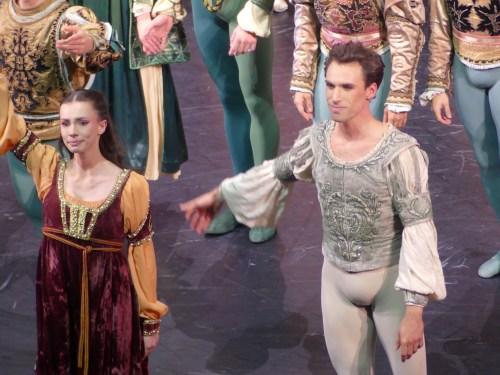
Bleuenn Battistoni and Thomas Docquir. Performance on April 8th

The next night, after another impeccably danced performance, again I left the theater hungry for more. Unlike American critics, I have not so far felt I’d experienced what they sneeringly call the “too perfect” performances of the Paris Opera Ballet. But on the second night I started – for the first time ever – to muse that the principals just might have been over-rehearsed. Is that possible?

Even before Juliet’s entrance, I’d been tempted by what Hohyun Kang’s fluffy and flirty Rosalind had to offer. Kang is one of those soloists who keeps catching the light. Pablo Legassa’s limber and graphic Tybalt could have been naughtier (on the 17th, Nicola di Vico will carve out a splashily dashing silent movie villain who really has the ear of Katherine Higgins’s chillingly ambitious Lady Capulet). Andrea Sarri’s Mercutio had joyous energy to spare. Keita Bellali used the role of Paris to display his silky control and gorgeous lines as a peacock would. Bellali even managed to indicate that he might have some secret passions simmering just below the surface, too.

Everything Bluenn Battistoni’s Juliet does flows so naturally that you take her unforced – but powerfully developed — technique for granted. Her Juliet on April 8th accelerated, decelerated, nuanced little flicks of leg or hand, slowly loosened up. Her dance is beautifully silky…but it wasn’t until the third act that she took over the narrative and made it impossible not to watch her.

Her Romeo was Thomas Docquir. His trajectory in this company has been awkward. Every time I’ve seen him over the years he’s clearly been concentrating on extending his lines and technique, especially in the service of the tricky syncopations and changes of direction in Nureyev’s ballets. But something never quite happened. Endlessly cast as a perfectly acceptable Rothbart “de service” one season, then miscast as a mild Frollo, with a Prince Desiré in between (where he seemed petrified by imposter syndrome). And here? …here he was deeply sweet and finally relieved from whatever it was that had been holding him back. So I was rooting for him.

Docquir’s Romeo is very much in the vein of Tony in West Side Story, a passionate pacifist. He really draws in the audience when he pleads “I don’t, I won’t, I can’t” when prodded by his friends or by Tybalt. But with his Juliet, alas, once again, sparks just didn’t happen until the last act. Thomas Docquir – like Paul Marque the night before – kept disappearing into partner mode.

*

 *                                                       *

April 17th
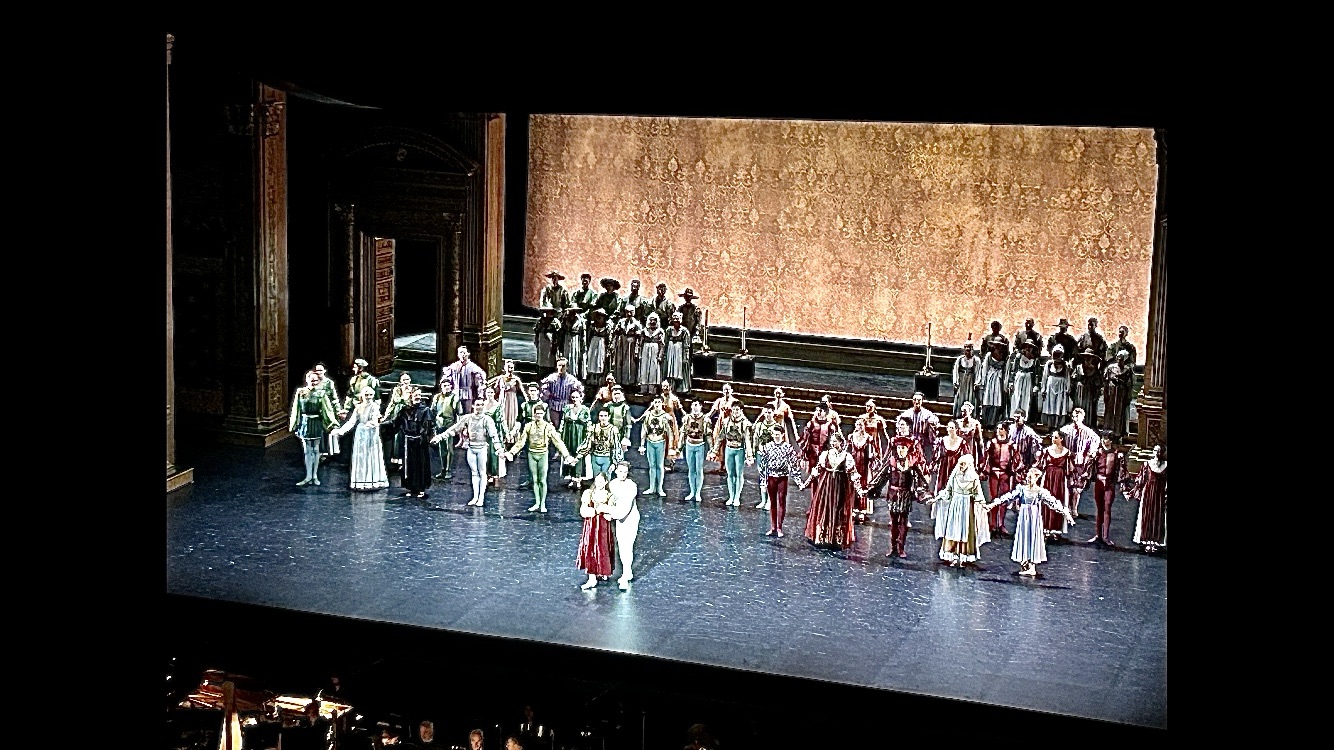
Romeo & Juliet. Performance on April 17th.

And then, unexpectedly, Thomas Docquir was thrust into a new partnership with Valentine Colasante on April 17th due to Guillaume Diop cancelling due to injury. And maybe this wasn’t such a bad idea.

While this couple also didn’t make me cry, the fact that they had been working in different directions with equal intensity in rehearsals gave their interactions a spontaneity that had been lacking in the other pairings.

Colasante’s playful “don’t worry, I won’t break” Juliet just wants to dance with her besties and no one, not even this rather cute Paris (Bellali again) was going to make her simply smile at everyone and obey. I sighed along with her easy loping pensive walk out onto the terrace and into the Balcony Scene. Docquir’s “Maybe Tonight” attitude made her visibly brighten. The duet on the 17th had an amplitude that was lacking on the 7th or 8th, perhaps due to the fact that when a new partner comes at you with a different center of gravity, then you are forced to concentrate on getting through the moment, rather than perfecting the look. So what if a few landings are hard, some lifts a bit short, and maybe timing is sometimes half a beat away from in-sync? In a dramatic ballet is partnering supposed to be predictably pretty?  Imperfection creates a sense of spontaneity. When Docquir’s Romeo struggled both intentionally and unintentionally with Colasante’s drugged body near the end, it felt raw. This drama was happening here and now on stage, not copy-pasted from a rehearsal studio.
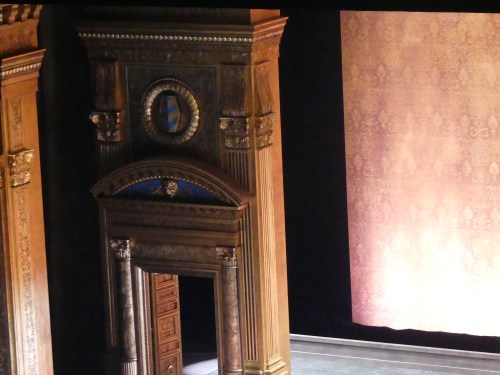
Empty backdrops and over-guilded decor for this revival…

1 commentaire

Classé dans Retours de la Grande boutique

Programme Trois Cygnes au Capitole de Toulouse : vues croisées

Les Balletonautes sont allés en délégation faire leur pèlerinage à Toulouse pour découvrir un ambitieux programme présenté par le Ballet du Capitole : Trois Cygnes. Alors, Cléopold et Fenella, quid de ces trois volatiles?

*

 *                                                    *

Cléopold

Cygnes de Ciel, d’Eau et de Terre

Programme Trois Cygnes (Nicolas Blanc : « Cantus Cygnus », Jann Gallois : « Incantation », Iraxte Ansa / Igor Bacovich : « Black Bird »), Ballet du Capitole de Toulouse. Musiques enregistrées. Représentation du samedi 14 mars 2026.

Dans un monde idéal, la troisième compagnie de danse classique nationale en termes d’effectifs devrait pouvoir être en mesure de monter un Lac des cygnes traditionnel. Mais au pays de France, où les politiques publiques ont consciencieusement et sans relâche travaillé à affaiblir l’idiome classique depuis les années 80, il n’y a plus guère que le ballet de l’Opéra, le splendide isolé, à être en mesure de remonter correctement un tel monument. Avec 31 danseurs, des supplémentaires aux étoiles, le ballet du Capitole de Toulouse peut difficilement aligner un nombre de filles suffisant pour rendre pleinement justice aux géométries captivantes d’Ivanov.

Beatte Vollack, l’actuelle directrice de la compagnie qui se dit une grande admiratrice du ballet original, a donc proposé une parade intéressante. Lors d’une soirée traditionnelle depuis l’époque des Ballets russes de Serge de Diaghilev, réunissant plusieurs ballets courts, elle a commandé à trois chorégraphes (deux individuels et un duo pour être plus précis) un triptyque unifié par une même équipe de production : Les décors et costumes des trois pièces sont de Silke Fischer et les lumières de Johannes Schadl. Doit-on y voir un clin d’œil à George Balanchine qui en 1960 avait annoncé un ballet d’une soirée au public américain et leur avait présenté Joyaux, trois ballets, trois ambiances, trois compositeurs mais des costumes tous conçus par Barbara Karinska ? La réponse allait être donnée au cours de la soirée. Votre serviteur s’était bien gardé de lire la glose de la plaquette de programme afin de se faire une idée personnelle de ces cygnes réinventés.

 *                                                    *

Programme Trois Cygnes. Ballet du Capitole de Toulouse. Cantus Cygnus de Nicolas Blanc. Photographie David Herrero.

La soirée s’ouvrait avec Cantus Cygnus. Je ne connaissais pas Nicolas Blanc en tant que chorégraphe et répétiteur en chef du Joffrey Ballet. J’avais par contre un souvenir très vif du danseur lorsqu’il était principal au San Francisco Ballet, lors de la tournée de la compagnie en 2007 dans le cadre des Etés de la Danse. Formé à Monaco et à l’Ecole de Danse de l’Opéra, Nicolas Blanc se distinguait par son élégance et sa précision très « française ». Il était particulièrement brillant dans Square Dance de Balanchine.

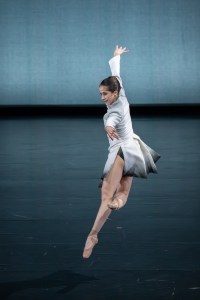
Programme Trois Cygnes. Ballet du Capitole de Toulouse. Cantus Cygnus de Nicolas Blanc. Nina Queiroz. Photographie David Herrero.

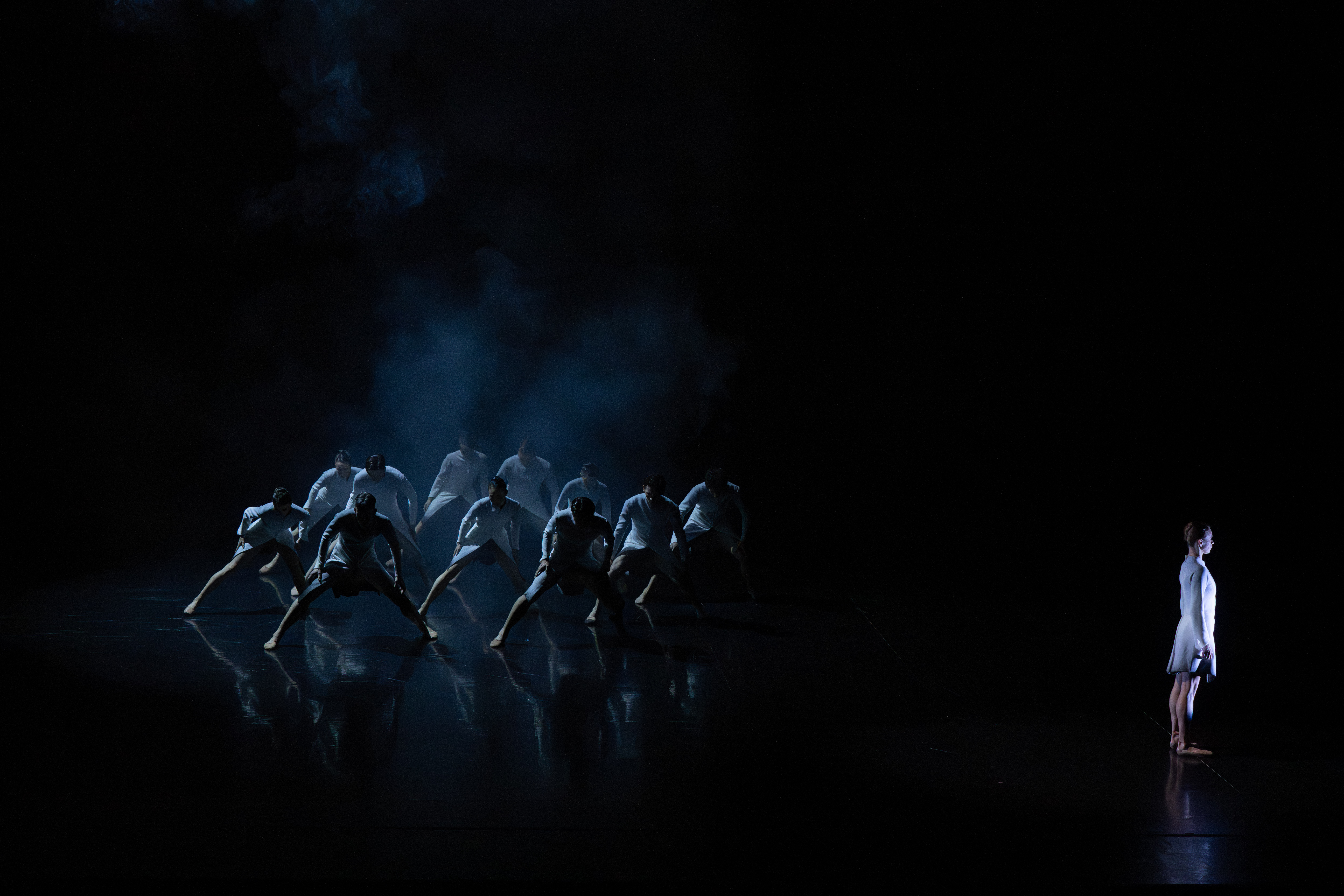
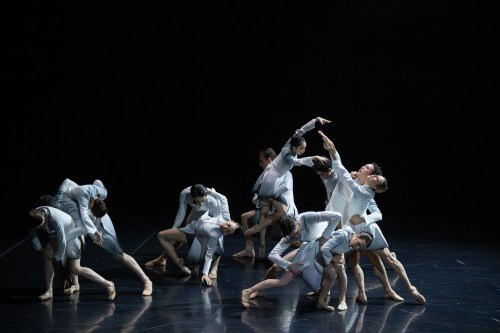
Pour ce Cantus Cygnus, monsieur Blanc créé un ballet pour six couples. Le rideau s’ouvre sur le groupe effectuant de profonds pliés respirés, très dans le sol tandis que la soliste (Natalia de Froberville) se tient seule à jardin dans une pose anxieuse comme soulignée par le collage musical réunissant des pièces du compositeur Einojuhani Rautavaara et d’Anna Clyne très artistement dissonantes. Des scènes de groupes dans la veine néoclassique, des duos, trios  et soli acrobatiques se succèdent avec une belle harmonie. Nina Queiroz accomplit un court solo sur pointes plein de développés et de décentrés. Natalia de Froberville et Ramiro Gómez Samón bénéficient de deux pas de deux aux moult décalés et portés compliqués.

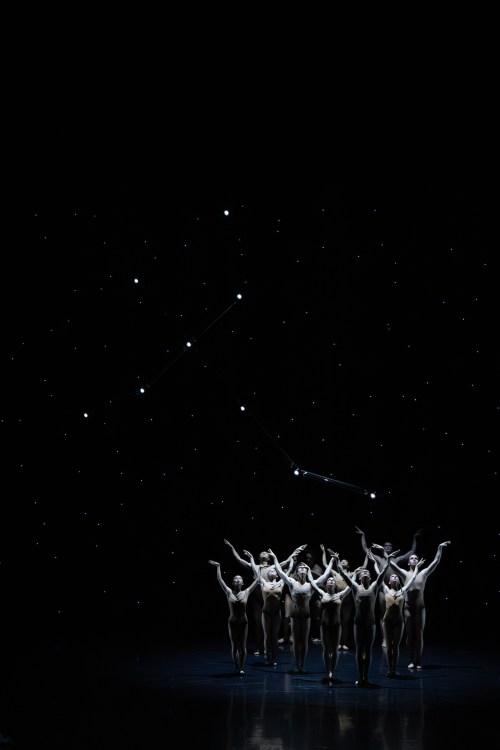
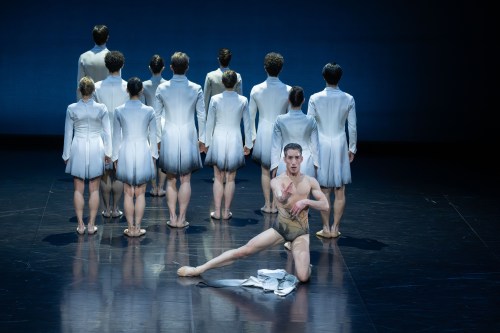
Les bras, qui ont un petit côté sémaphorique, n’évoquent d’abord que subrepticement des volatiles. Les danseurs, tous vêtus de vestes justaucorps XVIIIe d’un blanc laiteux semblent presque se restreindre dans ce registre. Puis, un garçon, Eneko Amoros Zaragosa, fait tomber la veste révélant un justaucorps de couleur glauque à motif de plumes. Les filles puis les garçons se dévêtiront tour à tour non sans étoffer concomitamment leur gestuelle de cygne, comme si le dépouillement vestimentaire leur permettait de mieux embrasser leur véritable nature. Nalatlia Froberville, la danseuse solitaire du début du ballet, est la dernière à se dévêtir sur une scène illuminée d’une constellation en néon et d’un fond de scène étoilé.

On a apprécié cette vision du cygne « cosmique ».

Programme Trois Cygnes. Ballet du Capitole de Toulouse. Cantus Cygnus de Nicolas Blanc. Photographie David Herrero.

 *                                                    *

Jann Gallois, la chorégraphe d’Incantation, vient d’un autre monde que Nicolas Blanc puisqu’elle a été formée tout d’abord aux danses urbaines. Elle n’est néanmoins pas étrangère aux fusions et hybridations techniques. En 2022, on avait beaucoup apprécié son duo avec le danseur de flamenco Eric Coria : Imperfecto.

Programme Trois Cygnes. Ballet du Capitole de Toulouse. Incantation de Jann Gallois. Photographie David Herrero.

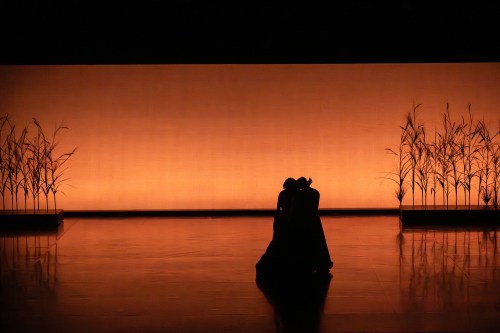
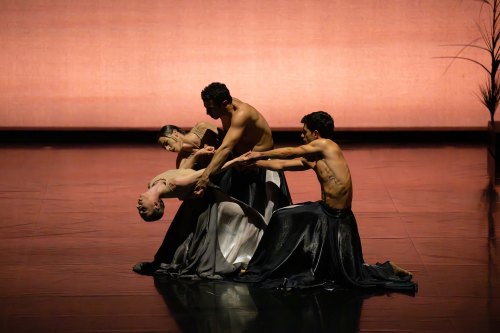
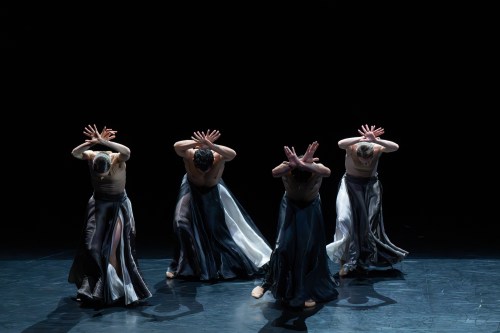
Incantation est un quatuor. Sous un fond végétal illuminé d’un cyclo rose, les danseurs (Philippe Solano, Solène Monnereau, Kleber Rebello et Tiphaine Prévost) vêtus de longues et amples jupes unisexes, apparaissent enchevêtrés dans une seule masse. S’ils se divisent en deux couples dans le courant de la pièce, ils ne resteront néanmoins jamais longtemps séparés. Sur une bande son jazz atmosphérique aux bases pulsées (Yom), la créatrice bâtit une chorégraphie puissante à base de chaînes humaines qui s’étirent et se contractent plus ou moins rapidement en ménageant parfois de courtes poses plastiques. Elle utilise avec maîtrise la technique des pointes pour les filles. Les danseurs projettent parfois leurs mains par-dessus leurs épaules en secouant les mains figurant des volatiles qui glisseraient sur la surface huileuse et sombre d’un lac. On est séduit à la fois par ce qui nous semble être un détour vers l’animalité des cygnes et par la concentration physique des interprètes, tous admirables.

Programme Trois Cygnes. Ballet du Capitole de Toulouse. Incantation de Jann Gallois. Solène Monnereau, Tiphaine Prevost, Philippe Solano et Kleber Rebello. Photographie David Herrero.

 *                                                    *

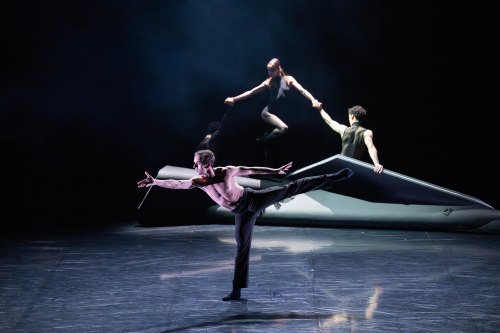
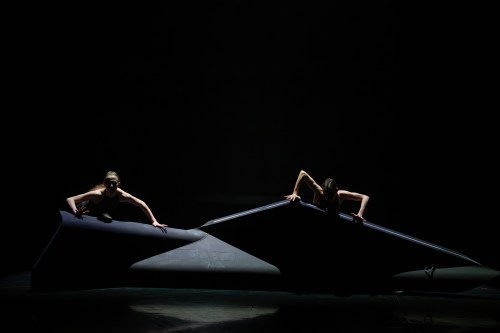
Après cette évocation animale presque fantasmée, Black Bird du duo de créateurs Iraxte Ansa et Igor Bacovitch semble quant à lui explorer la nature agressive des cygnes comme l’indique la couleur noire des costumes et la gestuelle à base de micro-agressions du duo entre Solène Monnereau et Juliette Itou, intenses, qui émergent d’une pièce de décor mouvante semblent figurer un fragment de berge. Par la suite, Aleksa Zikic, à la fois sensuel par des mouvements coulés et tendu (la projection des arabesques) renforcera cette impression par des solos et des pas de deux aux portés imbriqués et musclés.

Programme Trois Cygnes. Ballet du Capitole de Toulouse. Black Bird d’Iratxe Ansa et Igor Bavovich. Aleksa Zicik. Photographie David Herrero.

Le duo de chorégraphes joue clairement le jeu de la référence avec le ballet inspirateur de la soirée. La séduction maléfique de la magicienne Odile n’est jamais très loin et la partition d’Owen Belton utilise des fragments mis en boucle du Lac de Tchaïkovski (le thème principal, l’introduction des petits cygnes, ou encore l’amorce de l’adage de l’acte 2…).

La pièce est plaisante, certaines images comme cette course immobile à quatre pattes par les filles sur pointes retiennent l’attention. Mais notre intérêt s’émousse un tantinet. Sont-ce certains costumes parfois peu seyants comme ce justaucorps à uni-jambe longue à franges ? Ou bien est-on un peu ennuyé de ne pas parvenir à trouver une signification claire à l’évolution dans les airs du décor-berge du début de la pièce ?

 *                                                    *

Peut-être l’idée séduisante de la production unifiée pour trois univers chorégraphiques distincts trouve-t-elle ses limites. Au lieu de se concentrer sur la spécificité des styles des chorégraphes on a fini par n’en retenir que les similitudes. On aura en effet observé beaucoup de partenariats décentrés, de portés mettant en avant l’apesanteur plus que l’envol, des ports de bras mimant mécaniquement l’animalité. La lecture à posteriori des intentions des chorégraphes nous aura aussi laissé perplexe…

Il n’en reste pas moins vrai que la soirée Trois Cygnes dans son ensemble, excellemment dansée et artistement chorégraphiée, était ambitieuse et stimulante pour le public.

*

 *                                                    *

Fenella

One for all and all for one.

Trois Cygnes, Le Ballet du Capitôle, Toulouse:  “Cantus Cygnus” by Nicolas Blanc; “Incantation” by Jann Gallois;  and “Black Bird” by Iratxe Ausa and Igor Bacovich. March 14, 2026.

This triple-bill only lasted one hour and forty minutes, intermission included, yet I left Toulouse’s house feeling more sated than I usually do after one of the Paris Opera Ballet’s slightly longer but incoherent double-bills. (There, I always leave hungry).  Nevertheless, I feel a bit confused. Had I just witnessed a “Gesamtkunstwerk” or three stand-alone pieces? Either can be argued. Let me explain.

The same artists were commissioned by Toulouse to create the sets and costumes (Silke Fischer) and the lighting design (Johannes Schadl). The result was a certain kind of “look” that carried over: moody lighting, overhead spots. In the case of both Cantus Cygnus and Black Bird, bright white neon punctured the darkness. Incantation used backlighting against cutouts of some abstracted plant fronds. The costumes for all three were rather protean but, no matter what they began dressed in, the dancers all ended up stripped to some variation on nude-tone underwear.

The music – menacing and angsty for the first (Einojuhani Rautavaara and Anna Clyne), more rhythmic and thumpy for the second (Yom), noodly and thrumming for the third (Owen Belton) – provided hypnotic soundscapes that really didn’t differ all that much from one to the next to my ear. Distracted by how loud it was most of the time alas I did not, unlike Cléopold, hear more than one of the many echoes of Tchaikovsky that were embedded in these scores.

But most of all the danced vocabulary of these three pieces offered up an awful lot of similarities.

  • Gently place your hands somewhere on the other’s face or head or nape and begin to stroke down to incite said appendage to move on up or out. Use that to initiate spiraling movement that shivers down the spine and pushes outwards. All three pieces.
  • Splay the fingers. Put your own body’s tension out into the fingers and release the body back/out/down from there. All three pieces.
  • Very gendered horizontal partnering – all three pieces — with women slowly doing a side split as they get transferred left, right, upstage, downstage, offstage.
  • Another lift that got too familiar: you guys will hoist the women – floppily face down or face up – and drape them over your shoulder.
  • The pose of the day: a deep plié in second. Sometimes with one foot flat and the other foot distancing itself from the floor because it is sharply on pointe. Alternate move: supported squat with leg extended to the side or rotated to the front. All three pieces.
  • Slowed down movement. A lot of it. Supported extensions tilted to the side.

At least, the women in all three ballets used pointe technique. I say yes to that!

While too much was the same, surprisingly the choreography was not monotonous. Many other elements served to differentiate these “Three Times Swans.”  I should note here for anglophone readers that “cygnes” (swans) is a homonym for “signes” (signs). Whatever.

 *                                                    *

Programme Trois Cygnes. Ballet du Capitole de Toulouse. Cantus Cygnus de Nicolas Blanc. Photographie David Herrero.

Nicolas Blanc’s Cantus Signus [Swan Song] for six pairs of dancers was special in its clever interplay of shifting dynamics and energy. As the music moaned on, Blanc’s choreography sang.

Cantus Signus began with horizontal sliding movements done with the sway and swagger of long-distance skaters — arms bent down, heads tilted — emanating a sense of alarm as they glid.  Where are we? On a frozen lake, or maybe in outer space? (Mobile white neon tubes – enormously distracting at first – will indeed fall into place in the end as the Cygnus constellation).

The movement does have a swan-y feel, but why? Maybe it’s the elbows up, elbows down. Or both arms twistily thrusted to the back in a move that evokes both Petipa and Mathew Bourne. One dancer in a short solo clearly attempts to fly away.

Programme Trois Cygnes. Ballet du Capitole de Toulouse. Cantus Cygnus de Nicolas Blanc. Eneko Amoros Zaragoza. Photographie David Herrero.

As in sci-fi, both the men and the women are ill at ease in this universe. Several times dancers are lifted and cradled as if they were wounded or dead. Or cover their faces with their hands and seem to cry. Or clutch their heads.  At some point Eneko Amorós Zaragosa, who kept catching your eye, slips off his silky 18th century style hunting jacket jacket. “I’m getting too hot in this” is indicated. Is this a ballet about global warming? Then the rest drop their jackets – revealing, you guessed it, sheer body stockings with what must be stenciled feathers — at the feet of one woman who seems not to want to join them. Yet the goodbyes are tender. More stars filled the black backdrop.

The final duet follows. Ramiro Gómez Samón seems to be trying to save that last woman – Natalia de Froberville — who is still clinging to her jacket. Powerful port de bras, backward and forward bends are let rip. And the constellation lines into place.

You know, of course, that in all religions birds are sacred because they are the only creatures that can connect the earth to the sky, ergo to God’s light. Swans, then, can do this.

 *                                                    *

Programme Trois Cygnes. Ballet du Capitole de Toulouse. Incantation de Jann Gallois. Solène Monnereau, Tiphaine Prevost, Philippe Solano et Kleber Rebello. Photographie David Herrero.

Jann Gallois’s quartet for two couples, Incantation, is the cheeriest of the three. It begins with four backlit beings melted into an earthy clump under warmer light.  Seemingly half asleep, they emerge slowly and stretch and pull on each other’s limbs, all in floor length long skirts with little or nothing up top (Joke and Jirí, hello!). A bit of slo-mo whirling dervishing ensues, lots of hands stretch into the stratosphere, girls move or are moved horizontally. Cat’s cradle forms for four. Then the squats happen again, then the palm cradling a face with rollover via head or neck, again and again. Yet the group energy did rise into something…Ohan Naharan-iesque: percussive, sculpted, primal. In a split second, cygnet crossed arms were lightly referenced and acknowledged. Everything then slowly slowed down and tired itself out as swirls replaced percussive movement. Solène Monnereau, Kelber Rebello, Tiphaine Prévost, Philippe Solano, were all completely engaged in the non-stop choreographic shifts and interlocking shapes that are propelled by the evolving musical soundstage. I would have loved to see them dance an encore.

 *                                                    *

Programme Trois Cygnes. Ballet du Capitole de Toulouse. Black Bird d’Iratxe Ansa et Igor Bavovich. Juliette Itou et Solène Monnereau. Photographie David Herrero.

Iratxe Ausa and Igor Bacovich’s Black Bird must be Odile, right? As far as I was concerned, this ballet – dark, black, neurotic — was about spiders instead. Worse than than that, as far as my phobias go, about punk tarantulas. Vibrating to music that alternates strings and plinking sounds, Black Bird reads as a tense, combative, but in the end not quite altogether convincing, narrative. By the end, I was toast.

A creature (the fiercly graceful and authoritative Solène Monnereau) climbs out from under a rocky outcropping on a shore or perhaps out from under a tumulus.

Programme Trois Cygnes. Ballet du Capitole de Toulouse. Black Bird d’Iratxe Ansa et Igor Bavovich. Photographie David Herrero.

Whatever that mound is, it will move around and take on a life of its own. Anyway, to the shimmers of yet another vibrating score, “She” pushes another female down. This dominatrix wears a kind of shredded two-tone black bodysuit with fabric appendages and sports asymetric eye make-up, the raised eye being very “Black Swan, the movie.” Her antagonist/victim/novice (the equally haughty and pliant Juliette Itou) bears a not-quite-all-there fringed cocktail dress and an elusive attitude.

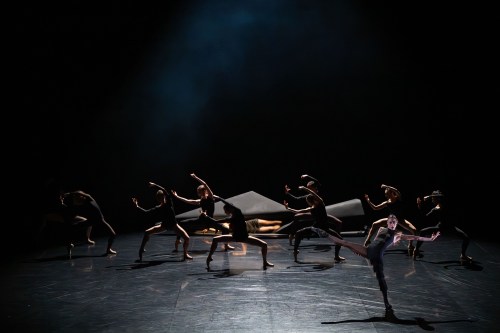
Lots of men show up to pivot them and swish them – as well as a plethora of other females — forwards and back. Again, fingers are splayed more often than not. Energy here is concentrated more in the hands than in the movement. Second position plié cliché, slo-mo, etc. Dancers move into and out of overhead shower spots. Some combative duets and other configurations ensue, the one after the other. Domination is not pre-ordained. When a lone teasing woman is surrounded by four men, she manages to subdue them. But it got repetitive. At some point, the two women retake the stage and subjugate the rest into circling around them. Everyone is no longer in black but in, you guessed it, flesh-toned undies. Black Bird, at only thirty minutes, could use some editing.

Nevertheless, I wouldn’t have said “no” to tickets for the next day’s matinée. I’d have been less distracted by what it was all supposed to mean and just admired what every single one of these powerful and expressive dancers brings to the stage.

Programme Trois Cygnes. Ballet du Capitole de Toulouse. Cantus Cygnus de Nicolas Blanc. Photographie David Herrero.

Commentaires fermés sur Programme Trois Cygnes au Capitole de Toulouse : vues croisées

Classé dans Blog-trotters (Ailleurs), France Soirs