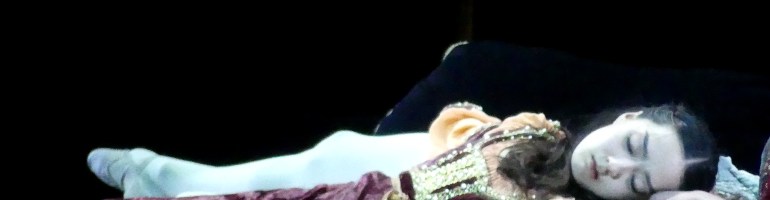
Fenella et Cléopold ont tout deux assisté à la représentation du 30 avril où Pablo Legasa dansait son unique date en Roméo aux côtés d’Hohyun Kang en Juliette. Ils vous racontent tout dans leur idiome respectif.

Cléopold : La Passion et l’Action
Roméo et Juliette. Représentation du 30 avril 2026
Après une représentation à haute teneur émotionnelle le 25 avril dans l’interprétation d’Inès McIntosh et de Jack Gasztowtt, on retournait à l’Opéra Bastille en se demandant si on serait capable de se passionner pour un autre couple.
Les attentes étaient néanmoins réelles. Pablo Legasa est sans doute le soliste masculin issu de l’Ecole de Danse du ballet de l’Opéra qu’on aura préféré cette dernière décennie : une ligne impeccable à la grâce presque féminine contrebalancée par une présence indéniablement virile, un phrasé musical somptueux et une singularité dans l’interprétation toujours captivante. Hohyun Kang, formée hors des murs de Nanterre, nous a conquis par sa volonté d’assimiler le style maison mais aussi par son charisme particulier. Legasa et Kang, distribués pour une unique date en Roméo et Juliette, avaient déjà été associés avec succès en début de saison dans le Rhapsodies de Mthuthuzeli November. Le couple fonctionnait mais on attendait de les voir dans un ballet plus abouti. Le moment était donc venu.
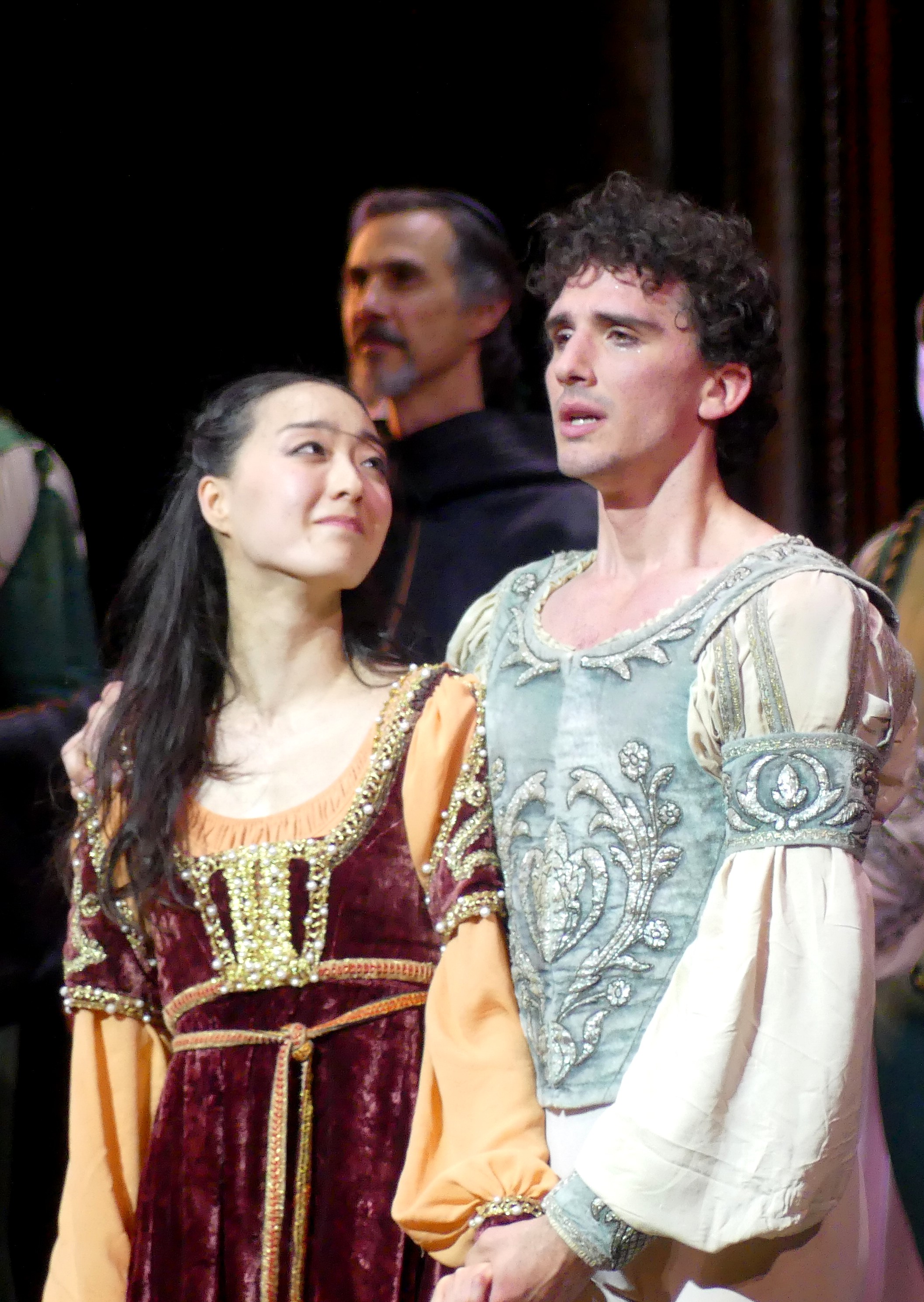
A l’acte 1, Pablo Legasa fait une première entrée presque discrète. Il incarne un patricien de Vérone aimable et léger lorsqu’il flirte avec Rosaline. Il est bon camarade avec Mercutio-Benvolio et autres comparses lors de la scène devant la demeure des Capulets.
Mais le danseur élégant rencontre sa partenaire et il se révèle soudain un interprète passionné. Cette première scène entre Roméo-Pablo et Juliette-Hohyun est palpitante. Les baisers sont goulus de la part du damoiseau. Dans les jeux, qui sont comme aimantées, les deux interprètes introduisent des variations de rythme. Legasa accomplit des doubles ronds de jambes qui sont à la fois ciselés (comme on peut l’attendre d’un danseur de l’Opéra de Paris) mais fiévreux (ce qui est plus rare dans la maison). De même, ses coupés-jetés prennent la dimension d’envolées spirituelles. De son côté, Hohyun Kang joue parfaitement l’indifférence polie à l’égard de Paris (Corentin Dournes) et l’attraction irrépressible qui la porte vers Roméo. Le partenariat des deux danseurs n’est en aucun cas uniforme. Il s’y loge des accélérations, de petites hésitations presque empruntées puis des moments d’accord spontané, de plénitude amoureuse. On a assisté à un parfait pas de deux de la découverte.
La scène du balcon capitalise sur ces belles prémices. Legasa paraît presque hésitant au début puis prend confiance. Il développe ses longues lignes et phrase sa variation comme un poème de l’aspiration. Les baisers sont désormais voraces. Kang se jette dans le pas de deux sans se ménager. Elle est une Juliette instinctive et résolue.
A l’acte deux, on se laisse porter par le badinage entre Roméo et ses amis. En Mercutio, Rubens Simon intègre la pantomime et la danse de manière naturelle et dessine un vrai personnage, mélangeant la facétie avec une certaine forme de réflexivité. On a presque du mal à dissocier Francesco Mura de ce même rôle alors qu’il joue Benvolio. Mais le trio que les deux danseurs forment avec la nourrice Sofia Rosolini est plein d’énergie et de drôlerie. La variation à la lettre de Roméo-Legasa montre toute l’exaltation amoureuse par la célérité de la danse. Là encore, on apprécie les variations de rythme et de phrasé qui communiquent l’état d’esprit du héros. On sort de la simple perfection technique grâce à une liberté et un naturel dans les ports de têtes parfois décentrés.
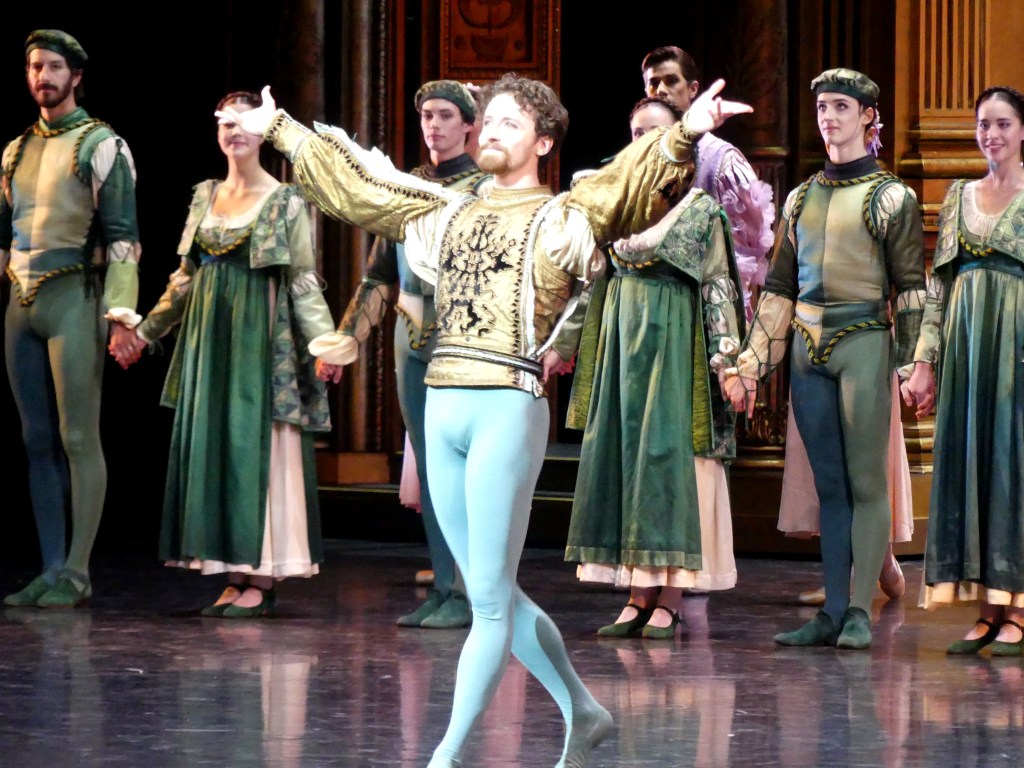
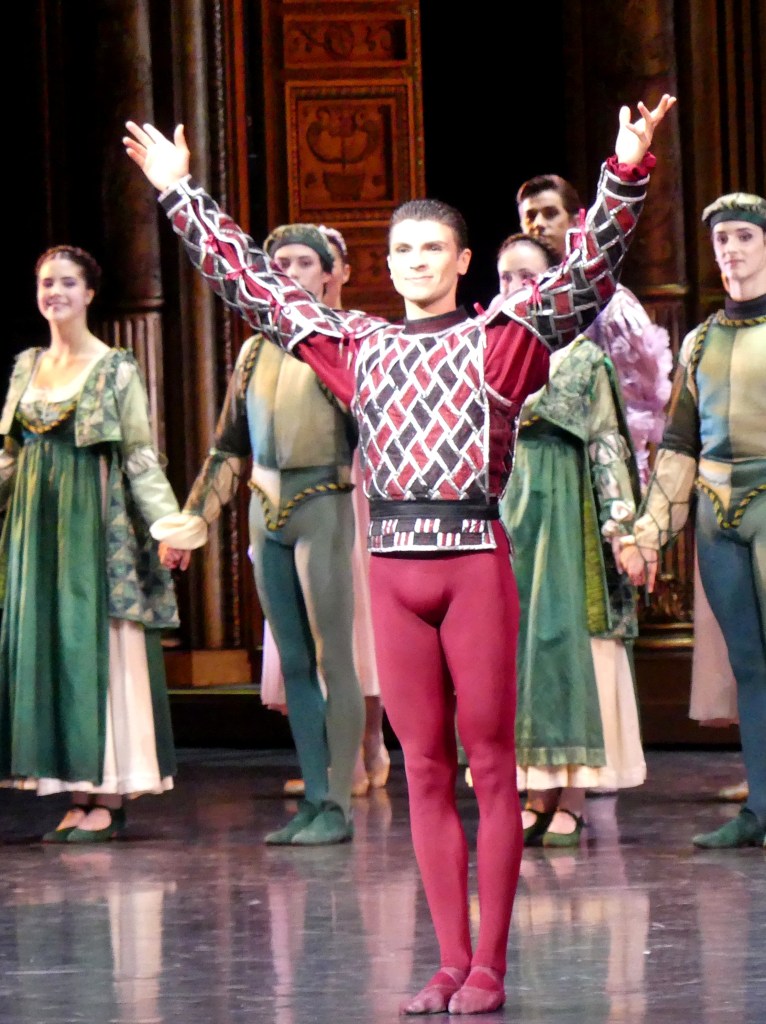
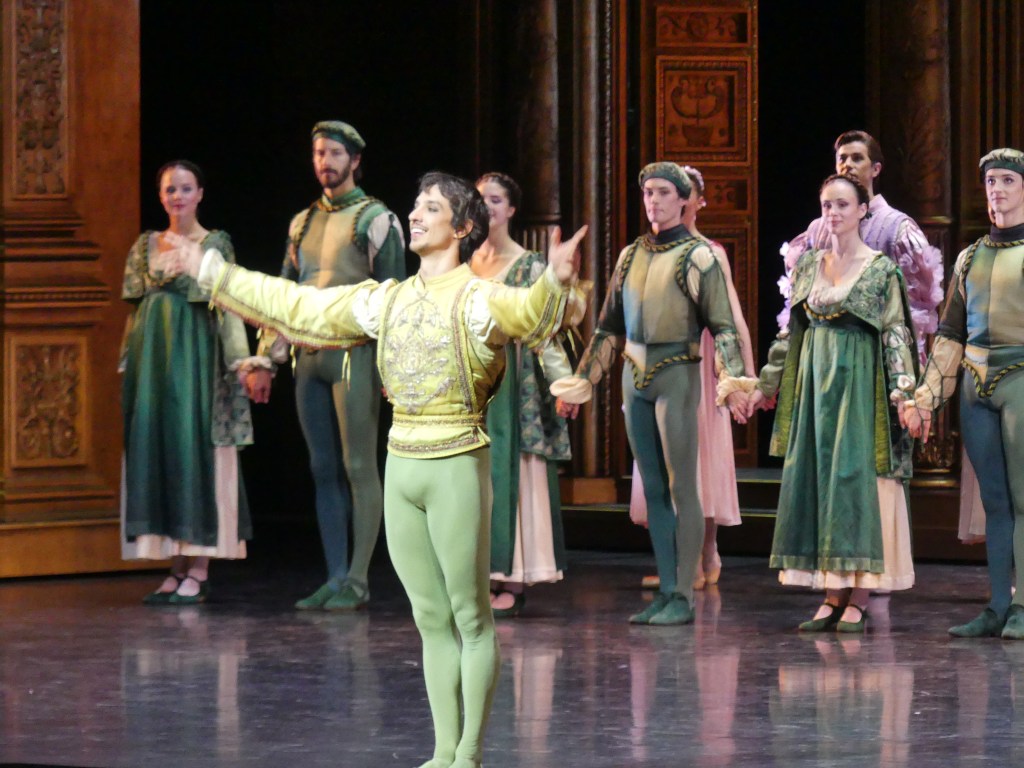
La scène de mariage réunit nos deux héros dans un unisson d’impatience amoureuse avant que le drame ne se noue. Les combats sont saisissants. Nicola Di Vico est un Tybalt concentré d’autorité. Il exsudait la haine des Montaigu dès sa première apparition sur la place de Vérone. Le combat avec Mercutio, très bien réglé, est donc violent à souhait. Le facétieux trublion meurt avec panache. Legasa dépeint très bien sa reluctance face au combat vengeur puis s’y jette avec rage. Tybalt poignardé s’écroule au sol d’une manière presque vériste tandis que Kang termine l’acte par une scène de folie au lyrisme presque russe.
L’épisode de la chambre qui ouvre l’acte 3 trouve nos deux héros dans un état d’esprit divergent. Tandis que Roméo-Pablo, qui a conscience de l’aspect inextricable de la situation, se jette de manière désespérée dans le pas de deux comme s’il avait la prescience qu’il ne verrait plus sa bien-aimée vivante, Juliette-Hohyun s’exalte d’une manière positive, semblant tirer sa force de la présence de son partenaire. Il y a quelque chose d’extrêmement poignant dans ce quiproquo. Le doute s’instille chez Juliette qu’après que Roméo ait sauté le parapet. Elle rencontre alors l’incompréhension furieuse de sa famille. Plus surprise que dévastée, elle se jette avec détermination dans la suite funeste de l’histoire.
Le rêve à Mantoue prend avec Pablo Legasa et Hoyhun Kang une vraie dimension de scène de rêve d’un grand ballet classique. Le désespoir qui suit n’en est que plus vibrant. Legasa se jette en arrière sans précaution dans les bras de Benvolio-Mura qui le rattrape magistralement, surtout si on considère la différence de gabarit entre les deux interprètes.
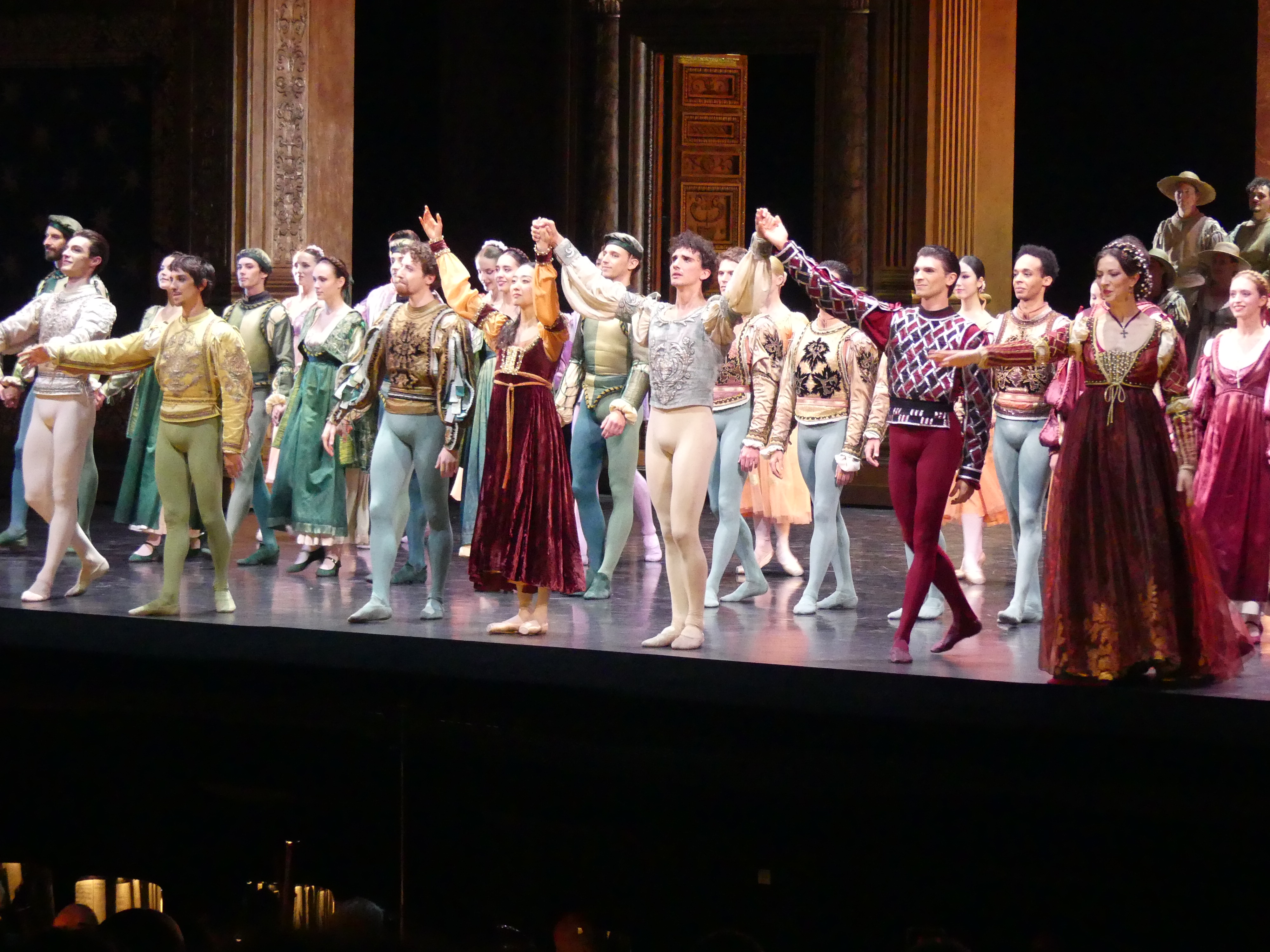
De la scène finale, qu’on a vu, reconnaissons-le, l’esprit un peu embué par l’émotion, on se souviendra de ce Roméo mystique débouchant avec tendresse le flacon du poison, viatique vers l’aimée qu’il croit défunte. Moins spirituelle mais assurément charnelle jusqu’au bout, Juliette passe sans transition de la joie sur le corps de Pâris au désespoir éperdu sur celui de son amant supplicié. Tout l’acte aura ainsi été sur le mode du malentendu et pas seulement la lettre de frère Laurent qui n’est jamais arrivée à bon port. On peut parfois s’aimer authentiquement et prendre des directions divergentes.
On aura en tous cas assurément été conquis par ce Roméo Passion et cette Juliette Action.
***************************
**************************************
***************************

Fenella : No flies on our patty-cakes!
Roméo et Juliette, Paris Opera Ballet, Opera Bastille, April 30, 2026. Choreography by Rudolf Nureyev, Music by Sergei Prokofiev, Sets and Costumes attributed to Ezio Frigerio.
“Foreswear it, sight, For I ne’er saw true beauty till this night.”
This cast kept the music dancing in my mind’s eye for more than a week. This time, the dancers wooed us by not performing as if they were still in the rehearsal studio. We were invited in to their club. This gang of youngsters was all about flirts and jokes, about how pattycake can become a serious game and, most of all, about how each kiss can evolve into its own narrative.
“Watch her place of stand, And touching hers, make blessed my rude hand.”
About five seconds after Pablo Legasa’s Romeo, ”quick to haste,” entered softly on cat’s feet, he set the stage for what was to come. I stuffed my notebook back into my bag. This performance, I knew, would be the one I remembered down to the last detail for a very long time. Critical distance begone! Even the cheapened “made to go on tour” decor stopped bothering me.
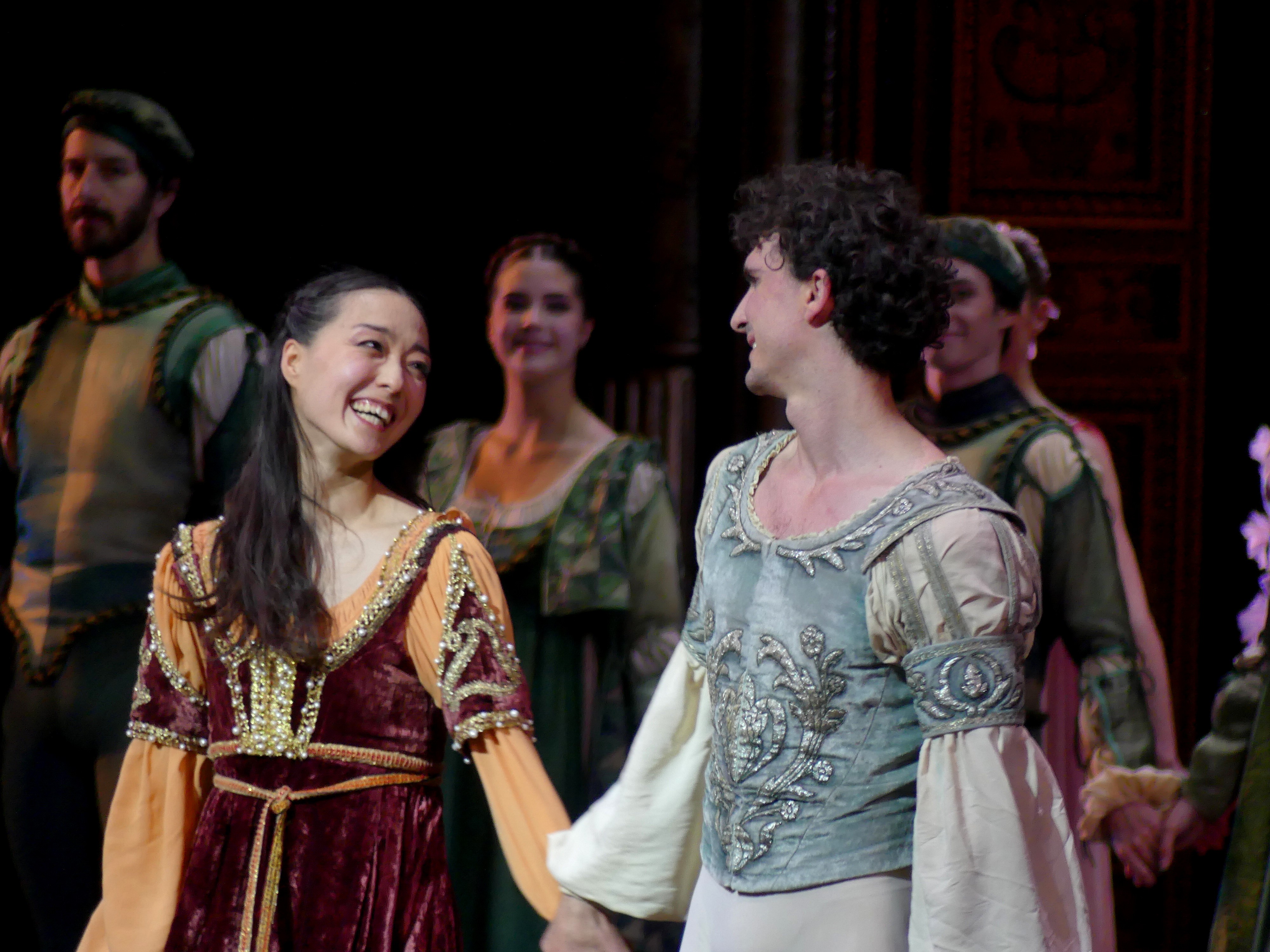
Pablo Legasa’s lissome Romeo kept opening his arms out and up from deep inside his chest. His dance unfurled in beautiful lines and balances that reached the limits of off-balance. He reminded me of Giambologna’s Mercury if only it could have started to move…but without any fuss or mannerisms. I’m having a hard time to describe the movement and persona I was watching: Opalescent? Limpid? Most of all he made dancing classical ballet look as if it were the way we all move, as if ballet were just another way of communicating a feeling, just like talking aloud.
Legasa was lucid about his Rosalind: yet another crush, but not much more. And Aubane Philberts‘s leisurely and delicately ironic Rosalind with a very “hey, girls, he’s not as bad as the other dorks” vibe, proved him right.
Nurse: “Thou wilt fall backward when thou comest to age.”
Hohyun Kang’s Juliet started out as a lively tomboy. No flies on her patty-cake with her cousin. Nicola Di Vico’s Tybalt clearly cherished her headstrong spirit – obviously he has seen her getting into mischief before – and he does not worry all that much that this Juliet is a bit all over the place, unimpressed by this other man/arranged marriage/wedding dress. You get the feeling that Tybalt agrees with her and thinks Paris is a stick.
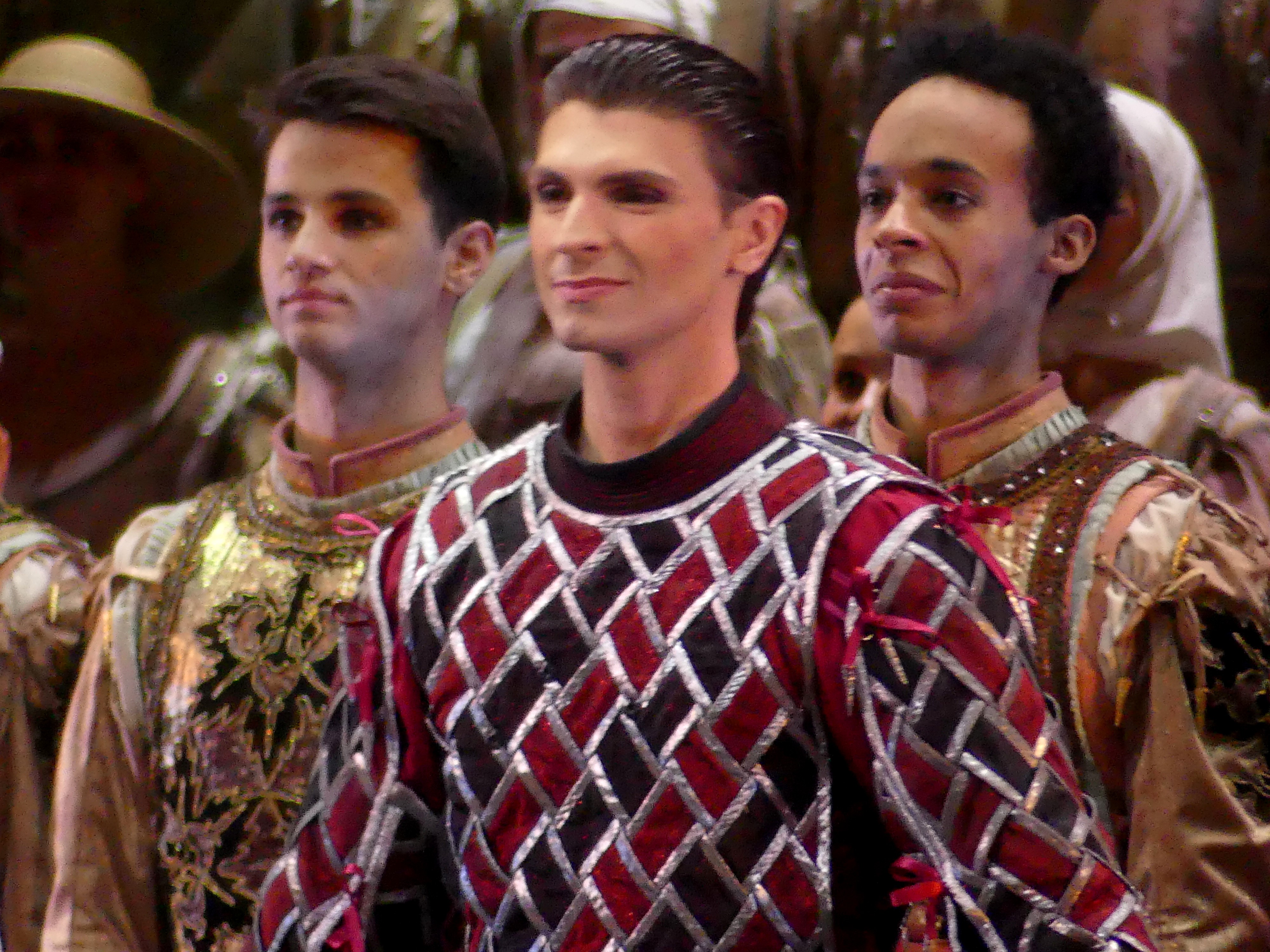
Things really started to go “boom” in the ballroom scene even as Legasa and his soul-mate, Hohyun Kang, a dancer who has been catching the light and my attention ever since she joined the corps de ballet –remained aristocratically well-bred and seemingly reserved, at first… How to say it: hints of all the drama that was to come were subtly and deftly planted with every gesture and every response from the start.
Every time he encountered Kang’s Juliet – his first solo in the ballroom, the first moments of the balcony scene – Legasa/Romeo’s phrasing would accelerate to almost just beyond the music. It was if his heart, as his legs, had started beating faster.
Juliet: “For saints have hands that pilgrim’s hands do touch. And palm to palm is holy palmer’s kiss.” Romeo: “If I profane with my unworthiest hand/ This holiest shrine, the gentle sin is this.” Stage direction: “Takes her hand.”
Legasa and Kang just fit and flow together. Everything about their partnership could be described as relaxed acceleration. A kind of call and response of weightless yet weighty lifts evolved. This couple’s interaction and manner of using points of physical contact to coil inwards and then spring forth pulled me into their narrative. Here, the leads gave us the illusion of spontaneity that had been lacking the three previous performances I saw. You can over-rehearse, you can under-rehearse…or you can rehearse just enough to feel free on stage. Nothing here was over-thought. Legasa and Kang’s duet was definitely in the vein of that never-forgotten first night where you discovered that you just could not stop talking to each other.
Romeo: “See! How she leans her cheek upon her hand/O! that I were a glove upon that hand/That I may touch her cheek.”
Her hands. Her face. I was drawn to the way Hohyun Kang took the initiative, something Nureyev himself imagined for his Juliet. She does not just lean in for kisses, she sparks them. More than that, she etched the theme of “palm to palm” into highlighting her every interaction with Romeo, the Capulets, as well as the Paris, in different measure. Each time nuanced, the pressure of Kang’s hands upon anyone she was interacting with shaped and defined the situation at hand.
Tybalt: “Mercutio, thou consort’st with Romeo.”
Mercutio: “Consort! What? Dost thou make us minstrels? […] here’s my fiddlestick, here’s that shall/make you dance.”
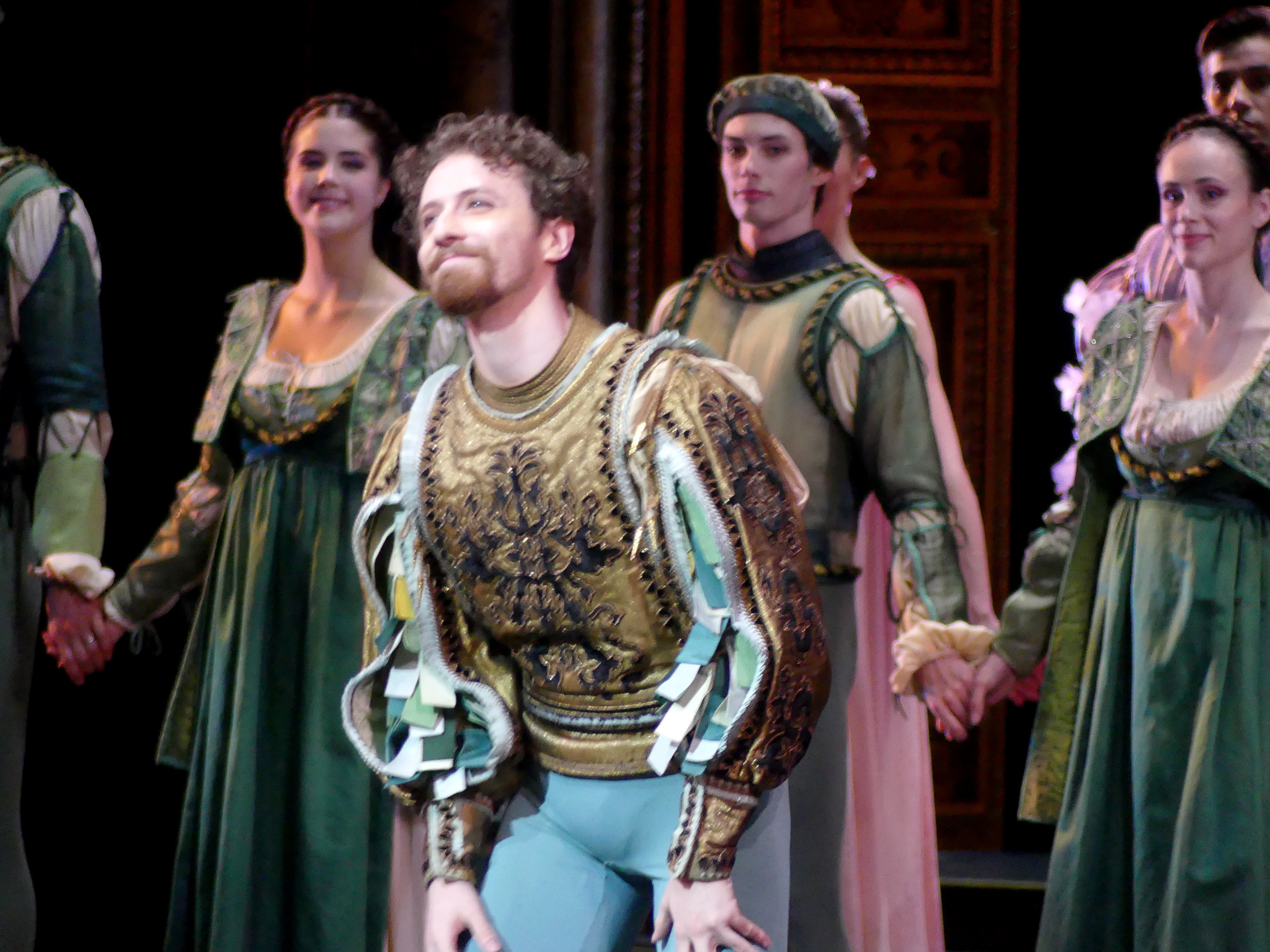
Of all the Mercutios I’ve seen so far this run, Rubens Simon’s luscious and ribald Renaissance man took “extraverted” to a new level and gave a sly gift to the audience.
Here’s the beauty: you in the audience could adopt this Mercutio into whatever your worldview and root for him. A macho straight bloke always about needling Tybalt for being a closet sissy [word used advisedly]? A dear who has been so out and so loud and so proud in the city square for so long that by this point everyone in Verona takes his fabulousness for granted?
So what was Nicola de Vico’s Tybalt, a vivid princox [aka “conceited ass.” I confess, I used a dictionary to look up the meaning of Shakespeare’s evocative word] supposed to do with a guy that everyone said was cooler than he was?
When Simon’s Mercutio, about to die first, lurches into Romeo’s arms and kisses him feverishly, it’s obvious that this guy’s guy loved his pal no question. And made you wonder about the subtext. The mystery – just how far did they go in their love for each other? — made us all the sorrier to see Mercutio go. The ambivalence is in Shakespeare, too, but it takes refined scenic intelligence to craft such a multifaceted and bewitching creature. Here, one act early, Rubens Simon’s Mercutio stole that famous line, “Thus, with a kiss, I die.”
“Arms, take your last embrace.”
Legasa’s Romeo just wanted to be left out of all this dueling ego family honor crapola. The manner in he responded to the call to battle and then in which he thrust aside Tybalt’s – and his own – swords was no way as pacific as my prior Romeos. No hint of “why can’t we still be friends?” It was definitely “è basta with all of your stupid nonsense.”
The only thing that slightly bothered me early on had been Francesco Mura, miscast as Benvolio. As Mercutio on April 7th, he played a bewitching scamp. But Shakespeare’s Benvolio is slightly older than these messy boys. Yet Mura’s boyish Benvolio, step by step, grew into his own form of of gravitas.
Nureyev had devised an athletic scene of despair, an insert that does not appear in any other ballet productions using the Prokofiev score : a long scene where Romeo, having fled to Mantua, first dreams of Juliet and then abruptly reacts to being told by Benvolio that Juliet is “dead.”
During the backwards hurtling leaps and falls that ensue, Mura proved a masterful and reactive partner to Legasa. The pain flowed, spewed, and anchored the drama to come.
“O, she doth teach the torches to burn bright […] beauty too rich for use, for earth too dear […] Did my heart love till now?”
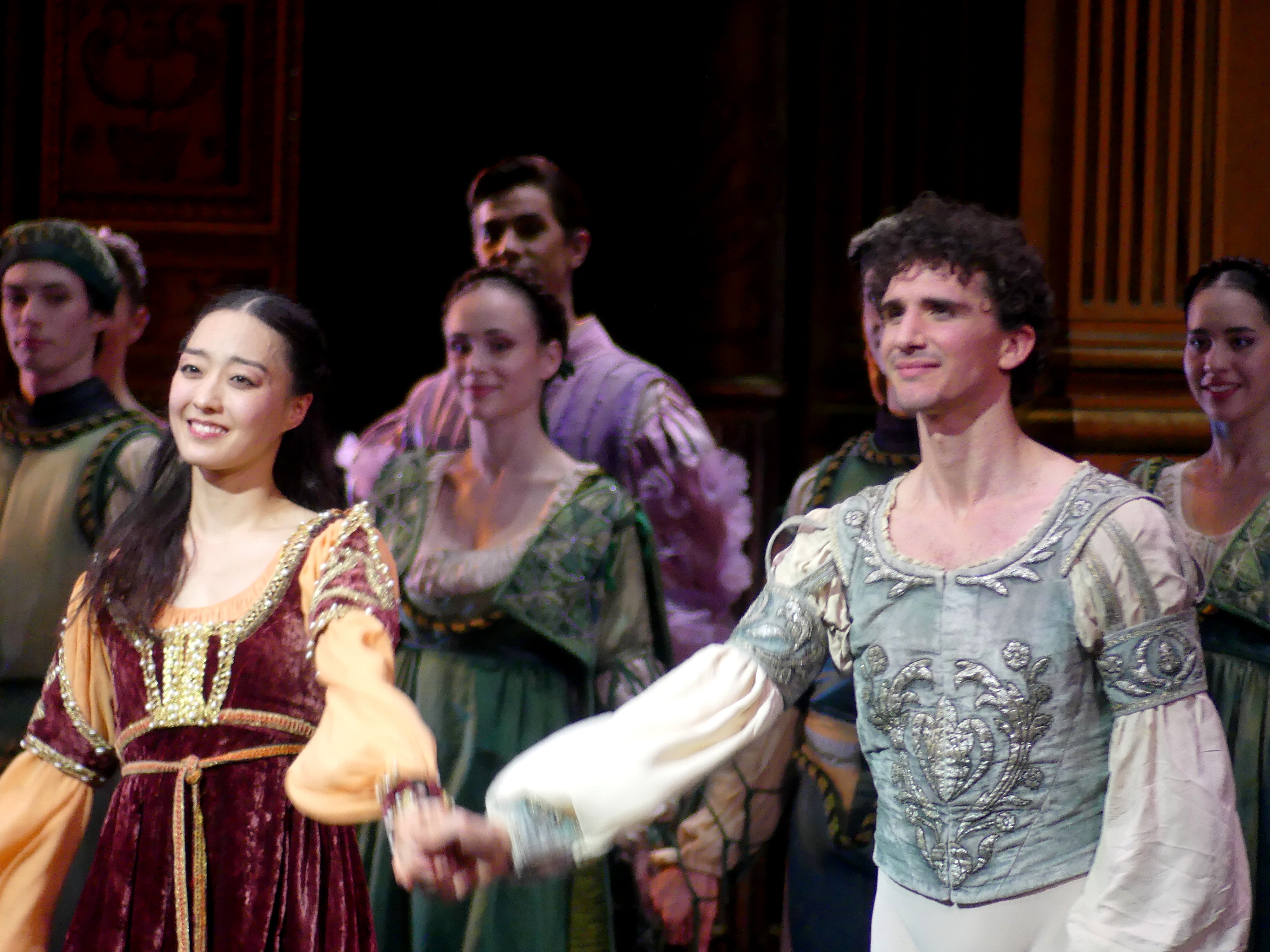
At the start of Act Three, waiting on her bed and trying to think it though, all the glorious light had gone out of Juliet’s face. And then her determination to not to let her fate be dictated by others took over. Hohyun Kang’s enormous eyes set sight on all that she wanted and then upon all that she hated, with a startling and magnetizing intensity. She fought back against all of this, against all of them, right up until the end.
 James
James Albertina
 Cléopold
 Fenella
 Les Balletonautes
 Mini Naila

Je suis heureuse de lire votre commentaire » embué » car mes yeux l’ont aussi été sur cette représentation; moi qui ne vais plus guère voir des spectacles qui souvent m’ennuient, n’aurais raté pour rien au monde ces deux danseurs qui sont actuellement mes préférés maisons et qui m’ont fait vibrer toute la soirée. Vous lire me remet en mémoire l’ensemble de cette soirée, et je vous remercie pour cela. J’aurais bien aimé les voir sur Bayadère….
Merci pour ce retour, Valérie! Heureux de constater que nous avons ressenti des émotions similaires.