
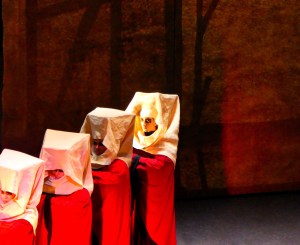
 Notre Dame de Paris (Maurice Jarre, Roland Petit), Ballet de l’Opéra de Paris. Opéra Bastille. représentations des 9, 10, 23 et 30 décembre 2025.
Roland Petit était dans le ballet narratif un maître de la réduction des œuvres littéraires à leurs caractères essentiels. Dans Carmen, en 1945, toute l’action était ainsi recentrée sur les deux anti-héros, Carmen et Don José. Pour Notre Dame de Paris, Petit évacue une myriade de personnages hugoliens, Pierre Gringoire, le poète impécunieux, Jehan, le frère de Frollo, sœur Gudule, l’emmurée vociférante, Fleur de Lys, fiancée de Phoebus et même …Djali, la chèvre qui lit l’avenir. Reste un quatuor de personnages – Quasimodo, Frollo l’archidiacre tourmenté par le désir, Esméralda, l’objet de son désir et Phoebus, jouisseur impénitent au physique avantageux- entouré de la foule parisienne –le corps de ballet- protéiforme et foncièrement labile.
L’équilibre des quatuors dans ce ballet Notre Dame de Paris est donc essentiel pour créer un récit continu et palpitant. Las, pour cette première reprise effective depuis neuf ans, l’Opéra semble avoir chichement compté ses effectifs de solistes; un comble quand on sait combien le chorégraphe aimait à travailler avec les dernières stars du moment. La majorité des têtes d’affiche de la maison étaient en effet concentrée sur le programme néo-classique – moderne à Garnier et seulement quatre distributions alternaient sur la série de Bastille. Doit-on y voir le début de l’effacement de Petit du répertoire ? On pourrait le craindre, l’Opéra étant spécialiste incontesté du syndrome de l’ardoise magique.
Les résultats sont donc mitigés en terme d’homogénéité même si on aura eu moult sujets de satisfaction en termes d’individualité.
*
* *
Paradoxalement, c’est le quatuor le plus « étoilé » qui nous a le moins entraîné dans son sillage.
Le 9 décembre, en Quasimodo, Hugo Marchand met trop l’accent sur l’angularité de la chorégraphie au détriment de l’émotion. On voit le challenge que l’exécution des pas représente mais on n’y voit guère qu’une manifestation de maîtrise un peu vide. Dès la fête des fous, le bossu de Marchand ne dégage aucune fragilité. On doit attendre la scène du pilori où, en partie grâce à sa taille, Marchand pris en main par six sbires ressemble à une figure christique de la Passion, pour se laisser un tantinet émouvoir. Amandine Albisson introduit en revanche dans son Esmeralda un vrai équilibre entre le moelleux aguicheur et la sensibilité. Sa confrontation avec Frollo après sa première variation est subtilement construite : elle passe de l’attitude bravache et narquoise à l’incrédulité puis à la peur. En face d’elle, Pablo Legasa est un archidiacre reptilien. Avec ses pliés infinis, ses jetés à la seconde aériens et déconcertants de facilité, il incarne moins un être humain qu’une allégorie du cauchemar. Cette posture est particulièrement effective dans la scène des tours de Notre Dame qui devient alors une véritable scène de possession. En Phoebus, Antonio Conforti peine de son côté à convaincre. Le costume du martial tendron, l’un des plus mémorables du ballet avec son carré bleu roi et ses bandes de cuir, directement inspiré de la célèbre collection Mondrian que Saint-Laurent dessina en 1965, ne convient pas à tout le monde. Il sied plutôt à des danseurs qui ont le buste en V, or Conforti en a un plutôt droit. La perruque blonde, aussi solide et luisante qu’un casque de motard, n’aide pas à donner au danseur une aura de jeune premier. C’est triste car Antonio Conforti est un véritable artiste. On voit qu’il a essayé de montrer quantité de choses dans ce rôle court mais pivot. Mais dans ce cas, trop d’intentions peuvent provoquer un effet inverse à celui qui était recherché. Conforti tire donc son Phoebus vers l’Escamillo de Carmen. Ce type de personnage à la masculinité exacerbée jusqu’au ridicule fait bien partie du répertoire de Roland Petit, mais ils n’a rien à faire ici. Phoebus doit d’abord paraître héroïque et attirant pour mieux ensuite, durant la scène de la taverne, lever en partie le voile sur son abjection. Ici, on se demande ce qu’Esmeralda peut bien trouver à ce bellâtre.
On est donc cueilli un peu à froid par le pas de deux entre Esmeralda et Quasimodo à l’acte 2 même si on finit quand même par se laisser toucher par la fluidité du partenariat. Mais, il faut bien le dire, en dépit d’un corps de ballet énergique lors de l’attaque de la cathédrale et une scène des battements de cloche avec le cadavre d’Esmeralda bien amenée, on est sorti de la représentation attristé d’être tellement resté extérieur à l’histoire.
* *
Le 10 décembre, Jeremy Loup Quer se montre beaucoup plus humain que Marchand. Il parvient à mélanger l’effrayant (magnifié par sa haute stature) et le touchant. Quer présente une option intéressante : il se redresse parfois de tous ses grands abattis, main vers le ciel pour montrer son aspiration à la normalité puis est comme rattrapé par la difformité, qu’il montre clairement sans la figer dans des positions. Durant la fête des fous, il instaure une vraie interaction avec le corps de ballet. Dans la scène de l’église, son adoration pour Frollo en train de dire la messe est patente.
Roxane Stojanov est également parfaitement convaincante en Esmeralda : très séductrice dès sa première variation, elle accentue les incongruités de la chorégraphie : bascules cambrées sur pointes, poses sémaphoriques égyptiennes, appels du tambourin en direction du corps de ballet. De surcroit, elle module subtilement la célérité de sa danse.
Le couple Quer-Stojanov fait montre d’une belle alchimie qui culmine dans le pas de deux de la Tour. Quasimodo-Quer, timide et énamouré se courbe et regarde la belle Esmeralda-Stojanov par le dessous. Celle-ci appuie fort sur son épaule pour la redresser et semble lui dire de regarder le monde. Roxane Stojanov parvient à rester sur le fil : jamais dans la séduction calculatrice. Lorsque le jeu devient trop intense et qu’Esmeralda retire sa main, le désespoir de Quasimodo n’en est que plus authentiquement déchirant.
On tient donc un bon couple pour cette Notre Dame de Paris. Las, le Frollo de Thomas Docquir ne convainc pas. Doté d’une belle ligne, le danseur rend bien en photo mais aplatit en fait la chorégraphie par manque de phrasé. Il n’introduit aucune suspension ni accélération dans sa danse. De plus, ses mains, centrales dans ce rôle, manquent totalement d’énergie : les étranglements simulés de la scène de l’église, les coups de poignards de la scène de jalousie ou les imprécations du procès ratent ainsi leur effet. Le pas de trois avec Phoebus (toujours Conforti) est donc un long moment d’ennui.
On sort néanmoins satisfait de cette soirée. Jeremy Loup Quer et Roxane Stojanov ont eu le dernier mot. Quer se montre extrêmement émouvant au moment de la mort d’Esmeralda. Il sourit d’abord au corps supplicié avant de fondre en larmes et de le décrocher. Lorsqu’il présente le corps de sa partenaire sur le proscenium, on l’entendrait presque nous dire « Pourquoi ? ».
* *
Le 23 décembre, Docquir ne semble toujours pas avoir trouvé sa voie en Frollo et Sae Eun Park accomplit une première variation peu convaincante. Trop légère, pas assez dans le sol, elle croit compenser en présentant la gestuelle spécifique à son rôle (notamment le haussement d’épaule suivi d’un tendu du bras opposé ou encore les jetés finis à genoux) et échoue. Faisant face à un Phoebus au physique plus adapté et à la belle énergie, Mathieu Contat, elle ne se montre pas spécialement à l’aise dans le partenariat.
Pourtant, on finira par se laisser gagner par l’émotion. Francesco Mura est en effet un Quasimodo extrêmement attendrissant. Il met l’accent sur la juvénilité de son personnage là où Quer paraissait plus mûr. Ce bossu, presque encore un adolescent, cherche à plaire à la foule dans sa variation de la Fête des Fous. Mura dissocie intelligemment le côté de la bosse, à la gestuelle contrefaite, et le côté préservé de son corps où il montre ses bonnes manières. Pendant la scène du pilori Quasimodo-Francesco tressaute de toute l’énergie du désespoir. La vue de ses bras bringuebalent le long du podium à la fin de cette scène de tabassage mécanique éprouvante nous laisse l’œil humide. Et on est comme emporté par l’inattendu moment d’intimité créé par Mura et Park lors du don de l’eau.
Cette subreptice complicité se confirmera et fleurira même lors du pas de deux de la Tour. On a longtemps reproché à Sae Eun Park son manque de réactivité face à ses partenaires. Désormais, son adhésion à un rôle peut au contraire changer du tout au tout en fonction de sa connexion avec l’un d’entre eux. Dans ce cas présent, on assiste à un poignant jeu d’enfant où l’éventualité de sentiments plus romantique n’est pas entièrement à exclure.
Partie sur cette lancée, Sae Eun Park meurt de manière saisissante, mimant parfaitement les fibrillations du corps strangulé. Mura, quant à lui, recueille le cadavre avec une telle tendresse qu’on sort du théâtre un peu hébété d’émotion.
* *
C’est pourtant le 30 décembre qu’on assiste, avec une distribution de danseurs du corps de ballet, à la représentation la plus homogène. Antonio Conforti, qui ne nous avait pas convaincu en Phoebus, fait mouche en Quasimodo. Il dépeint un être blessé par la méchanceté ambiante, qui du coup regarde toujours vers le sol, le cou cassé. Durant la fête des fous, il met du temps à comprendre ce que la foule colorée lui veut. Son ultime et tardive transe de bonheur est interrompue par Frollo, interprété par Alexandre Boccara.
Dans le rôle de l’archidiacre, le danseur introduit une sorte d’énergie nerveuse. La main au tambourin a vraiment l’air de s’être affranchie du reste du corps. La scène de l’église, si longuette avec Docquir, introduit de nouveau à merveille la variation d’Esmeralda.
Dans le rôle de la gitane, Claire Teisseyre, coryphée récemment entrée dans la compagnie mais soliste d’expérience sous d’autres cieux, allie à merveille le moelleux et l’acuité de certains gestes. On pense à la première main-tambourin, aux jetés parcourus la pointe glissant au sol ou encore aux fermetures cinquièmes en pose hiéroglyphique. Ils campent à merveille l’image de la gitane libre. En revanche, ses grands jetés, d’une grande pureté d’exécution, parlent de la juvénile innocence de son personnage.
On se rend compte que pendant la variation, Quasimodo-Conforti semble pour la première fois relever la tête afin de l’admirer.
La narration parfaitement construite par Petit reprend ses droits. Dans Phoebus, Nathan Bisson prend l’air de rien des poses d’Apollon du Belvédère. Il joue parfaitement le bellâtre jouisseur, à l’aspect héroïque mais au comportement abject.
Avec ces trois artistes, le pas de trois du meurtre reprend toute sa place dans le ballet. On imagine enfin que la scène se passe dans l’obscurité d’une chambre où Frollo attend pour frapper.
A l’acte 2, la scène des cloches est véritablement habitée par Conforti. On retrouve les pirouettes en dedans à la cheville très rapides de l’acte 1. Mais là où, pendant la scène du supplice, leur énergie traduisait l’affolement, elles expriment ici l’exaltation provoquée par les vibrations du bourdon.
Le pas deux entre Esmeralda et Quasimodo pourrait se lire comme une déclaration d’amitié. Claire Teisseyre se montre presque maternelle avec son Quasimodo. L’ensemble du pas de deux est marqué par une grande fluidité du partenariat et par une belle musicalité. Dans la dernière section de la berceuse, Conforti est peut-être le seul qui s’approche de la volonté de Roland Petit de ne pas voir d’arrêt entre le balancement d’Esmeralda endormie et le moment où elle est posée sur le sol. A la toute fin, Conforti parvient également à laisser en suspension sa pose redressée avant d’être récupéré par l’infirmité. C’est cette même musicalité qui lui permet durant la scène finale du ballet de faire basculer sa ballerine systématiquement en synchronisation avec le son de cloche. Cet ultime moment nous aura véritablement travaillé aux tripes.

Le 30 décembre : Nathan Bisson (Phoebus), Antonio Conforti (Quasimodo), Claire Teisseyre (Esmeralda) et Alexandre Boccara (Frollo).
*
* *
Il aura fallu attendre mais on a pu finalement, grâce à des interprètes encore peu élevés dans la hiérarchie, voir une représentation quasi-idéale du chef d’œuvre de Roland Petit. Espérons que, lorsqu’ils auront gravi les échelons comme on le leur souhaite, ils daigneront reprendre ces rôles lors d’une hypothétique reprise.


 James
James Albertina
 Cléopold
 Fenella
 Les Balletonautes
 Mini Naila
 Les Balletonautes