
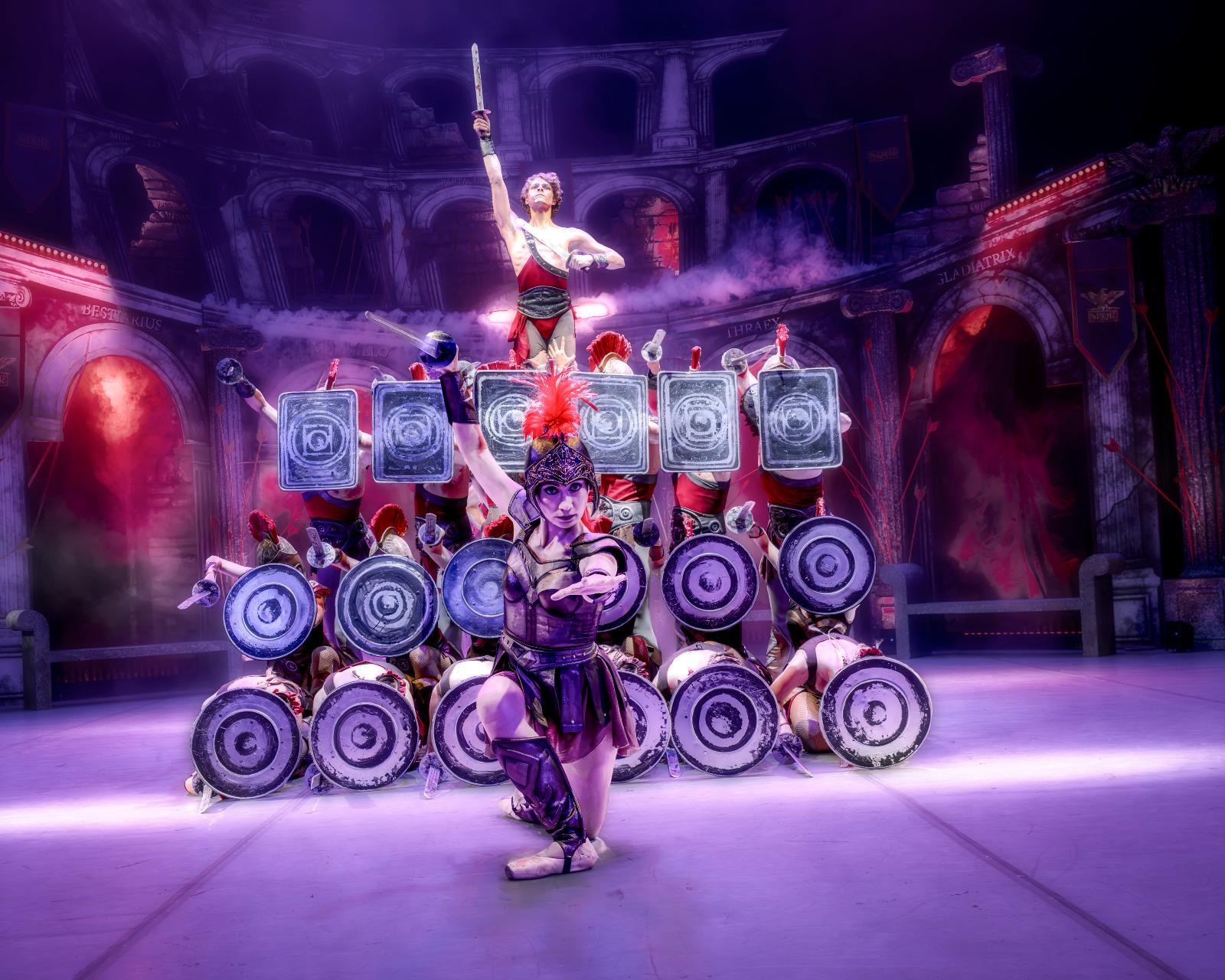
I must admit that I have had a particular inability to take anything “Roman gladiator” seriously ever since that Saturday morning when Bugs Bunny encountered a Martian decked out in full Spartan gear, replete with scrub-brush-topped helmet, on my parents’ old TV. That goes for films as well as for ballet. So, what was I thinking as the Varna State Opera Ballet company’s Spartacus was about to begin? Uh oh.
But the desire to giggle quickly faded as I got swept up in an unusually lively and absorbing piece of total theater. On the night of July 17th in Bulgaria, Sergey Bobrov’s intelligent and subtle rethinking of an old, and odd, ballet finally convinced me that Spartacus may not be such a bad subject for a ballet after all.
While this choreographer’s training is rooted in Soviet-era hyper-athleticism and the explosive Moiseyev school of folk-dance, he gives them new verve and focus. His intelligent mélange — to which he has added a verismo approach to stage fighting, an incredibly complex vision of partnering, as well as a refreshing rejection of the old-fashioned hero/villain paradigm – serves to create a tightly narrated and endlessly inventive ballet that sweeps us along through two swift acts. The minutes of music cut from Khachaturian’s original 1954 score? I didn’t miss them at all.
This is the first time I’ve ever sat through a Spartacus with neither a sigh nor a yawn.
Bobrov is abetted in his endeavor by a vigorous company of polished dancers who share such a coherent style that you cannot tell which ones were trained in Europe or South America rather than Russia. My admiration for them only increased when, during an unexpectedly long intermission, the audience learned that during the entire first act the stage floor had been slick with condensed water due to a freak climate event. I mean, as wet as in “I just dumped three buckets on the floor.” (This would continue to be the case during Act Two, despite the heroic efforts of the cleaning crew). These kids were risking their necks, but no one out in the audience saw anything other than a committed and absorbing performance. The choreography, the narration, was that strong.
Historical Context:
The saga of the Third Servile War that ended in a bloodbath in 71 BCE, as later recounted by Plutarch and Appian, is fairly straightforward. Spartacus, a proud Thracian reduced to the status of slave-gladiator, instigates a small revolt which ultimately swells into an improvised army of around 70,000 angry men. The Romans are gob-smacked. It is noted he has a wife. His nemesis is praetor Marcus Licinius Crassus, an ambitious and brutal general, future consul of Rome. These two men have good reasons for wanting to kill each other. Although he outsmarts and outfights the Romans numerous times, to the point of almost taking out Crassus himself, in the end Spartacus was certainly killed. His body was never found; we only know that 6,000 of his followers – which included anyone from household slaves to fellow gladiators to shepherds who had just had enough – ended up crucified and left to rot all the way down the Via Appia.
History of Ballet Context:
Aram Khachaturian had composed a quite catchy Lenin-Prize winning ballet score in 1954. The subject was a clever choice, given that Spartacus had been one of Marx’s great heroes in the history of class struggles. It would be first choreographed by Leonid Jacobson for the Bolshoi in 1956. But Jacobson’s Fokine-correct abandonment of pointe shoes in the service of realism was not appreciated. Then Igor Moiseyev tried his hand at one in 1958. Ten years later Yuri Grigorovich and the Hungarian László Seregi simultaneously produced their own still-performed readings, both of which I have seen on stage.
When I first saw the Grigorovich version of Spartacus as a teenager during a Bolshoi tour to New York, I was perfectly aware that this tale of a doomed slave uprising in Ancient Rome was a piece of Agitprop, created by a man of his time and place. But I was willing to give it try.
The many things I remember I disliked about his ballet were confirmed during a Bolshoi tour to Paris in 2008: its Manichaeism; its reductive politics (it should not take three hours to illustrate the existence of slave/master and proletariat/bourgeois). Its extreme gendering also really got up the nose of this feminist: there was a muchness of manly men, and then there were “ze vimin,” also either good [wailing females in chiffon waving their arms about] or just bad [scheming hetaerae stabbing their pointe shoes into the floor]. Overly aestheticized and stylized stage battles and the etcetera of what has long come to be known as “Soviet Style Acrobatics” left me cold. It was loooong .
Seregi’s version for the Budapest Ballet seemed mildly less didactic, softer, with more focus on private drama. What I vaguely remember (it’s been a few decades) is that the subtext was an easy read: “the Russians now do unto Czechs and Hungarians as the Romans once did to their colonial subjects”.
Good Guys/Bad Guys
One of my problems with the Grigorovich had been the paucity of vocabulary, and even how absolutely every turn or combination got done to the right.
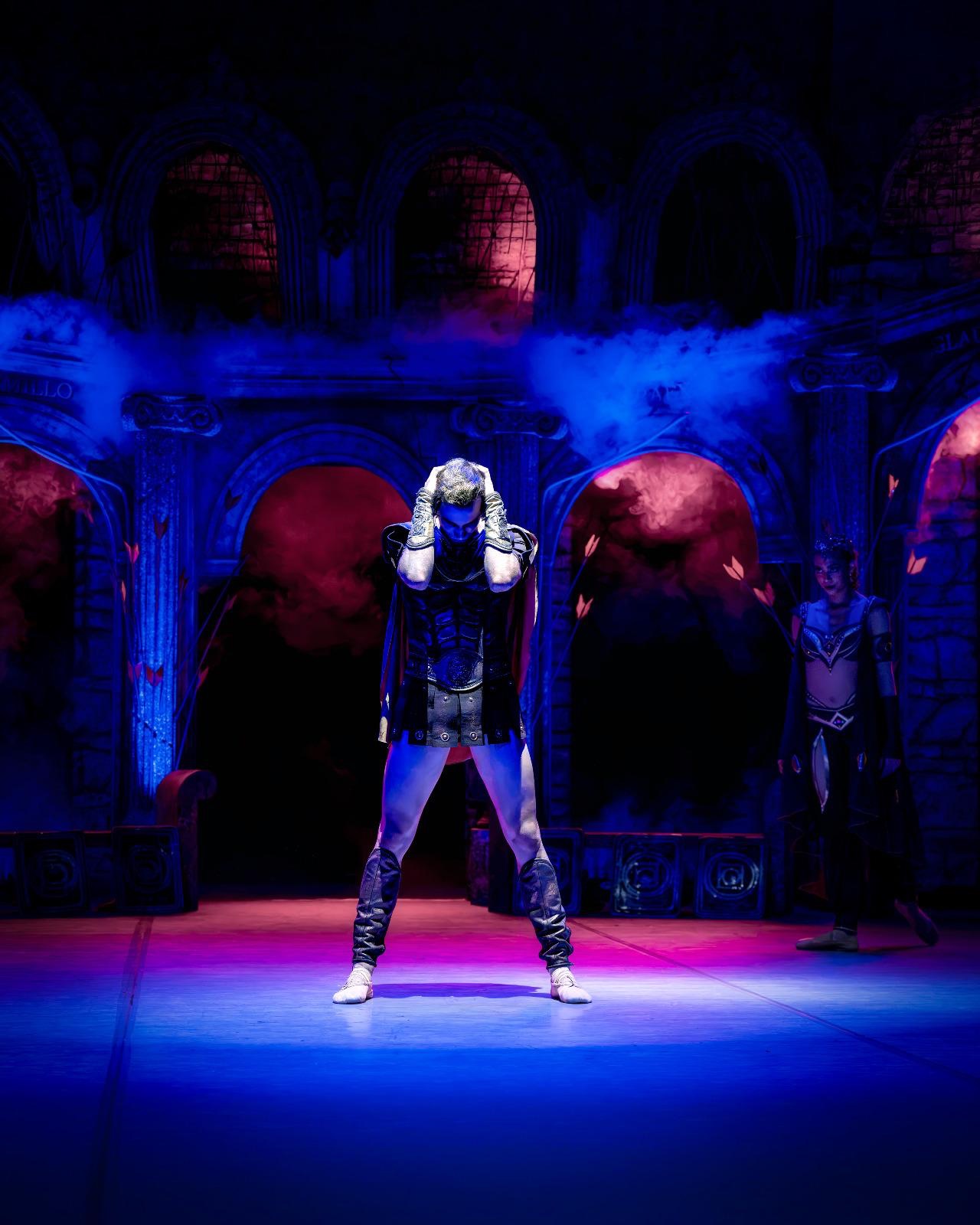
Spartacus? A lot of head-clutching and splayed-finger angst, plus superfast chainés or rabid pirouettes to signal torment. A steady dose of grands jetés: regular, scissored, en tournant. Another problem was that Crassus the Roman General’s vocabulary didn’t differ all that much from Spartacus’s, down to the fist-clenching, the pop-out jumps, and those explosive folk-dance leaps where arms, legs and torso all arch backwards.
In Bobrov’s new Spartacus – despite the use of a full dose of classic acrobatics and heroic bouncing around — the immense inventiveness he brings to combinations means that the choreography – even when those vehement pirouettes take off — never got predictable, boring, stale. Every character had their own vocabulary. Not once did I feel a dance was being done simply because thirty-six bars of music needed to be filled.
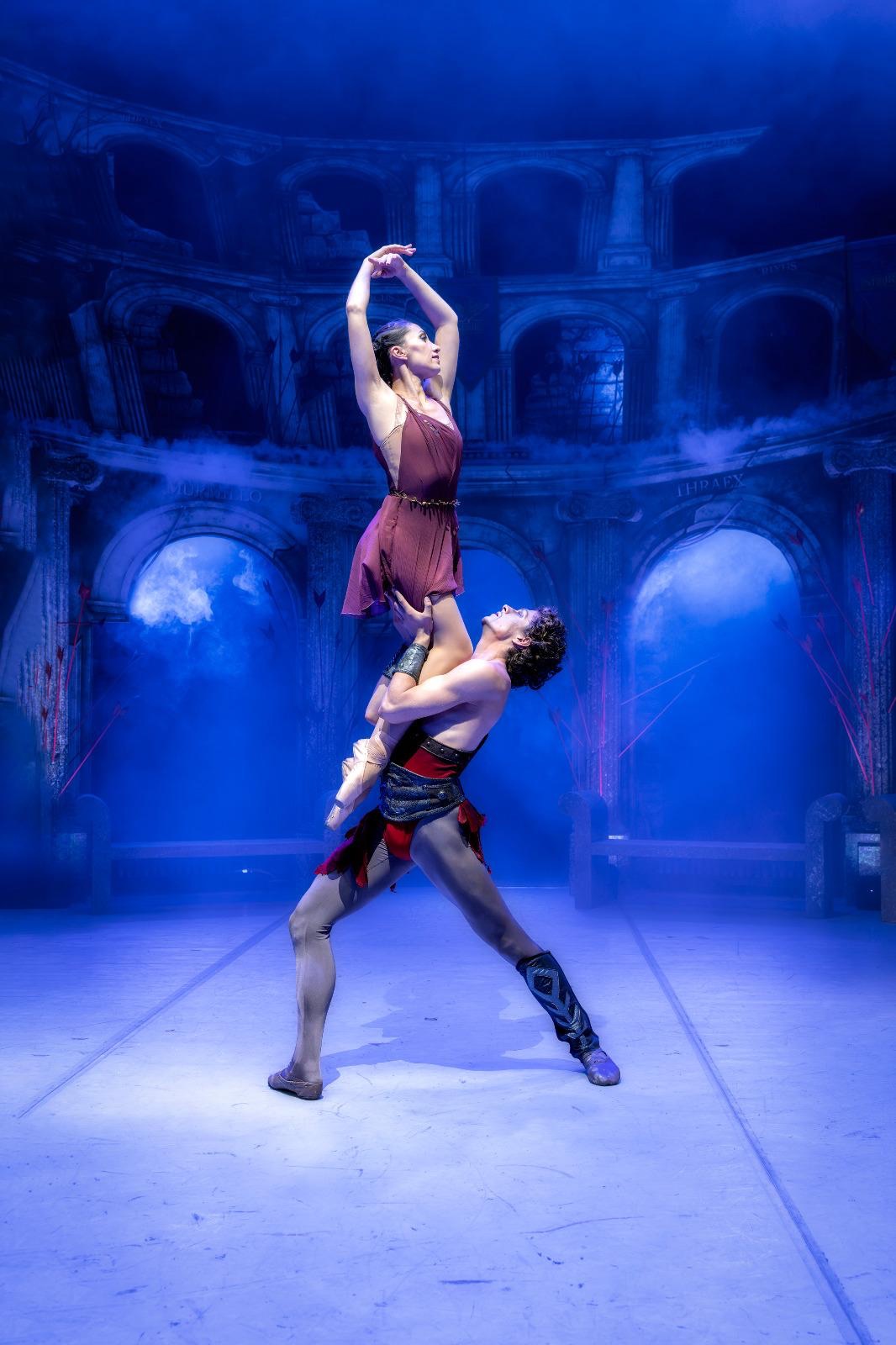
That new thrills that can happen onstage is rare, and I praise Bobrov’s pursuit of innovation. He keeps reimagining the classic flying configurations that we in the West have oohed and aahed about ever since our first look at “Spring Waters”. But he builds upon the potential of last-second catches and holds to the point that you no longer remember which way is up or down. The variety proved energizing. My notebook ended up full of question marks. What could these things possibly be called? Chair lifts? Lap lifts? Scoop lifts? Tumble lifts? Even when Spartacus ends up only dancing with a veil (attached to…I’m not telling), the fabric responds to him and seems to be dancing itself.
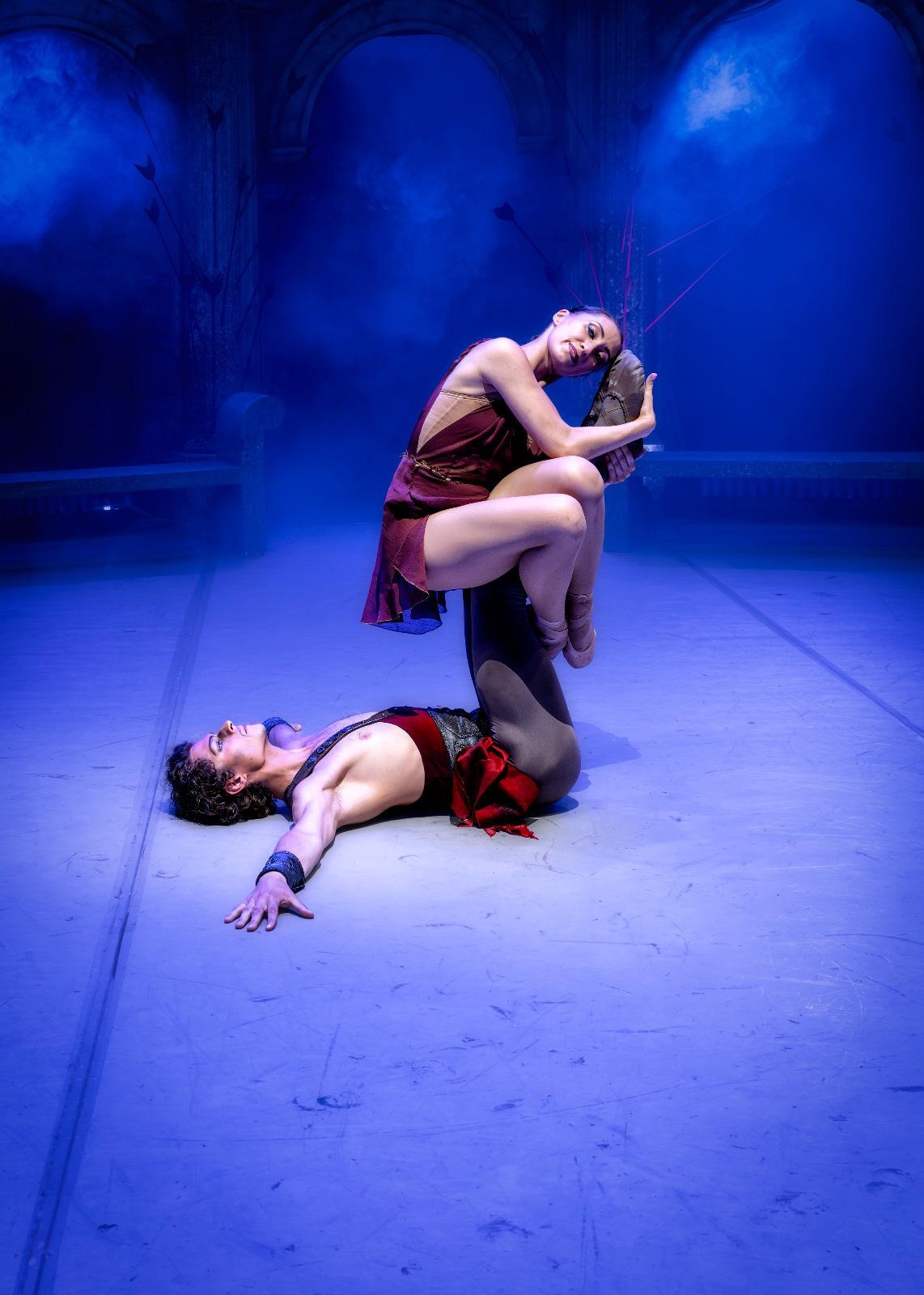
The intently focused Danylo Motkov brought fascinatingly elegant stretch and bounce to his Spartacus along with a most welcome manly softness. He humanized this superhero from the moment he ripped off his gladiator’s mask. His Spartacus never veers off into the melodramatic even when repeatedly whipping off superfast pirouettes of grief or rage (yes that one, again) or when he launches into those arched leaps with knees bent back (or forward, or in between). Motkov is also a most skilled and considerate partner. Despite the use of spectacular, sometimes impossible-looking, lifts that get pushed skywards and sideways, Spartacus’s duets with his mate, here called Achillea [Phyrgia in other versions], each have a different kind of lyricism because they are anchored in an evolving narrative.
And here Crassus concentrates more on his lovers. This really helps push the narrative along and pulls this ballet back from the manosphere. His contemptuous hatred of Spartacus will explode to a whole other level after the gory demise of one of his lovers. He’s an antagonist, not a caricature of motiveless malevolence. Crisp and complex in the role of Crassus, Vladimir Mozgovoj is a peacock in public who lets his guard down in private. I should mention that all of Mozgovoj’s manèges with double tours en tournant positively sizzled.
You wanna fight?
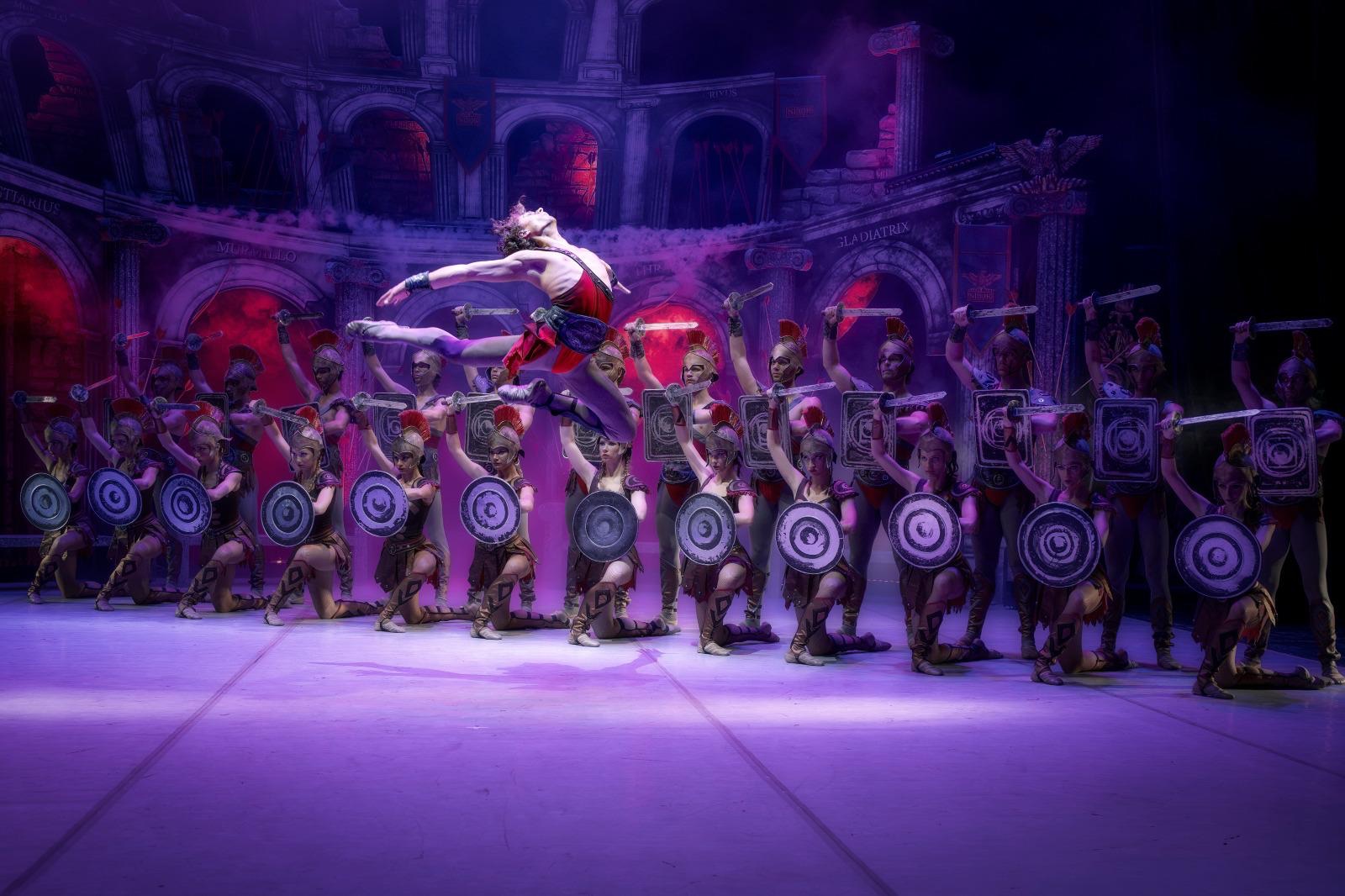
Whereas in the Grigorovich version, the group movements consisted of soldiers (or rebels) prancing side by side in formation, here the cohorts got de-aestheticized, and engaged with each other in what looked like actual combat. Despite the small size of the open-air stage in Varna, entrances and exits were planned to full effect. Dancers keep pouring in and out from three and more directions. Here the soldiers and gladiators really broke loose.
You could hear clanging of metal against metal throughout this ballet. The angle of swords ferociously planted “into” an opponent are so precisely calibrated that the action felt surprisingly real. The falls of the fallen were superbly untheatrical, heavy.
Bobrov succeeds at making that abstraction, “the people,” zing by specifically allotting certain steps to only one group or personage. For example, we know shepherds had joined Spartacus’s rebellion, but Grigorovich kind of blended them into generic crowd formations. Here the Shepherds hoist their crooks, root them around earthily during folkloric roundabouts, do awkward squats, and even inch out backwards from the wings in a stunningly inventive – as well as hilarious – bent over forwards conga line that any other choreographer who sees it will definitely want to steal.
The battles are not only full of surprises but always end with flair. Bobrov turns out to be a master of the tableau vivant that pays off both visually and dramatically. Just about every scene ends with a striking visual (which I would rather not divulge).
Ze Vimin
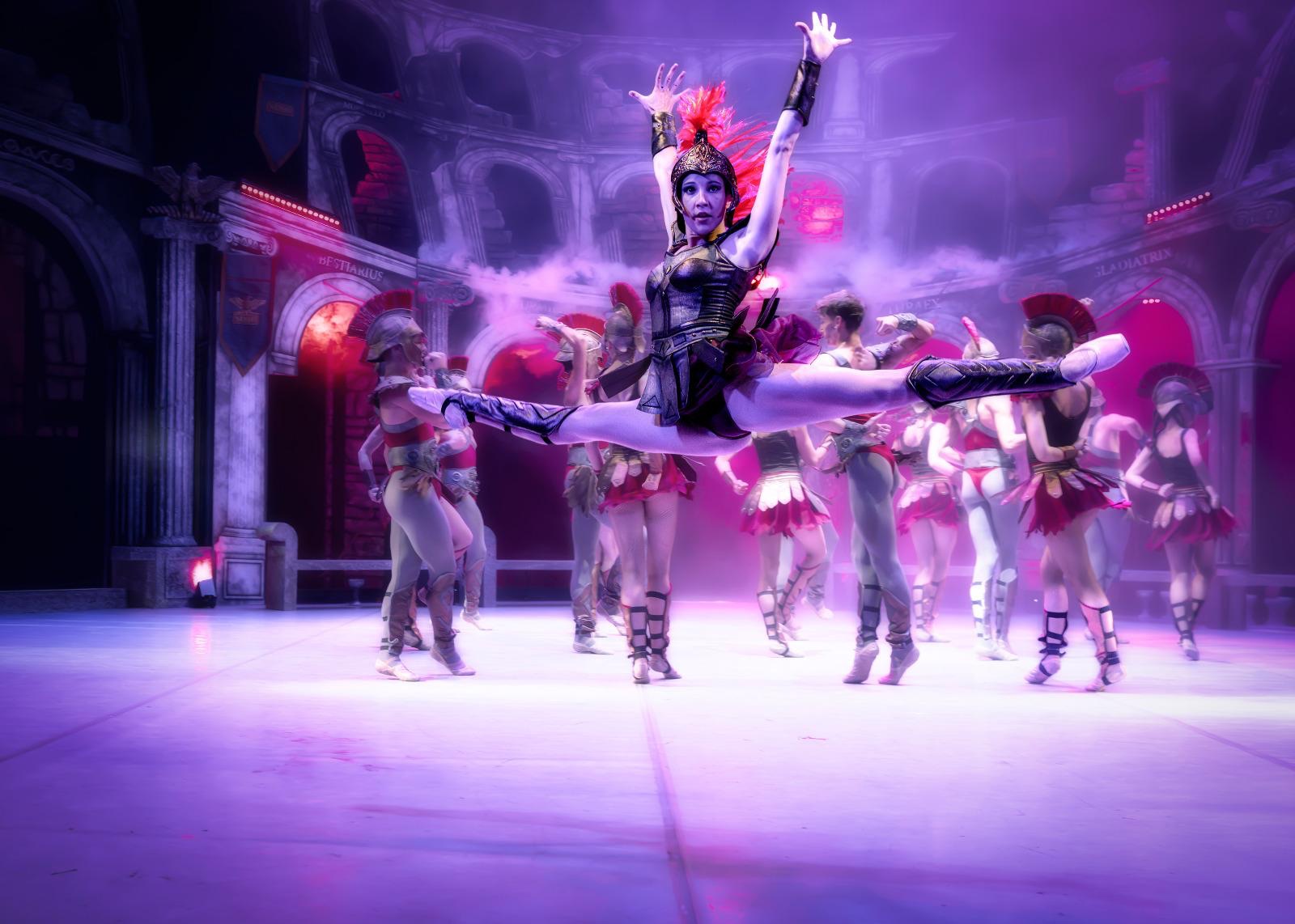
The women in the older productions? Lots of passive bourrée-ing around and turned-in passés for the good women as they express. Wispy arms alternate with developés front/side/back and that’s about it. The bad women do splits and wiggle their shoulders while leaning back on their knees in that decadent gypsy dance manner. Duh.
In Bobrov’s choreography the female domestic slaves are kittenish and assertive in a manner straight out of Puss n’Boots. They have swing. But most of all, Bobrov finally gets at least half of the females out of the bedroom by introducing a most refreshing and welcome plot twist that is anchored in historical record. Did you know that the Ancients do mention that the powerful and dexterous cohort of gladiators included enslaved women? Therefore, here Spartacus is conjoined to an equal with a mind of her own, a fighter, rather than to a weeping willow. As Achillea, the valiant Natalia Bobrova shape shifts from strong as a rock to pliant as a vine in a split second. Always on the alert for the next challenge, she seems to not even sweat. I rooted more for her than for Spartacus, even. Her sword drawn once again, Achillea will even face off with Crassus himself and die like a man.
The several pas de deux for Crassus and his Persian concubine Roxana (the regal, alternately flirtatious and ferocious, Roberta Pereira) contrasted vividly with those of Achillea and Spartacus both in intent and in feeling: sharper, swifter, knottier. Roxana wrapped herself around the general like a…pretzel?…a boa constrictor? Their specific vocabulary included upside-down splitting that a brave and virtuous gladiatrix like Bobrova’s Achillea would find beneath contempt.
All the women in this Varna production bristled with confidence and determination. When Natalia Bobrova whipped out fouettés with both angry conviction and a sword in each hand during Act Two, the audience whooped at yet another demonstration of dancing machisma. [Amusingly, spell-check keeps insisting I revert to the masculine version of this word].

Gaydar
We know the Romans where quite open to sexual adventure, especially when it came to the exploration of tasty younger males. More than that, the philosophers often spoke of true transformative love only taking place between men rather than between men and women.
Whether it’s in a ballet, movie, or comic book, the sight of buff sweaty bare-chested guys decked out in leather should set off at least some bells, don’t you think? No prior choreographer of Spartacus ever dared to address the obvious. I should add that this was not only due to Communist prudes: in Hollywood’s 1960 blockbuster, the scene where Crassus salaciously propositioned his male slave with the come-on “my taste includes both snails and oysters” swiftly landed on the cutting room floor.
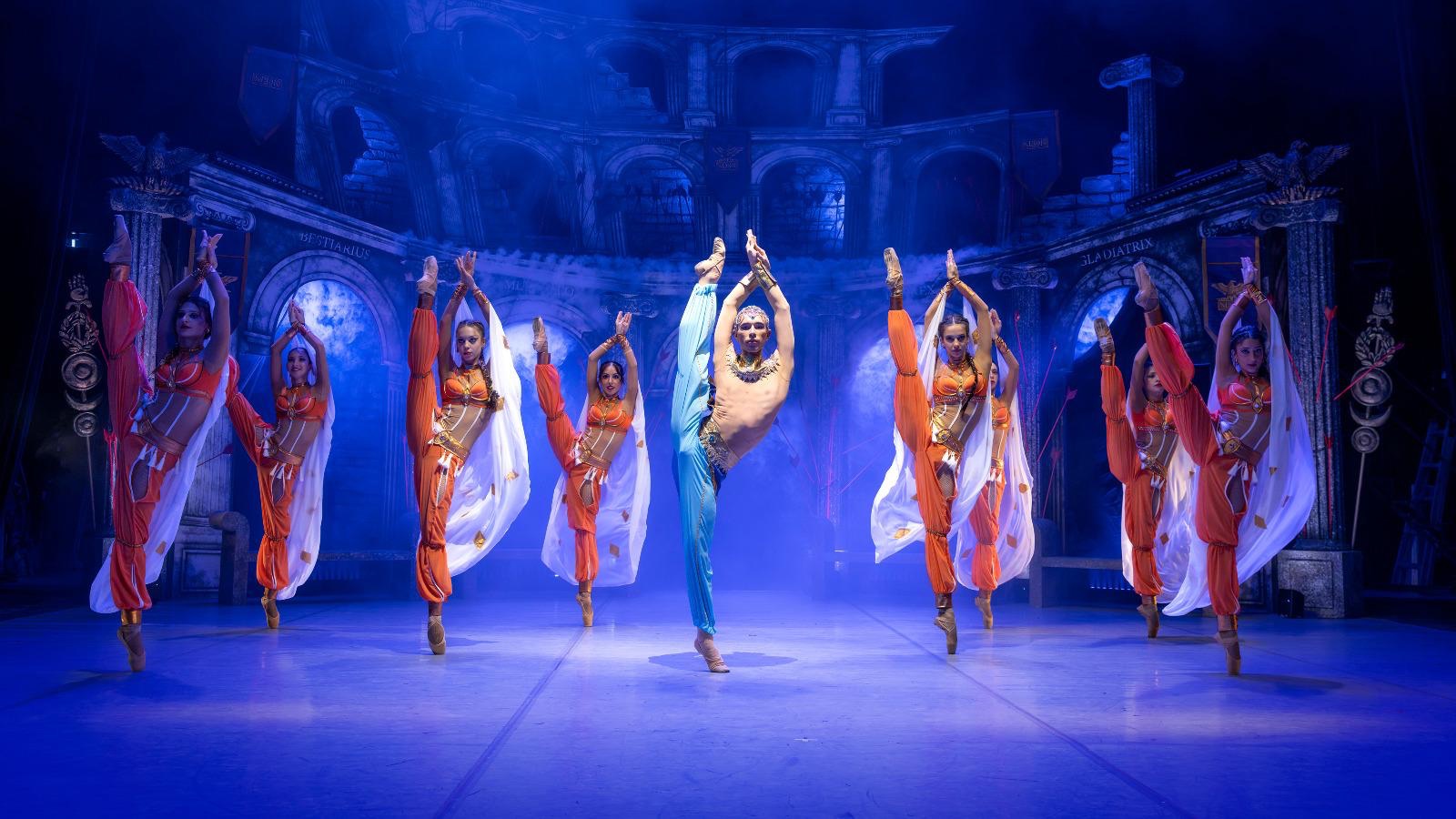
Bobrov is the first ever to grab the bull by its horns, so to speak. He has added a fifth lead, and a clearly loud and proud one at that. Far from being a camp distraction, Azar the Persian Slave adds a most welcome dynamic to this tale of love and loss.
This role is clearly custom-made for the unique talents of the witty and double-jointed Vittorio Scole. His splits and hip swivels and 2 p.m. (aka way beyond 12 o’clock) extensions, plus his knowing sass, will be hard for someone else to replicate one day. His, um, “I’ll just use my own pole to amuse myself, thank you” solo, which made for a gleeful moment of respite from all the drama, was delightful.
Inserting an ambitious and endearingly flawed queen into the relationship between Crassus and that scheming dominatrix Roxana would serve, most of all, to further humanize the general. He’s clearly more at ease with Miss Thing than with the Agrippina wannabe. Crassus’s full-bodied reaction to Azar’s violent demise reinforced the ballet’s premise that no guy is ever a totally bad person. Life is not lived in black and white. It’s full of grey zones and blood-soaked reds.
A ballet for our time?
Whether they speak truth to power or bend to power, works of art are always rooted a time and a place. The concluding scenes of all the theatrical incarnations of Spartacus demonstrate this. The last scenes of the Kirk Douglas Spartacus film, for example, paid wildly obvious homage to the solidarity of those who had refused to “name names” during the American Red Scare.
Grigorovich and Seregi (as I imagine Jacobson and Moiseyev, too) knew they had to provide uplifting finales. The people might lose this war, but the moral high ground soldiers on.
Bobrov’s finale? Nobody wins in the slightest. A mournful, abstract, and anti-heroic tableau turns out to have been inspired by the origin story of a flower we don’t even think about twice. Two gladiators (one probably Spartacus himself) had refused to fight to the death. They had instead thrust their swords into the ground, knowing that neither of them would be spared. In their place, the…gladiola sprouted. Did you know that this flower represents comradeship, solidarity, non-violence?
Women without men, sheathed in long black chiffon [thank goodness sparingly used in this production], pensively – at one point even angrily – dance with swords sheathed in that flower. When crossed mid-air, these instruments of death even form butterfly shapes, as if they want to fly away. But then they were pointed at us and loudly stabbed down into the floor of the stage. To hell with this never-ending violence!
Bobrov’s epic, slated to tour European venues next season, proves more than relevant given that great powers still feel they are entitled to abuse entire populations they deem inferior to them.
Therefore, it was most fitting to premiere this ballet in Spartacus’s homeland on the Black Sea, formerly known as Thrace, now called Bulgaria. As I wandered out to the beach the next morning, still mulling over the performance, I could not believe that I was only a stone’s throw away from more of mens’ pointless carnage.
********************
*****************************
Spartacus in Varna : de retour dans la Comté
Je dois avouer que j’ai du mal à prendre au sérieux tout ce qui touche aux gladiateurs romains depuis ce samedi matin où, sur le vieux téléviseur de mes parents, j’ai vu Bugs Bunny croiser un Martien en tenue complète de Spartiate, casque à crête inclus. Cela est aussi valable pour le cinéma que pour le ballet. Alors, quel était donc mon état d’esprit alors que « Spartacus » par le ballet de l’Opéra d’État de Varna allait débuter? Un certain scepticisme.
Mais l’envie de glousser s’est vite dissipée, balayée par une œuvre de « théâtre total » d’une vivacité et d’une force immersive rares. En ce 17 juillet, en Bulgarie, la relecture intelligente et subtile proposée par Sergey Bobrov de ce ballet ancien — et singulier — m’a finalement convaincu que « Spartacus » n’était peut-être pas, après tout, un si mauvais sujet de ballet.
Bien que la formation de ce chorégraphe soit ancrée dans l’hyper-athlétisme de l’ère soviétique ainsi que dans l’explosive tradition folklorique de l’école Moïsseïev, il insuffle à ces éléments une énergie et une rigueur nouvelles. Ce savant mélange — auquel s’ajoutent une approche réaliste des combats scéniques, une conception incroyablement complexe du travail de duo et un rejet rafraîchissant du schéma classique opposant héros et méchant — donne naissance à un ballet à la narration serrée et à l’inventivité inépuisable, qui nous emporte à travers deux actes au rythme soutenu. Quant aux minutes de musique supprimées de la partition originale de Khatchatourian (1954), elles ne m’ont absolument pas manqué.
C’est la première fois que j’assiste à « Spartacus » du début à la fin sans soupirer ni bâiller.
Bobrov est secondé dans son entreprise par une troupe vigoureuse aux danseurs accomplis ; ils partagent une telle cohérence stylistique qu’il est impossible de distinguer ceux qui ont été formés en Europe ou en Amérique du Sud de ceux qui l’ont été en Russie. Mon admiration pour eux n’a fait que croître lorsque, durant un entracte d’une durée inhabituelle, le public a appris que le sol de la scène avait été rendu glissant par de la condensation tout au long du premier acte, en raison d’un phénomène climatique exceptionnel. Je parle d’un sol si détrempé que si on y avait déversé trois seaux d’eau. La situation a perduré durant le deuxième acte, malgré les efforts héroïques de l’équipe de nettoyage. Ces jeunes artistes prenaient des risques considérables, mais personne dans la salle n’a rien perçu d’autre qu’une interprétation engagée et captivante tant la narration chorégraphique était forte.
Contexte historique :
La relation de la troisième guerre servile, qui s’acheva dans un bain de sang en 71 av. J.-C. et fut relatée plus tard par Plutarque et Appien, est assez simple. Spartacus, fier Thrace réduit au statut d’esclave-gladiateur, fomente une révolte qui finit par prendre de l’ampleur au point de former une armée de fortune d’environ 70 000 hommes en colère, stupéfiant les Romains. On sait qu’il a une épouse. Son grand rival est le préteur Marcus Licinius Crassus, général ambitieux et brutal, futur consul de Rome. Ces deux hommes ont de bonnes raisons de vouloir s’entretuer. Bien qu’il ait surpassé les Romains par la ruse et au combat à maintes reprises — manquant de peu d’éliminer Crassus lui-même —, Spartacus finira par trouver la mort. Son corps ne fut jamais retrouvé ; on sait seulement que 6 000 de ses partisans — un groupe hétéroclite allant des esclaves domestiques aux compagnons gladiateurs, en passant par des bergers à bout de patience — furent crucifiés et laissés à l’abandon le long de la Via Appia.
Contexte de l’histoire du ballet :
Aram Khatchatourian avait composé, en 1954, une partition de ballet très entraînante, récompensée par le prix Lénine. Le sujet était un choix judicieux, Spartacus figurant parmi les grands héros de Marx dans le cadre de la lutte des classes. L’œuvre fut d’abord chorégraphiée par Leonid Jacobson pour le Bolchoï en 1956. Toutefois, le choix de Jacobson d’abandonner les pointes au nom du réalisme — une démarche pourtant fidèle à l’esprit de Fokine — ne fut pas apprécié. Igor Moiseyev s’y essaya ensuite en 1958. Dix ans plus tard, Iouri Grigorovitch et le Hongrois László Seregi montèrent simultanément leurs propres versions, toujours à l’affiche aujourd’hui et que j’ai toutes deux vues sur scène.
Lorsque je découvris la version de « Spartacus » signée Grigorovitch alors que j’étais adolescente — lors d’une tournée du Bolchoï à New York —, j’étais parfaitement consciente que ce récit d’une révolte d’esclaves vouée à l’échec dans la Rome antique relevait de l’agitprop : œuvre d’un homme marqué par son époque et son milieu. J’étais néanmoins prêt à lui laisser sa chance.
Les nombreux aspects de son ballet qui m’avaient déplu ont été confirmés lors d’une tournée du Bolchoï à Paris en 2008 : son manichéisme; sa vision politique réductrice (il ne devrait pas falloir trois heures pour illustrer les oppositions binaires maître/esclave ou prolétariat/bourgeoisie). La manière dont les genres y étaient marqués à l’extrême a également beaucoup agacé la féministe que je suis : d’un côté, une profusion de messieurs très virils ; de l’autre, des dames, soit « bonnes » [femmes en mousseline gémissantes agitant les bras], soit « mauvaises » [courtisanes intrigantes plantant leurs pointes dans le sol]. Les combats scéniques enfin, excessivement esthétisés et stylisés, ainsi que tout l’arsenal de ce qu’on appelle depuis longtemps les « acrobaties de style soviétique », m’ont laissé de marbre. C’était… loooong.
La version de Seregi pour le Ballet de Budapest m’avait semblé un peu moins didactique, plus douce, et davantage centrée sur les drames intimes. Ce dont je me souviens vaguement (car c’était il y a quelques décennies), c’est que le sous-texte était limpide : « les Russes font désormais aux Tchèques et aux Hongrois ce que les Romains faisaient autrefois à leurs sujets colonisés ».
Gentils contre méchants
L’un des problèmes que j’avais avec la version de Grigorovitch tenait également à la pauvreté du vocabulaire chorégraphique, et même au fait qu’absolument chaque tour ou chaque enchaînement était exécuté à droite.
Spartacus ? Beaucoup de gestes où l’on se prend la tête à deux mains et d’expressions d’angoisse avec les doigts écartés, sans oublier des déboulés ultra-rapides ou des pirouettes frénétiques pour traduire le tourment. Une dose constante de grands jetés : classiques, en ciseaux ou en tournant. L’autre problème était que le vocabulaire du général romain Crassus ne différait pas essentiellement de celui de Spartacus, jusque dans les poings serrés, les sauts explosifs et ces bonds inspirés de la danse folklorique où bras, jambes et buste se cambrent tous vers l’arrière.
Dans le nouveau « Spartacus » de Bobrov – malgré une bonne dose d’acrobaties classiques et de bonds héroïques –, l’immense inventivité déployée dans les combinaisons fait que la chorégraphie, même lorsque ces pirouettes impétueuses se déploient, ne devient jamais prévisible, ennuyeuse ou répétitive. Chaque personnage possède son propre vocabulaire gestuel. Pas une seule fois je n’ai eu l’impression qu’une danse était exécutée simplement pour combler trente-six mesures de musique.
Il est rare de vivre de telles sensations inédites sur scène, et je salue la quête d’innovation de Bobrov. Il réinvente sans cesse ces figures aériennes classiques qui, en Occident, nous ont émerveillés depuis notre première découverte de « Spring Waters ». Mais il exploite le potentiel des rattrapages et des portés de dernière seconde au point de nous faire perdre tout repère spatial. Cette variété s’est révélée stimulante. Mon carnet de notes a fini par se remplir de points d’interrogation. Comment nommer ces figures ? Portés chaise ? Portés sur les genoux ? Portés en cuillère ? Portés acrobatiques ? Même lorsque Spartacus danse uniquement avec un voile (attaché à… je n’en dirai pas plus), l’étoffe réagit à ses mouvements et semble danser d’elle-même.
Danylo Motkov, d’une concentration absolue, a conféré à son Spartacus une élégance fascinante, faite d’extension et de ressort, tout en y apportant une douceur virile très bienvenue. Il a humanisé ce super-héros dès l’instant où il a arraché son masque de gladiateur. Son Spartacus ne sombre jamais dans le mélodrame, même lorsqu’il enchaîne à toute vitesse des pirouettes exprimant le deuil ou la rage (oui, encore elles), ou lorsqu’il se lance dans ces sauts en cambré, genoux pliés vers l’arrière (ou vers l’avant, ou dans une position intermédiaire). Motkov se révèle également être un partenaire extrêmement habile et attentionné. Malgré l’utilisation de portés spectaculaires – parfois d’apparence impensable – propulsés qu’ils sont vers le haut ou sur les côtés, les duos de Spartacus avec sa compagne, ici nommée Achillea [Phrygia dans d’autres versions], possèdent chacun un lyrisme singulier, car ils sont ancrés dans une narration en constante évolution.
Ici, Crassus se concentre davantage sur ses différents amants. Cela contribue réellement à faire avancer l’intrigue et permet au ballet d’échapper à une vision purement masculine et guerrière. Sa haine méprisante envers Spartacus atteindra un paroxysme après la mort sanglante de l’un de ses partenaires. C’est un antagoniste, et non une caricature de malveillance gratuite. Incisif et complexe dans le rôle de Crassus, Vladimir Mozgovoj fait le paon en public mais baisse la garde dans l’intimité. Il convient de souligner que ses enchaînements de doubles tours en tournant étaient absolument électrisants.
Tu veux la bagarre?
Alors que dans la version de Grigorovitch, les mouvements d’ensemble mettaient en scène des soldats (ou des rebelles) évoluant côte à côte en formation, ici, les cohortes perdent leur aspect purement esthétique pour s’affronter dans ce qui s’apparente à un véritable combat. Malgré l’exiguïté de la scène en plein air de Varna, les entrées et les sorties sont orchestrées pour un effet maximal. Les danseurs surgissent et disparaissent de toutes parts, dans trois directions ou plus. Ici, soldats et gladiateurs se déchaînent véritablement.
Tout au long du ballet, on entend le fracas du métal contre le métal. L’angle dans lequel les épées sont plantées avec férocité « dans » l’adversaire, est si précisément calculé que l’action paraît étonnamment réelle. Les chutes des combattants abattus sont superbement dénuées d’artificialité; elles sont lourdes et vraies.
Bobrov parvient à donner du relief à cette abstraction qu’est « le peuple » en attribuant des pas spécifiques à un groupe ou à un personnage précis. Par exemple, nous savons que des bergers ont rejoint la révolte de Spartacus, mais Grigorovitch avait tendance à les fondre dans la masse anonyme de la foule. Ici, les pâtres brandissent leurs houlettes, les ancrent dans le sol avec rusticité lors de rondes folkloriques, exécutent des accroupissements maladroits et progressent même à reculons depuis les coulisses en une « chenille » incroyablement inventive — et hilarante — où ils avancent buste penché en avant ; une trouvaille que tout chorégraphe voyant ce spectacle sera assurément tenté de reprendre à son compte.
Les batailles sont non seulement pleines de surprises, mais elles se concluent toujours avec panache. Bobrov s’avère être un maître du tableau vivant, une approche payante tant sur le plan visuel que dramatique. Presque chaque scène s’achève sur une image saisissante (que je me garderai bien de dévoiler).
Les Faaaaaaames!
Les femmes dans les anciennes productions ? Beaucoup de piétinés passifs et de retirés en parallèle pour les gentilles, comme moyen d’expression. Des bras frêles alternant avec des développés devant/sur le côté/derrière, et c’est à peu près tout. Les méchantes font le grand écart et ondulent des épaules en se penchant en arrière sur les genoux, dans une manière de danse gitane décadente. Évidemment.
Dans la chorégraphie de Bobrov, les esclaves domestiques sont espiègles et affirmées, à la manière du Chat Botté et la Chatte Blanche. Elles ont du swing. Mais surtout, Bobrov sort enfin au moins la moitié des femmes de la chambre à coucher en introduisant un rebondissement des plus rafraîchissants et bienvenu, ancré dans l’histoire. Saviez-vous que les Anciens mentionnent que la puissante et agile cohorte de gladiateurs comprenait des femmes réduites en esclavage ? Ainsi, Spartacus est ici uni à une égale, une combattante, plutôt qu’à un saule pleureur. Dans le rôle d’Achillea, la vaillante Natalia Bobrova passe de la force du roc à la souplesse d’une liane en un instant. Toujours prête à relever le prochain défi, elle semble même ne pas transpirer. J’ai dû même la soutenir plus que Spartacus quand, son épée à nouveau dégainée, elle affrontait Crassus en personne avant de mourir en homme.
Les nombreux pas de deux de Crassus et de sa concubine perse Roxane (interprétée avec majesté par Roberta Pereira, tour à tour coquette et féroce) contrastaient fortement avec ceux d’Achillea et de Spartacus, tant par leur intention que par leur émotion : plus incisifs, plus rapides, plus complexes. Roxane s’enroulait autour du général comme… un bretzel ?… un boa constrictor ? Leur vocabulaire spécifique incluait des grands écarts inversés qu’une gladiatrice courageuse et vertueuse comme l’Achillea de Bobrova aurait méprisés.
Toutes les femmes de cette production de Varna rayonnaient de confiance et de détermination. Lorsque Natalia Bobrova a exécuté des fouettés avec une conviction farouche, une épée dans chaque main, au cours de l’acte II, le public a acclamé cette nouvelle démonstration de virilité dansante. [Curieusement, le correcteur orthographique insiste pour que j’utilise la forme masculine de ce mot].
Gaydar
Nous savons que les Romains étaient plutôt ouverts aux expérimentations sexuelles, surtout lorsqu’il s’agissait de découvrir de jeunes hommes séduisants. Qui plus est, les philosophes affirmaient souvent que le véritable amour, celui qui transforme l’être, ne pouvait naître qu’entre hommes, et non entre hommes et femmes.
Que ce soit dans un ballet, un film ou une bande dessinée, voir des hommes musclés, torse nu et en sueur, vêtus de cuir, devrait éveiller quelques soupçons, ne trouvez-vous pas ? Aucun chorégraphe ayant travaillé sur « Spartacus » auparavant n’avait osé aborder cette évidence. Il faut dire que la faute n’en incombait pas qu’aux puritains communistes : dans le blockbuster hollywoodien de 1960, la scène où Crassus faisait des avances lubriques à son esclave masculin — avec cette phrase d’accroche : « J’aime aussi bien les escargots que les huîtres » — a été rapidement coupée au montage.
Bobrov est le tout premier à prendre le taureau par les cornes, si l’on peut dire. Il a ajouté un cinquième rôle principal, et un personnage qui assume pleinement et fièrement sa nature. Loin d’être une simple distraction kitsch, Azar, l’esclave perse, apporte une dynamique très bienvenue à ce récit fait d’amour et de perte.
Ce rôle semble taillé sur mesure pour le talent unique de Vittorio Scole, artiste plein d’esprit et d’une souplesse incroyable. Ses grands écarts, ses déhanchements et ses extensions dépassant largement le 180°, sans oublier son impertinence malicieuse, seront difficiles à égaler. Son solo — « je vais utiliser ma propre barre pour m’amuser, merci » — a offert un moment de répit joyeux au milieu de tout ce drame ; un pur délice.
L’introduction d’une ambitieuse Queen, aux imperfections attachantes, au sein de la relation entre Crassus et Roxana — cette dominatrice manipulatrice — sert avant tout à humaniser davantage le général. Il est manifestement plus à l’aise avec cette « diva » qu’avec celle qui se prend pour Agrippine. La réaction viscérale de Crassus face à la mort violente d’Azar a renforcé le postulat du ballet : aucun homme n’est jamais totalement mauvais. La vie ne se résume pas au noir et au blanc ; elle regorge de zones grises et de rouges imprégnés de sang.
Un ballet pour notre Temps?
Qu’elles défient le pouvoir ou qu’elles s’y soumettent, les œuvres d’art sont toujours ancrées dans une époque et un lieu donnés. Les scènes finales de toutes les adaptations théâtrales de « Spartacus » en témoignent. Le dénouement du film avec Kirk Douglas, par exemple, rendait un hommage on ne peut plus explicite à la solidarité de ceux qui avaient refusé de « dénoncer leurs semblables » durant la « Peur rouge » aux États-Unis.
Grigorovitch et Seregi (tout comme, j’imagine, Jacobson et Moïsseïev) savaient qu’il leur fallait offrir des finals exaltants. Le peuple a beau perdre la guerre, la supériorité morale, elle, perdure.
Qu’en est-il du final de Bobrov ? Personne ne sort vainqueur, loin de là. Ce tableau funèbre, abstrait et aux antipodes de l’héroïsme, s’inspire en réalité de la légende d’une fleur à laquelle nous prêtons rarement attention. Deux gladiateurs (dont probablement Spartacus lui-même) avaient refusé de s’entretuer. Ils avaient préféré planter leurs épées dans le sol, sachant qu’aucun des deux ne serait épargné. À cet endroit précis a jailli… un glaïeul. Saviez-vous que cette fleur symbolise la camaraderie, la solidarité et la non-violence ?
Des femmes sans hommes, drapées dans de longues tenues de mousseline noire [utilisée avec parcimonie dans cette production, Dieu merci], dansent pensivement — ou avec colère — en maniant des épées gainées de cette fleur. Lorsqu’ils se croisent dans les airs, ces instruments de mort dessinent même des formes de papillons, comme s’ils aspiraient à s’envoler. Mais soudain, elles sont braquées vers nous avant d’être violemment plantées dans le plancher de la scène. Au diable cette violence sans fin !
L’épopée de Bobrov, dont une tournée européenne est prévue pour la saison prochaine, s’avère plus que jamais d’actualité à une époque où les grandes puissances s’estiment encore et toujours en droit d’opprimer des populations entières qu’elles jugent inférieures. Il était donc tout à fait opportun de présenter ce ballet en avant-première sur la terre natale de Spartacus, au bord de la mer Noire — une région autrefois appelée Thrace et aujourd’hui connue sous le nom de Bulgarie. Le lendemain matin, alors que je me promenais sur la plage en repensant au spectacle, j’avais du mal à croire que je me trouvais à deux pas d’un autre carnage absurde perpétré par les homme


 James
James Albertina
 Cléopold
 Fenella
 Les Balletonautes
 Mini Naila
