Archives de Tag: MacMillan’s Manon

MacMillan’s Manon at the Paris Opera: Dammit.

img_7407

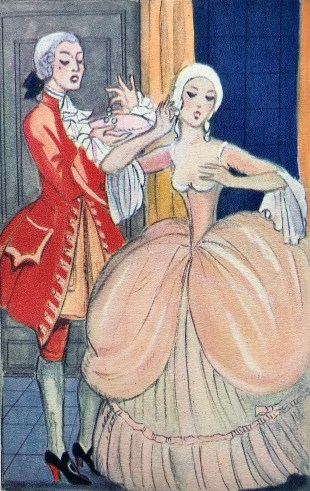
Histoire de Manon Lescaut. Aquarelle de Maggy Monier. Editeur Nilsson, La Bibliothèque précieuse. 1930’s

Dammit, the evening of July 5th started out splendidly. The first image — that spotlit sight of an utterly lone and still man in cape and tricorn — made my neighbour gasp in surprise.

As Lescaut, Francesco Mura is elastic and poised, reaches out, seems to have no dark side.

The beggars and their chief make their parody clear, but none of the beggar chiefs I saw had the panache of Hugo Vigliotti, on June 24th, who seems to have inherited Simon Valastro’s title of “best lion king of the second bananas.”

Ludmila Pagliero’s Manon enters curious about everything and everybody, reactive to all the new sensations around her.

In their first encounter, Marc Moreau’s Des Grieux has nice inflections that respond to Pagliero’s feminine grace. The mood was that of children’s games, where everything – including using the see-saw – is natural and uncomplicated. As if they were on a playground swing, the sweep and flow built up. Remember when you’d swing so hard you were nearly horizontal to the top… and only then would you jump off? That’s how their lifts and curls felt throughout the ballet, dangerously free. Pagliero’s abandon, and utter trust that she will be caught, was gorgeous. She just took off, certain she could fly on her own.

My neighbour let out a breath and said “intermission already?!”

But alas this same neighbour left after Act Two. “I’m sorry, I couldn’t stop worrying about work due tomorrow.” During Act Two, I too admit my mind had begun to wander.

At fault?  Silvia Saint-Martin as Lescaut’s mistress. In Act One already, she was like one of those underage girls who watch some video of Roland Petit’s femmes fatales over and over again, thinking sexuality and sensuality are the same, and then imitates a Carmencita from the outside. She never added another layer, a nuance. If it weren’t for her costume, you couldn’t have told that she was supposed to be more interesting than the corps de ballet.

She gave us an engineer’s outline, not a character. Mura therefore had nothing to work with during Act Two, so he underplayed and their interactions did not provide even one hint of comic relief. The only moment the audience laughed was when she kicked him, but we should have been chuckling from the start.

So there was a gaping big hole in Act Two.

Meanwhile, Pagliero continued to develop her character in what had become a theatrical vacuum. A bit distressed by her brother’s boozy breath. Sad and cold in her solo for Monsieur G.M., definitely not “loud and proud” about being a top-notch sex worker. She’s also frightened by Moreau/Des Grieux’s pushiness. “This necklace is all that I have.” “This bracelet is non-negotiable.”

She’d worked hard for her money.

After the black hole of Act Two, I just couldn’t get back into the mood. I sat there during the last act thinking, “wow, those flips are incredible.” Dammit.

*

 *                                     *

img_3913

Histoire de Manon Lescaut. Aquarelle de Maggy Monier. Editeur Nilsson, La Bibliothèque précieuse. 1930’s

Zut alors! La soirée du 5 juillet avait pourtant superbement commencé. La première image d’un homme en cape et tricorne inondé dans sa solitude par une douche de lumière avait fait haleter de surprise ma voisine.

En Lescaut, Mura est à la fois élastique et posé ; il projette. Il semble n’avoir pas de côté sombre.

Les mendiants et leur chef rendent claire leur parodie, mais aucun des chefs mendiants n’a eu autant de panache qu’Hugo Vigliotti, le 24 juin, qui semble avoir hérité du titre de plus Grand Roi Lion des seconds couteaux jadis détenu par Simon Valastro.

Ludmila Pagliero entre, curieuse de tout et de tous, réceptive à toutes les nouvelles sensations autour d’elle.

Durant la première rencontre, Marc Moreau a de jolies inflexions qui répondent aux grâces féminines de Pagliero. L’humeur était aux jeux d’enfants où tout, même jouer à la bascule, est naturel et sans complication. Comme s’ils étaient sur une balançoire, leur flux et reflux gagnait en intensité. Vous souvenez-vous, quand vous vous balanciez très fort, vous vous retrouviez parfois en l’air à l’horizontale, et à ce point seulement vous lâchiez prise ? C’est à cela que les portés et entrelacements des deux danseurs faisaient penser pendant tout le ballet ; dangereusement libres. L’abandon de Pagliero et sa certitude qu’elle sera rattrapée étaient magnifiques. Elle prenait son essor, certaine qu’elle pourrait voler par ses propres moyens.

Ma jeune voisine, le souffle coupé, laissa échapper : « C’est déjà l’entracte ? ».

Hélas, cette même voisine est partie après l’acte 2 : « Désolée, j’ai du travail pour demain et je n’arrête pas d’y penser ». Et je dois aussi avouer que pendant l’acte 2, j’avais commencé à perdre ma concentration.

La faute à qui ? Silvia Saint Martin en maîtresse de Lescaut. Déjà durant l’acte 1, elle est comme une jeunette qui a regardé en boucle quelques vidéos de femmes fatales de Roland Petit, confond sexualité et sensualité, et du coup, imite la Carmencita de manière extérieure. Jamais elle n’a ajouté une couche supplémentaire, une nuance. À l’acte 2, n’était son costume, vous n’auriez pu deviner que la danseuse était censée être plus intéressante que le reste du corps de ballet. Elle nous a délivré un plan détaillé, jamais un développement. Du coup, Mura, qui n’avait peut-être rien sur quoi s’appuyer, s’est mis en retrait et leurs interactions n’ont donc offert aucun répit comique. Le seul moment où le public a ri est quand Saint-Martin a renversé son partenaire cul par-dessus tête, mais nous aurions dû pouffer dès le début.

Il y avait donc un trou béant à l’acte deux.

Et pendant ce temps, Pagliero continuait à développer son personnage dans ce qui était devenu un grand vide : quelque peu affligée par l’haleine alcoolisée de son frère, triste et froide pendant son solo pour monsieur G.M ., absolument pas haute et fière d’être une travailleuse du sexe de haut-vol. Elle se montre également effrayée par l’outrecuidance de Moreau/Des Grieux : « ce collier est tout ce que j’ai ! », « le bracelet n’est pas négociable ! ». Elle a travaillé dur pour les obtenir…

Mais après le trou noir de l’acte 2, je n’ai pu me remettre dedans. Je me suis retrouvée assise là, pendant le dernier acte, en train de penser « ouah, ces grands doubles tours en l’air sont incroyables ».

Zut alors!

Libre traduction : Cléopold

Commentaires fermés sur MacMillan’s Manon at the Paris Opera: Dammit.

Classé dans Retours de la Grande boutique

Girl, misunderstood: a plot summary for “L’Histoire de Manon” coming soon to the Palais Garnier.

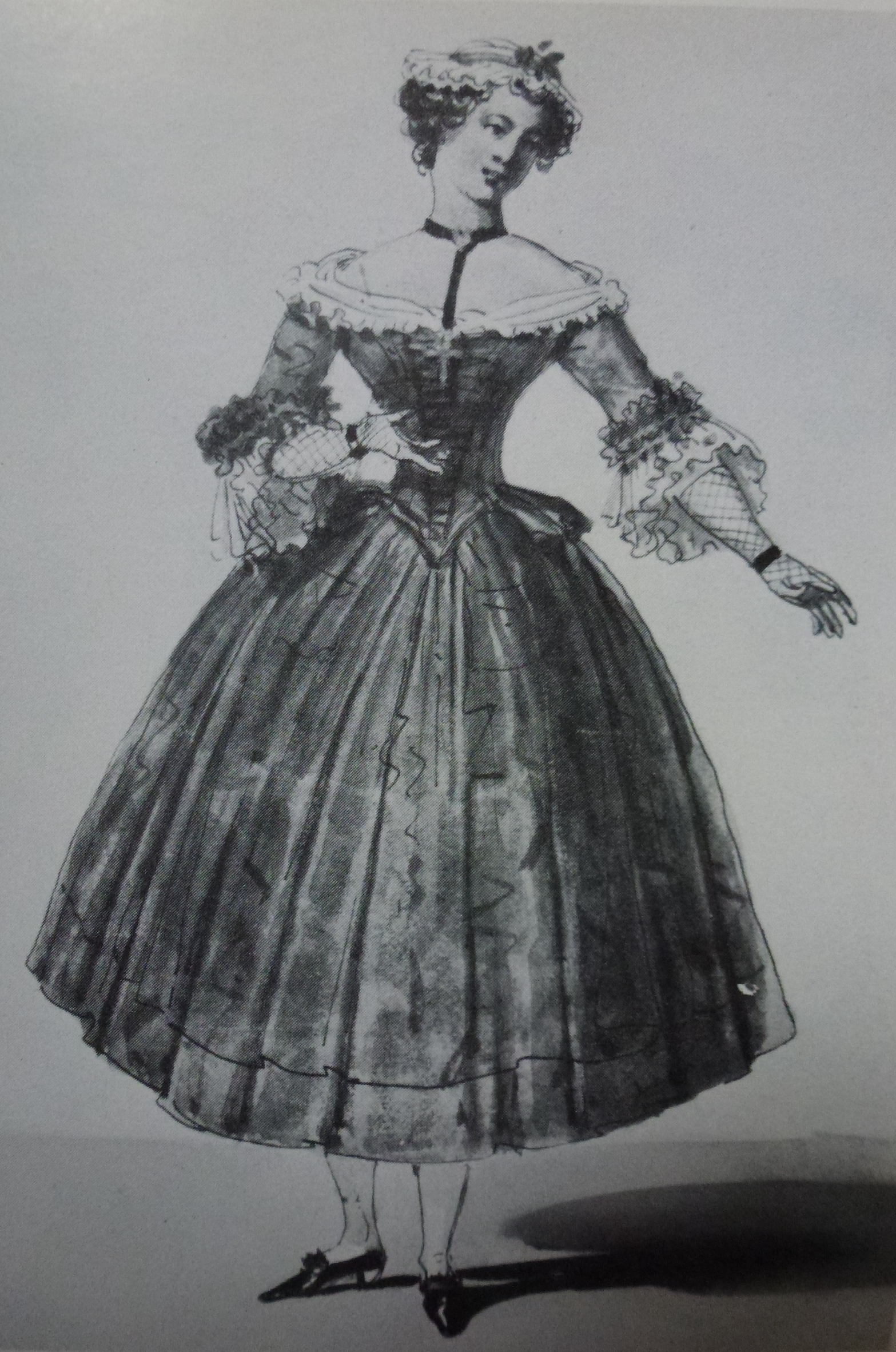
Pauline Montessu dans Manon, 1830

Pauline Montessu dans Manon, 1830

Like other 18th century French classics such as Les Noces de Figaro and Les Liaisons dangereuses, this tale highlights issues of gender and class during the ancien régime.
God, that sounds boring. To restate: this ballet about all kinds of social and sexual relationships will be danced out by extraordinarily limber people wearing really spiffy period costumes. And that’s never boring at all…
L’Abbé Prévost’s 1731 novel continues to perplex readers. Is his rags-to riches-to rags heroine immoral or amoral? A vicious man-eater who merely pretends to be innocent or a clueless innocent corrupted by men and drawn into vice? Or does the pro-active Manon now represent the anti-Cinderella outlook for many enlightened girls?

If there is such a thing as “woman’s nature,” men — from randy politicians to religious zealots — continue trying to figure that one out.
You might know of the more famous adaptations of this tale into operas by Jules Massenet [1885] and Giacomo Puccini [1894]. Sir Kenneth MacMillan certainly did in 1974. In love with the story, working on a deadline for England’s Royal Ballet, he felt hamstrung by two gorgeous scores. How could he avoid making dancers mime to well-known arias? Here’s how: use music by Massenet…lots of juicy bits of it, but not one note from the opera!

ACT ONE (43 minutes)
Scene one: at a stagecoach inn near Paris
The first person we see under the spotlight is Manon’s corrupt and venal brother, Lescaut. Equally at ease with riff-raff and raunchy aristocrats, he first tries to pass off his mistress to the rich Monsieur G.M. and then guffaws when his beggar friends make off with the pompous ass’s watch.
Into this decadent scene stumbles a shy and handsome student, so lost in reading a book he’s utterly oblivious to all the commotion. His name is Des Grieux.
The stagecoach finally arrives, with Manon in it. While still trying to fend off the old guy who was trying to pick her up during the voyage, she’s faced with her brother immediately trying to set her up with the lecherous monsieur G.M. No wonder her parents are sending her to a convent, men just can’t keep their hands off of her. Her fault?
To very delicate music, Manon tries to hold on to her liberty, her freedom to at least choose only one of these disgusting men whom her brother encourages. Lescaut’s mistress flashes lengths of perfect thigh. She wouldn’t mind being propositioned by any of the leftovers.
Then Manon’s eyes meet those of Des Grieux, the first and only man she will ever desire. After all those miming and stumbling old farts, here’s a man who really knows how to dance!
At the end of this scene, we are treated to the first of all the glorious pas de deux [duet]’s that all dance lovers associate with MacMillan: how can two bodies be taken to the limit of push-me-pull-you? The point of each of their duets in this ballet will be about how far you can go without breaking your ankle/wrist or fall down head-first while transmitting pure emotion. And each duet will end with the exquisite ways MacMillan will invent for the lovers to float back down off their high: literally ending up sweeping the floor — oh so deliciously — with their bodies.
The old guy returns only to discover that Manon has eloped with his purse and his carriage. Monsieur G.M. offers Lescaut even more money to find and bring him this tantalizingly frisky creature.

Scene two: in Des Grieux’s humble garret [at least it’s in Paris, not at some awful old dull country mansion].Des Grieux tries to write a letter to his father along the lines of “listen, this is a great girl, please send more money.” He’s from a good family, but doesn’t control his fortune yet.

In love, but bored by watching him write, Manon — to put it mildly — distracts him (see here Cléopold’s second by second analysis).

When he finally tears himself away in order to go mail the thing, Lescaut sneaks in with Monsieur G.M., who tantalizes her with all kinds of promises and jewels and even a fur-lined cape. What girl could resist? O.K., the guy seems to have some kind of foot fetish, but ballerinas have been all vaccinated against that old cliché since, like, forever.
Lescaut stays behind in order to rein in the understandable anguish of a horrified Des Grieux. And to try tempt him to listen to reason. “Why not let her suck that bloodsucker dry? We could all be rich!

INTERMISSION (20 minutes)

ACT TWO (46 minutes)
Scene one: an elegant evening chez a most shady lady
We saw her in the first scene, grandly sweeping along with Monsieur G.M. That was no lady.. .and not his wife either. “Madame” is actually what is known as a “Madam.” Those girls we saw with fans in the first scene were not ladies, but prostitutes.
Swords should be left at the door, but other metaphors may enter.
A very drunk Lescaut arrives, dragging along the reluctant and droopy Des Grieux. Lescaut’s ever-optimistic mistress gets caught – sideways – in the fun.
Manon enters, stunningly outfitted, and is carried aloft à la Marilyn Monroe by besotted customers to the creepy Monsieur G.M.’s proud delight.
Manon’s thoughtless vanity cannot at first be worn down by Des Grieux’s lovelorn glances. When he finally gets her alone, she makes it clear that she loves him, but not his poverty.
Manon tells him what to do: fleece G.M. by cheating at cards…Des Grieux may be cute, but he botches the job. Real swords are drawn. Taking advantage of the confusion, the lovers elope again.
Scene two: back at the garret
The lovers dance all over the bedroom as usual.
At one point, Manon realizes that she “forgot” to leave her jewelry behind…
Bad idea. G.M. knows where to find the love-nest and bursts in with a police escort, dragging along a bound and bleeding Lescaut. He threatens to have Manon arrested for theft and prositution. For the first time in her life, she must face the ugliness of the vengeful cruelty of which some men prove most inclined.

INTERMISSION (20 minutes)

ACT THREE (25 minutes)
Scene one: arrival in New Orleans
A shipload of unfortunate prostitutes have been deported to the New World. Des Grieux’s love knows no bounds: he got himself on the ship by pretending to be Manon’s husband and even seems oddly happy despite the circumstances.
Even broken in spirit and with a shorn head alas alas Manon, despite herself, still attracts unwonted attention.
Scene two: the jailor’s office
This one is gross. The jailor will give her privileges if she…and he forces her to do so. Des Grieux acts out the audience’s shock and kills this gloating perv.
Scene three: lost in the bayou
On the run with nowhere to go, the couple once again proves how love does not mean the same thing.  Des Grieux obstinately keeps sweeping his love aloft. Haunted by her memories, Manon — never a fighter to being with — dies of  exhaustion in the arms of her despairing lover. Manon is the epitome of a girl who gets completely burned out by the force of other men’s great expectations.

Commentaires fermés sur Girl, misunderstood: a plot summary for “L’Histoire de Manon” coming soon to the Palais Garnier.

Classé dans Hier pour aujourd'hui