
Archives de Tag: Zizi Jeanmaire

Cérémonie des Balletos d’Or : trois paquets de chips et on fait danser le monde entier

P1000938

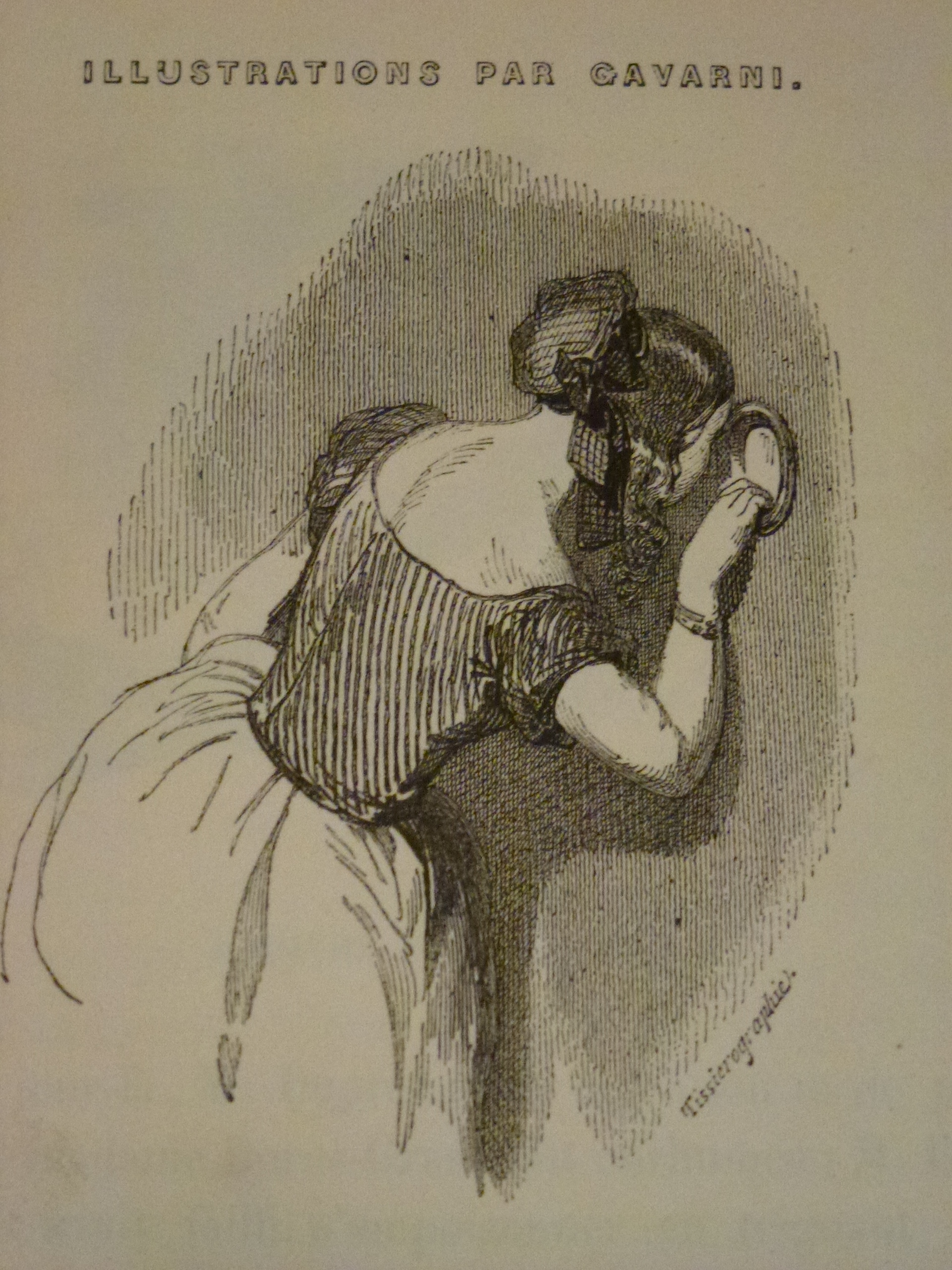
Gravure extraite des « Petits mystères de l’Opéra ». 1844

Qu’allions-nous faire pour la traditionnelle fête du 15 août ? Cet été à Paris, la concurrence est rude entre les cérémonies. Mais en plus, elle est déloyale : comme les connaisseurs n’ont pas manqué de le remarquer, les organisateurs de la parade fluviale d’ouverture des Jeux olympiques nous ont piqué toutes nos idées. Au soir du 26 juillet, James, dont la zénitude n’est pas la qualité première, était en toupie.

Et d’énumérer, au risque de la mauvaise foi, les emprunts dont nous avons été victimes : « Danser sur les toits ? On l’a fait en 2012. Un détour par les lacs souterrains ? 2013. Les annonces plurilingues ? 2015 ! Tous les styles de danse qui se mélangent ? 2016 ! Un clin d’œil à Marie-Antoinette ? On l’a fait dès 2019. La célébration des amours passagères ? 2020 ! La tête en bas le corps retenu aux échafaudages par des filins ? 2021 ! Réunir le ballet de Bordeaux et le Malandain Ballet Biarritz ? 2022 ! Voyager dans le temps ? 2023 ! L’exclusion des poutinistes ? Déjà en 2016 aussi ! Le queer en majesté ?  Chaque année ! Même le dialogue avec les fantômes est, depuis les origines, estampillé balletoto ! »

On ne l’arrêtait plus, mais l’essentiel était ailleurs : les finances. En temps normal, les équipes marketing de LVMH nous filent un paquet de biftons, car elles ont – scientifiquement – établi que les Balletonautes contribuent à hauteur de 2,17% à la notoriété du pays et au glamour de la capitale. Mais comme la boîte a claqué tout son budget de l’année pour un publireportage sur les mallettes monogrammées, il n’y avait plus un radis pour nous.

Donc : pas de laser, pas de star, pas d’extras, pas de tralala. « Même pas trois sous pour une mini-boule à facettes ? », quémandait Fenella, la larme à l’œil. Eh bien non : impossible de surenchérir, on en serait quitte pour confectionner des lampions avec du papier-crépon. Au minimum, il faut pour une remise des prix réussie : un espace comportant une estrade (le grand escalier du palais Garnier), un bateleur dont la voix porte (le vendeur de progrrââââmmmmmes le plus tympanisant de la saison dernière), quelques boissons gazeuses, des chips et de petites madeleines en barquette.

Tout ça pour des récipiendaires émus sur leur trente-et-un pour la montée des marches, et des parents qui versent une larme en contrebas : ça tombait bien, cette année, la plupart des prix vont à des jeunes dont la famille n’est pas encore blasée. On prévoyait une ambiance un peu préau d’école, ce serait spartiate, peut-être un peu tristoune, mais digne (« pour une fois ! », ricanait Fenella).

C’était sans compter sur l’inventivité de nos amis danseurs qui voient tout d’un œil expert et se laissent aisément rattraper par l’esprit de compétition. Sur son quant-à-soi,  Cléopold tenta de réfréner la tentation de la comparaison avec des séquences « pas si ouf » de la soirée du 26 juillet, rien n’y fit : bien des ballerines tinrent à montrer qu’elles avaient de l’esprit dans la gambette. À quinze reprises, on dansa et chanta en direct Mon truc en plume, avec seize meneuses de revue différentes. La dernière fois, il y en avait deux en même temps, chacune faisant une seule jambe et un seul bras ; grâce au jeu des éventails, la supercherie était imperceptible : du grand art.

Plusieurs équipes tinrent aussi à interpréter un cancan bien synchronisé. Les plumes volaient encore partout, quand, élargissant le propos chorégraphique, les délégations du monde entier entreprirent de titiller notre occidentalo-centrisme. Cela démarra par une séquence de danse halay. Puis, suivirent des démonstrations de tous les continents : tahtib, séga, frevo, kalela, dabkeh, lezginka, romvong, pungmul, tinikling, yosakoi, zaoli, bigwala… Ça tourbillonnait tellement qu’on n’arrivait pas à tout retenir.

Il y a eu de l’inimitable un peu savant – Bruno Bouché s’est luxé le poignet en essayant les figures des danseuses khmères, aux doigts si étonnamment remontés en arrière de la paume –  mais aussi, et le plus souvent, du partage et de l’échange. Claude Bessy a fait la derviche-tourneuse, Mathilde Froustey a appris la rumba congolaise, John Neumeier a découvert le mixer québécois, et José Martinez s’est demandé comment il avait pu passer toute sa vie à côté de la morenada de l’Altiplano.

Pour tous les détails de cette remise des prix bon-enfant mais au final un peu cacophonique, nous ne pouvons que vous référer au Live du journal Le Monde qui a tenu à couvrir l’événement pendant 12 heures. Nous, on a préféré apprendre le poco-poco et regarder toute la troupe de l’Opéra s’initier en un temps-record à la danse xòe.


Le trophée Balleto d’Or est une tête de Poinsinet en plastique doré à l’or fin.

1 commentaire

Classé dans Blog-trotters (Ailleurs), Dossier de l'Ecran, France Soirs, Hier pour aujourd'hui, Humeurs d'abonnés, Ici Londres!, Ici Paris, Retours de la Grande boutique, Une lettre de Vienne, Vénérables archives, Voices of America

Roland Petit bill : “Float like a butterfly, sting like a bee”

P1010032While the big news of the evening of March 27th, has of course become Eleonora Abbagnato’s late-career elevation to the rank of étoile/prima ballerina during the final curtain calls, I’d like to start by mentioning other dancers, those young talents and strong soloists who gave masterful performances earlier in this evening devoted to Roland Petit’s ballets.

Dancers, athletes, choreographers.  The self-proclaimed greatest boxer Muhamed Ali once said “Champions aren’t made in the gyms.  Champions are made from something they have deep inside of them: a desire, a dream, a vision.”

Many criticize Petit as merely a “dance maker.” Or even worse, a vulgarian. However I like the fact that, by being somewhat obvious at times, his desire, his dream, his vision, was to make the audience feel smart and included. His are ballets to be engaged with directly, without afterwards feeling forced  — because you feel stupid and confused — to purchase and read an expensive program with all its extensive rhetorical flourishes.  What his works will always need – and don’t all ballets? – is to continue to be fed by the imaginations of great dancers, younger and older. They can give any package of steps and gestures new life and, by melting into the music, provide the “oomph” that make ballet continue to come alive again night after night.

It’s a lack of faith that makes people afraid of meeting challenges, and I believe in myself.” (M.Ali)

Le Rendez-vous distills, somewhat awkwardly, the perfume of post-liberation Paris.  That somehow magical moment of Juliette Greco, of Sartre, of Montand and smoke-filled dance halls. While “of the moment” in 1945, it’s now up to the performers to make this dusty relic sing to us.

Alexandre Gasse, a youthful demi-soloist, got his chance to embody the archetypical “young man about to be eaten alive during sex by a praying mantis” (Petit’s ballets can unfortunately, I must admit, too often resort to the virgin/whore and man vs. female bloodsucker dichotomy pushed to center stage during the Romantic Era but which wears thin these days).

Most of the ballet actually revolves around his gentle relationship with a crippled beggar – to set up that he’s a nice guy — only in the last scene does he have to deal with the femme fatale in high heels (crippling for her).  Throughout, Gasse floated like a butterfly, landing after all kinds of double-tours softly onto one knee.  His performance was free, emotionally fresh, danced with flair and thoughtfullness, his chest and back open and ready to take on almost any challenge.

I’d begun to hope that he’d just go off with the beggar and, as they say in the  French variation on “happily ever after:  “et ils eurent beaucoup d’enfants.” But then another young soloist arrived for her date with the audience, Amandine Albisson.

Albisson, in her Louise Brooks wig, at first made me think of Arielle Dombasle during her recent Crazy Horse phase.  But she only resembled a frozen monument to pulchritude at first glance.   Albisson has already demonstrated – in Psyché or in In the Middle, for example –  that she is endowed with a fearless stage persona and spotlight-attracting cool. Even if she hasn’t yet quite mastered the scarily humorous and sensual way that Ciaravola and Cyd Charisse unfurl their gams in extensions, her dance already has its own weight and authority.  For two seasons now, she’s been testing her wings.  I hope she won’t try to imitate Ciaravola or Guillem  and continues to believe in herself.

“George can’t hit was his hands cant see/Now you see me, now you don’t/George thinks he will, but I know he won’t.” [M. Ali]

Le Loup is a cruel parable of mistaken identities and identity confusion.  Sabrina Mallem, in the supporting role of the gypsy, grasped the chance to have the time of her life: she created a character ferocious and cruel by using sharply stabbing feet,  no, chiseled, no, it wasn’t about the feet, the legs, the arms, at all in fact.  It was about the full-bodied, blood-rich, completely disarming sensuality she managed to express at every swerve of every part of her superbly-controlled body.  Mallem radiated life like a great boxer high on adrenaline. She’s hit that “sweet spot” where honed technique and learned stagecraft make even a mere soloist a great performer.

And so to Carmen, a highlight during an evening of highlights.  Where Abbagnato seemed to be telling us and them:

If you ever dream of beating me…you better wake up and apologize.” [yes, Ali again]

Petit structured a couture gown around his beloved Zizi Jeanmaire with this ballet, designed to highlight all of her multiple attributes… in 1949. And ever since, the specter of its two creators has haunted each ballerina who dares try to tame this ballet while trapped in yet another black wig.

Most fall into two categories: those Carmens who overdo the bent-index-finger biting “ergo me sexy” category, and the others who overdo the “ I gotta pretend I be ze flamenco queen “ category.  In each case, they all forget that the original French text, even music, is filled with bitter irony and a raised eyebrow.

Petit’s Carmen does not need to be overcooked.  She needs to hum, not scream.   She’s the only fully human character in the whole piece.  The rest certainly move about, but they – especially the men — are in essence cardboard cutouts.

Abbagnato’s Carmen fluttered like a butterfly and brawled like a bee. She sandpapered away all the clear edges one would expect, and spared us any “olé, olé” hispanitude. More than that, she gave a dragonfly aspect to the character.  Never at rest, always buzzing, ever alert to threat, proud of her delicately nervy wings.  Indeed, she was probably unphotographable this night, for she rarely paused to pose for a six o’clock standard snapshot. She was too busy dancing.  And by really dancing, not just steps but ideas, she kept making the interstices in between the usual photo-ops come alive.

I found myself completely absorbed by the final duel between this elusive heroine and her Don José: for once it seemed as if this Carmen suddenly had decided that there was no way the choreographer would let her down and not let her go free. Her movement reflected less the shivering angry  pride of Zizi Jeanmaire when confronted by Don José’s knife, but a kind of shock  at this man’s betrayal. By wielding a knife, he was cheating and breaking the rules of the game. Dragonflies, butterflies, bees never expect to face a pesticide.

So when Abbagnato launched herself at her lover’s knife with the fervor of the character she’d sculpted in 40 minutes flat… the entire house heard another patron near me “lose it.”  A loud gasp of “Mais ça alors!” [American translation: “Jesus H. Christ.”]  That’s the kind of comment yelled out at a boxing match where the one you root for gets hammered.

While some of you may find Petit awfully corny, I like the fact that he always tried to make the dances where dancers could convince even one member of the audience thinks this dream, this vision….is real.  And never want to wake up.

Commentaires fermés sur Roland Petit bill : “Float like a butterfly, sting like a bee”

Classé dans Retours de la Grande boutique